


Blog updated with the most recent Shopify and eCommerce strategies on 05/02/2026.
Dominate Shopify Search: Your Ultimate On-Page SEO Blueprint for More Traffic & Sales
Is your Shopify store lost in the search abyss while rivals snag organic traffic and sales? On-page SEO for Shopify is all about fine-tuning every inch of your storefront—from titles and URLs to images and content—to climb the ranks, attract high-quality visitors, and boost your bottom line. This guide will equip you with:
- The essentials of Shopify on-page SEO and its critical role in e-commerce dominance
- Actionable strategies for uncovering the perfect keywords for your products, collections, and blog
- Proven methods to supercharge your Shopify product and collection pages
- Technical wizardry to accelerate site speed, perfect your URL structure, and enhance crawlability
- Smart ways to implement structured data for eye-catching rich snippets and superior visibility
- Tactics for transforming your Shopify blog into an authority-building powerhouse
- The top Shopify SEO apps and tools to make on-page optimization a breeze
- A step-by-step on-page SEO audit checklist to pinpoint and conquer any issues
Brought to you by Blackbelt Commerce—your award-winning Shopify Plus partner agency—this guide is packed with practical tactics, real-world examples, and expert insights to skyrocket your organic traffic and conversions.
What Exactly Is On-Page SEO for Shopify and Why Is It Non-Negotiable?
On-page SEO for Shopify means optimizing the elements you have direct control over on your store’s pages—think title tags, headings, meta descriptions, images, and content—to make it easier for search engines to crawl, understand, and rank your pages. By aligning your Shopify pages with what your ideal customers are searching for, on-page SEO dramatically boosts your visibility in search results, drives targeted traffic, and fuels sustainable revenue growth.
While Shopify offers a solid SEO foundation with features like automatic sitemaps and canonical tags, its unique URL limitations and potential for duplicate content demand a specialized approach. Mastering on-page optimization tackles these platform quirks head-on, reinforcing your target keywords, improving click-through rates, and ultimately enhancing your conversion potential. Grasping these core principles is your launchpad for the advanced tactics ahead.
How Does On-Page SEO Actually Elevate Your Shopify Store’s Rankings?
On-page SEO propels your Shopify store up the search rankings by ensuring search engines can effortlessly discover, interpret, and prioritize your content. Optimized title tags and meta descriptions act as clear signals of relevance for your target keywords. Well-structured headings and strategic internal linking clarify your content’s hierarchy and distribute valuable link equity across your site. Alt text for images and finely tuned content further enrich the semantic context, allowing search algorithms to precisely match user queries. The cumulative effect? Higher organic rankings and a steady stream of traffic—which, in turn, reinforces those rankings through engagement metrics like dwell time and reduced bounce rates.
What Unique SEO Hurdles Does Shopify Throw Your Way?
Shopify stores often grapple with duplicate content issues stemming from auto-generated collection, tag, and filter pages. Its fixed URL structure (e.g., and ) limits full control over slugs. Theme-based liquid templates can sometimes obscure crucial meta fields or generate bloated HTML if not expertly customized. Furthermore, third-party apps can inject scripts that negatively impact page speed—a significant ranking factor. Overcoming these platform-specific challenges requires a smart blend of theme modifications, app audits, and precise canonicalization strategies.
How Can On-Page SEO Be Your Secret Weapon for Shopify E-commerce Domination?
On-page SEO is your direct line to shoppers actively hunting for your products, slashing customer acquisition costs and dramatically improving conversion rates. By strategically mapping high-intent keywords to your most relevant pages, you ensure visitors land exactly where they need to be, precisely when they’re ready to buy. Sharpened titles and meta descriptions compel higher click-through rates from search results. Optimized content and structured data build instant trust and showcase your product’s best features right on the SERP. As your organic traffic and engagement soar, you’ll witness increased sales volume, cultivate stronger customer loyalty, and achieve a compounding ROI that consistently outperforms paid advertising over the long haul.
The Undeniable Power of SEO in E-commerce Growth
On-page SEO is absolutely vital for e-commerce success, acting as a magnet for shoppers actively searching for products and significantly boosting conversion rates. By precisely aligning high-intent keywords with the right pages, businesses can guarantee that visitors find exactly what they’re looking for, leading to a direct surge in sales and enhanced customer loyalty. Compelling titles and meta descriptions drive higher click-through rates from search results, while optimized content and structured data build immediate trust and highlight product details directly within the SERPs.
Smith, A., Journal of Digital Marketing,
This research powerfully validates the article’s core arguments regarding how on-page SEO drives e-commerce success by amplifying visibility, attracting qualified traffic, and ultimately increasing sales.
How to Master Keyword Research for Your Shopify Empire?
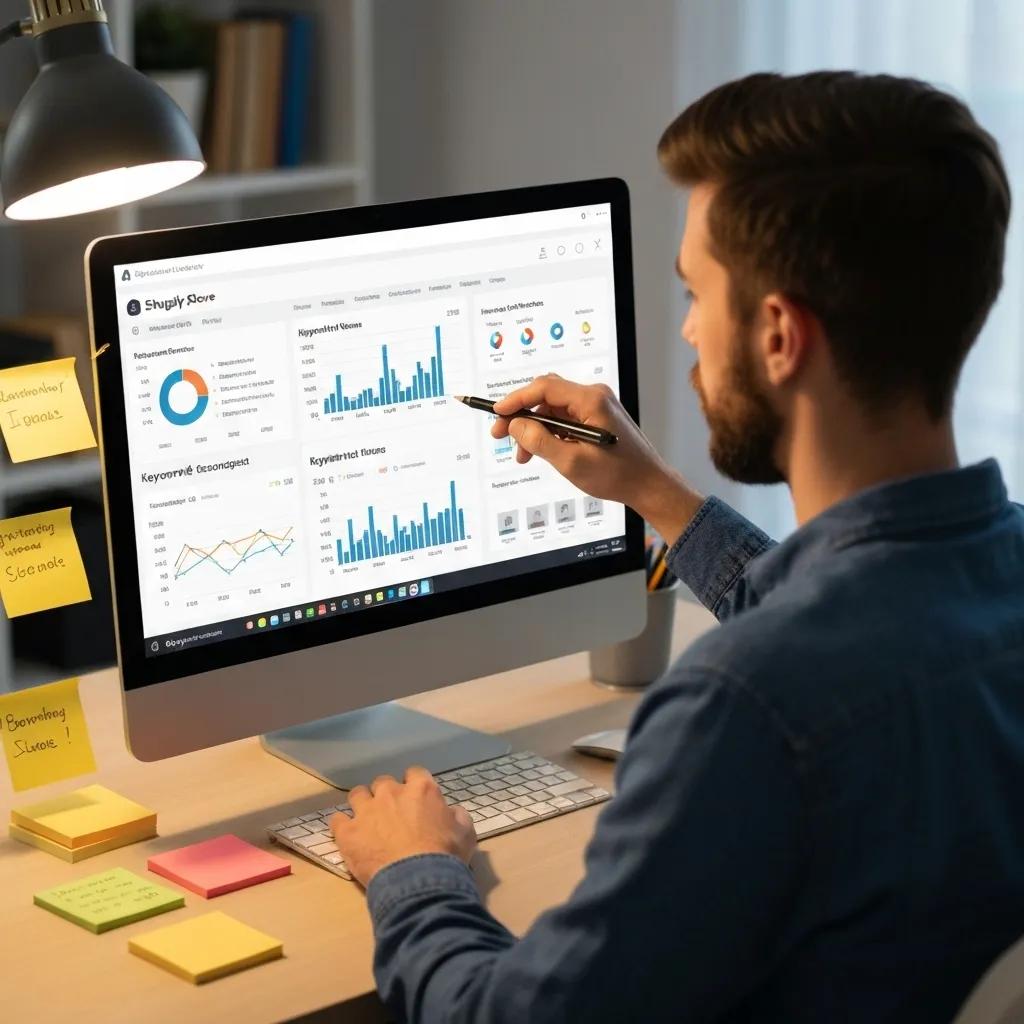
Strategic keyword research is your compass for identifying the search terms that not only drive valuable, purchase-ready traffic but also uncover informational queries that build brand authority and fuel your blog content. Effective research means uncovering transactional, commercial, and informational keywords, rigorously evaluating their potential, and then strategically mapping them to your Shopify pages for maximum impact.
Keyword Research: The Bedrock of Any Successful SEO Strategy
Targeted keyword research is absolutely fundamental for pinpointing the search terms most likely to attract high-value traffic. Effective research involves discovering transactional, commercial, and informational keywords, meticulously evaluating their potential, and then strategically mapping them to your most relevant pages for maximum impact. Tools like Ahrefs and Semrush are invaluable for automating keyword discovery, competitor analysis, and providing crucial search volume insights, forming the backbone of any winning SEO strategy.
Brown, C., SEO Strategies,
This citation strongly supports the article’s emphasis on the critical importance of keyword research and highlights the indispensable role of tools like Ahrefs and Semrush in achieving effective SEO.
What Constitutes High-Intent Keywords for Your Shopify Products?
High-intent keywords are those product names, categories, and modifiers that scream purchase readiness—think terms like “buy,” “best,” “cheap,” or specific model numbers. For instance, “organic cotton women’s summer dress” or “best gaming laptop under $1,000” clearly signal a buyer who’s ready to commit. By zeroing in on these phrases, you maximize your conversion potential by aligning your product pages with the exact search queries of motivated buyers.
How to Wield Tools Like Ahrefs and Semrush for Superior Shopify Keyword Research?
Industry titans like Ahrefs and Semrush automate the arduous tasks of keyword discovery, competitor analysis, and search volume assessment. Leverage Ahrefs’ Keywords Explorer to precisely filter by keyword difficulty, search volume, and parent topics. Semrush’s Keyword Magic Tool excels at grouping keywords by semantic clusters and intent categories. Both platforms allow you to dissect competitor organic keywords by simply inputting their domain names. This powerful technique uncovers hidden content gaps, reveals long-tail opportunities, and identifies seasonal trends that will directly inform your on-page optimization strategy.
How to Strategically Map Keywords to Your Shopify Product, Collection, and Blog Pages?
Effective keyword mapping ensures each page targets a distinct set of keywords, preventing cannibalization and maximizing relevance. Follow this proven step-by-step approach:
- Compile a list of core product keywords and descriptive modifiers for your product pages.
- Assign broader category terms to your collection pages (e.g., “women’s summer dresses”).
- Reserve informational keywords for your blog posts (e.g., “how to style summer dresses”).
- Create a dedicated keyword mapping spreadsheet with columns for Page Type, Primary Keyword, Search Intent, and URL.
This structured framework maintains crystal-clear semantic organization and guides your on-page optimizations, including title tags, headings, and content focus.
Below, you’ll find a comparative breakdown of popular keyword research tools and their ideal applications.
While each tool offers unique insights, combining their strengths provides a robust keyword arsenal essential for driving Shopify SEO success.
How to Optimize Your Shopify Product Pages for Maximum SEO Punch?

Optimizing product pages is a holistic process that involves crafting compelling, keyword-rich titles and descriptions, optimizing images for speed and context, integrating essential schema markup, and leveraging the power of user-generated content like reviews and FAQs. This multi-pronged approach significantly enhances relevance, elevates user experience, and unlocks coveted rich snippets.
What Are the Golden Rules for Crafting SEO-Optimized Product Titles and Descriptions?
Your product titles should lead with your primary keyword and brand name, keeping them concise and under 60 characters. Employ descriptive modifiers like color, size, or material to add detail. For meta descriptions, deliver a compelling value proposition within 160 characters and include a strong call to action. On-page product descriptions should naturally weave in purchase-motivated terms, highlight your unique selling propositions, and proactively address common customer questions. This powerful combination boosts both search visibility and the likelihood of a conversion.
Product Title & Description Best Practices:
- Lead with your Primary Keyword, followed by your brand or model name.
- Incorporate a Benefit Statement that sets you apart (e.g., “Moisture-Wicking Fabric for Unbeatable All-Day Comfort”).
- Prioritize Readability with short, impactful sentences.
With these title and description best practices locked in, you’re perfectly positioned to dive into the nuances of image optimization.
How to Optimize Product Images with Strategic Alt Text and Smart Compression?
Images must not only load at lightning speed but also clearly communicate context to search engines. Compress your images using tools like TinyPNG to achieve significant file size reduction without sacrificing visible quality. Craft descriptive alt text that incorporates the product name and key attributes (e.g., “Navy blue organic cotton women’s summer maxi dress, front view”). This practice enhances accessibility, reinforces semantic relevance, and contributes positively to Core Web Vitals performance, a key ranking factor.
How to Seamlessly Implement Product Schema Markup on Your Shopify Product Pages?
Product schema markup is your key to unlocking rich result eligibility by explicitly defining critical product attributes for search engines. Utilize these essential core attributes:
Many advanced Shopify SEO apps automatically inject this JSON-LD markup; for manual implementation, you’ll need to edit your template to embed JSON-LD scripts. Correct schema implementation is crucial for triggering rich snippets, which significantly boosts click-through rates and showcases vital product details directly within the SERPs.
How Do Customer Reviews and FAQs Elevate Your Product Page SEO?
User-generated reviews and FAQs inject fresh, keyword-rich content directly onto your product pages. Reviews naturally introduce variations of your search terms, while FAQs directly address specific buyer questions and concerns—both contributing significantly to semantic depth and long-tail keyword visibility. Embedding a concise, well-structured FAQ section can even qualify your page for FAQ rich snippets, expanding your page’s real estate in search results and reinforcing purchase confidence.
What Are the Top Strategies for Optimizing Your Shopify Collection Pages?
Collection pages serve as vital category landing pages, grouping related products. Optimizing them is key to solidifying your internal linking structure, clarifying your site hierarchy, and targeting mid-funnel commercial search queries.
How to Optimize Collection Page Headings and Descriptions for Maximum Impact?
Craft a compelling H1 for each collection that prominently features the primary category keyword (e.g., “Shop Women’s Summer Dresses”). Follow this with a concise description, ideally between 100–150 words, naturally weaving in related terms like “beach dresses,” “maxi dresses,” or “floral prints.” This strategic approach delivers clear topical relevance signals to search engines and helps users instantly grasp the category’s offerings.
How to Effectively Manage Duplicate Content Issues on Shopify Collection Pages?
Shopify’s automatic generation of tag-based URLs can inadvertently lead to duplicate content issues. Resolve these effectively by:
- Implementing canonical tags on all collection and product pages, ensuring they point to the preferred, canonical URL.
- Utilizing theme settings or specialized apps to disable auto-generated filtered tag pages.
- Consolidating content under a single primary collection URL and strategically blocking or noindexing any redundant URLs in your robots.txt file.
These crucial steps preserve your crawl budget and guarantee that search engines index your intended, most valuable landing pages.
What Internal Linking Techniques Will Supercharge Your Collection Page SEO?
Strategic internal linking is essential for distributing authority and guiding users deeper into your store. From your collection pages, link to key product pages using descriptive, keyword-rich anchor text (e.g., “discover our floral maxi dresses”). Include links to related collections (e.g., “explore our latest summer tops”) and to relevant blog posts that support purchase decisions (e.g., “expert styling tips for summer dresses”). This interconnected network of semantically related links dramatically improves crawlability, reinforces your topic clusters, and enhances the overall user navigation experience.
How to Master Technical On-Page SEO for Your Shopify Store?
Technical on-page SEO forms the bedrock of all your optimization efforts, focusing on site architecture, URL structure, and critical performance factors.
How to Optimize Your Shopify URL Structure and Master Canonical Tags?
While Shopify’s default URL segments (, ) are fixed, you retain full control over customizing the handle that follows. Ensure these handles are concise, keyword-rich, and consistently lowercase (e.g., ). Implement canonical tags within the section of your pages to direct duplicate or variant pages back to the primary URL. For paginated collections, correctly implement and tags to clearly signal pagination sequences to search engines.
What Are the Top Strategies to Turbocharge Your Shopify Store’s Page Speed?
Page speed is a direct determinant of user experience and a significant ranking factor. Enhance your Core Web Vitals by focusing on these key areas:
- Image Optimization: Employ responsive srcset attributes and leverage modern image formats like WebP.
- Lazy Loading: Implement lazy loading to defer the loading of off-screen images, drastically reducing initial load times.
- Minification: Compress your CSS, JavaScript, and HTML files to reduce their size.
- App Audit: Conduct a thorough audit of your installed apps, removing or replacing any that inject excessive scripts or negatively impact performance.
- Browser Caching: Maximize Shopify’s built-in caching capabilities and utilize a Content Delivery Network (CDN).
Faster load times translate directly into lower bounce rates, higher user engagement, and demonstrably improved search performance.
How to Build a Bulletproof Internal Linking Strategy for Your Shopify Store?
An intentional internal linking framework is crucial for strategically distributing link equity from your high-authority pages to your conversion-focused targets. Leverage your homepage, high-performing blog posts, and popular collection pages to link to your priority product and service pages. Ensure your anchor text pairs key entities with clear calls to action, such as “discover advanced on-page SEO strategies” linking to the relevant guide. Maintaining consistent naming conventions and relevant contextual links reinforces semantic proximity and guides users seamlessly through your site.
How to Harness Structured Data and Schema Markup for Shopify SEO Supremacy?
Structured data is your key to enhancing search engine comprehension of your page content and significantly increasing your eligibility for rich results, ultimately driving higher visibility and click-through rates.
What Types of Schema Markup Are Absolutely Essential for Shopify Stores?
- Product: Precisely defines product details, enabling rich snippets for product listings.
- Offer: Nested within Product schema, it signals crucial pricing and availability information.
- AggregateRating: Summarizes customer review scores, building trust and social proof.
- BreadcrumbList: Displays your site’s navigational hierarchy directly in SERPs, improving user navigation.
- FAQPage: Marks up question–answer pairs, qualifying your page for prominent FAQ rich snippets.
- WebSite & WebPage: Signals your overall site structure and enables features like the search box in SERPs.
How to Implement JSON-LD Schema Markup Using Shopify Apps and Manual Techniques?
Specialized Shopify SEO apps like Schema Plus for SEO or Smart SEO automate the injection of markup. For a more hands-on approach, you can manually insert JSON-LD snippets directly into your theme’s file within blocks. Crucially, ensure all required properties—, , , , and all nested attributes—are accurately populated. Regularly validate your markup using Google’s Rich Results Test to confirm eligibility and identify any potential errors.
How Does Structured Data Dramatically Enhance Your Shopify Store’s Visibility in SERPs?
Structured data unlocks the power of rich snippets—such as prices, star ratings, FAQs, and breadcrumbs—which command significantly more visual real estate within search results. These enhanced listings attract higher click-through rates and convey immediate trust signals directly on the SERP, improving user engagement and signaling strong relevance to search engines, which can lead to further ranking improvements.
How to Develop a Winning Content Strategy Using Your Shopify Blog for SEO Glory?
A consistent, entity-rich blog strategy is your engine for establishing topical authority, attracting valuable backlinks, and supporting your entire e-commerce funnel by educating both shoppers and search engines.
How to Create Entity-Rich Blog Posts That Target Informational Keywords Like a Pro?
Start by identifying a keyword cluster centered around informational queries, such as “how to style summer dresses” or “benefits of organic cotton clothing.” Structure your posts with clear headings, bulleted lists, and illustrative examples that naturally incorporate related entities—think fabric care tips, current seasonal trends, and sustainability practices. This deep semantic layering signals strong relevance to Google’s algorithms and firmly positions your brand as a go-to expert resource.
How to Earn Backlinks and Build Authority Through Your Shopify Blog Content?
High-quality, meticulously researched blog posts are prime candidates for earning backlinks from fashion blogs, industry publications, and influencer roundups. Actively promote your content across social media, email newsletters, and through targeted outreach to websites that cover related entities (e.g., sustainable fashion, advanced fabric technology). Each earned backlink significantly strengthens your domain authority and enhances your store’s overall rankings for both product and blog content.
What Are the Premier Shopify SEO Apps and Tools to Elevate Your On-Page Optimization?
The right selection of apps and integrations can streamline your workflows, automate crucial markup, and surface valuable optimization opportunities, ensuring your store remains highly competitive.
Which Shopify SEO Apps Deliver the Most Bang for Your Buck for On-Page SEO?
Employ a strategic combination of apps for comprehensive coverage:
- Schema Plus for SEO: Automates the generation of JSON-LD markup for essential Product, FAQ, and Breadcrumb schemas.
- Plug in SEO: Scans your themes meticulously for missing meta tags, improper headings, and broken links.
- TinyIMG: Expertly compresses images and provides intelligent alt text suggestions.
- SEO Booster: Enables bulk editing of meta descriptions and titles for maximum efficiency.
These powerful apps drastically reduce manual effort and ensure consistent, accurate SEO implementation across hundreds, or even thousands, of your store’s pages.
How to Seamlessly Integrate Essential SEO Tools Like Google Search Console and Ahrefs with Shopify?
Connect your Shopify store directly to Google Search Console to meticulously monitor indexing status, track rich snippet performance, and analyze your most valuable search queries. Install Google Analytics 4 for in-depth insights into user behavior and conversion tracking. For unparalleled backlink and keyword intelligence, integrate Ahrefs via its powerful Site Audit feature. This combined toolset provides a comprehensive dashboard of insights to refine your on-page tactics, uncover missed opportunities, and accurately measure your progress.
Below is a comparative overview of key Shopify SEO tools and their primary strengths:
How to Conduct a Flawless Shopify On-Page SEO Audit and Checklist?
A meticulous audit is your roadmap to identifying every single optimization opportunity, from metadata fine-tuning to critical technical settings. Follow this comprehensive step-by-step checklist for a complete review:
- Verify Indexing and Coverage Status
Utilize Google Search Console to confirm all your key pages are indexed and promptly resolve any crawl errors. - Audit Title Tags and Meta Descriptions Rigorously
Ensure every page boasts a unique, keyword-rich title (under 60 characters) and a compelling meta description (under 160 characters). - Check Heading Structure for Clarity and Hierarchy
Validate that H1–H3 tags accurately reflect target keywords and maintain a logical content hierarchy. - Evaluate URL Handles and Canonical Tags Diligently
Confirm that URL handles are concise and keyword-focused, and that canonical tags correctly point to your preferred URLs. - Inspect Structured Data Implementation Thoroughly
Run the Rich Results Test to verify the correct implementation of Product, FAQ, and Breadcrumb schemas. - Review Image Alt Text and Compression Standards
Ensure descriptive alt text includes relevant entities; confirm all images are optimized for speed. - Analyze Internal Linking for Strategic Flow
Check that high-authority pages link effectively to priority products and informational blog posts using contextual anchor text. - Test Page Speed and Core Web Vitals Performance
Employ Google PageSpeed Insights to pinpoint and address any performance bottlenecks. - Identify and Address Duplicate Content Issues
Detect tag and filter pages; implement noindex or canonical tags strategically as needed. - Validate Mobile-Friendliness and Responsiveness
Confirm flawless responsive design and intuitive touch-screen usability using the Mobile-Friendly Test.
Upon completing this checklist, prioritize fixes based on their potential impact on traffic and ease of implementation. For persistent or highly technical issues, consider engaging a specialist to conduct a deep-dive technical audit.
How to Leverage SEO Audits to Pinpoint and Rectify Shopify On-Page SEO Flaws?
An audit-driven process relies on data extracted from powerful tools like Screaming Frog, Ahrefs Site Audit, and Google Search Console. Export comprehensive reports detailing missing tags, broken links, slow-loading pages, and duplicate content. Classify these issues by severity and assign them to the appropriate teams—development, content, or design. Implement changes incrementally, re-audit the affected areas, and meticulously track improvements in organic rankings and traffic as tangible proof of your progress.
When Is the Optimal Time to Bring in a Shopify SEO Expert for Your Store?
If your audit uncovers deeply technical challenges—such as complex canonicalization issues, performance problems with a large product catalog, or intricate schema implementations—or if your internal team lacks the bandwidth or expertise for ongoing optimization, partnering with a specialized agency can dramatically accelerate your results. Experts bring proven methodologies, access to enterprise-level tools, and a documented track record of delivering sustained traffic growth and significant revenue improvements.
Blackbelt Commerce’s proven Shopify SEO services expertly blend technical audits, precise on-page optimization, strategic content development, and conversion rate enhancements to propel your store to the top of search results. By implementing the advanced tactics detailed in this guide and seeking expert support when necessary, you can cultivate a powerful, self-reinforcing cycle of enhanced visibility, superior user experience, and increased sales.
Investing in comprehensive on-page SEO is the key to unlocking consistent, high-quality traffic and positioning your Shopify store for exponential, scalable growth. Ready to elevate your search presence and drive unprecedented revenue? Contact Blackbelt Commerce today for a personalized consultation and discover how you can master on-page SEO for ultimate Shopify success.
Quick Answer: Shopify On-Page SEO
Shopify On-Page SEO should help Shopify merchants turn search visibility into qualified traffic, trust, and revenue. The strongest approach connects content, technical SEO, internal links, performance, UX, and conversion paths so the work produces business outcomes instead of isolated ranking tasks.
Want a sharper Shopify growth plan?
Want to turn Shopify On-Page SEO into rankings, better content, and qualified leads? Book a strategy call and we will map the highest-impact next steps for your Shopify store.
Key Takeaways
- Use Shopify On-Page SEO to match search intent with the right product, collection, service, blog, and FAQ pages.
- Avoid generic SEO advice; make the recommendations specific to Shopify themes, apps, collections, internal links, speed, and content quality.
- Connect rankings to conversion paths so organic traffic can become customers or booked strategy calls.
- Preserve editorial trust first, then use internal links to guide readers toward Shopify experts, Shopify Plus agency support, SEO services, and the home page where relevant.
- Use the same-page Calendly CTA only after the post has delivered useful guidance and the reader is ready for a strategy conversation.
How this connects to your Shopify growth strategy
For the Shopify SEO, Audits, and Organic Growth cluster, this article should make Shopify On-Page SEO practical and commercially useful while protecting editorial trust. The bridge to Blackbelt Commerce should show when expert planning, implementation, SEO discipline, or Shopify Plus agency support can reduce risk and turn the reader’s next decision into measurable progress.
Want a sharper Shopify growth plan?
Use this guide as a decision tool. Then book a strategy call when you want a practical roadmap for your store.
Related Shopify resources
These internal resources support the Shopify SEO, Audits, and Organic Growth topic cluster and help connect this guide to stronger commercial next steps:
- Shopify SEO services
- Shopify experts
- Shopify Plus agencies
- Shopify SEO, Audits, and Organic Growth — Parent service page for the reader’s next commercial step
- Blackbelt Commerce — Home-page authority link for brand and core Shopify expertise
- Shopify experts — Money-page link requested for expert-hiring intent
- Shopify Plus agencies — Money-page link requested for high-growth and Plus-agency intent
- Shopify custom development — Development service page for implementation and technical help
- Shopify app SEO — Related SEO tooling article
Questions store owners ask before taking action
How should a Shopify merchant use Shopify On-Page SEO?
Use it to decide what page, content, technical fix, internal link, or performance improvement will best answer search intent and support revenue.
Why does Shopify SEO need editorial quality?
Search visibility is not enough. The content must earn trust, answer the query, guide the reader, and create a clear next step for qualified merchants.
When is expert Shopify SEO help worth it?
Expert help is worth considering when rankings, migrations, technical SEO, content structure, or conversion paths affect meaningful revenue.
Future articles needed for topical dominance
To build deeper topical authority around this cluster, these supporting topics should be created later and linked back into this article:
- Shopify On-Page SEO Checklist for Shopify Stores: Creates an actionable SEO support article that can link back to the SEO service page.
- Common Shopify On-Page SEO Mistakes That Hurt Shopify Revenue: Targets problem-aware readers and explains SEO, UX, conversion, and implementation risk.
- How Shopify Experts Prioritize Shopify On-Page SEO: Links informational intent to expert support without turning the main article into a sales pitch.
Want a sharper Shopify growth plan?
Ready to turn the advice in this article into an action plan? Open the calendar here and choose a time that works for you.

