


Unlock Peak Traffic: Your Ultimate Guide to Shopify Blog SEO Mastery
A finely tuned Shopify blog can amplify your organic traffic by 3x, showcasing your brand’s expertise to search engines and driving sales. If your ecommerce content isn’t drawing in high-intent visitors, you’re leaving revenue and brand authority on the table. This guide dives deep into actionable Shopify blog SEO strategies—from foundational concepts and keyword research to cutting-edge technical tactics, promotion blueprints, analytics tracking, and real-world success stories from Blackbelt Commerce. We’ll cover:
- What Shopify Blog SEO truly means and its power to boost ecommerce traffic
- Step-by-step keyword research methods for capturing high-intent searches
- Crucial on-page optimization for titles, content, visuals, and links
- Advanced technical SEO: speed, canonicals, schema, and mobile-first best practices
- Promotion and link-building strategies to expand your reach and credibility
- Measuring success with the right KPIs, analytics, and performance audits
- Common questions answered with clear, snippet-ready insights
- How Blackbelt Commerce has fueled over 500% traffic growth for clients
- Practical first steps and when to bring in expert Shopify SEO support
Implement these Shopify blog SEO tactics to transform your blog into a powerful traffic-generating asset and set your store on a path to sustained growth.
What Exactly is Shopify Blog SEO and Why is it Essential for Ecommerce Traffic?
Shopify Blog SEO is the strategic process of optimizing your store’s blog content—including titles, keywords, structure, and technical setup—to climb search engine results pages (SERPs), attract qualified prospects, and ultimately drive conversions.
Search engines evaluate blog post relevance based on how effectively they address user intent, utilize on-page signals, and deliver a swift, mobile-friendly experience. Optimizing your Shopify blog for SEO not only boosts organic traffic but also solidifies your brand’s authority and creates new pathways for product discovery, laying the groundwork for scalable ecommerce expansion.
How Does the Shopify Platform Itself Influence Blog SEO?
Shopify’s architecture, built on a liquid-templating system and integrated blogging features, directly impacts indexability and performance. Liquid templates enable dynamic control over meta tags and structured data, while Shopify’s Content Delivery Network (CDN) ensures rapid asset delivery.
- Template Flexibility – Your theme’s code allows for custom schema implementation and precise heading structure.
- Integrated CDN – Assets like images are served quickly, minimizing page load times.
- App Ecosystem – Specialized SEO apps can automate sitemap creation and meta tag optimization.
Shopify’s Built-in SEO Capabilities – Shopify Help Center
Shopify automatically manages key technical SEO elements, such as generating sitemaps and canonical tags, which is crucial for preventing duplicate content issues.
This insight from Shopify’s official documentation underscores the platform’s inherent SEO advantages, directly supporting our discussion on its impact on blog optimization.
Given Shopify’s robust backend support, your strategic focus can sharpen on crafting exceptional content, refining metadata, and optimizing speed through your theme’s settings.
What Are the Core Advantages of Optimizing Your Shopify Blog for Search Engines?
- Elevated Organic Visibility – Higher search rankings for your target keywords translate to more qualified traffic.
- Strengthened Brand Authority – Delivering valuable, informative content positions your store as a go-to industry resource.
- Boosted Conversion Rates – Insightful articles naturally guide users toward product pages and purchase decisions.
- Sustained Traffic Growth – Evergreen content continues to attract visitors long after publication.
A well-balanced approach to on-page SEO and strategic internal linking builds a powerful content network that search engines favor, leading to compounding traffic gains.
How Does Effective Shopify Blog SEO Directly Fuel Ecommerce Sales and Conversions?
When your optimized blog content ranks for high-intent search queries, it effectively guides potential customers through the entire purchase funnel:
- Awareness – Educational posts capture users in the early stages of research.
- Consideration – In-depth guides help prospects compare options and establish buying criteria.
- Decision – Tutorials and reviews can directly link to product pages or special offers.
By strategically integrating product recommendations, compelling calls to action, and conversion-focused content, your blog transforms into a potent engine for ecommerce revenue and long-term customer value.
How Do You Master Shopify Blog Keyword Research to Capture High-Intent Traffic?
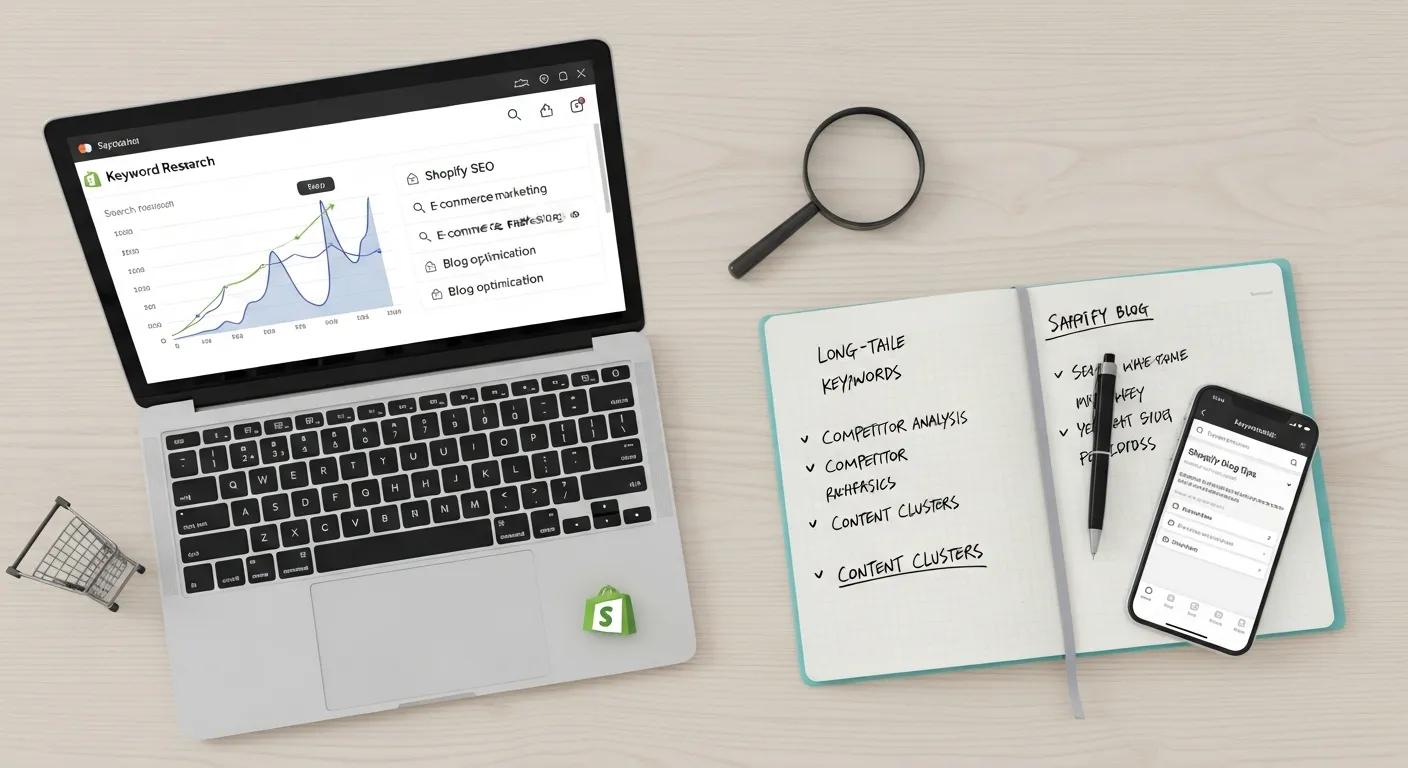
Keyword research for Shopify blogs means pinpointing search queries that signal strong purchase intent and align perfectly with your product catalog. Comprehensive research uncovers both high-volume “head” terms and niche “long-tail” phrases that consistently convert.
What Are the Top Tools for Shopify Blog Keyword Discovery?
- Google Keyword Planner for foundational search volume data
- SEMrush for in-depth competitive keyword gap analysis
- Ahrefs for understanding ranking difficulty and SERP feature tracking
These powerful platforms reveal related queries, search trends, and competitive landscapes, enabling you to prioritize your keyword strategy effectively.
How to Uncover High-Intent and Long-Tail Keywords for Your Shopify Blog?
High-intent keywords often incorporate transactional modifiers like “buy,” “best,” or “review.” Long-tail variations typically combine product names with specific attributes, use cases, or problem-solving phrases.
- Start by listing your core product categories or niche terms.
- Append qualifiers such as “compare,” “shipping,” “discount,” or “for [specific need].”
- Analyze the balance between search volume and keyword difficulty to gauge potential ROI.
Targeting these specific queries ensures visitors find precisely what they’re looking for, positioning them perfectly for conversion.
How Can Analyzing Competitor Keywords Elevate Your Shopify Blog Strategy?
Competitor analysis is invaluable for identifying keywords they rank for that you currently miss. By auditing your top-performing competitors:
- Extract their highest-traffic pages and the keywords they target.
- Pinpoint content gaps where you can offer superior value or a unique perspective.
- Reverse-engineer their internal linking structures to inform your own strategy.
Focusing on underserved topics and subtopics allows you to tap into existing demand with a more compelling offering.
What Seasonal and Product-Focused Keywords Should Shopify Stores Prioritize?
- Holiday Campaigns: “Unique Valentine’s Day gift ideas for her”
- Major Sales Events: “Best Black Friday deals for Shopify stores”
- New Product Launches: “Review: The latest vegan leather tote bag”
Align your content calendar with these seasonal peaks to capture timely, high-intent traffic.
What Are the Premier On-Page SEO Practices for Optimizing Shopify Blog Posts?
How to Craft Compelling, SEO-Optimized Shopify Blog Titles and Meta Descriptions?
An effective title tag should blend your primary keyword, brand name, and an enticing hook. Your meta description should concisely summarize the article’s core value proposition and include a clear call to action.
- Title Example: “10 Proven Shopify Blog SEO Tactics to Skyrocket Your Traffic
- Meta Description Example: “Unlock actionable Shopify blog SEO strategies from experts to boost organic traffic and sales. Discover proven optimization techniques now.”
Shopify SEO: The Definitive Step-by-Step Guide (2025 Edition)
This comprehensive guide offers essential tips for optimizing a Shopify blog, including crafting keyword-rich titles, descriptions, and URLs, plus integrating images and videos to enhance content engagement.
This authoritative source provides specific, actionable recommendations for Shopify blog optimization, directly aligning with our article’s core focus.
How Do You Write Engaging, Keyword-Rich Shopify Blog Content?
High-performing content strikes a balance between keyword integration and reader engagement. Employ these best practices:
- Strategic Headings – Weave LSI (Latent Semantic Indexing) terms into your H2 and H3 tags.
- Semantic Variations – Naturally incorporate synonyms and related phrases like “search engine optimization” and “blog ranking strategies.
- Concise Paragraphs – Break up text to improve readability and scannability, especially for mobile users.
- Strategic Internal Links – Connect relevant posts and product pages to guide users and search engines.
This approach satisfies both user experience expectations and search algorithm requirements.
What Are the Top Image Optimization Techniques for Shopify Blogs?
Proper image optimization enhances user experience and boosts visibility in image search results.
How to Structure Internal Links for Maximum Shopify Blog SEO Impact?
Internal links are crucial for distributing link equity and guiding search engine crawlers through your content. Implement these best practices:
- Link from high-authority articles to newer content using precise, keyword-relevant anchor text.
- Utilize descriptive anchor text, such as “advanced on-page Shopify SEO tactics.
- Develop topic clusters where related articles interlink extensively, reinforcing topical authority.
Consistent internal linking strengthens your site’s topical authority and improves crawl depth, making your content more accessible to search engines.
How Can You Implement Advanced Technical SEO for Shopify Blogs?
What Are the Most Effective Shopify Blog Speed Optimization Techniques?
- Minify CSS/JS – Eliminate redundant code to reduce file sizes and speed up rendering.
- Image Compression – Utilize WebP format and lazy loading for non-essential visuals.
- App Audit – Regularly review and disable or remove apps that inject excessive scripts or slow down your site.
Accelerated load times directly improve user engagement and significantly reduce bounce rates.
How to Properly Manage Canonical Tags and Pagination on Shopify Blogs?
- On paginated pages, implement the `<link rel=”canonical”>` tag pointing to the primary article or the first page of the series.
- Utilize `rel=”next”` and `rel=”prev”` attributes for clear blog index navigation signals to search engines.
Correct canonicalization ensures search engines index the definitive version of your content, preventing duplicate content penalties.
How to Leverage Structured Data and Schema Markup for Shopify Blog Posts?
- BlogPosting – Enclose your article content within `BlogPosting` schema, including essential properties like `headline`, `author`, and `datePublished`.
- HowTo – For tutorial-style posts, structure steps using `HowToStep` markup for clarity.
- BreadcrumbList – Implement breadcrumb schema to enhance site navigation visibility in SERPs.
Structured data makes your content more understandable to search engines, leading to richer search results and improved click-through rates.
Why is Mobile-First Optimization Absolutely Critical for Shopify Blog SEO?
With over 60% of all searches originating from mobile devices, Google prioritizes mobile-first indexing. Key considerations include:
- Ensure your design is fully responsive, adapting seamlessly to all screen sizes.
- Optimize for touch-friendly navigation and easily tappable links.
- Eliminate intrusive interstitials that hinder content access on mobile.
A mobile-first approach not only boosts search rankings but also significantly enhances user satisfaction.
What Strategies Drive Maximum Shopify Blog Promotion and High-Quality Link Building?

Effective promotion and strategic link building are essential for amplifying your blog’s reach and establishing its authority in the eyes of search engines.
How Can You Promote Shopify Blog Content for Maximum Reach and Engagement?
- Email Newsletters – Segment your subscriber list and send targeted content updates.
- Social Media Channels – Share compelling snippets with engaging visuals across platforms like Instagram, X, and LinkedIn.
- Product Launch Campaigns – Cross-promote relevant blog posts alongside new product announcements.
What Are the Most Effective Link Building Techniques for Shopify Blogs?
- Guest Blogging – Contribute valuable content to reputable industry websites and include a contextual backlink.
- Resource Page Outreach – Pitch your in-depth guides as valuable references for relevant “best of” or resource roundups.
- Broken Link Reclamation – Identify broken links on related sites and propose your content as a suitable replacement.
How Can Influencer Marketing Amplify Your Shopify Blog Traffic?
- Collaborate on co-authored articles or exclusive interviews.
- Provide unique discount codes that can be embedded within influencer content.
- Encourage influencers to share your valuable guides with their dedicated followings.
Endorsements from trusted influencers build crucial social proof and drive significant referral traffic.
How Do You Measure and Continuously Improve Shopify Blog SEO Performance?
Ongoing measurement and iterative refinement are key to achieving sustainable results and adapting to evolving search engine algorithms.
What Key Performance Indicators (KPIs) Should Shopify Store Owners Monitor?
How to Utilize Google Analytics and Search Console for Shopify Blog Insights?
- Search Console – Track search queries, impressions, click-through rates, and identify performance trends for individual posts.
- Google Analytics – Segment organic blog traffic by source, device, user behavior, and conversion paths.
- Behavior Flow Reports – Map visitor journeys through your content to optimize conversion funnels.
When and How Should You Audit and Update Shopify Blog Content?
- Quarterly Content Audits – Refresh statistics, update outdated links, and optimize for emerging keywords.
- Post-Update Reviews – Conduct audits after significant Shopify platform changes or major Google algorithm updates.
- Performance Decline Analysis – Identify underperforming posts and reoptimize headings, CTAs, and schema markup.
Regular content maintenance is essential for preserving long-term search rankings and relevance.
What Are Common Shopify Blog SEO Questions and How Do You Answer Them Effectively?
Addressing frequently asked questions is a powerful strategy for capturing “People Also Ask” features and earning featured snippets in search results.
How Do I SEO My Shopify Blog Step-by-Step?
- Perform thorough keyword research to identify high-intent search queries.
- Optimize title tags, meta descriptions, and headings with your primary keywords.
- Create in-depth, value-driven content incorporating semantic variations and internal links.
- Optimize images with descriptive alt text, keyword-rich filenames, and efficient compression.
- Implement structured data (e.g., `BlogPosting`, `HowTo`) and ensure a mobile-first design.
These foundational steps provide a repeatable framework for sustained Shopify blog success.
Is a Shopify Blog SEO-Advantageous Compared to Other Platforms?
Shopify’s emphasis on speed, user-friendliness, and native integrations makes it a highly competitive choice for ecommerce-focused blogging.
What Are the Top SEO Apps for Shopify Blogs?
- Yoast SEO – Offers on-page analysis and automated schema generation.
- Plug in SEO – Provides automated site health checks for broken links and missing tags.
- JSON-LD for SEO – Simplifies the implementation of structured data markup.
Integrating these tools can significantly accelerate your technical SEO improvements.
How Do I Discover Keywords for My Shopify Blog?
- Input seed terms into Google Keyword Planner to gauge volume and competition levels.
- Analyze competitor content gaps using tools like SEMrush or Ahrefs.
- Explore “People Also Ask” sections and “Related Searches” on Google for long-tail keyword inspiration.
Combining these research methods uncovers a rich landscape of high-intent topics your audience is searching for.
How Has Blackbelt Commerce Empowered Clients to Master Shopify Blog SEO for Maximum Traffic?
Blackbelt Commerce has consistently driven over 500% traffic growth and doubled conversion rates for clients by implementing sophisticated semantic SEO and highly targeted content strategies for their Shopify blogs.
What Semantic SEO Strategies Did Blackbelt Commerce Employ to Boost Client Traffic?
- Developed entity-based topic clusters to significantly strengthen topical authority.
- Implemented comprehensive `BlogPosting` and `HowTo` schema markup across all blog content.
- Optimized internal linking structures using precise, keyword-relevant anchor text for key entities.
How Did Blackbelt Commerce Enhance Conversion Rates Through Blog SEO?
- Integrated conversion-focused calls to action within high-traffic blog posts.
- Strategically aligned blog content with product launch campaigns to maximize cross-selling opportunities.
- Conducted A/B testing on meta descriptions to optimize click-through rates and user engagement.
These efforts resulted in a remarkable 2.5x increase in lead capture from organic blog traffic.
What Tangible Results Have Clients Achieved with Blackbelt Commerce’s Shopify SEO Expertise?
- A specialty apparel retailer experienced a 520% surge in organic blog sessions within six months.
- An online accessories brand successfully doubled its average order value from blog-referred sales.
- A subscription box service secured top-3 rankings for over 30 targeted long-tail keywords.
How Can You Start Mastering Shopify Blog SEO Today?
Launching a high-impact Shopify blog SEO strategy begins with identifying quick wins and establishing clear, achievable milestones.
What Are the Essential First Steps to Optimize Your Shopify Blog for Search Engines?
- Conduct a thorough audit of your existing blog posts, focusing on keyword targeting and metadata completeness.
- Develop a content editorial calendar that aligns with seasonal trends and product-specific keywords.
- Install top-rated SEO apps to automate checks and streamline structured data implementation.
When Should You Consider Engaging Shopify SEO Experts?
Bring in professional support when:
- Your internal team lacks the specialized technical expertise or content resources required.
- You need to accelerate results or have ambitious, time-sensitive growth targets.
- You seek a data-driven partner to manage ongoing audits, strategy, and optimization efforts.
How Can You Access Blackbelt Commerce’s Shopify SEO Resources and Expert Support?
Explore our comprehensive suite of services and valuable resources at Blackbelt Commerce – Shopify Experts and BigCommerce Developers. Schedule a personalized consultation to receive a tailored Shopify blog SEO audit and strategic roadmap.
By implementing these advanced Shopify blog SEO tactics and potentially partnering with proven experts, you’ll unlock your blog’s maximum traffic potential and drive sustainable ecommerce growth.
Elevating your Shopify blog’s search performance starts with foundational optimizations and scales through advanced, strategic initiatives. Consistent content audits, technical enhancements, and proactive promotional efforts build robust organic channels that consistently outperform competitors. Focus on targeting the right keywords, prioritizing user experience, and leveraging semantic signals to enhance your store’s authority and drive conversions. When you’re ready to accelerate your results and achieve significant growth, Blackbelt Commerce is here to deliver expert Shopify SEO services meticulously tailored to your unique objectives.
Research Support
The Ultimate SEO Checklist: 43 Essential Tips for 2025 – Shopify
This Shopify resource highlights the critical importance of optimizing product descriptions by crafting unique SEO copy for each item and incorporating relevant long-tail keyword variations.

