


Blog updated with the most recent Shopify and eCommerce strategies on 05/02/2026.
Mastering Shopify Email Support: Elevate Your Customer Service for Peak Engagement
Email support remains a critical pillar for e-commerce ventures, with a substantial 58% of shoppers favoring it for assistance due to its inherent clarity, traceability, and sheer convenience. This comprehensive guide will illuminate why robust Shopify email support is non-negotiable, how to architect powerful email systems, the art of crafting customer-centric messages, leveraging cutting-edge automation and AI, advanced tactics for Shopify Plus, and how Blackbelt Commerce propels your email support to new heights, driving unparalleled satisfaction and loyalty.
Customer Preference for Email Support
A significant percentage of customers prefer email as a primary channel for customer service due to its convenience and ability to retain context.
This statistic validates the article’s assertion that email is a preferred support channel.
Why Is Shopify Email Support Essential for E-commerce Merchants?
Shopify email support offers a dependable, asynchronous communication avenue that sharpens issue resolution and refines customer record-keeping by seamlessly embedding inquiries and responses directly within your help desk ecosystem.
Implementing email support on Shopify amplifies service consistency by consolidating tickets into a single, powerful platform, minimizes response errors through expertly crafted templated replies, and cultivates brand trust via professional, auditable conversations.
Shopify’s native Contact form, augmented by strategic third-party tools, streamlines incoming queries and guarantees every request is meticulously logged for follow-up. This foundational capability lays the groundwork for sophisticated customer engagement strategies.
What Are the Key Advantages of Using Email for Shopify Customer Service?
Leveraging email for Shopify customer service unlocks several paramount advantages:
- Record Retention – Every interaction is archived, providing invaluable resources for audits and ongoing team training.
- Scalable Workflows – Automated routing and intelligent tagging ensure even massive ticket volumes remain impeccably organized.
- Brand Consistency – Customizable templates and signatures serve to powerfully reinforce your unique brand identity.
- Asynchronous Convenience – Customers can submit requests on their own schedule, eliminating the need to wait for live agents.
- Analytics and Insights – Integrated email platforms provide deep dives into CSAT surveys and critical performance metrics.
These compelling benefits form the bedrock of a structured support strategy designed to scale seamlessly alongside your store’s expansion.
How Does Email Support Improve Customer Satisfaction and Retention?
Exceptional email support elevates satisfaction by delivering tailored, prompt solutions and bolsters retention through proactive follow-ups and strategically relevant offers.
- Achieving a Fast First Response Time (FRT < 4 hours) powerfully reinforces customer confidence.
- Resolving issues effectively within the same thread demonstrably reduces churn by up to 20 percent.
- Personalized follow-ups featuring curated product recommendations can boost repeat purchase rates by as much as 15 percent.
By diligently tracking CSAT scores post-resolution, merchants gain critical insights into service gaps and can cultivate enduring customer loyalty.
Why Do Most Customers Prefer Email Over Other Support Channels?
Email remains the preferred channel because it meticulously preserves context, readily accommodates attachments, and bypasses the disruptive nature of phone calls or live chat.
- Attachment Support – Customers can effortlessly share crucial documents like screenshots or order confirmations.
- Flexible Timing – Eliminates the pressure of needing to be online waiting for a live agent.
- Comprehensive Context – Responses retain the full conversation history, preventing any loss of vital information.
Understanding and respecting this preference empowers merchants to optimize their email workflows as their primary customer service channel.
How Can Shopify Merchants Set Up Effective Email Support Systems?
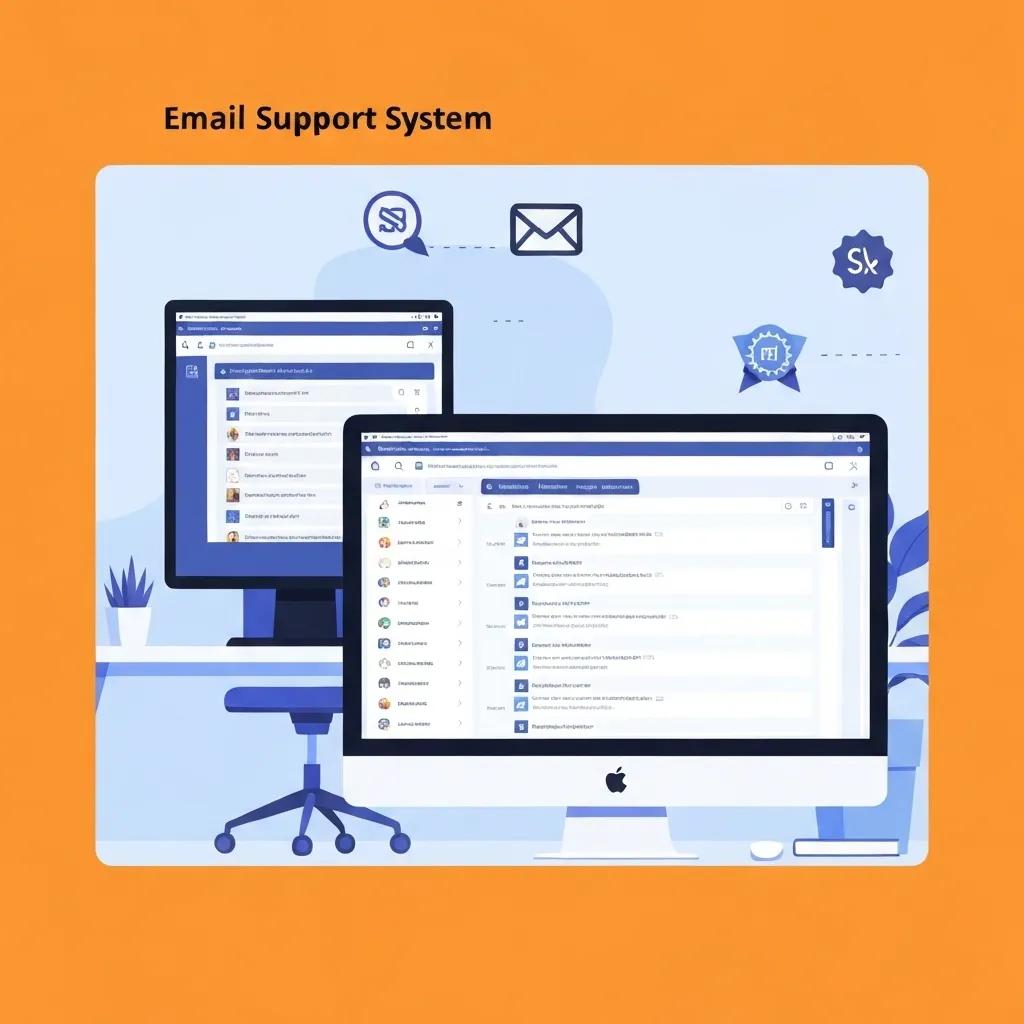
Architecting an effective email support system involves establishing a dedicated email address, expertly configuring Shopify Email, and seamlessly integrating robust help desk tools.
A meticulously structured support channel minimizes missed messages, ensures strict SLA compliance, and significantly elevates the overall customer experience. For instance, a dedicated support@yourstore.com address instantly signals professionalism and builds immediate trust.
What Are the Steps to Create a Dedicated Support Email for Your Shopify Store?
To establish your dedicated support email:
- Secure a custom domain (e.g., yourstore.com).
- Within your domain’s DNS settings, create an MX record pointing to your chosen email host.
- Configure your desired address, such as support@yourstore.com, within your email hosting dashboard.
- Connect Shopify’s Contact form to seamlessly forward all submissions to your dedicated support@yourstore.com address.
- Conduct thorough testing by sending sample inquiries to verify successful delivery.
Establishing this professional address centralizes customer inquiries and powerfully reinforces your brand’s authority.
How to Configure Shopify Email and Integrate Third-Party Help Desk Tools?
Integrating Shopify Email with external tools dramatically streamlines ticket management:
Integrating a dedicated help desk tool transforms every email into a manageable ticket, eliminating the need for manual inbox checks and drastically reducing response delays.
Why Is Domain Authentication Important for Shopify Support Emails?
Domain authentication, achieved through SPF, DKIM, and DMARC, acts as a crucial shield against phishing, minimizes spam flagging, and significantly boosts email deliverability by rigorously verifying your store’s email origin.
Implementing SPF records precisely dictates which servers are authorized to send mail on behalf of your domain. DKIM appends a unique cryptographic signature to each email. DMARC policies provide clear instructions to receiving servers on how to handle unauthorized messages.
These essential measures robustly protect your brand’s reputation and guarantee that your customer communications land squarely in their inbox, not lost in spam folders.
Importance of Domain Authentication
Implementing SPF, DKIM, and DMARC is crucial for domain authentication, which helps prevent phishing and increases email deliverability.
This supports the article’s recommendation to authenticate domains to ensure emails reach inboxes.
How to Optimize Your Shopify Contact Page for Email Support?
Optimizing your Shopify Contact page involves employing crystal-clear labeling, minimizing form fields, and setting transparent response expectations.
- Form Title: A clear “Email Support” title immediately clarifies the communication channel.
- Fields: Essential fields include Name, Order Number, Email, and Message.
- Response Note: Clearly state expectations, such as “We aim to reply within 24 hours.”
- Accessibility: Ensure forms are fully keyboard-navigable and flawlessly mobile-responsive.
A frictionless contact page significantly reduces abandonment rates and sets accurate, manageable expectations for your customers.
What Are the Best Practices for Crafting Shopify Customer Service Emails?
Mastering the art of crafting effective emails demands concise subject lines, personalized greetings, swift response timeframes, unwavering template consistency, and actionable, value-driven content.
Adhering to these best practices fosters crystal-clear communication, minimizes unnecessary back-and-forth, and elevates your brand perception by consistently delivering relevant, effective solutions.
How to Write Clear and Concise Subject Lines for Shopify Support Emails?
Subject lines should precisely define the issue and incorporate relevant reference numbers:
- “Order #12345 – Inquiry Regarding Shipment Status”
- “Refund Request Submitted – Order #67890”
- “Assistance Needed: Password Reset for Your Account”
Well-crafted subject lines empower agents to prioritize effectively and enable customers to quickly locate specific conversation threads.
How Can Personalization Enhance Shopify Email Communication?
Personalization leverages customer data to finely tune tone, reference specific past orders, and suggest highly relevant products:
- Address each customer by their preferred name.
- Explicitly mention the specific order or product under discussion.
- Incorporate empathetic statements: “We understand how crucial timely delivery is for your business.”
- Proactively recommend complementary items based on their unique purchase history.
Personalized emails demonstrably boost open rates by up to 29 percent and cultivate significantly stronger, more enduring customer relationships.
Email Personalization and Open Rates
Personalized emails have significantly higher open rates compared to non-personalized emails. Studies show that personalized subject lines and content lead to increased engagement.
This supports the article’s emphasis on personalization in customer service emails to improve engagement.
What Are the Recommended Response Timeframes for Shopify Email Support?
Optimal response timeframes strike a crucial balance between speed and accuracy:
Customer Expectations for Response Times
Customers expect quick responses, with a significant portion considering an “immediate” response as essential or very important when they have a customer service question.
This supports the article’s recommendations for optimal response timeframes.
How to Use Email Templates to Improve Efficiency and Consistency?
Email templates standardize essential elements like greetings, troubleshooting guidance, and closing remarks:
- Greeting Template: “Hi {{customer_name}}, thank you for reaching out to us today…”
- Issue Acknowledgment: “We’re truly sorry to hear about the unexpected delay you’ve experienced…”
- Resolution Steps: “To resolve this, please try clearing your browser cache and then attempt logging in again…”
- Closing: “Please don’t hesitate to let us know if you require any further assistance.”
Leveraging templates slashes drafting time by up to 50 percent while rigorously maintaining your distinct brand voice.
How to Provide Comprehensive and Actionable Email Responses?
Comprehensive responses should include crystal-clear instructions, direct links to relevant resources, and clearly defined expected timelines:
- Definition: Clearly explain the root cause of the customer’s issue.
- Steps: Provide a numbered list of precise actions the customer should take.
- Resources: Link directly to relevant help articles or frequently asked questions.
- Next Steps: Specify precisely when and how you will follow up with them.
Actionable emails significantly minimize follow-up inquiries and expedite the resolution process.
How Does Automation and AI Transform Shopify Email Support?

AI and automation tools dramatically accelerate first responses, intelligently triage incoming tickets, and deliver proactive notifications that significantly boost operational efficiency and overall customer satisfaction.
Integrating automation cultivates a dynamic support ecosystem where routine, repetitive tasks are handled instantaneously, freeing up your valuable human agents to concentrate on more complex, nuanced issues.
What Shopify Email Support Automation Tools Are Available for Merchants?
Merchants have a robust selection of automation solutions at their disposal:
- Gorgias – Automates ticket tagging, streamlines macro usage, and implements powerful rule-based responses.
- Zendesk Flow – Utilizes intelligent triggers to automatically assign tickets and dispatch timely follow-ups.
- Help Scout – Delivers pre-saved replies and sophisticated workflow automations.
These powerful tools drastically reduce manual effort and ensure that high-priority tickets receive immediate, focused attention.
How Can AI Improve Response Times and Customer Experience in Shopify Email Support?
AI-powered chat assistants and advanced language models can expertly draft initial replies, accurately analyze customer sentiment, and intelligently suggest personalized next steps.
- Draft Generation: AI pre-composes responses that agents can review and send in mere seconds.
- Triage: Sophisticated sentiment analysis instantly flags messages indicating negative or urgent customer emotions.
- 24/7 Assistance: AI bots adeptly handle after-hours queries by providing relevant knowledge base articles.
By accelerating response times by up to an impressive 90 percent, AI dramatically elevates both operational efficiency and the overall quality of customer service.
What Is the Role of Chatbots and Email Triage in Shopify Support?
Chatbots, seamlessly integrated with email workflows, effectively filter out routine questions and intelligently route more complex issues directly to human agents.
- Pre-Qualification: Bots initiate conversations by asking targeted questions to gather essential details like order numbers and specific issue descriptions.
- FAQ Delivery: Provide instant, accurate answers drawn directly from your comprehensive knowledge base.
- Ticket Creation: If the query remains unresolved, the bot efficiently converts the conversation into a fully detailed email ticket.
This streamlined process ensures that human agents receive meticulously detailed tickets, while customers benefit from near-instantaneous assistance.
How Does Sentiment Analysis Enhance Proactive Email Support?
Sentiment analysis meticulously scans incoming emails for subtle emotional indicators, empowering merchants to:
- Prioritize customers expressing negative sentiment or frustration.
- Proactively offer sincere apologies or targeted discounts.
- Identify recurring issues that can inform product development improvements.
By detecting dissatisfaction early, merchants can adeptly resolve concerns before they escalate, thereby fostering stronger customer loyalty.
What Advanced Email Support Strategies Are Available for Shopify Plus Merchants?
Shopify Plus merchants gain access to dedicated account management, highly customized workflows, and specialized partner support, all designed to expertly handle high-volume email operations.
Enterprise-grade strategies ensure robust scalability, deep personalization, and rapid issue resolution for even the most complex and high-traffic storefronts.
What Are the Benefits of Dedicated Email Support for Shopify Plus Stores?
Dedicated email support offers distinct advantages:
- Priority SLAs: Significantly faster response and resolution time windows.
- Custom Macros: Tailored templates that precisely reflect enterprise-level workflows.
- Account Manager Access: Direct, streamlined coordination with dedicated Shopify Plus specialists.
These powerful benefits align support efforts directly with overarching business objectives and high transaction volumes.
How to Design Custom Email Workflows for High-Volume Shopify Plus Merchants?
Custom-designed workflows ensure that valuable resources are allocated with maximum efficiency and that service levels consistently remain at the highest standard.
How Does Shopify Plus Partner Support Enhance Email Support Optimization?
Collaborating with a premier Shopify Plus Partner like Blackbelt Commerce unlocks:
- Expert Configuration: Meticulously tailored help desk and automation setup.
- Performance Audits: Data-driven reviews of response times, CSAT trends, and key performance indicators.
- Strategic Roadmaps: Ongoing refinement of support processes directly tied to measurable revenue objectives.
Strategic partner collaboration drives continuous, impactful improvements in customer experience and operational efficiency.
How Can Merchants Measure and Improve Shopify Email Support Performance?
Meticulously measuring key performance indicators such as first response time, average resolution time, and CSAT empowers merchants to pinpoint bottlenecks and strategically optimize their workflows.
Data-driven insights serve as the compass for effective resource allocation, targeted training initiatives, and informed automation upgrades.
What Are the Key Metrics to Track for Shopify Email Support Efficiency?
Consistently track these essential email support metrics:
- First Response Time (FRT): The critical time elapsed until the initial acknowledgment.
- Average Resolution Time (ART): The total duration required to fully resolve customer inquiries.
- Customer Satisfaction Score (CSAT): The percentage of overwhelmingly positive customer feedback received.
Diligent monitoring of these indicators clearly highlights areas ripe for process enhancement and targeted agent training.
How to Analyze Shopify Email Ticket Volume and Resolution Rates?
A thorough analysis of ticket volume and resolution rates involves:
- Charting weekly ticket counts to identify seasonal trends and predict future demand.
- Segmenting tickets by issue type to strategically allocate agent expertise where it’s most needed.
- Comparing resolution times across different categories to pinpoint slow-moving or complex cases.
This in-depth analysis informs critical decisions regarding hiring, automation priorities, and knowledge base expansion efforts.
What Tools Help Monitor Shopify Customer Service Email Performance?
Deploying these sophisticated solutions ensures continuous performance tracking and enables rapid, data-informed optimization.
How Does Blackbelt Commerce Help Merchants Unlock Shopify Email Support Benefits?
Blackbelt Commerce excels at architecting, implementing, and meticulously optimizing email support systems that expertly blend automation, AI, and proven best practices to maximize customer satisfaction and foster unwavering retention.
As a highly-rated Shopify Partner agency, Blackbelt Commerce crafts bespoke solutions tailored to each merchant’s unique requirements, guaranteeing scalable workflows, seamless integrations, and demonstrably impactful improvements.
What Shopify Email Support Optimization Services Does Blackbelt Commerce Offer?
Blackbelt Commerce provides a comprehensive suite of services:
- Custom Help Desk Integrations – Seamlessly connecting Shopify with leading platforms like Gorgias and Zendesk.
- Automation & AI Configuration – Expertly setting up intelligent triage bots, advanced sentiment analysis, and efficient macros.
- Template & Workflow Design – Crafting on-brand email templates and custom ticketing rules that align with your business processes.
- Ongoing Performance Audits – Conducting monthly reviews of critical metrics like FRT, ART, and CSAT to ensure continuous improvement.
Discover how Blackbelt Commerce empowers merchants with unparalleled Shopify expertise to fundamentally transform their customer support operations.
How Has Blackbelt Commerce Improved Email Support for Shopify Clients?
Our extensive case studies showcase tangible results:
- A leading fashion retailer achieved a remarkable 60 percent reduction in average resolution time through strategically implemented automated workflows.
- An electronics brand elevated its CSAT score from a solid 78 percent to an outstanding 92 percent by deploying highly personalized email templates.
- A wellness company successfully decreased inbound ticket volume by 30 percent by implementing proactive shipment notification strategies.
These success stories powerfully illustrate the measurable impact of strategic, expert-driven email support enhancements.
Why Choose Blackbelt Commerce as Your Shopify Email Support Expert?
Merchants consistently partner with Blackbelt Commerce for:
- Deep Shopify Expertise: Certified developers and strategists singularly focused on optimizing customer service.
- Conversion-Driven Approach: Implementations designed to directly drive repeat purchases and maximize lifetime customer value.
- Long-Term Partnership: Providing ongoing support, comprehensive training, and timely content updates.
- Proven Results: Delivering documented case studies and data-backed, quantifiable improvements.
See why ambitious e-commerce businesses entrust Blackbelt Commerce to unlock the full, transformative potential of their Shopify email support.
What Are Common Questions About Shopify Email Support?
This section addresses frequently asked questions to guide merchants in effectively leveraging Shopify’s native capabilities and optimized email support solutions.
How Do I Contact Shopify Support by Email?
Shopify merchants can connect with official Shopify support by navigating to the Help Center and submitting an email request directly through their account dashboard. This method ensures your inquiry is directed to Shopify’s global support team for platform-specific issues.
Does Shopify Provide Email Support for Merchants?
Absolutely. Shopify’s comprehensive Help Center offers dedicated email support for merchants on Basic, Shopify, and Advanced plans, with expedited priority SLAs available for valued Shopify Plus merchants.
How Long Does Shopify Email Support Usually Take?
Shopify’s internal Service Level Agreements (SLAs) target an initial response within 24 hours. However, actual first response times typically average between 4–8 hours, influenced by plan level and the complexity of the request.
What Information Should I Include When Emailing Shopify Support?
When contacting Shopify support via email, ensure you include:
- Your store URL and the email address associated with your login.
- Any relevant order or transaction IDs, if applicable to your inquiry.
- A clear, detailed description of the issue you’re experiencing, including any error messages received.
- Screenshots or video captures that visually illustrate the problem.
Providing complete and accurate context significantly accelerates the troubleshooting and resolution process.
How Can Merchants Enhance Shopify Email Communication for Better Customer Experience?
Implementing holistic email communication strategies involves expertly combining personalization, seamless omnichannel alignment, intelligent AI automation, and proactive updates to deliver truly exceptional customer support.
Integrating these sophisticated elements cultivates deep customer loyalty and powerfully drives repeat business.
What Role Does Personalization Play in Enhancing Shopify Email Support?
Personalization actively builds rapport by directly addressing individual customer needs, thoughtfully reflecting past interactions, and recommending highly relevant solutions. This focused, tailored approach significantly elevates customer satisfaction and encourages ongoing engagement.
Impact of Personalized Emails on Transaction Rates
Personalized emails deliver significantly higher transaction rates compared to non-personalized emails, highlighting the importance of tailoring content to individual customers.
This reinforces the article’s point about the benefits of personalization in customer service emails.
How to Integrate Email Support with Omnichannel Customer Service?
Seamlessly integrating email support with chat, social media, and phone channels guarantees a unified, consistent customer profile across all touchpoints:
- Synchronize customer data across all relevant platforms.
- Route all incoming inquiries to the same centralized ticketing system.
- Ensure conversation history is readily accessible to all support agents.
True omnichannel cohesion effectively prevents duplicated efforts and delivers consistently seamless customer experiences.
Why Is Balancing AI Automation with Human Touch Critical in Shopify Email Support?
While AI excels at efficiently handling routine requests, skilled human agents provide essential empathy and adeptly manage complex problem-solving. Maintaining this delicate balance ensures maximum efficiency without sacrificing the personalized care that is fundamental to fostering lasting customer loyalty.
How Can Proactive Email Updates Improve Customer Satisfaction?
Proactive updates—encompassing order confirmations, timely shipping notifications, and helpful back-in-stock alerts—keep customers consistently informed and significantly reduce the volume of inbound inquiries. This anticipatory service powerfully demonstrates reliability and enhances your brand’s reputation for excellence.
Every facet of your Shopify email support infrastructure—from initial setup and adherence to best practices, to the strategic deployment of AI automation and rigorous performance measurement—collaborates to forge an impeccably seamless customer experience. By partnering with Blackbelt Commerce, you’ll implement proven, cutting-edge strategies designed to drive superior satisfaction, cultivate stronger retention, and achieve measurable business growth. Are you ready to transform your email support into a formidable competitive advantage? Connect with us today for a personalized consultation.
Quick Answer: Shopify support
Shopify Support should help merchants make a clearer decision about their store, customer experience, and growth priorities. A useful guide explains the concept, shows when it matters, and gives the reader a practical next step without forcing the topic into a generic template.
Key Takeaways
- Start with the search intent behind Shopify support: the reader needs a clear explanation before they are ready for a service conversation.
- Keep the advice practical and specific so the post feels editorial, useful, and worth sharing.
- Use the topic cluster links to connect the article to related BBC expertise instead of leaving it as a standalone blog post.
- Add a natural commercial bridge only after the article has answered the reader’s main question.
- Use the same-page Calendly CTA so qualified readers can book a strategy call without being sent to a long form.
How this connects to your Shopify growth strategy
This article should remain useful for readers researching Shopify support, but it also needs to show when the topic becomes a business decision. For the Shopify Plus Strategy and Implementation cluster, the commercial bridge is practical: once the reader understands the concept, the next step is deciding whether their current Shopify setup can support the desired experience, conversion path, and operational workflow. That is where expert planning, design, development, CRO, and SEO support can turn the idea into measurable store improvements.
Related Shopify resources
These internal resources support the Shopify Plus Strategy and Implementation topic cluster and help connect this guide to stronger commercial next steps:
- Shopify Plus Strategy and Implementation
- Shopify experts
- Shopify Plus agencies
- Shopify Plus Strategy and Implementation — Parent service page for the reader’s next commercial step
- Blackbelt Commerce — Home-page authority link for brand and core Shopify expertise
- Shopify experts — Money-page link requested for expert-hiring intent
- Shopify custom development — Development service page for implementation and technical help
- Shopify CRO — Conversion service page for readers focused on revenue and lead generation
Questions store owners ask before taking action
What does Shopify support mean for a Shopify merchant?
For a Shopify merchant, Shopify support is about choosing or improving the store experience in a way that supports traffic, trust, conversion, and long-term operations.
When should a store owner get expert help?
Expert help becomes useful when the decision affects SEO, conversion, theme architecture, integrations, migration risk, or revenue-critical customer journeys.
How should this topic connect to a broader content cluster?
The post should link to a parent service page, related support articles, and money pages so Google and AI systems understand how the article supports a broader area of expertise.
What is the lead-generation goal of this article?
The article should educate first, then guide qualified readers toward booking a strategy call when they need help applying the advice to their own store.
What should be avoided during optimization?
Avoid filler, unrelated phrases, invented statistics, broken formatting, duplicated CTAs, and any edit that makes the article feel less helpful or less polished.
Future articles needed for topical dominance
To build deeper topical authority around this cluster, these supporting topics should be created later and linked back into this article:
- Shopify Support Checklist for Shopify Store Owners: Creates a practical support article that turns the Shopify Plus Strategy and Implementation topic into an actionable review tool.
- Common Shopify Support Mistakes and How to Avoid Them: Captures problem-aware searches and gives BBC a natural place to explain implementation risks without hard selling.
- When to Hire Shopify Experts for Shopify Support: Connects informational demand to the expert-hiring money page while preserving educational intent.

