


Blog updated with the most recent Shopify and eCommerce strategies on 05/02/2026.
Shopify Pricing vs. Competitors: A Clear Breakdown of E-Commerce Platform Costs and Plans
Getting clarity on how Shopify’s pricing compares to other e-commerce platforms can determine your profit margins and growth trajectory. This guide breaks down every cost component—from monthly subscriptions and transaction fees to hidden expenses like apps, themes, and migrations—so you can estimate your Total Cost of Ownership (TCO) and choose the right solution. You’ll learn:
- What drives platform costs and why TCO matters
- How Shopify’s Basic, Shopify, Advanced, and Plus plans stack up
- How WooCommerce, BigCommerce, Magento, and Salesforce Commerce Cloud compare on fees and features
- Hidden expenses beyond subscriptions
- A decision framework for selecting the most cost-effective platform
- Market trends shaping platform pricing
What Are the Key Cost Components of E-Commerce Platforms?
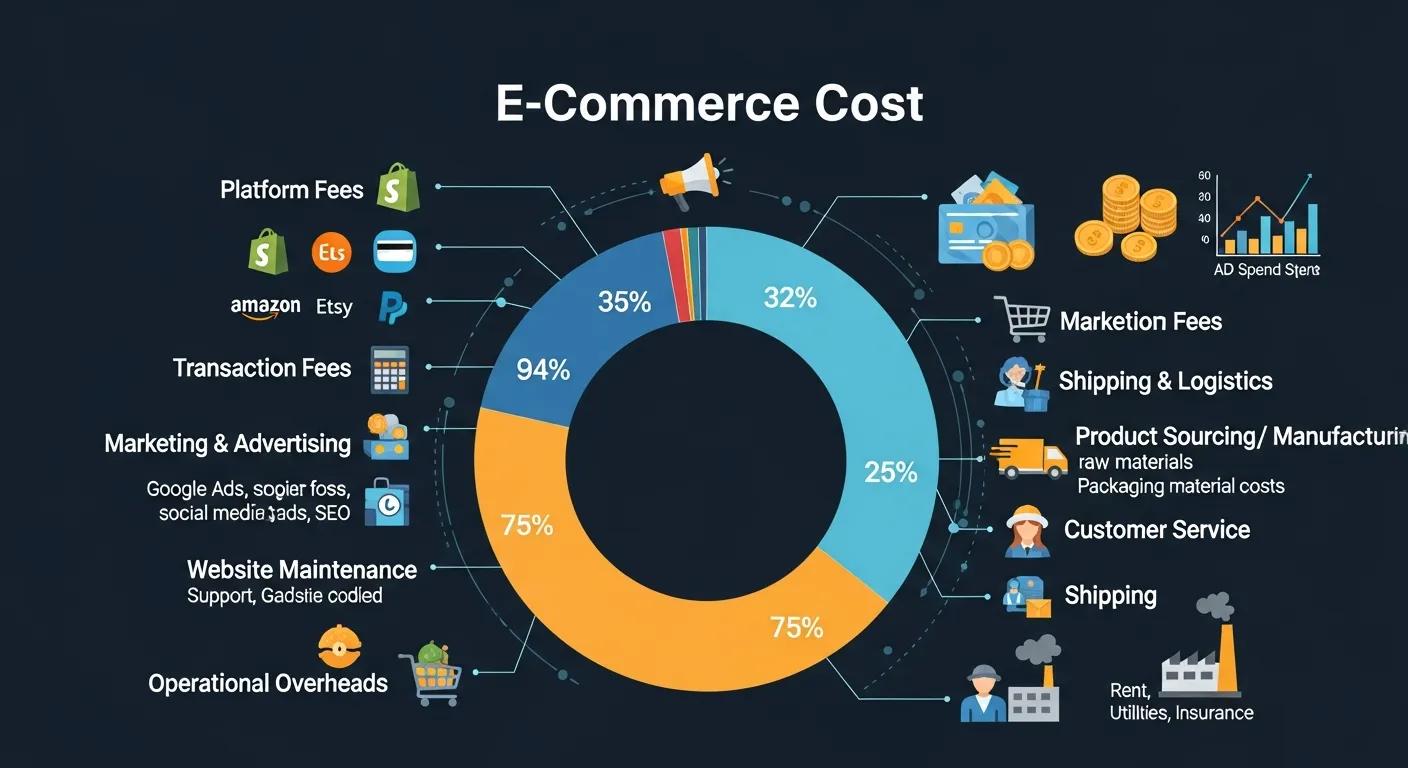
Understanding platform costs requires dissecting each expense category that impacts your bottom line. These include straightforward subscriptions, percentage-based transaction fees, and variable expenses tied to customization, hosting, and third-party integrations.
What Monthly Fees Should You Expect Across Platforms?
Monthly fees represent the baseline investment for hosted solutions or managed services. They range from low-cost entry-level tiers to premium enterprise plans with advanced features and dedicated support.
*WooCommerce core is free, but hosting and extensions add recurring expenses. Entry and top tier fees set the foundation for platform affordability and scalability.
How Do Transaction Fees Impact Overall Platform Costs?
Transaction fees are charged as a percentage of each sale plus a fixed amount per order, directly affecting your net revenue. Lower fees increase profit per transaction, especially at higher sales volumes.
- Shopify Payments: 2.9% + $0.30 (Basic) → 2.4% + $0.30 (Advanced)
- Third-party gateways on Shopify: +0.5–2.0%
- BigCommerce: 1.5%–2.9% depending on plan
- WooCommerce gateways: 2.9% + $0.30 (PayPal/Stripe)
- Magento/Salesforce: varies by enterprise agreements
Transaction fees can add thousands to annual costs on high-volume stores, making payment gateway selection and plan upgrades crucial to managing TCO.
What Are the Additional Costs for Apps, Themes, and Plugins?
Beyond core subscriptions, e-commerce platforms generate revenue through marketplaces of extensions that enhance functionality. These one-time or recurring fees accumulate based on required features.
Investing in the right mix of themes and plugins boosts conversion but requires careful cost planning to avoid eroding margins. The combined cost of five to ten apps can equal a plan upgrade.
How Do Hosting and Development Costs Vary by Platform?
Self-hosted solutions like WooCommerce and Magento offer flexibility but transfer hosting and maintenance responsibilities to you. Managed platforms include hosting but may charge extra for customization beyond templates.
- WooCommerce hosting: $10–$50/month for shared → $100+/month for managed WP
- Magento hosting: $20–$100+/month depending on performance needs
- Development costs: $50–$150/hour for store builds and custom features
Higher development complexity increases initial setup costs but can streamline operations and reduce long-term maintenance if executed well.
Why Is Total Cost of Ownership Important for E-Commerce Businesses?
Total Cost of Ownership (TCO) captures both explicit and hidden expenses—subscriptions, fees, custom work, and operational overhead—over a multi-year horizon.
Total Cost of Ownership in E-commerce
Total Cost of Ownership (TCO) in e-commerce encompasses all costs associated with acquiring, implementing, operating, scaling, and innovating with a product or service throughout its life cycle, including both direct and hidden expenses.
Virto Commerce, Complete Guide to eCommerce TCO and Cost of Innovation, 2025
A low initial fee can mask costly add-ons or tech debt, while a higher-tier plan may deliver better value through bundled features and support.
Analyzing TCO helps you:
- Forecast five-year budget more accurately
- Compare platform investment on equal footing
- Identify opportunities to optimize overhead through automation and built-in features
A robust TCO model informs strategic platform choice and guides decisions on upgrades, migrations, or feature investments.
How Does Shopify’s Pricing Structure Compare Across Its Plans?
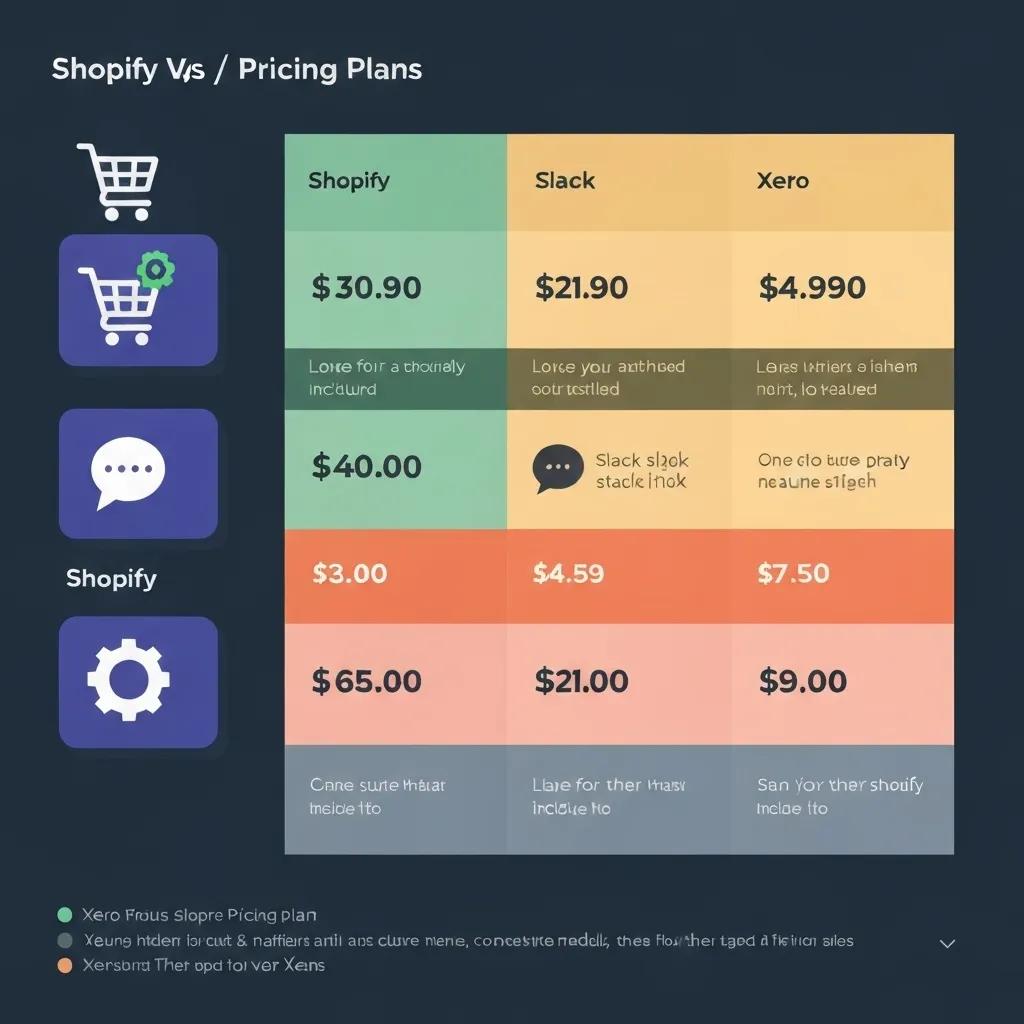
Shopify’s tiered pricing aligns features and fees to business maturity and sales volume. Each plan adds functionality to support growing operations.
What Features and Costs Define Shopify Basic, Shopify, and Advanced Plans?
Shopify’s core plans differ on report access, staff accounts, and transaction fees. Their monthly subscriptions set the baseline for store operations and growth.
*When using Shopify Payments. Third-party gateways incur +0.5–2% extra per sale.
Basic covers essentials; Shopify adds analytics; Advanced suits high-growth stores needing deep insights.
How Does Shopify Plus Pricing Differ for Enterprise Businesses?
Shopify Plus moves from fixed tiers to custom contracts, typically starting around $2,300/month. It includes:
- Dedicated account management
- Unlimited API calls and channel integrations
- Advanced automation with Shopify Flow and Scripts
- Priority support and launch assistance
Enterprises benefit from enterprise-grade stability, scalability, and custom SLAs, which often justify the premium for high-volume merchants.
What Are Shopify’s Transaction Fees and Payment Gateway Options?
Shopify Payments is the native gateway with no additional transaction fees beyond processing rates, unlocking the best per-sale margins. Third-party gateways (PayPal, Stripe, Authorize.net) add 0.5%–2.0% fee on top of processing rates but can be necessary for global coverage or preferred merchant accounts.
How Do Shopify Apps, Themes, and POS System Add to Costs?
Shopify’s app ecosystem and theme store deliver tailored functionality and design, with costs that vary widely:
- Apps: $5–$100/month each for features like subscriptions, loyalty programs, advanced filters
- Themes: One-time $100–$350 for premium storefront designs
- POS hardware and software: $89+/month plus card reader costs
While apps accelerate growth, a plan upgrade or API-first integrations can reduce reliance on paid apps and lower monthly overhead.
How Do WooCommerce Costs Compare to Shopify’s Pricing?
WooCommerce offers open-source flexibility with cost variation driven by hosting, premium plugins, and developer fees rather than fixed monthly plans.
What Are the Hosting and Maintenance Costs for WooCommerce?
Self-hosting shifts infrastructure costs to you. Hosting choices impact performance, security, and maintenance workload:
- Shared hosting: $5–$15/month (limited scalability)
- Managed WordPress hosting: $20–$100+/month (auto-updates, staging)
- Developer and maintenance: $50–$100/hour for custom themes, security, performance tuning
WooCommerce Pricing: How Much Does it Cost to Run a Store?
WooCommerce itself is free, but there are associated costs like hosting, domain names, and payment gateways. Hosting can cost from $3 to $50+ per month, while domain names usually cost $10 to $20 per year. Payment gateways like PayPal and Stripe charge transaction fees, from 2.9% + $0.30 per sale.
Cloudways, WooCommerce Pricing: How Much Does a WooCommerce Store Cost?, 2024
Which Essential WooCommerce Plugins Affect Total Cost?
Critical plugins often include payment gateways, SEO, caching, and product builders. Typical costs:
Selecting essential plugins avoids feature bloat and keeps annual extension fees predictable.
How Does WooCommerce’s Open-Source Model Influence Pricing?
The free core empowers budget-conscious brands and developers to build exactly what they need. However, open-source flexibility introduces variability:
- DIY configuration can save costs but increase time investment
- Custom themes and bespoke modules require developer expertise
- Community support substitutes for dedicated account management
When totaled, extension fees plus hosting and customization can rival or exceed hosted platform plans at scale.
What Are the Payment Gateway Fees and Transaction Costs for WooCommerce?
Most WooCommerce merchants rely on Stripe or PayPal at 2.9% + $0.30 per transaction. Enterprise stores may negotiate lower rates or integrate local processors, reducing gateway fees but adding development and certification costs.
What Are the Pricing Tiers and Features of BigCommerce Compared to Shopify?
BigCommerce offers structured tiers with no additional transaction fees, positioning itself as a merchant-friendly hosted solution with built-in features.
How Do BigCommerce Standard, Plus, Pro, and Enterprise Plans Differ?
BigCommerce plans are defined by annual sales thresholds and features:
BigCommerce’s no-transaction-fee model yields savings on every sale, particularly with high volume.
What Are BigCommerce’s Transaction Fees and Sales Limits?
All BigCommerce plans waive transaction fees, but upgrading is required once you exceed annual revenue caps. Exceeding limits incurs overage fees or forced plan upgrades, so forecasting growth is essential to control costs.
How Does BigCommerce Compare to Shopify in Features and Costs?
BigCommerce includes many popular apps—subscriptions, reviews, filtering—at no extra charge, whereas Shopify requires paid apps. When factoring transaction fees and extension expenses, BigCommerce often delivers lower TCO for merchants who prioritize built-in capabilities over a vibrant third-party ecosystem.
BigCommerce vs Shopify: Which is best for your online store?
BigCommerce has more built-in features than Shopify, including a product review system and tools for managing customer groups. Shopify’s app store, however, offers a wider range of functionalities.
Zapier, BigCommerce vs Shopify: Which is best for your online store?, 2025
How Do Magento (Adobe Commerce) and Salesforce Commerce Cloud Pricing Compare?
Enterprise platforms target large-scale operations with custom contracts, extensive feature sets, and professional services.
What Are the Differences Between Magento Open Source and Enterprise Pricing?
- Magento Open Source: Free codebase + hosting and development costs
- Adobe Commerce (Enterprise): Annual license starting at $22,000 + implementation
How Do Development and Customization Costs Affect Magento’s Total Cost?
Magento’s modular architecture allows limitless customization, but every module, theme, and integration adds development hours at $75–$150/hour. High-traffic stores require performance optimization, security hardening, and dedicated infrastructure, which can drive TCO well into six figures annually.
What Are Salesforce Commerce Cloud’s Pricing Models and Enterprise Solutions?
Salesforce Commerce Cloud uses revenue-based pricing starting around 1%–2% of gross merchandise volume (GMV) plus a base fee. It includes AI-driven personalization, multi-site management, and enterprise SLAs. The revenue share model aligns vendor success with merchant growth but scales costs directly with sales velocity.
Magento vs Salesforce Commerce Cloud: In-Depth Comparison
Magento Open Source is free, but businesses must cover costs for hosting, development, and security. Salesforce Commerce Cloud operates on a revenue-based model, potentially offering a lower entry cost for small businesses but increasing as sales volume grows.
Magenest, Magento vs Salesforce Commerce Cloud: In-Depth Comparison, 2024
What Hidden Costs Should You Consider Beyond Monthly Platform Fees?
Beyond subscriptions, migration, maintenance, and payment processing can cause budget overruns if unplanned.
How Do Migration Costs Impact Your E-Commerce Budget?
Migrating from one platform to another involves data mapping, theme rebuilding, and QA testing. Typical migration engagements range from $1,500 for basic stores to $20,000+ for complex catalogs. Factoring migration into your TCO ensures you avoid surprises when scaling or switching solutions.
What Are Developer and Maintenance Costs for Online Stores?
Ongoing developer support covers feature updates, security patches, and integrations. Retainers or hourly rates ($50–$150/hour) translate into monthly maintenance budgets of $500–$2,000, which should be built into annual spending forecasts.
How Do Payment Gateway Choices Affect Overall Fees?
Choosing between native gateways (with lower fees) or third-party processors (with broader global coverage) impacts per-transaction costs and integration complexity. Enterprise agreements, PCI compliance, and currency conversion fees can raise effective processing rates by up to 1%.
What Are the Costs of Apps, Themes, and Third-Party Integrations?
Each external integration—ERP, CRM, marketing automation—requires licensing or development spend. While some apps charge $5–$50/month, mid-tier connectors to shipping or loyalty platforms can cost $100–$500/month. Bundling integrations through APIs or middleware can reduce cumulative subscription fees and simplify maintenance.
How Can You Choose the Right E-Commerce Platform Based on Pricing and Features?
A systematic evaluation aligns your budget, business model, and growth projections to platform capabilities and total costs.
What Business Factors Should Influence Your Platform Choice?
- Sales Volume and Growth Rate – Transaction fees and plan limits
- Technical Resources – In-house vs. agency development capacity
- Feature Requirements – Built-in vs. third-party apps
- Support Expectations – Account management, SLAs, community support
Mapping these factors against platform TCO frameworks reveals the most cost-effective path forward.
How Does Industry or Business Model Affect Platform Suitability?
Niche-focused stores—B2B wholesalers, subscription services, high-fashion brands—have specialized requirements. Platforms with robust B2B modules or subscription engines may incur higher subscription fees but lower extension overhead, proving more economical in the long run.
What Are the Long-Term ROI Considerations for Platform Investment?
Assessing ROI involves comparing incremental revenue gains (from improved performance, analytics, marketing) against incremental costs (higher tiers, extensions, development). A higher-tier platform often pays for itself through reduced app spend and stronger conversion rates.
How Can BlackBelt Commerce Help Optimize Your Platform Costs?
As a full-service e-commerce growth agency, BlackBelt Commerce guides merchants through platform selection, cost modeling, and optimized implementations. Whether you need a streamlined Shopify migration, custom WooCommerce development, or an enterprise roadmap for Magento or Salesforce Commerce Cloud, our team delivers data-driven recommendations that minimize TCO and accelerate ROI.
What Are the Latest Trends and Market Insights Affecting E-Commerce Platform Pricing?
Platform pricing evolves alongside global commerce growth, market share shifts, and emerging business models.
How Is Global E-Commerce Growth Influencing Platform Costs?
With e-commerce sales projected to exceed $7.4 trillion by 2025, platforms invest in performance, security, and AI-driven features, which filter into higher subscription tiers and enterprise licensing models. Growing demand for headless commerce and omnichannel experiences also raises development complexity and price points.
What Are the Market Shares of Shopify, WooCommerce, and Competitors?
Shopify commands over 25% of the global e-commerce market, WooCommerce powers nearly 30% of online stores via its WordPress plugin, and BigCommerce, Magento, and Salesforce each hold single-digit shares. Dominant platforms leverage scale to bundle advanced features, while open-source alternatives compete on flexibility and control.
Shopify Market Share and Usage Statistics
Shopify holds a 10.32% share of the global e-commerce software market and approximately 29% of the United States e-commerce software market as of 2025, making it the fourth-largest platform worldwide and the dominant player domestically.
Kinsta, Shopify Market Share and Usage Statistics, 2025
How Do Mobile Commerce and Subscription Models Impact Pricing?
Mobile-first checkout and subscription engines are now baseline expectations. Platforms that include native subscription tools or optimized mobile UX in lower tiers reduce reliance on paid add-ons, offering better value for recurring-revenue and mobile-centric businesses.
Why Is Understanding Hidden Costs Critical for Budget Planning?
Recent studies show businesses underestimate non-subscription costs by up to 30%, leading to budget overruns and stalled growth. Incorporating hidden fees—migration, maintenance, transaction surcharges, and integration spend—into TCO models ensures realistic forecasts and supports sustainable expansion.
Crafting a comprehensive cost analysis and investment plan empowers you to select and scale the optimal e-commerce platform without financial surprises. By aligning fees, features, and growth scenarios, you’ll unlock profitability and competitive advantage. For expert guidance and implementation support, explore the capabilities of Book a strategy call with us to reduce your Total Cost of Ownership and accelerate your e-commerce success.
Quick Answer: Shopify pricing vs other ecommerce platforms
Shopify Pricing Vs Other Ecommerce Platforms should help merchants make a clearer decision about their store, customer experience, and growth priorities. A useful guide explains the concept, shows when it matters, and gives the reader a practical next step without forcing the topic into a generic template.
Key Takeaways
- Start with the search intent behind Shopify pricing vs other ecommerce platforms: the reader needs a clear explanation before they are ready for a service conversation.
- Keep the advice practical and specific so the post feels editorial, useful, and worth sharing.
- Use the topic cluster links to connect the article to related BBC expertise instead of leaving it as a standalone blog post.
- Add a natural commercial bridge only after the article has answered the reader’s main question.
- Use the same-page Calendly CTA so qualified readers can book a strategy call without being sent to a long form.
How this connects to your Shopify growth strategy
This article should remain useful for readers researching Shopify pricing vs other ecommerce platforms, but it also needs to show when the topic becomes a business decision. For the Shopify Cost and Payment Strategy cluster, the commercial bridge is practical: once the reader understands the concept, the next step is deciding whether their current Shopify setup can support the desired experience, conversion path, and operational workflow. That is where expert planning, design, development, CRO, and SEO support can turn the idea into measurable store improvements.
Related Shopify resources
These internal resources support the Shopify Cost and Payment Strategy topic cluster and help connect this guide to stronger commercial next steps:
- Shopify Cost and Payment Strategy
- Shopify experts
- Shopify Plus agencies
- Shopify Cost and Payment Strategy — Parent service page for the reader’s next commercial step
- Blackbelt Commerce — Home-page authority link for brand and core Shopify expertise
- Shopify experts — Money-page link requested for expert-hiring intent
- Shopify custom development — Development service page for implementation and technical help
- Shopify CRO — Conversion service page for readers focused on revenue and lead generation
- Cost of Shopify website — Related pricing article that helps readers compare platform, build, and expert investment decisions
- Shopify Plus checkout customization — Related Shopify Plus implementation guide for readers evaluating advanced Plus costs and capabilities
Questions store owners ask before taking action
What does Shopify pricing vs other ecommerce platforms mean for a Shopify merchant?
For a Shopify merchant, Shopify pricing vs other ecommerce platforms is about choosing or improving the store experience in a way that supports traffic, trust, conversion, and long-term operations.
When should a store owner get expert help?
Expert help becomes useful when the decision affects SEO, conversion, theme architecture, integrations, migration risk, or revenue-critical customer journeys.
How should this topic connect to a broader content cluster?
The post should link to a parent service page, related support articles, and money pages so Google and AI systems understand how the article supports a broader area of expertise.
What is the lead-generation goal of this article?
The article should educate first, then guide qualified readers toward booking a strategy call when they need help applying the advice to their own store.
What should be avoided during optimization?
Avoid filler, unrelated phrases, invented statistics, broken formatting, duplicated CTAs, and any edit that makes the article feel less helpful or less polished.
Future articles needed for topical dominance
To build deeper topical authority around this cluster, these supporting topics should be created later and linked back into this article:
- Shopify Pricing Vs Other Ecommerce Platforms Budget Checklist for Shopify Merchants: Creates a practical support article that turns the Shopify Cost and Payment Strategy topic into an actionable planning worksheet without relying on stale price claims.
- Hidden Cost Drivers Behind Shopify Pricing Vs Other Ecommerce Platforms: Captures cost-aware searches and explains apps, design, content, SEO, integrations, QA, and rework risks without hard selling.
- When to Hire Shopify Experts for Shopify Pricing Vs Other Ecommerce Platforms: Connects pricing research to the expert-hiring money page while preserving educational intent and lead-generation flow.

