


More than 80 percent of American shoppers will abandon a slow online store before completing a purchase. Fast performance is no longer optional, it is essential for digital retail success. In a competitive market shaped by ever-changing user expectations and technology, understanding ecommerce performance optimization can make the difference between growth and missed opportunity. This guide unpacks practical strategies to help American merchants maximize their online store’s speed, usability, and revenue.
Table of Contents
- Defining Ecommerce Performance Optimization
- Core Elements Of Store Performance
- Key Metrics And Performance Benchmarks
- Optimization Strategies For Shopify Success
- Common Challenges And How To Overcome Them
Key Takeaways
| Point | Details |
|---|---|
| Ecommerce Performance Optimization | Focus on enhancing site speed, user experience, and technical infrastructure to improve conversion potential. |
| Core Elements | Prioritize a seamless integration of technical systems and user design for optimal online store performance. |
| Key Metrics | Analyze conversion metrics, engagement levels, and financial indicators to evaluate and enhance ecommerce success. |
| Optimization Strategies | Implement data-driven strategies, including A/B testing and predictive analytics, to continuously enhance store performance. |
Defining Ecommerce Performance Optimization
Ecommerce performance optimization represents a comprehensive strategic approach to enhancing online store functionality, speed, and conversion potential. At its core, the process involves systematically analyzing and improving multiple interconnected elements that impact digital retail success. Frontend performance optimization strategies focus on creating seamless user experiences that drive engagement and sales.
Critical components of ecommerce performance optimization include site speed, user interface design, mobile responsiveness, checkout process efficiency, and technical infrastructure. Successful optimization requires a multidimensional strategy that addresses both technical backend systems and customer-facing design elements. Online merchants must continuously evaluate metrics like page load times, bounce rates, conversion rates, and customer interaction patterns to identify improvement opportunities.
The primary goals of ecommerce performance optimization revolve around creating frictionless shopping experiences that encourage customer acquisition, retention, and increased average order values. This involves implementing advanced technologies like accelerated mobile pages, optimizing image and content delivery, reducing server response times, and creating intuitive navigation structures. Performance optimization is not a one-time task but an ongoing process of refinement and adaptation to changing user expectations and technological landscapes.
Pro Tip – Optimization Strategy: Start by conducting a comprehensive performance audit of your online store, identifying specific bottlenecks in page speed, user experience, and conversion funnel, then prioritize improvements based on potential impact and implementation complexity.
Core Elements of Store Performance
Successful online store performance hinges on several critical interconnected elements that work together to create a seamless and compelling shopping experience. Core competencies in digital retail performance demonstrate that strategic alignment of technical and user-facing components directly impacts business outcomes. These core elements encompass technical infrastructure, user experience design, conversion optimization, and data-driven decision making.

The primary technical elements include site speed, mobile responsiveness, secure payment processing, and robust backend systems. Performance metrics like page load times, server response rates, and transaction completion percentages serve as key indicators of technical health. Merchants must continuously monitor and optimize these technical foundations to ensure smooth customer interactions. Conversion architecture plays a crucial role, involving strategic placement of call-to-action buttons, intuitive navigation design, and streamlined checkout processes that reduce friction and encourage purchase completion.
User experience represents another fundamental performance element, integrating visual design, content clarity, product presentation, and interactive features. Strategic store display planning reveals that thoughtful design can significantly enhance consumer perception and engagement. This includes responsive design that adapts seamlessly across devices, high-quality product imagery, clear pricing information, comprehensive product descriptions, and easy-to-use search and filtering mechanisms.
Pro Tip – Performance Audit: Conduct a quarterly comprehensive performance review using analytics tools to identify specific bottlenecks in your online store, systematically prioritizing improvements that offer the highest potential return on investment and immediate customer experience enhancement.
Key Metrics and Performance Benchmarks
Measuring ecommerce performance requires a comprehensive approach that goes beyond traditional financial metrics. Performance measurement frameworks for digital commerce demonstrate the importance of holistic evaluation strategies that capture both quantitative and qualitative aspects of online store success. These benchmarks help merchants understand their current performance, identify improvement opportunities, and track progress over time.
Key performance indicators (KPIs) for online stores typically fall into several critical categories. Conversion metrics include conversion rate, average order value, cart abandonment rate, and customer lifetime value. Traffic and engagement metrics encompass website visitors, bounce rate, time on site, pages per session, and traffic sources. Financial performance indicators track revenue, gross profit margin, customer acquisition cost, and return on advertising spend. Technical performance metrics measure site speed, mobile responsiveness, uptime, and user experience indicators like page load times and interaction rates.
Advanced performance benchmarking involves comparative analysis across industry standards and competitive landscapes. Merchants should establish baseline performance metrics and set realistic improvement targets. This might involve segmenting performance data by product categories, customer demographics, traffic channels, and device types. Sophisticated analytics tools enable deep dive analysis, providing granular insights into customer behavior, conversion funnel efficiency, and potential optimization opportunities. Regular performance audits allow businesses to identify emerging trends, address potential issues proactively, and maintain a competitive edge in the rapidly evolving digital marketplace.
Here’s a comparison of key ecommerce performance metrics and how they influence online store growth:
| Metric Type | Example Metric | What It Measures | Business Impact |
|---|---|---|---|
| Conversion | Conversion Rate | Percentage of visitors buying | Direct revenue growth |
| Engagement | Pages per Session | Depth of user site exploration | Higher upsell opportunities |
| Technical Performance | Page Load Time | Time to fully load a page | Reduces bounce rates |
| Financial | Customer Acquisition Cost | Cost to obtain each new customer | Determines profitability |
Pro Tip – Metric Tracking: Develop a standardized monthly performance dashboard that consolidates key metrics from different tracking systems, enabling quick visual assessment of your online store’s health and identifying immediate areas for strategic improvement.
Optimization Strategies for Shopify Success
Predictive analytics strategies have transformed the approach to Shopify store optimization, providing merchants with data-driven methodologies to enhance store performance. Successful optimization requires a multifaceted approach that integrates technical improvements, user experience enhancements, and strategic marketing techniques tailored specifically to the Shopify platform’s capabilities.
Core optimization strategies focus on several critical areas of store performance. Conversion rate optimization involves systematic improvements to the shopping experience, including streamlining product navigation, simplifying checkout processes, and implementing persuasive design elements. This includes optimizing product pages with high-quality images, compelling descriptions, clear pricing information, and strategic placement of call-to-action buttons. Technical optimization encompasses improving site speed, ensuring mobile responsiveness, implementing secure payment gateways, and leveraging Shopify’s built-in SEO tools to improve search engine visibility.
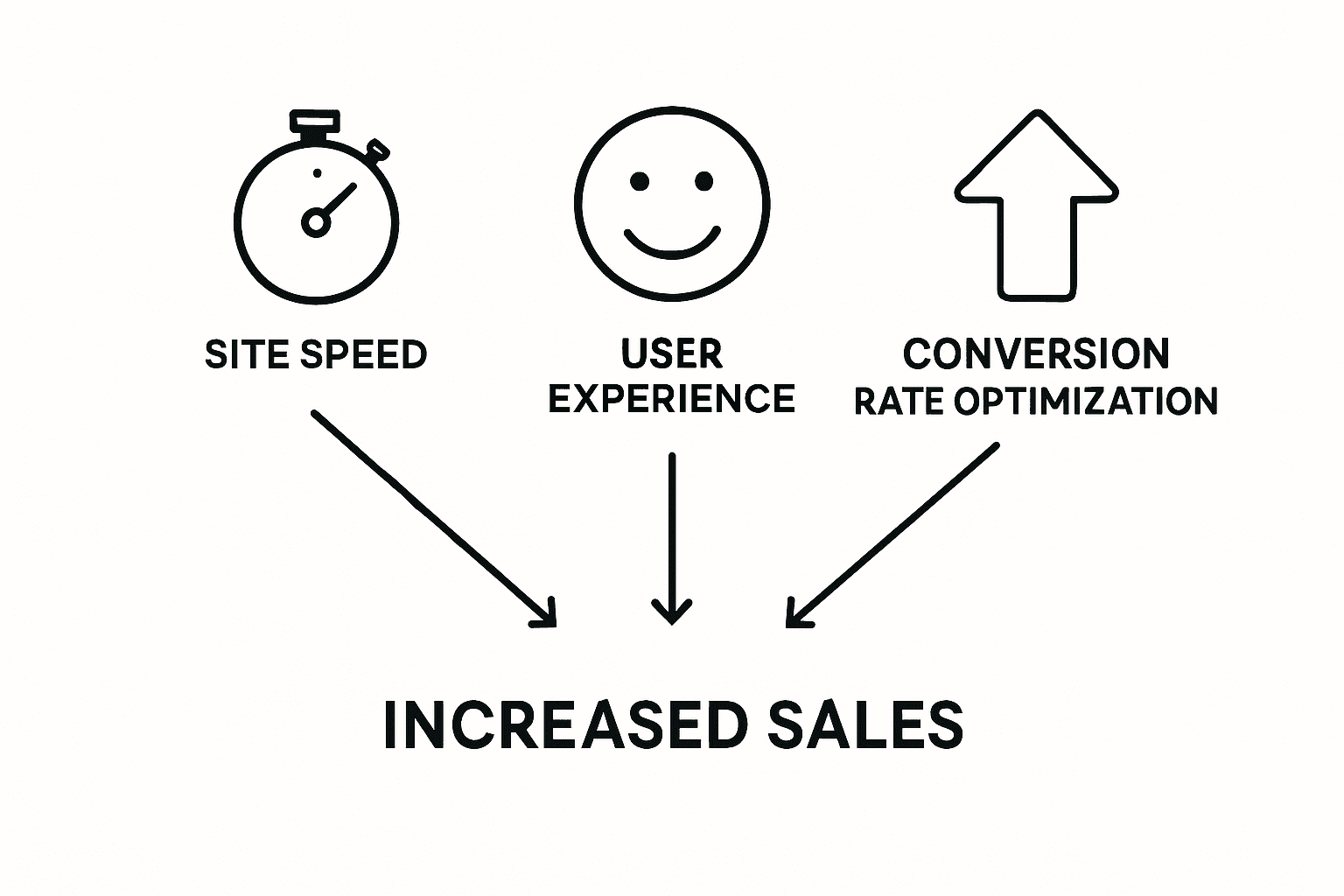
Advanced Shopify optimization strategies integrate sophisticated analytical approaches. Conversion rate optimization frameworks recommend leveraging machine learning and data analytics to understand customer behavior, personalize shopping experiences, and predict potential conversion opportunities. This involves using advanced tracking tools, implementing A/B testing for critical store elements, analyzing customer segments, and creating targeted marketing campaigns that align with specific customer preferences and behaviors.
Pro Tip – Optimization Approach: Develop a systematic optimization roadmap that prioritizes improvements based on potential impact, implementing changes incrementally and measuring results to create a continuous improvement cycle for your Shopify store.
Common Challenges and How to Overcome Them
Performance assessment strategies reveal that Shopify store owners face numerous complex challenges that require strategic and nuanced approaches to resolution. The most prevalent issues stem from technical limitations, marketing complexities, and operational inefficiencies that can significantly impact online store performance and growth potential.
One primary challenge involves conversion rate optimization, which requires merchants to address multiple interconnected problems. These include high cart abandonment rates, inconsistent user experience across devices, slow page loading times, and ineffective product presentation. Successful stores implement comprehensive solutions like simplified checkout processes, mobile-responsive design, high-quality product imagery, clear pricing structures, and intuitive navigation systems. Additionally, merchants must develop robust analytics tracking to identify specific bottlenecks in the customer journey and systematically address performance gaps.
Supply chain optimization strategies highlight the critical importance of addressing backend operational challenges that can undermine store performance. These challenges include inventory management complexities, shipping and fulfillment inefficiencies, payment processing issues, and customer support limitations. Advanced Shopify stores leverage artificial intelligence and machine learning tools to streamline these processes, implementing automated inventory tracking, predictive demand forecasting, integrated shipping solutions, and intelligent customer service platforms that reduce friction and enhance overall store reliability.
The table below summarizes leading optimization strategies for Shopify stores and how they address common challenges:
| Strategy | Targeted Challenge | Expected Outcome |
|---|---|---|
| Streamlined Product Navigation | High cart abandonment | Increased checkout completion rate |
| Mobile-Responsive Design | Inconsistent device experience | Higher mobile conversion rates |
| Predictive Inventory Tools | Stockouts and overstocking | Reduced lost sales and excess stock |
| A/B Testing Elements | Low conversion rates | Data-driven improvement initiatives |
Pro Tip – Challenge Management: Develop a quarterly performance audit process that systematically evaluates your store’s technical infrastructure, marketing performance, and operational efficiency, creating a structured approach to identifying and resolving potential challenges before they significantly impact your business growth.
Unlock Your Shopify Store’s Full Potential with Expert Ecommerce Performance Optimization
Struggling with slow site speed or low conversion rates that hold your Shopify store back From the article’s insights into ecommerce performance optimization it is clear that tackling technical challenges like page load times and streamlining checkout processes are essential to driving growth At Blackbelt Commerce we specialize in overcoming these pain points using custom Shopify solutions that focus on enhancing conversion architecture, mobile responsiveness and seamless user experience Our proven approach is designed to reduce cart abandonment and boost average order values through tailored optimizations and advanced analytics

Ready to turn complex performance challenges into your biggest growth opportunities Explore how our expert team delivers transformative results by visiting Blackbelt Commerce Dive into our comprehensive process of consultation design development and ongoing support or review detailed case studies that showcase remarkable traffic and revenue growth Act now to start your store’s continuous improvement cycle and outperform your competition
Frequently Asked Questions
What is ecommerce performance optimization?
Ecommerce performance optimization is a strategic approach to enhancing the functionality, speed, and conversion potential of an online store. It involves analyzing and improving elements such as site speed, user interface design, mobile responsiveness, and checkout efficiency.
Why is site speed important for ecommerce?
Site speed is crucial for ecommerce because faster-loading pages enhance user experience, reduce bounce rates, and increase conversion rates. A slow site can lead to lost sales and frustrated customers.
How can I improve my online store’s conversion rates?
To improve conversion rates, focus on optimizing the shopping experience through streamlined product navigation, simplified checkout processes, high-quality product imagery, and clear call-to-action buttons. Regularly analyze user behavior to identify and address specific bottlenecks in the conversion funnel.
What key metrics should I track for ecommerce performance?
Key performance indicators (KPIs) for ecommerce include conversion rate, average order value, cart abandonment rate, bounce rate, and customer lifetime value. Monitoring these metrics helps merchants identify areas of improvement and track growth over time.
Recommended
- Why Optimize Ecommerce Stores: Complete Guide – Shopify Experts: Grow Your eCommerce Revenue
- E-commerce growth strategy: Top 3 Pillars
- How to optimize site? Unlock 3 Pillars for Success
- Complete Guide to Why Optimize Shopify Stores
Quick Answer: What is ecommerce performance optimization
What is ecommerce performance optimization should improve how a Shopify store converts traffic into trust, customers, and revenue. The article should connect UX, store features, security, automation, performance, analytics, and conversion paths so readers understand what to fix and when expert help can accelerate results.
Want a sharper Shopify growth plan?
Want to turn What is ecommerce performance optimization into a practical Shopify growth plan? Book a strategy call and we will help you clarify the next move.
Key Takeaways
- Use What is ecommerce performance optimization to clarify the business problem and the highest-impact next step for a Shopify store.
- Connect recommendations to customer trust, UX, conversion, SEO, analytics, operations, and revenue.
- Link naturally to Blackbelt Commerce money pages and the home page without weakening editorial trust.
- Avoid generic ecommerce advice; make the guidance specific to Shopify constraints and opportunities.
- Use the same-page Calendly CTA only after the post has delivered useful guidance.
How this connects to your Shopify growth strategy
For the Shopify Growth, CRO, and Store Optimization cluster, this article should make What is ecommerce performance optimization practical, specific, and commercially useful while protecting editorial trust. The bridge to Blackbelt Commerce should show when expert planning, implementation, SEO/CRO discipline, or Shopify Plus support can reduce risk and turn the reader’s next decision into measurable progress.
Want a sharper Shopify growth plan?
Use this guide as a decision tool. Then book a strategy call when you want a practical roadmap for your store.
Related Shopify resources
These internal resources support the Shopify Growth, CRO, and Store Optimization topic cluster and help connect this guide to stronger commercial next steps:
- Shopify CRO services
- Shopify experts
- Shopify Plus agencies
- Shopify CRO services — Primary money/service page for this search intent
- Blackbelt Commerce — Home-page authority link for brand and core Shopify expertise
- Shopify experts — Money-page link requested for expert-hiring intent
- Shopify custom development — Development service page for implementation and technical help
- Shopify checkout optimization — Related conversion article
- Shopify conversion optimization — Related CRO article
Questions store owners ask before taking action
Why does What is ecommerce performance optimization matter for Shopify merchants?
It matters when the topic affects customer trust, conversion, operations, SEO, analytics, or the team’s ability to scale the store cleanly.
How should the article guide the reader?
It should answer the search intent first, then connect the topic to practical next steps, related resources, and expert support when that next step is useful.
What is the lead-generation goal?
The goal is a qualified strategy-call booking after the article has delivered enough value for the reader to trust Blackbelt Commerce with the next decision.
Future articles needed for topical dominance
To build deeper topical authority around this cluster, these supporting topics should be created later and linked back into this article:
- What is ecommerce performance optimization Checklist for Shopify Stores: Creates an actionable support article that can earn long-tail searches and link back to relevant money pages.
- Common What is ecommerce performance optimization Mistakes That Hurt Shopify Revenue: Targets problem-aware readers and explains UX, SEO, conversion, and implementation risk.
- How Shopify Experts Prioritize What is ecommerce performance optimization: Links informational intent to expert support without turning the main article into a sales pitch.
Want a sharper Shopify growth plan?
Ready to turn the advice in this article into an action plan? Open the calendar here and choose a time that works for you.

