


Why Migrate to Shopify in 2026: Benefits, Costs & Process
Brands migrate to Shopify in 2026 for better performance, easier day-to-day management, stronger app and integration support, and a platform built to support growth without a full re-platform every few years. Store Leads tracks roughly 2.87 million live Shopify stores as of June 2026, up about 11% year over year, making it the most widely adopted dedicated ecommerce platform (Store Leads, 2026). Migrating well — without losing SEO equity or sales during the switch — comes down to understanding the real costs and process up front.
TL;DR
- Top reasons to migrate: better performance and uptime, a larger app/integration ecosystem, easier day-to-day store management, and room to scale without another re-platform.
- Migration cost ranges from about $2,000 for a simple move with a pre-built theme to $250,000+ for complex, highly customized enterprise migrations (Presta, 2026).
- Migrations from cleaner SaaS platforms (BigCommerce, Squarespace) run 30–40% cheaper than migrations from self-hosted platforms like Magento or heavily customized WooCommerce (Presta, 2026).
- The 2026 standard is a fixed price for the migration itself, then a monthly retainer for post-launch optimization.
Key Facts (2026)
- Store Leads counts roughly 2.87 million live Shopify stores as of June 2026 (Store Leads, 2026).
- Migration cost typically ranges from $2,000 to $250,000+, driven mainly by project complexity and how much technical debt exists on the origin platform (Presta, 2026).
- A pre-built theme with light customization costs $2,000–$5,000; a fully custom, conversion-optimized storefront runs $15,000–$50,000 (Presta, 2026).
- Headless migrations using React/Next.js with Shopify as the backend add roughly $20,000–$60,000 in development cost on top of the base migration (Presta, 2026).
- Mid-market migrations typically require 60–100 internal hours across product, marketing, and operations teams (Presta, 2026).
Table of Contents
- Defining Shopify Migration and Its Purpose
- Key Benefits of Migrating to Shopify
- Common Migration Challenges and Solutions
- Step-By-Step Shopify Migration Process
- Cost, ROI, and Long-Term Impact
- Comparing Shopify With Other Ecommerce Platforms
Key Takeaways
| Point | Details |
|---|---|
| Shopify Migration Purpose | Transferring to Shopify enhances digital infrastructure with advanced tools for performance, scalability, and user experience. |
| Key Benefits | Businesses gain access to marketing tools, robust analytics, customizable design, and seamless payment processing. |
| Common Challenges | Data transfer complexity, design preservation, and staff training may hinder migration success; proactive planning is essential. |
| Cost and ROI | Initial expenses include subscription and migration costs, but long-term benefits include improved conversion rates and growth opportunities. |
Defining Shopify Migration and Its Purpose
Shopify migration is the strategic process of transferring your entire online store’s digital infrastructure from an existing platform to Shopify’s robust e-commerce ecosystem. According to Shopify, this involves comprehensively moving website data including text, media files, metadata, user accounts, and custom code to enhance overall website performance and scalability.
As a result, at its core, migrating to Shopify means reimagining your digital storefront with a platform designed to streamline online selling. Shopify Help explains that this process encompasses transferring critical business assets such as:
- Product catalogs and inventory details
- Customer account information
- Complete order history and transaction records
- Existing website design and branding elements
The fundamental purpose of Shopify migration extends beyond mere platform switching. Therefore, it represents a strategic opportunity to leverage a powerful e-commerce infrastructure that can transform how you conduct online business. By moving to Shopify, businesses gain access to:
- Advanced marketing and sales tools
- Seamless payment processing integrations
- Comprehensive analytics and reporting capabilities
- Scalable infrastructure that grows with your business
For merchants seeking to upgrade their online presence, migration to Shopify represents more than a technical transition. It’s a calculated move towards creating a more efficient, user-friendly, and powerful digital sales environment that can dramatically improve customer experiences and operational effectiveness.
Key Benefits of Migrating to Shopify
Migrating to Shopify offers a transformative opportunity for businesses to revolutionize their online selling strategies. E-commerce performance becomes dramatically more powerful when leveraging Shopify’s comprehensive ecosystem, which provides merchants with an unparalleled toolkit for digital success. Shopify Plus migration enables businesses to unlock potential beyond traditional online selling platforms.
The key benefits of transitioning to Shopify encompass multiple critical business dimensions:
- Scalable Infrastructure: Seamlessly grow your online store without technical limitations
- Advanced Marketing Tools: Integrated solutions for customer acquisition and retention
- Robust Analytics: Real-time insights into sales performance and customer behavior
- Streamlined Payment Processing: Multiple payment gateway integrations
- Customizable Design Options: Flexible themes and design capabilities
Perhaps most compelling are Shopify’s technical advantages. At the same time, the platform provides enterprise-grade security, automatic updates, and mobile-responsive designs that ensure your online store remains cutting-edge. Instead, small businesses and large enterprises alike can customize their digital storefront with unprecedented flexibility.
For entrepreneurs seeking comprehensive growth strategies, Shopify Plus features represent more than just an e-commerce solution. They provide a strategic framework for digital transformation, enabling businesses to create more engaging online experiences, optimize operational efficiency, and drive sustainable growth in an increasingly competitive digital marketplace.
Common Migration Challenges and Solutions
Navigating a Shopify migration requires strategic planning and anticipation of potential roadblocks that can disrupt your e-commerce transition. While the process offers tremendous benefits, businesses must be prepared to address several critical challenges that could impact their digital transformation. Tectic Solutions highlights that proactive management of these challenges is crucial for a smooth migration experience.
The most common migration challenges typically fall into several key categories:
- Data Transfer Complexity: Ensuring accurate migration of product catalogs, customer records, and historical order data
- Design and Functionality Preservation: Maintaining existing website aesthetics and critical e-commerce features
- Staff Training and Adaptation: Helping team members learn and embrace the new platform
- Integration with Existing Systems: Seamlessly connecting Shopify with current business tools and workflows
- Performance and SEO Continuity: Preventing disruptions in search engine rankings and website performance
Because of this, addressing staff resistance is particularly critical during platform migration. As noted by Tectic Solutions, organizations can mitigate this challenge by “investing in structured onboarding, conducting hands-on training sessions, and providing clear documentation tailored to the company’s workflows.” For context, this approach ensures that team members feel supported and empowered throughout the transition.

What to Expect After Migrating to Shopify Plus reveals that successful migration is less about overcoming challenges and more about transforming them into opportunities for operational improvement. By anticipating potential obstacles, developing comprehensive migration strategies, and maintaining a flexible approach, businesses can turn the migration process into a catalyst for digital innovation and growth.
Step-By-Step Shopify Migration Process
Migrating to Shopify requires a strategic and methodical approach that transforms your existing e-commerce infrastructure into a powerful, scalable digital storefront. According to Shopify, a comprehensive migration involves careful planning, precise execution, and meticulous attention to detail across multiple critical stages.
Here’s a detailed breakdown of the Shopify migration process:
- Pre-Migration Preparation
- Audit current website and e-commerce data
- Create comprehensive backup of existing store
- Identify critical data points for transfer
- Select appropriate Shopify plan
- Data Migration Strategy
- Export customer databases
- Transfer product catalogs
- Migrate historical order information
- Preserve SEO metadata and URL structures
- Technical Configuration
- Set up payment gateways
- Configure shipping options
- Integrate third-party applications
- Customize store design and themes
As Shopify Help emphasizes, the migration process critically involves “setting up a payment provider, configuring the checkout page, and placing test orders to ensure everything functions correctly.” Most importantly, this systematic approach guarantees a smooth transition and minimizes potential operational disruptions.
5 Best Practices for Optimizing Your Shopify Store recommends conducting multiple rounds of testing before going live. This includes thoroughly verifying payment processing, checking product displays, ensuring mobile responsiveness, and simulating complete customer purchase experiences to identify and resolve any potential issues before your official launch.
Cost, ROI, and Long-Term Impact
Evaluating the financial implications of migrating to In many cases, shopify requires a comprehensive understanding of both immediate investment and long-term strategic benefits. The migration represents more than a simple platform change – it’s a strategic investment in your digital commerce infrastructure that can dramatically transform business performance and scalability.
The cost structure for Shopify migration typically breaks down into several key components (you can also see how Shopify pricing compares across plans):
- Platform Subscription Costs
- Shopify Basic: $29/month
- Shopify Standard: $79/month
- Shopify Advanced: $299/month
- Shopify Plus: Custom pricing for enterprise solutions
- Migration Expenses
- Design and theme customization
- Data migration services
- Integration of third-party applications
- Potential developer or agency support
The true value of Shopify migration extends far beyond initial expenses. Maximize Shopify Plus Features reveals that businesses can experience transformative benefits, including improved conversion rates, streamlined operations, and enhanced customer experiences that directly contribute to revenue growth.
For entrepreneurs seeking strategic advantages, Shopify Plus migration represents an opportunity to future-proof their digital commerce strategy. By investing in a robust, scalable platform, businesses can unlock potential for international expansion, omnichannel selling, and advanced marketing capabilities that traditional e-commerce solutions simply cannot match.
Comparing Shopify With Other eCommerce Platforms
Choosing the right e-commerce platform is a critical decision that can significantly impact your online business’s growth and operational efficiency. While numerous platforms compete for merchants’ attention, Shopify stands out as a comprehensive solution that addresses the complex needs of modern digital retailers across various scales and industries.
Key comparison points between Shopify and alternative e-commerce platforms reveal distinct advantages:
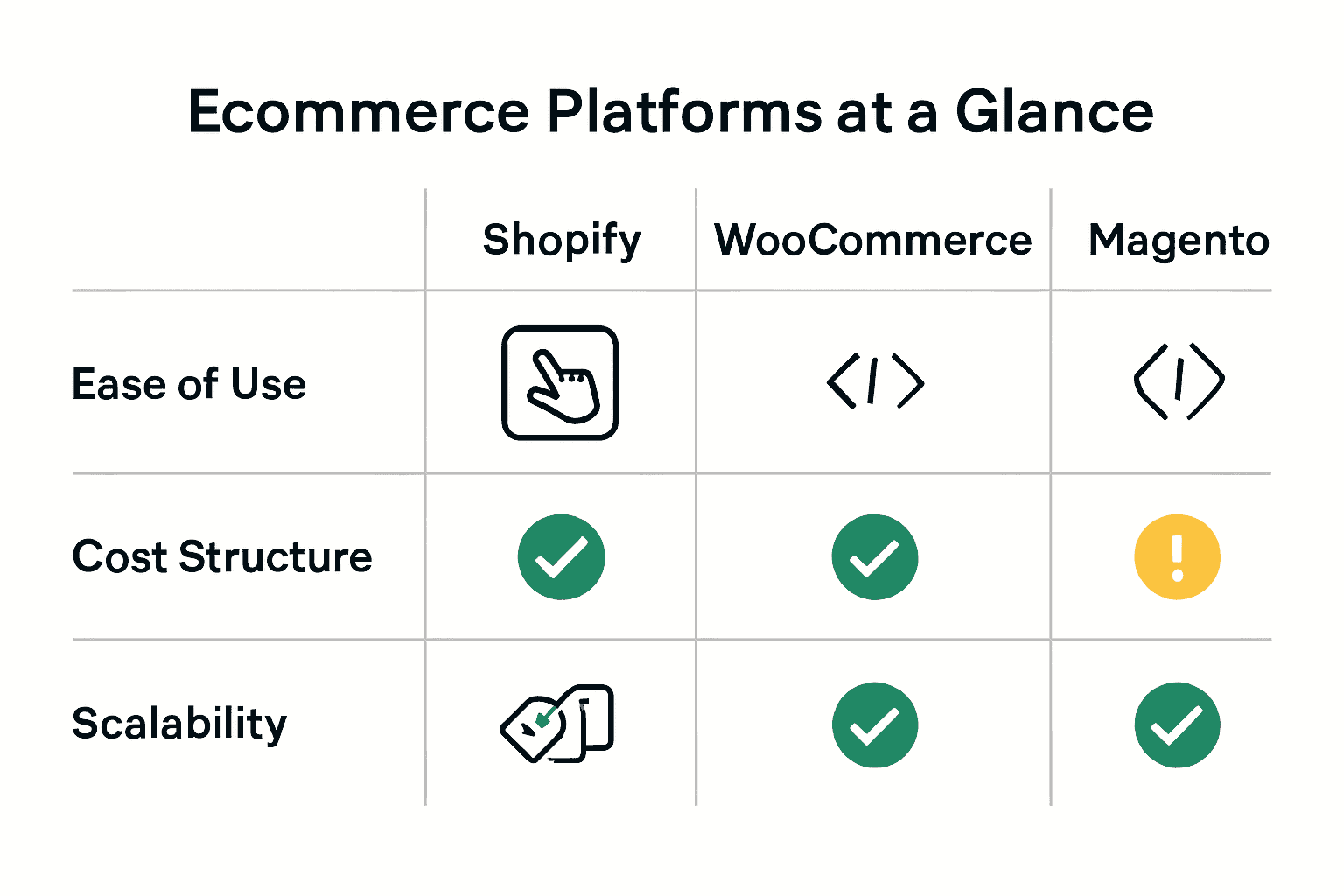
Platform Strengths Comparison
- Ease of Use
- Shopify: Intuitive, drag-and-drop interface
- WooCommerce: Requires more technical knowledge
- Magento: Complex, developer-intensive setup
- Cost Structure
- Shopify: Transparent pricing, no hidden fees
- BigCommerce: Complicated transaction fee models
- WooCommerce: Potentially higher indirect costs
- Scalability
- Shopify Plus: Enterprise-level solutions
- BigCommerce: Limited enterprise flexibility
- Magento: Expensive customization requirements
PayPal VS Other Gateways on Shopify highlights that From there, shopify’s integration capabilities and payment flexibility provide merchants with unprecedented control over their financial ecosystems. On the other hand, unlike many competitors, Shopify offers seamless multi-channel selling capabilities that allow businesses to expand beyond traditional online storefronts.
For entrepreneurs seeking a robust, adaptable e-commerce solution, Multichannel Thinking demonstrates how That said, shopify’s ecosystem enables businesses to create cohesive shopping experiences across web, mobile, and social platforms. For this reason, this comprehensive approach sets Shopify apart from more rigid, single-dimensional e-commerce platforms that limit merchants’ growth potential.
Unlock Seamless Shopify Migration with Expert Guidance
In short, migrating your online store to Shopify is more than just a technical upgrade. To reduce risk, the article highlights challenges like data transfer accuracy, preserving site design, and staff adaptation that can feel overwhelming without expert help. If you want to avoid costly mistakes and ensure your migration drives real growth through scalable infrastructure and advanced e-commerce features, you need a trusted partner who understands these critical steps.
At Blackbelt Commerce, we specialize in turning migration challenges into competitive advantages. Our proven process covers everything from detailed consultation and custom theme development to rigorous testing and ongoing support. We focus on delivering tailored Shopify Plus solutions designed to boost conversion rates and streamline your entire online operation. Learn how our expert team can help you confidently navigate the Shopify migration journey and unlock your store’s true potential.
Ready for a migration experience that minimizes risk and maximizes growth?

Explore our comprehensive Shopify services and start transforming your e-commerce today at Blackbelt Commerce. Discover why so many brands trust us to deliver scalable, high-performance Shopify stores that elevate their online business.
Visit Blackbelt Commerce now to get started and experience expert Shopify migration support designed for lasting success.
Frequently Asked Questions
What is Shopify migration and why should businesses consider it?
Shopify migration is the process of transferring your online store’s digital infrastructure to Shopify. Businesses consider this to leverage Shopify’s advanced e-commerce tools, scalable infrastructure, and enhanced performance capabilities.
What are the key benefits of migrating to Shopify?
Migrating to Shopify provides benefits like scalable infrastructure, advanced marketing tools, robust analytics, streamlined payment processing, and customizable design options that help improve overall business performance and customer experience.
What common challenges can arise during the Shopify migration process?
Common challenges include data transfer complexity, preserving design and functionality, staff training, integrating existing systems, and maintaining performance and SEO continuity during the transition.
How does the cost of migrating to Shopify compare to other e-commerce platforms?
The cost of migrating to Shopify includes platform subscription fees and potential expenses for design, data migration services, and third-party integrations. Shopify offers transparent pricing without hidden fees, making it a cost-effective choice compared to some competitors that have complex fee structures.
Recommended
- What to Expect After Migrating to Shopify Plus
- When to Upgrade to Shopify Plus: Key Benefits & Migration Tips
- Should You Hire a Shopify Expert? – Expert Insights
Article generated by BabyLoveGrowth
Why migrate to Shopify before your current platform slows growth?
Shopify Migration Readiness Checklist for Growth Teams
Before you commit to a Shopify migration, use a readiness checklist to separate technical tasks from business priorities. In practice, the strongest migration plans begin with a complete inventory of products, collections, customers, orders, redirects, tracking scripts, apps, payment settings, shipping rules, tax settings, and third-party integrations.
For SEO planning, map every important legacy URL to a new Shopify destination before launch. This includes product pages, category pages, blog posts, buying guides, and high-value landing pages. A migration should protect organic traffic first, then improve the experience after the new store is stable.
For operations planning, identify which workflows must work on day one. These usually include order routing, fulfillment, subscriptions, returns, customer accounts, email flows, analytics, product feeds, and customer-support tools. If one of these workflows breaks, the migration can affect revenue even when the storefront looks correct.
For conversion planning, review the theme, navigation, product templates, cart experience, checkout settings, trust signals, and mobile performance before launch. A migration is not only a platform move; it is a chance to remove friction that keeps shoppers from buying.
For executive planning, decide which metrics will define a successful migration. Useful measures include organic sessions, indexed URLs, crawl errors, conversion rate, checkout completion, average order value, page speed, app stability, and support-ticket volume. When those metrics are tracked before and after launch, your team can see whether the migration improved the business instead of simply changing the platform.
Quick answer for Shopify store owners
Before choosing a path, migrating to Shopify can make sense when your current ecommerce platform is difficult to manage, slow to improve, expensive to maintain, or limiting growth. The decision should be based on operational fit, migration risk, SEO preservation, integrations, and the revenue upside of moving to a more flexible commerce platform.
Need help turning this Shopify migration plan into a revenue-focused Shopify project?
Book a strategy call with us so we can review your goals, identify the highest-impact next step, and help you prioritize the work.
When should you get expert help with a Shopify migration?
When planning the work, migration projects carry SEO, data, design, checkout, and integration risks. If your store has meaningful organic traffic, complex product data, customer records, order history, subscriptions, B2B requirements, or custom features, expert planning can prevent traffic loss and post-launch disruption.
Need help turning this into a revenue-focused Shopify plan? Book a priority call with Blackbelt Commerce and we will help you identify the next best step for your store.
Key takeaways
- Preserve the main search intent of this topic before adding commercial recommendations.
- Use the information on this page to decide whether your team can handle the work internally or needs expert Shopify support.
- Focus on changes that improve revenue, conversion rate, speed, SEO, or operational efficiency.
Related Shopify Migration resources
To continue planning your next step, review these related Blackbelt Commerce resources:
- Blackbelt Commerce services
- Weebly to Shopify migration
- Shopify Plus migration
- Magento ecommerce agency guide
- Shopify custom development
Frequently asked questions
What is the biggest risk when migrating to Shopify?
To keep momentum, the biggest risks are SEO loss, broken redirects, incomplete data migration, missed integrations, and checkout or theme issues after launch.
Should every ecommerce business migrate to Shopify?
No. Shopify is a strong fit for many brands, but the decision should be based on platform limitations, growth goals, operating requirements, and total cost of ownership.
Can Blackbelt Commerce plan a Shopify migration?
Yes. You can book a priority call to review your current platform, migration risks, timeline, and the right Shopify setup.
Need help turning this Shopify migration plan into a revenue-focused Shopify project?
Book a strategy call with us so we can review your goals, identify the highest-impact next step, and help you prioritize the work.
Ready to turn this into a Shopify growth project?
If this topic connects to a current store issue, redesign, migration, SEO problem, or conversion goal, book a priority call with Blackbelt Commerce. We will review the situation, explain the tradeoffs, and help you choose the most practical path forward.
Quick Answer: Why migrate to shopify
Migrating to Shopify makes sense when a store needs easier operations, stronger checkout performance, better app flexibility, lower maintenance burden, or a cleaner path to growth. The best migrations protect SEO, preserve critical data, map redirects carefully, and improve the customer journey rather than simply copying the old store onto a new platform.
Want a sharper Shopify growth plan?
If this article connects to a current store decision, use the calendar to book a strategy call and turn the idea into a practical plan.
Key Takeaways
- Start with the search intent behind Why migrate to shopify: the reader needs a clear explanation before they are ready for a service conversation.
- Keep the advice practical and specific so the post feels editorial, useful, and worth sharing.
- Use the topic cluster links to connect the article to related BBC expertise instead of leaving it as a standalone blog post.
- Add a natural commercial bridge only after the article has answered the reader’s main question.
- Use the same-page Calendly CTA so qualified readers can book a strategy call without being sent to a long form.
How this connects to your Shopify growth strategy
This article should remain useful for readers researching Why migrate to shopify, but it also needs to show when the topic becomes a business decision. For the Expert Hiring & Costs cluster, the commercial bridge is practical: once the reader understands the concept, the next step is deciding whether their current Shopify setup can support the desired experience, conversion path, and operational workflow. That is where expert planning, design, development, CRO, and SEO support can turn the idea into measurable store improvements.
Want a sharper Shopify growth plan?
Use this guide as a decision tool. Then book a strategy call when you want a practical roadmap for your store.
Related Shopify resources
These internal resources support the Expert Hiring & Costs topic cluster and help connect this guide to stronger commercial next steps:
- Expert Hiring & Costs
- Shopify experts
- Shopify Plus agencies
- Expert Hiring & Costs — Parent service page for the reader’s next commercial step
- Shopify Plus agencies — Money-page link requested for high-growth and Plus-agency intent
- Shopify custom development — Development service page for implementation and technical help
- Shopify CRO — Conversion service page for readers focused on revenue and lead generation
- Cost of Shopify website — Related pricing article that helps readers compare platform, build, and expert investment decisions
- Shopify Plus checkout customization — Related Shopify Plus implementation guide for readers evaluating advanced Plus costs and capabilities
- Shopify Plus benefits — Related Plus strategy article for readers comparing platform value and growth-stage fit
Questions store owners ask before taking action
What does Why migrate to shopify mean for a Shopify merchant?
For a Shopify merchant, Why migrate to shopify is about choosing or improving the store experience in a way that supports traffic, trust, conversion, and long-term operations.
When should a store owner get expert help?
Expert help becomes useful when the decision affects SEO, conversion, theme architecture, integrations, migration risk, or revenue-critical customer journeys.
How should this topic connect to a broader content cluster?
The post should link to a parent service page, related support articles, and money pages so Google and AI systems understand how the article supports a broader area of expertise.
What is the lead-generation goal of this article?
The article should educate first, then guide qualified readers toward booking a strategy call when they need help applying the advice to their own store.
What should be avoided during optimization?
Avoid filler, unrelated phrases, invented statistics, broken formatting, duplicated CTAs, and any edit that makes the article feel less helpful or less polished.
Want a sharper Shopify growth plan?
Ready to turn the advice in this article into an action plan? Open the calendar here and choose a time that works for you.
Frequently asked questions about migrating to Shopify in 2026
How much does it cost to migrate to Shopify in 2026?
Migration cost ranges from about $2,000 for a simple move using a pre-built theme to $250,000+ for complex enterprise migrations with heavy customization. Moving from a cleaner SaaS platform like BigCommerce or Squarespace typically costs 30-40% less than migrating from a self-hosted platform like Magento or a heavily customized WooCommerce install (Presta, 2026).
Will I lose my SEO rankings when migrating to Shopify?
You do not have to. SEO equity loss during migration is almost always caused by broken redirects, changed URL structures, or lost metadata — not the platform switch itself. A migration plan that 301-redirects every old URL, preserves title tags and meta descriptions, and resubmits an updated sitemap protects existing rankings.
How long does a typical Shopify migration take?
Mid-market migrations typically require 60-100 internal hours across product, marketing, and operations teams, spread over several weeks depending on catalog size and how much custom design work is involved (Presta, 2026).
What is the biggest benefit of migrating to Shopify?
The most common reason merchants cite is easier ongoing management combined with a much larger app and integration ecosystem, which reduces the need for custom development to add new sales channels, marketing tools, or automation as the business grows.

