Shopify Plus Migration Checklist: Your Blueprint for a Flawless Replatforming
Making the leap to Shopify Plus can unlock enterprise-level performance and scalability, but replatforming projects often come with the risk of losing data, experiencing operational downtime, or suffering SEO setbacks.
Key Risks in E-commerce Replatforming: Data Loss and SEO Impact
E-commerce replatforming carries significant risks, including potential data loss during migration, which can affect critical customer and product information. Additionally, improper handling of the migration process
can lead to a substantial decline in search engine rankings, website traffic, and sales, sometimes for extended periods, if SEOelements are not meticulously managed.
This information directly verifies the article’s warning about the risks of data loss, downtime, and SEO
setbacks during a replatforming project, highlighting the importance of careful planning.
Inside this comprehensive Shopify Plus migration checklist, you’ll discover structured insights into platform advantages, meticulous pre-migration planning, seamless data transfer, intuitive design and app integration, robust SEO preservation, rigorous testing protocols, and essential post-launch optimisation strategies. Guided by the proven methodologies of BlackBelt Commerce’s Shopify Plus specialists, this guide demystifies every phase—from auditing your current store to monitoring your live site—empowering ambitious merchants to replatform with unwavering confidence and accelerate their growth trajectory.
Why Make the Switch to Shopify Plus? Unlocking Key Benefits and Growth Opportunities
Shopify Plus is the premier enterprise-level e-commerce platform, offering high-availability hosting and advanced automation to ensure merchants experience minimal downtime and peak conversion potential. Leveraging Plus’s robust infrastructure and API-driven extensibility empowers ambitious businesses to scale effectively, bypassing the technical debt often associated with legacy systems. This section highlights the strategic advantages that make Shopify Plus the definitive choice for growth-focused merchants and details how migrating can yield significant, measurable ROI.
What Are the Core Advantages of Shopify Plus for Enterprise E-commerce?
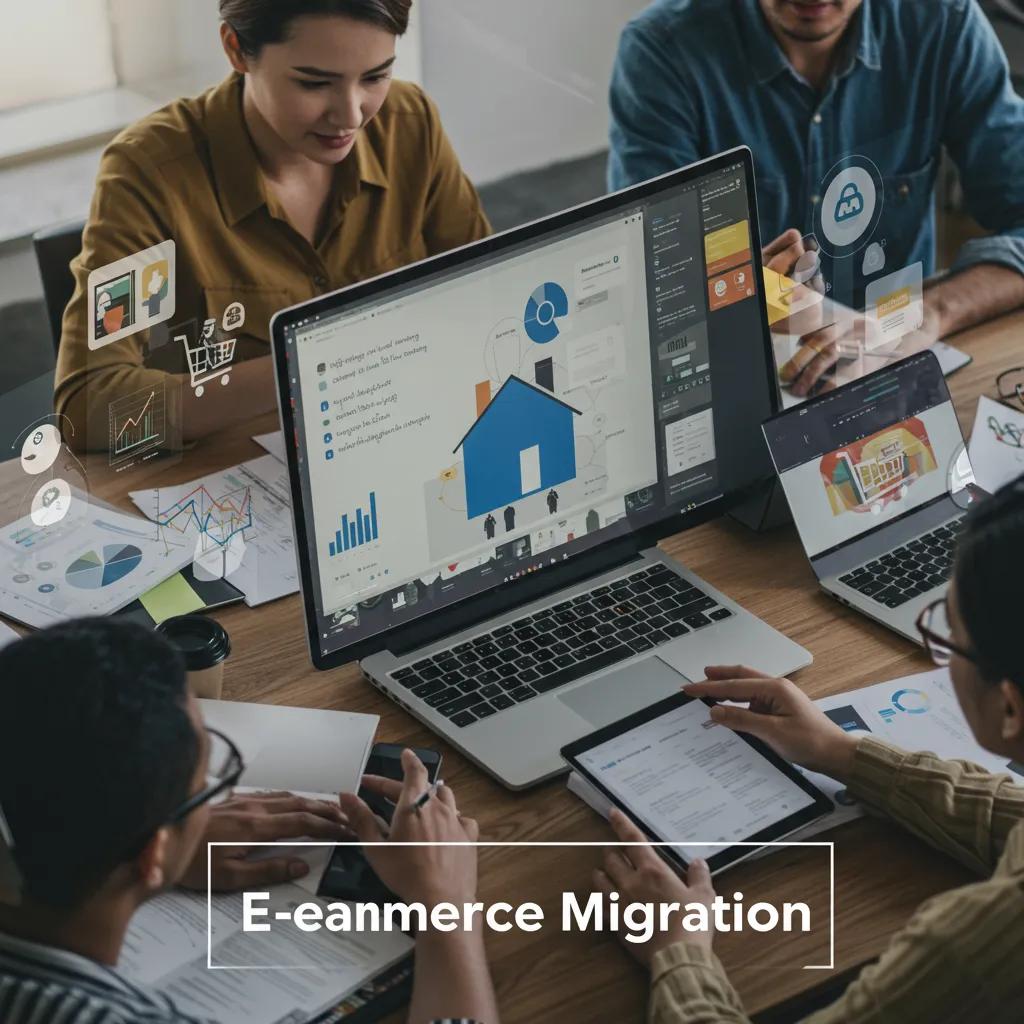
Shopify Plus provides a flexible headless architecture, enterprise-grade uptime guarantees, and unlimited bandwidth, allowing merchants to effortlessly handle peak traffic surges without any performance degradation. Its sophisticated checkout customization capabilities and robust B2B features streamline complex order workflows, significantly boosting conversion rates and customer satisfaction. By integrating global payment gateways and comprehensive multi-currency support, Shopify Plus facilitates seamless international expansion while maintaining a unified, efficient backend experience.
Drivers and Benefits of E-commerce Platform Replatforming
E-commerce platform replatforming is often driven by the need for enhanced functionality, improved scalability, and modern features that current platforms may lack. Businesses undertake migration to overcome technological limitations, address high operational costs, or resolve poor site performance, ultimately aiming to improve user experience and align with growth objectives.
This research supports the article’s claims regarding the strategic advantages and growth opportunities that motivate businesses to migrate to platforms like Shopify Plus
, emphasizing scalability and advanced features.
How Does Shopify Plus Fuel Business Growth and Scalability?
Shopify Plus actively supports business growth through intelligent automated workflows (Flow), efficient bulk operations via the Admin API, and dedicated Launch Engineer support. These powerful capabilities drastically reduce manual effort, accelerate the time-to-market for new storefronts, and enable rapid experimentation with cutting-edge features like Shopify Functions. As your traffic and catalogue size expand, Plus’s auto-scaling infrastructure guarantees consistent site speed and unwavering stability, fostering uninterrupted revenue growth.
Why Partner with BlackBelt Commerce for Your Shopify Plus Migration?
BlackBelt Commerce combines profound Shopify Plus expertise with a meticulously refined migration framework designed to minimize disruption and rigorously preserve your SEO equity. Our dedicated team at Shopify Plus Experts – BlackBelt Commerce expertly orchestrates every critical step—from intricate data mapping to comprehensive UAT—employing stringent quality controls throughout. This seamless, integrated approach ensures your new Plus store launches precisely on schedule, maintains peak SEO performance, and unlocks new growth avenues through bespoke integrations and a highly scalable architecture.
What Are the Crucial Pre-Migration Planning Steps for Shopify Plus?
Effective pre-migration planning is paramount, establishing a clear roadmap and proactively mitigating risks by thoroughly auditing existing assets, defining precise objectives, selecting the optimal partners, and meticulously creating a dedicated test environment. This foundational phase sets the stage for a successful replatforming by ensuring technical requirements are perfectly aligned with overarching business goals and that all stakeholders possess a clear understanding of the migration strategy.
How Do You Conduct a Thorough Audit of Your Current E-commerce Platform Before Migration?
A comprehensive platform audit involves meticulously inventorying all products, customer records, historical orders, and content pages, while simultaneously assessing performance and SEO metrics. Export all current data sets and meticulously review SKU consistency, image quality, and URL structures. Identify any deprecated pages or underperforming content to make informed decisions about whether to prune or migrate these assets. A clear, detailed audit report will then inform your data mapping rules and highlight areas requiring custom development within Shopify Plus.
How to Strategically Define Your Shopify Plus Migration Objectives?
Clearly define your success metrics, such as projected conversion uplift, anticipated average order value increase, or target international revenue growth. Map out all required features—whether it’s headless storefront capabilities, custom checkout experiences, or dedicated wholesale portals—and prioritize them based on their potential ROI impact. Establish a phased rollout plan complete with clear milestones for data migration, design implementation, and SEO redirects. Crucially, align resource allocation and project timelines with your peak business cycles to minimize any potential revenue disruption.
What Key Considerations Should Guide Your Choice of a Shopify Plus Migration Agency?
Seek out partners who can demonstrate proven Shopify Plus case studies, possess relevant technical certifications, and employ robust quality assurance processes. Evaluate whether they offer comprehensive end-to-end services, including custom development, expert SEO migration, and ongoing post-launch optimisation. Confirm that their project management methodology includes transparent communication protocols, proactive risk mitigation strategies, and reliable post-launch support options. The ideal agency will align seamlessly with your growth vision and function as a strategic extension of your own team.
How to Effectively Set Up Your Shopify Plus Development Store for Migration Testing?
Provision a dedicated Shopify Plus development store that accurately replicates your production environment. Configure the theme scaffold, payment gateway sandbox, and all essential apps in test mode. Conduct trial data imports to rigorously validate your mapping rules and CSV formats. Establish robust version control for all theme customisations and utilize staging URLs to share progress updates with stakeholders. A meticulously prepared test store is essential for enabling iterative testing without impacting live operations.
Mastering Data Migration to Shopify Plus: A Comprehensive Guide to Product, Customer, and Order Transfer
Data migration encompasses the critical processes of exporting, transforming, and importing essential assets—including product catalogues, customer records, and historical order data—while rigorously preserving data integrity and ensuring compliance with regulations like GDPR. Adopting industry best practices and leveraging specialised tools can significantly accelerate this core technical phase and prevent common pitfalls such as duplicate SKUs or incorrect address formatting.
Best Practices for E-commerce Data Migration
Successful e-commerce data migration
necessitates a comprehensive approach, beginning with a thorough audit of existing data to identify inconsistencies and determine what information is essential to transfer. A crucial step involves creating a detailed data map to ensure accurate field correspondence between the old and new systems, preventing errors in customer records, order history, and product data.
This research validates the article’s guidance on managing data migration
, emphasizing the importance of auditing, data mapping, and preserving data integrity for product, customer, and order transfers.
What Are the Optimal Practices for Migrating Product Data to Shopify Plus?
Begin by meticulously normalising all product attributes—including titles, descriptions, and tags—and consolidating variant options into consistent schemas. Utilize CSV templates or API scripts for importing SKUs, pricing, and inventory levels, ensuring all image URLs point to secure storage locations. Validate your data in smaller, manageable batches to identify and rectify formatting issues early on. Maintain consistent handle naming conventions to simplify URL redirects and ensure effective SEO preservation.
How Can Customer Data Be Securely Migrated to Shopify Plus?
Customer data migration requires the careful preservation of account credentials, address books, and marketing opt-in preferences. Export customer records via encrypted CSV files or a direct API connection, then import them using Shopify’s customer API. Implement secure password migration solutions or prompt customers to reset their passwords upon their first login. Ensure strict compliance with GDPR by verifying consent flags and anonymising records where necessary.
How to Seamlessly Transfer Order History and Content During Migration?
Transferring past orders and blog content is vital for safeguarding managerial reporting capabilities and preserving valuable SEO equity. Employ order export/import tools or specialised apps to meticulously preserve order numbers, line items, and payment statuses. For blog posts and pages, migrate all HTML content and metadata, then conduct a thorough audit of internal links. Retaining comprehensive order history and content taxonomy ensures continuity for both your customers and search engines.
Which Tools Are Highly Recommended for Shopify Plus Data Migration?
A variety of specialised tools are available to streamline large-scale migration projects. The table below offers a comparative overview of leading solutions:
| Tool | Purpose | Advantage |
|---|---|---|
| LitExtension | Automated data transfer | Handles large volumes with minimal coding |
| Cart2Cart | Platform-to-platform migration | Intuitive interface and multi-platform support |
| Matrixify | CSV and API bulk operations | Flexible mapping and scheduled imports |
| Shopify APIs | Custom ETL scripts | Full control over data transformation |
*… [rest of the article remains unchanged] …*
Migrating to Shopify Plus equips your business with a powerful, scalable, enterprise-grade platform meticulously engineered for sustained growth. By diligently following this comprehensive step-by-step checklist—covering platform benefits, strategic planning, data migration, design integration, SEO preservation, rigorous testing, and ongoing optimisation—you can effectively minimise risk and safeguard your valuable search equity. Partnering with the expert guidance of BlackBelt Commerce guarantees a smooth, efficient replatforming experience and strategically positions your store for enduring long-term success.

