


There is a hard deadline the 2026 deadline that will silently break checkout logic inside a meaningful percentage of active Shopify Plus stores. No warning email will save you once it hits. No patch will be possible after April 15th. And the worst part: most founders running $2M–$8M Shopify Plus brands have no idea which Scripts are live in their store, what those Scripts are doing, or whether anyone on their team has touched them in the last two years.
Quick answer
There is a hard deadline the 2026 deadline that will silently break checkout logic inside a meaningful percentage of active Shopify Plus stores. No warning email will save you once it hits. No patch will be possible after April 15th. And the worst part: most founders running $2M–$8M Shopify Plus brands have no idea which Scripts are live in their store, what those Scripts…
On June 30, 2026, all Shopify Scripts cease to execute. Entirely. If your store uses custom Ruby Scripts for discount logic, shipping rules, or payment method gating — that logic disappears at midnight. Not deprecated gracefully. Not throttled down. Gone. And because as of April 15, 2026, editing and publishing new Shopify Scripts is no longer possible, any bug in a Script you haven’t migrated yet is now permanently unfixable. You’re running frozen code in production with a ticking clock on it.
TL;DR: Shopify Scripts shut down permanently on June 30, 2026 — and unlike the two previous deadline extensions, Shopify has stated this is the final date. If your Plus store runs custom discount, shipping, or B2B payment logic through Scripts, that logic stops working with no grace period. The migration path is Shopify Functions — a better architecture, but a real engineering project. Most founders have been treating this as a dev ticket. They should be treating it as a Q2 revenue priority.
What Actually Happened
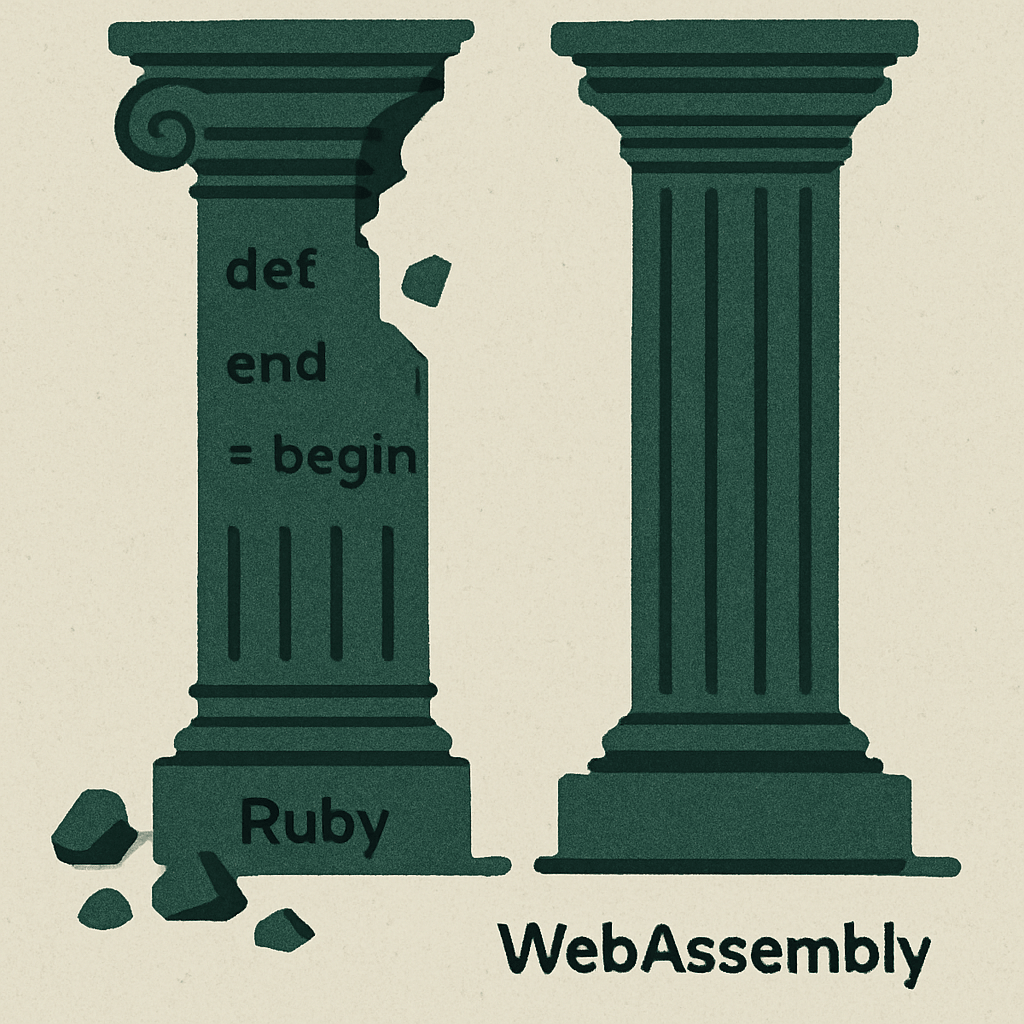
As of April 2026, Shopify extended the Scripts deprecation deadline from August 28, 2026 to June 30, 2026, while continuing to improve Shopify Functions with new capabilities for discounts, shipping, and payments. The deadline had already been pushed once before that — originally set for August 2024. Shopify has confirmed this deadline will not extend again. The deadline was pushed twice before, originally August 2024, then August 2026. June 30, 2026 is the hard stop. The replacement is Shopify Functions: Functions are not Scripts with a new syntax — the architecture is fundamentally different. Functions are compiled WebAssembly modules that run inside Shopify’s core infrastructure at specific points in the commerce lifecycle. The practical upside is real: instead of interpreted Ruby running in a sandbox, Functions are compiled WebAssembly binaries that execute natively on Shopify’s infrastructure — in under 5 milliseconds, every time, even during Black Friday traffic spikes.
Still running checkout logic on Shopify Scripts?
Blackbelt Commerce migrates Plus stores to Functions without downtime. Book a free call and we'll assess your risk today.
Book Your Free 30-Minute Strategy Call
Prefer to talk now? Call +1 (516) 704-9890
Why Most Plus Founders Are Underestimating This
The conventional read on this story is: “developer migration task, ticket it, done by June.” That framing is why stores get burned.
Here’s what we’ve seen repeatedly working with Plus brands across multiple platform transitions: Scripts became load-bearing infrastructure precisely because nobody was paying attention to them. A developer built a tiered wholesale pricing Script in 2021. The developer left. The brand grew. New team members inherited the store but not the institutional knowledge. The first cutoff has already passed — as of April 15, 2026, merchants can no longer edit existing Scripts or publish new ones. That creates a real problem for stores that still depend on them, especially if the current team no longer remembers who wrote the Script, why certain exceptions exist, or whether the logic is documented anywhere outside Script Editor.
The failure mode isn’t dramatic. When Scripts stop executing, the storefront does not necessarily break in an obvious way. Checkout may still load, customers may still place orders, and the admin may still look normal. What stops working is the invisible layer of business logic: the BOGO that only applies to specific SKUs, the payment method that should be hidden from retail customers but visible to wholesale accounts, the shipping rate that shouldn’t appear for orders under $50. Custom discount logic, shipping rules, payment gating — anything that ran through Scripts simply stops working. Customers will see the standard Shopify behavior in place of whatever your Scripts were doing. For a $5M brand running tiered B2B pricing through Scripts, “standard Shopify behavior” could mean every wholesale customer suddenly sees retail pricing at checkout. That’s not a dev bug. That’s a revenue event.
The other thing founders miss: from a merchant’s perspective, the most meaningful change is deployment model. Functions are distributed as apps — either custom private apps for a single store, or public apps from the Shopify App Store. That means the migration isn’t just a code rewrite. It’s an architectural decision. Do you rebuild custom logic as a private Function? Do you replace it with a public app? Do you use this moment to audit whether the old Script logic should even exist in the new system? Getting that decision wrong in a rush — especially for B2B stores — creates new technical debt faster than it eliminates old debt.
The Bigger Opportunity Running in Parallel
While the Scripts deadline is the immediate fire, there’s a structural platform shift happening at the same time that rewards the same kind of infrastructure discipline.
Shopify activated its “Agentic Storefronts” feature by default for all eligible US merchants on March 11, 2026. Every Shopify store meeting basic product data standards is now automatically syndicated to ChatGPT’s shopping experience. For merchants, products become discoverable in ChatGPT by default, with no separate integrations, apps, or transaction fees beyond standard processing rates. Orders flow into the admin with ChatGPT referral attribution, and merchants remain the merchant of record, retaining full ownership of customer relationships and data.
The part most founders are missing: merchants with better product data get better visibility in AI recommendations. This channel does not reward ad spend. It doesn’t reward brand awareness in the traditional sense. Success depends on clean data. Without strong metadata and structured product attributes, AI discovery can fail or misrepresent offerings. AI agents parse metafields to understand your products. If your specs live only in HTML descriptions, AI can’t read them. The action is to move critical product data to metafields.
We’ve been pushing metafield hygiene with clients for two years now — not because it was urgent, but because we could see the direction. A $3M apparel brand we’ve been working with had product descriptions written entirely in HTML with specs buried mid-copy. A $6M home goods brand had zero structured metafields, relying on long-form descriptions for all product attributes. Neither store is showing up meaningfully in AI-driven recommendations yet. That changes with focused catalog work, but only if it starts now. The structured data, feed quality, and crawler configuration work you do today compounds over time as AI agents learn which merchants provide reliable, complete product information. Brands that wait for the channel to mature before investing will find themselves playing catch-up against competitors who started earlier.
What These Two Stories Have in Common
Scripts migration and Agentic Storefronts readiness look unrelated. One is a deadline. One is an opportunity. But they share the same root cause for why most $1M–$10M brands are underinvested in both: founders treat platform infrastructure as maintenance, not growth work.
The Scripts deadline hits stores that outsourced checkout logic years ago and never revisited it. The Agentic Storefronts opportunity rewards stores that have been treating their product catalog as a data asset, not just a visual display. In both cases, the founders who win are the ones who know what’s actually running under the hood of their store — not just what it looks like from the front end.
This is exactly why we push every Plus client through a quarterly store audit. Not because we enjoy audit work, but because we keep watching smart operators get blindsided by infrastructure they didn’t know they owned. Understanding what Shopify Plus checkout customization actually enables — and what it now requires — is a different conversation than it was 18 months ago. The architecture has changed. The opportunity has changed. The risk of doing nothing has changed.
We’d also add: if you’re running Scripts-based checkout logic and you haven’t migrated, the window to do this well has largely closed. Merchants who complete the migration thoughtfully will end up with checkout logic that is easier to maintain, easier to test, and better aligned with the direction Shopify is building toward. The risk is not the migration itself — it is running out of time to do it properly. Thoughtful migrations take 4–8 weeks depending on complexity. With June 30 as the hard stop, “thoughtful” is now a luxury available only to stores that start immediately.
What Founders Should Do This Week
Here are five moves that matter this quarter — ordered by urgency:
- Run the Scripts customizations report today. In your Shopify admin, go to Apps > Script Editor. Click “Replace Shopify Scripts” in the banner. Shopify Scripts customization reports are generated automatically — you can export as CSV. The report lists every active Script, what it does, and links to recommended replacement apps or Function API tutorials. If you don’t know what Scripts are running, you cannot scope the migration.
- Categorize your Scripts by replacement path. Some are dead Scripts you can drop immediately. Others are quick-win cases that a public app can handle. The rest are high-risk Scripts that need careful planning. Don’t treat all Scripts as equivalent — the complexity range is wide.
- Audit your product data for AI catalog readiness. Go to your top 20 products. For each one, check: are the key specs structured as metafields, or buried in HTML descriptions? Is your inventory accurate and real-time? Are product titles clear and query-friendly (not marketing-headline format)? This work directly affects how you surface in ChatGPT, Google AI Mode, and Microsoft Copilot. You can manage which AI channels you want to sell your products on in the Agentic section of your Shopify admin — so confirm you’re opted in and that your store policies are current.
- Check your robots.txt for AI retrieval bots. Allow retrieval crawlers that power live search (OAI-SearchBot, ChatGPT-User, PerplexityBot, Google-Extended). You can block training crawlers if you don’t want your content used for model training. Shopify recently added default scraping restrictions, so check your store’s robots.txt to confirm retrieval bots aren’t accidentally blocked.
- Set a hard internal deadline of June 15 for Scripts migration completion. Not June 30 — June 15. You want two weeks of buffer to catch edge cases, test B2B logic, and verify discount stacking behavior before the platform kills Scripts entirely. If you need agency help scoping the migration, this is the right week to start that conversation. See our guide on what to expect from a Shopify Plus migration timeline for context on how these projects actually move.
What We’re Watching Next
Two signals will tell us how this plays out over the next 90 days. First: how many Plus stores hit July 1 with broken checkout logic they didn’t know was Script-dependent. We’ve seen this pattern before — every Shopify deadline produces a tail of stores that moved too late and paid for it in conversion rate. Second: which product catalog attributes drive AI discovery most reliably. Right now, the signal is thin. AI-driven traffic to Shopify stores has increased 7x since January 2026, and AI-attributed orders are up 11x over the same period — but the question of which specific product data inputs drive those results is still being figured out in real time. The stores that treat their catalog as an ongoing data project this summer will have meaningful early-mover data by Q4. The ones that wait for the channel to “prove itself” will be optimizing for last year’s traffic mix while the channel is already shifting under them.
The platform is moving. Both stories are about the same thing: knowing what your store actually runs on, not just what it looks like. If you’re evaluating whether Shopify Plus is right for your current revenue stage, this infrastructure reality — Scripts, Functions, Agentic Storefronts — is exactly the kind of decision that makes Plus worth it when you actually use the architecture, and expensive when you don’t.
FAQ
What happens if I don’t migrate my Shopify Scripts before June 30, 2026?
Every Script stops executing at midnight on June 30. There is no grace period. Any checkout logic running through Scripts — custom discounts, shipping rules, B2B payment filtering — simply reverts to standard Shopify behavior. Customers will see whatever Shopify’s native defaults produce, which likely does not match your actual business rules. For stores with complex B2B or wholesale logic, this can mean wrong pricing or incorrect payment methods showing at checkout. The only way to prevent it is migrating to Shopify Functions or a compatible public app before the deadline.
Can I still edit or fix my Scripts before June 30?
No. As of April 15, 2026, editing and publishing Shopify Scripts is no longer possible. Your existing published Scripts will continue to run until June 30, but if any bug surfaces in that window you cannot patch it. This is why the effective migration deadline was mid-April, not end of June. If you’re starting now, the priority is to get Functions live and tested, then disable the Scripts — not to try fixing Script bugs.
Do Shopify Agentic Storefronts cost anything extra for Plus merchants?
No additional fees for the ChatGPT channel. You pay only your standard Shopify payment processing rates on orders that come through. The Agentic Storefronts feature is active by default for eligible stores — you manage it from the Agentic section of your Shopify admin. The real “cost” is the ongoing product data work required to show up well in AI recommendations, which is an internal operational investment, not a platform fee.
What product data changes matter most for AI discovery?
The highest-priority moves are: moving key product specs out of HTML descriptions and into structured metafields (AI agents parse metafields, not HTML), writing product titles in query-answering format rather than marketing-headline format, keeping inventory accuracy high (AI channels use real-time inventory signals), and making sure your policies — return policy, shipping terms — are current in Shopify’s Policies settings, which is a hard requirement for ChatGPT Agentic Storefront eligibility. Start with your top 20 products by revenue before touching the full catalog.
Still running checkout logic on Shopify Scripts?
Blackbelt Commerce migrates Plus stores to Functions without downtime. Book a free call and we'll assess your risk today.
Book Your Free 30-Minute Strategy Call
Prefer to talk now? Call +1 (516) 704-9890

