

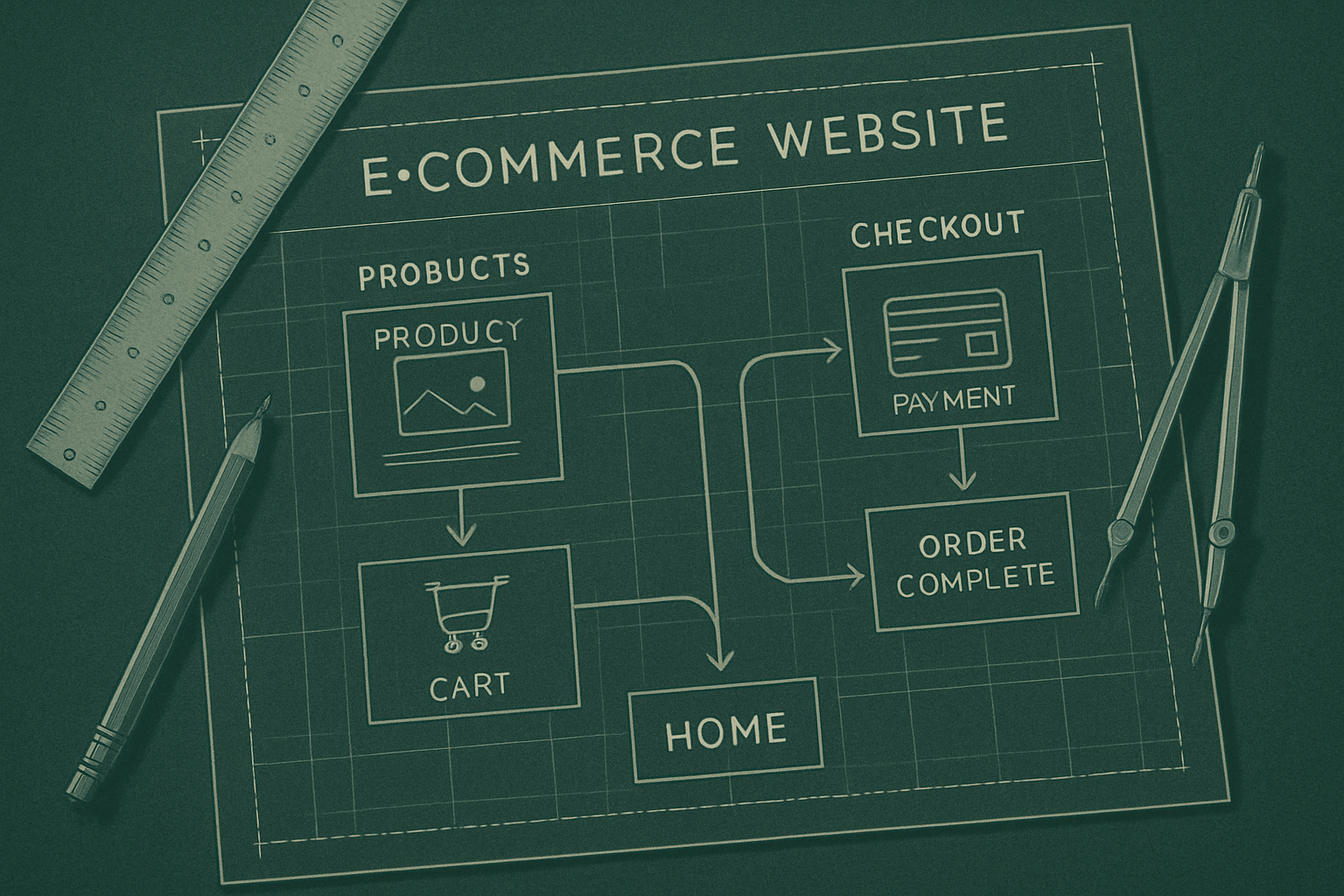
The meeting where we made the call that mattered wasn’t about SEO. It was about who Metro School Uniforms was actually talking to. They run national B2B uniform programs for schools and districts across the country, alongside an established retail presence — two audiences with fundamentally different buying contexts, different urgency patterns, and different signals of trust. The question on the table wasn’t “how do we rank for uniform keywords.” It was: do we build one store that tries to serve both audiences, or do we build a store that earns the trust of each?
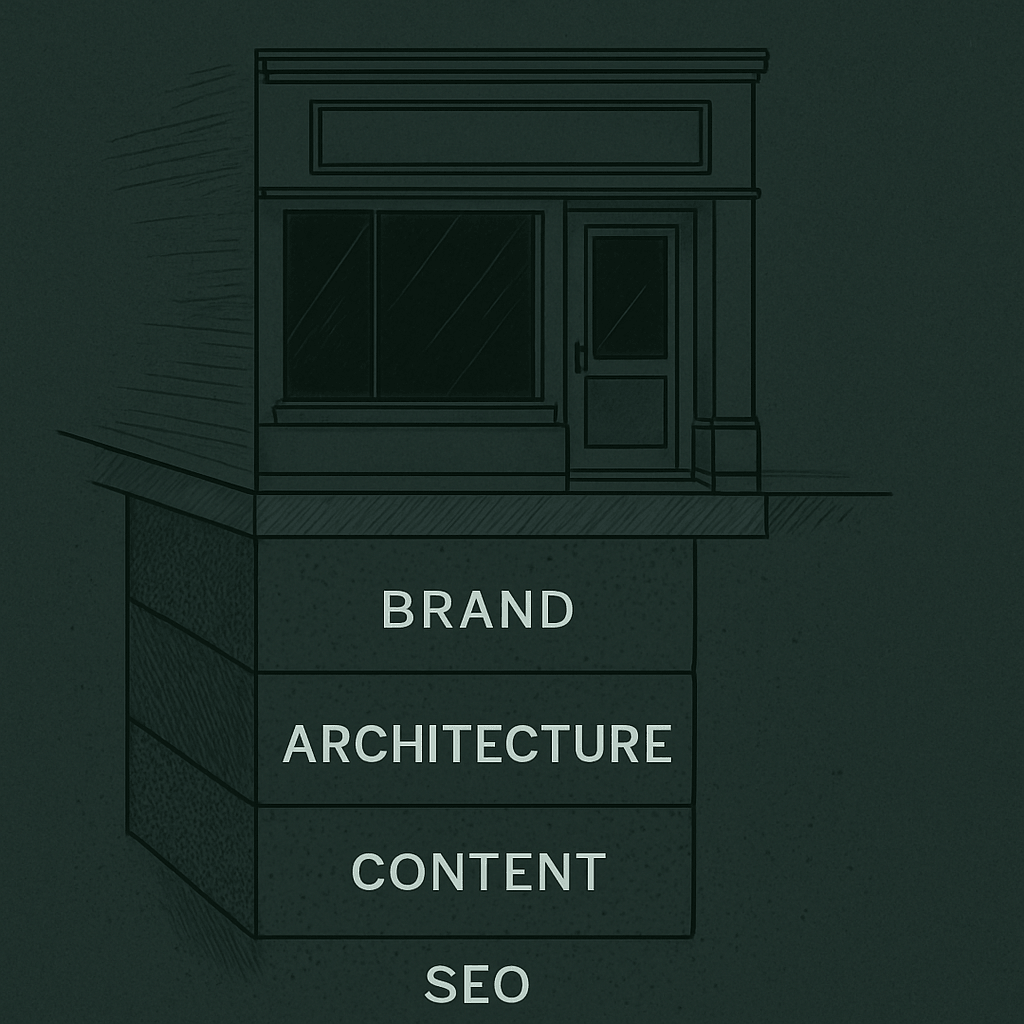
We made the call to design for clarity. One clear primary journey for institutional buyers. A retail experience that didn’t make a school administrator feel like they’d wandered into a consumer catalogue. That decision — brand architecture before SEO architecture — is what the 138.7% organic traffic lift grew from.
TL;DR: Metro School Uniforms’ organic traffic grew 138.7% year-over-year in a six-month comparison, bringing in 16,000+ users through search. The growth wasn’t built on a keyword sprint — it was built on a design-first rebuild that made the site legible to both search engines and human buyers. The lesson: clarity of audience signals trust to Google the same way it signals trust to a purchasing director.
The Brand Problem That Looked Like an SEO Problem
When Metro School Uniforms came to us, their Shopify store was functional. Products were listed. Checkout worked. But the site was architecturally confused in a way that showed up in their analytics before it showed up in a ranking report. Bounce rates on institutional landing pages were high. Time-on-site for what should have been high-intent B2B visitors was short. Category pages that should have been pulling organic traffic for school uniform programs were thin on content and thinner on conviction.
The instinct from most agencies at this stage is to prescribe a content plan. More blog posts. More keyword targeting. More backlinks. We’ve watched that approach get funded and fail consistently, because it treats the symptom — low rankings — without touching the cause, which is that a confused site can’t rank well for anything specific. Google can read ambiguity. So can a school district’s purchasing manager who’s deciding whether to request a quote.
The real problem wasn’t their SEO. It was that the store didn’t know what it was for. Once we named that, the path was clear — and it started with design, not a keyword map.
What “Design-First” Actually Means in Practice
Why does design affect organic search performance?
Design affects organic performance because search engines have spent the last decade getting better at reading what a page is actually about — and a page built around a clear audience intent is easier to read, rank, and cite. When you design for a specific user, you naturally produce cleaner heading hierarchies, more relevant internal linking, and page content that answers real questions. Google rewards that. LLMs cite it.
For Metro School Uniforms, design-first meant making decisions about hierarchy before we made decisions about content. The B2B program inquiry path got primary navigation real estate. Product categories were structured around how school buyers actually shop — by grade range, by program type, by district customization need — rather than by how a warehouse would sort SKUs. The retail experience branched off cleanly, with its own visual language and calls to action that wouldn’t confuse or distract an institutional buyer who’d arrived looking for contract pricing.
None of that was a tactic. It was brand architecture. And it’s the kind of call that subtraction-led thinking demands: before you add content, remove the confusion.
The SEO Work That Followed (And Why Sequence Matters)
Once the architecture was clean, the SEO work had somewhere to land. This is the part most agencies sequence incorrectly. They run the technical audit, fix crawl issues, and start publishing content into a store that is still structurally ambiguous. The content doesn’t compound. The rankings plateau. They shrug and recommend more content.
We ran the technical work — crawl clean-up, Core Web Vitals, canonical structure — after the design foundation was set. Category pages got real depth: program descriptions, school administrator FAQs, district-specific content that matched actual search intent from institutional buyers. Product pages were rebuilt with structured data and copy written for the buyer who is three signatures away from a purchase order, not the parent buying one polo shirt on a Tuesday night.
The distinction matters because search intent for B2B uniform programs is almost entirely informational at the top of the funnel and highly transactional once a district is ready to move. If your site can’t serve both modes of that same buyer — in the same visit, sometimes — you’re not ranking for the high-value queries. Metro School Uniforms’ site, after the rebuild, could hold that buyer through both stages. That’s what 16,000+ organic users and a 138.7% YoY lift in a six-month window reflects.
The B2B-Retail Dual Audience Problem (And How We Solved It)
How do you serve two distinct audiences on one Shopify store without diluting either?
You design intentional entry points — not one homepage that tries to speak to everyone, but a clear navigational architecture that routes each audience to their appropriate experience within the first interaction. The key is that the routing has to happen at the design level, not the content level. Adding a “For Schools” button to a consumer-focused homepage is not solving the problem. It’s acknowledging it.
For Metro School Uniforms, the homepage became a decision point, not a destination. B2B buyers — school administrators, district purchasing teams, uniform program coordinators — got a primary navigation path that led to program inquiry, catalog requests, and district-specific pricing pages. Retail buyers got a clean product browsing experience that felt consumer-appropriate without any of the institutional jargon that would confuse a parent buying a replacement shirt.
This sounds simple. It is not simple to execute inside Shopify’s default theme structure. It required custom navigation logic, conditional content blocks, and a product taxonomy rebuild from scratch. The kind of technical work described in our Shopify Plus migration walkthrough — where the real complexity isn’t the platform, it’s the decisions you make before you start building.
What the dual-audience design produced, from an SEO standpoint, was a site where every page had a clear primary audience and a clear primary intent. That specificity is what earns rankings. Not volume of content. Not keyword density. Specificity.
The Three Decisions That Actually Drove the Numbers
We’ve built enough stores to know that the headline result — 138.7% organic growth — doesn’t come from one thing. But when we look back at Metro School Uniforms’ rebuild, three decisions stand out as the ones that moved the needle most.
One: We killed the generic homepage. The original homepage tried to do too much. Hero image, retail promotions, some B2B messaging, a blog preview, a brand story block. It ranked for nothing specific because it was about everything generally. The replacement was focused. The design said: if you’re an institution, here’s your path. If you’re a parent, here’s yours. Search engines read that clarity immediately.
Two: We built category pages as destinations, not filters. Most Shopify category pages are thin — a heading, a grid of products, maybe a short paragraph at the bottom that the SEO tool told you to add. Metro School Uniforms’ program category pages became real content: what a school uniform program through Metro School Uniforms actually includes, how districts customize it, what the ordering process looks like, what questions purchasing directors typically ask. These pages now rank for queries that drive real B2B pipeline. That content didn’t come from a content brief. It came from knowing the buyer.
Three: We structured the internal linking around the B2B funnel, not the retail catalog. Most ecommerce internal linking is product-to-product. Cross-sells, related items, “you might also like.” That’s appropriate for retail. But for the B2B side of Metro School Uniforms’ business, the funnel runs program inquiry → catalog → quote request → order. We built internal links that followed that path. Pages earned authority by passing it along the actual buyer journey, not the inventory structure.
The Objection: “You Just Did Good SEO”
Some agencies will tell you this is just a well-executed SEO engagement. More content, better technical foundation, good keyword research. The design stuff is window dressing — what really drove the numbers was the SEO work that came after.
Here’s why that framing is wrong, and why it matters for your store.
If you sequence SEO before brand architecture, you get content published into a structurally confused site. We’ve audited enough stores to recognize the pattern: six months of blog content, a technical audit, a new sitemap, and flat organic numbers. Not because the SEO work was bad. Because the site beneath it was still speaking to three audiences at once, using category structures inherited from a platform migration three years ago, with a homepage that was designed to look impressive at a board meeting rather than convert a purchasing director.
The 138.7% lift was possible because the SEO work had something solid to anchor to. Design gave it the foundation. That’s not a minor contribution. It’s the reason the whole thing worked. And it’s the reason we lead with brand and design thinking on every engagement — not because we want to do more design work, but because we’ve watched the SEO-first approach fail enough times to trust the sequence.
If you’re deciding between agencies and one of them wants to start with a keyword audit on day one, ask them what they plan to do if the site architecture doesn’t support the rankings they’re targeting. The answer will tell you everything about how they think. Choosing the right Shopify Plus agency comes down to exactly this: do they solve the brand problem, or do they route around it?
What to Do About It Monday Morning
If the Metro School Uniforms story maps to something you’re recognizing in your own store, here’s how to start pulling the thread.
1. Audit your homepage for audience clarity. Read it as a first-time visitor who arrived from a Google search for your highest-value product category. Can they tell immediately who the site is for and what they should do next? If the answer requires more than two seconds of scanning, the page is doing too many things.
2. Look at your category pages as content, not just navigation. Open your top three category pages. Strip away the product grid. What’s left? If the answer is a thin heading and a one-paragraph SEO block, those pages aren’t ranking for anything meaningful. They need to answer the real questions buyers ask before they feel confident enough to request a quote or add to cart.
3. Map your internal links to your actual buyer funnel. Pull a crawl of your site and look at where your internal links go. Are they following the path a buyer takes from first awareness to purchase? Or are they following your inventory structure? These are often very different things, and the mismatch is invisible until you look for it.
4. If you serve more than one audience, design the routing before you build the content. Don’t publish B2B-targeted content into a consumer-focused store architecture and hope the search engines figure it out. They won’t. Build the architecture first. Then build the content inside it.
5. Sequence the technical SEO work after the design foundation is set. Technical audits, crawl fixes, Core Web Vitals — these matter. But they compound on a clear foundation. Run them on a confused site and you’re optimizing the wrong thing.
What This Means for Your Store
Metro School Uniforms is a national leader in their category. The 138.7% organic growth and 16,000+ users through search didn’t come because they had an advantage no other brand could replicate. They came because a design-first rebuild made the site legible — to Google, to purchasing directors, to parents — in a way the old site never was.
We’re now expanding the relationship to a second Shopify store, because once the pattern is established and the foundation is clean, growth compounds. That’s the thing about getting the design call right: it doesn’t just produce a one-time ranking lift. It produces a store that can earn traffic consistently, because every new page you build goes into a structure that already knows what it’s for.
The brands that win organically aren’t the ones with the most content or the biggest backlink budgets. They’re the ones whose stores are built around a clear answer to a simple question: who is this for, and what do they need to trust us enough to act? Answer that at the design level, and the SEO work has somewhere real to land.
FAQ
How long did it take to see the 138.7% organic traffic lift for Metro School Uniforms?
The 138.7% figure reflects a six-month year-over-year comparison after the rebuild was live. Organic growth from a design-led rebuild typically begins showing in crawl and indexing metrics within the first four to six weeks, with ranking movement and traffic impact accumulating over the following three to five months. There is no shortcut to the compounding stage, but a clean architectural foundation gets you there faster than publishing content into a confused site structure.
Does this approach work for single-audience Shopify stores, or only dual-audience situations like Metro School Uniforms?
The design-first approach applies to any store where the current architecture is misaligned with buyer intent — which is most stores doing $1M–$10M that have grown organically without a deliberate redesign. Dual-audience complexity like Metro School Uniforms’ B2B plus retail model makes the problem more visible, but the underlying principle — design for a specific buyer before you build for search — applies to single-audience stores just as directly.
Why doesn’t keyword research come first?
Keyword research tells you what buyers are searching for. It doesn’t tell you whether your site architecture can actually earn those rankings. Starting with keyword research on a structurally confused site produces a content roadmap built on a foundation that won’t support it. We use keyword research to inform the architecture decisions — not to substitute for them. The sequence is: brand clarity → design architecture → keyword-informed content → technical optimization.
What if we’ve already published a lot of content — is it too late to fix the architecture?
It is not too late, but the fix requires an honest audit of what’s working before you build more. In most cases, a store with significant existing content has a handful of pages doing real organic work and a long tail of pages that are diluting crawl budget and confusing topic authority. The right move is to consolidate, redirect, and restructure — not publish more content on top of the existing confusion. We’ve done this cleanup on stores with 500+ pages and the ranking impact from the consolidation alone typically exceeds what the original content volume ever produced.

