


Nearly half of American online shoppers expect a store to load in just two seconds. For e-commerce managers at high-growth Shopify brands, technical performance testing is no longer optional. Every second delay translates to lost revenue and missed conversions. Understand exactly how systematic testing methods safeguard your digital storefront, drive higher sales, and keep your site responsive when it matters most.
Table of Contents
- Defining Ecommerce Performance Testing
- Key Types of Performance Testing Methods
- Critical Metrics And How They Work
- Real-World Applications For Shopify Brands
- Risks, Common Mistakes, And Alternatives
Key Takeaways
| Point | Details |
|---|---|
| Continuous Performance Testing | Implement performance testing as an ongoing process to preemptively address potential technical limitations and enhance user experience. |
| Diverse Testing Methods | Combine various performance testing methods like Load, Stress, and Soak Testing to achieve a comprehensive understanding of system capabilities. |
| Critical Metrics Monitoring | Monitor essential metrics like Response Time and Conversion Rate to inform strategic business decisions and improve online performance. |
| Risk Mitigation Strategies | Develop flexible testing frameworks to adapt to evolving technologies and mitigate risks associated with incomplete scenario coverage and benchmark inaccuracy. |
Defining Ecommerce Performance Testing
Ecommerce performance testing is a systematic process for evaluating an online store’s technical capabilities, speed, and reliability under various simulated conditions. This critical assessment helps businesses identify potential bottlenecks, optimize user experience, and ensure seamless digital commerce operations. Performance testing examines how e-commerce platforms function across multiple scenarios that could impact customer interaction and overall business success.
At its core, performance testing involves comprehensive analysis of key digital metrics including website load time, server response speed, transaction processing efficiency, and system stability under different traffic volumes. The primary objectives extend beyond basic functionality—they aim to validate that an online store can handle peak user loads, process transactions securely, and maintain consistent performance during critical shopping periods like holiday sales or product launches.
The scope of ecommerce performance testing encompasses several crucial evaluation dimensions:
- User Experience Validation: Measuring page load speeds, navigation responsiveness
- Transaction Processing: Assessing checkout process reliability and payment gateway performance
- Scalability Assessment: Determining system capacity under increasing user traffic
- Security Verification: Ensuring robust handling of concurrent user sessions and data transactions
Pro Tip: Implement performance testing as a continuous process, not a one-time checkpoint, to proactively identify and resolve potential technical limitations before they impact customer experience.
Key Types of Performance Testing Methods
Ecommerce performance testing encompasses multiple specialized methodologies designed to uncover different aspects of system performance and resilience. Performance testing techniques systematically evaluate an online store’s technical capabilities through targeted assessments that simulate real-world digital commerce scenarios.
The primary performance testing methods for ecommerce platforms include:
-
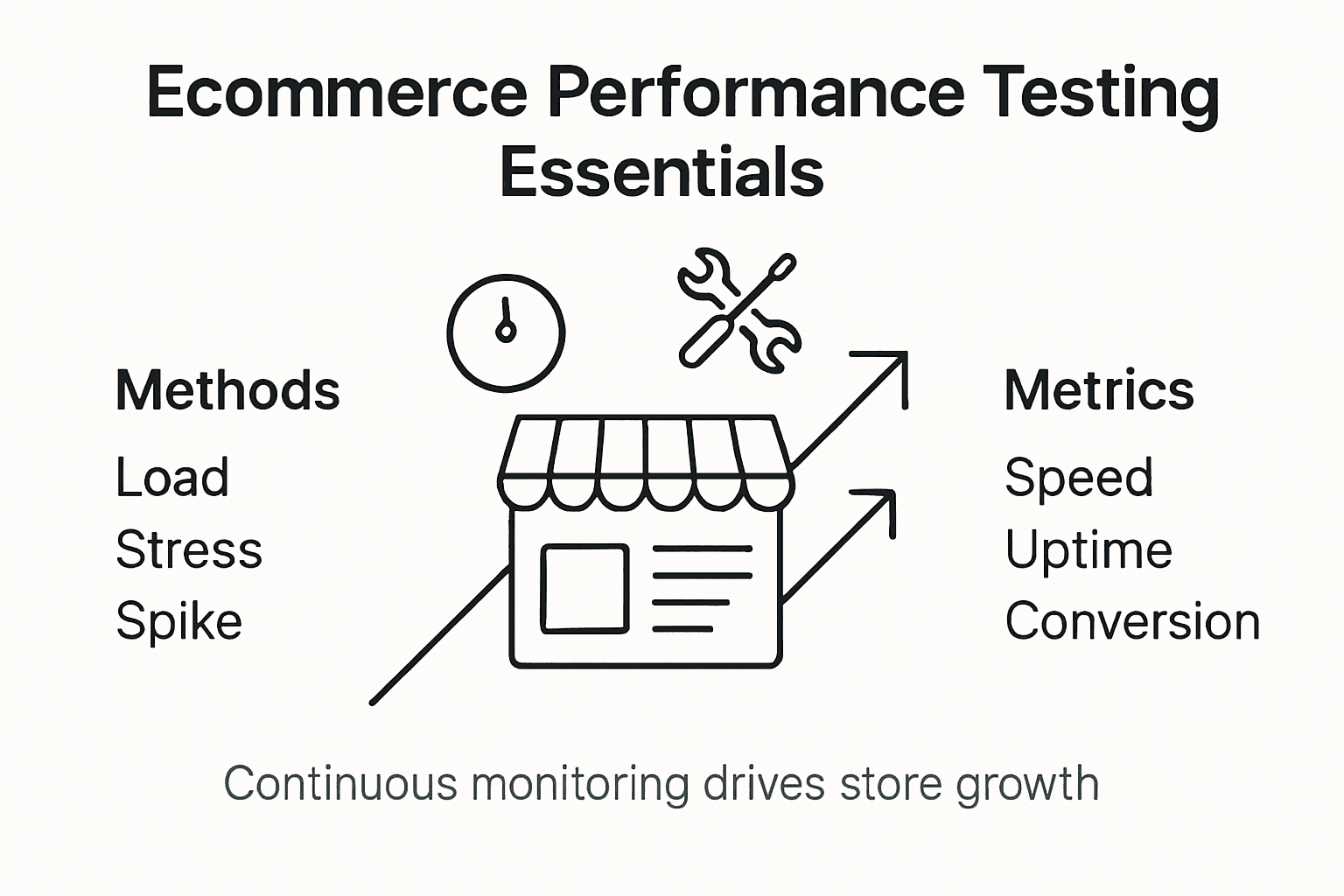
Load Testing: Evaluates system behavior under expected and peak traffic conditions, determining how many concurrent users the platform can support without degrading performance. This method helps predict potential bottlenecks during high-traffic events like flash sales or seasonal shopping periods.
-
Stress Testing: Pushes the system beyond normal operational capacity to identify breaking points and understand how the platform responds under extreme conditions. This approach reveals critical insights into system stability and potential failure modes that could disrupt customer experiences.
-
Spike Testing: Analyzes the application’s reaction to sudden, dramatic increases in user traffic. This method is crucial for understanding how quickly an ecommerce platform can adapt to unexpected traffic surges, such as during viral product launches or marketing campaigns.
-
Soak Testing: Examines the system’s long-term stability by running continuous load tests over extended periods. This approach helps identify memory leaks, performance degradation, and potential issues that might emerge during prolonged operational periods.
-
Volume Testing: Assesses the system’s ability to handle large amounts of data processing, particularly critical for ecommerce platforms managing complex transaction records, inventory updates, and customer interactions.
Pro Tip: Develop a comprehensive testing strategy that combines multiple performance testing methods to create a holistic view of your ecommerce platform’s technical resilience and capabilities.
Here’s a side-by-side overview of ecommerce performance testing methods and their strategic business advantages:
| Testing Method | Primary Purpose | Strategic Business Advantage |
|---|---|---|
| Load Testing | Measure performance under expected load | Prevents slowdowns during peak seasons |
| Stress Testing | Expose system breaking points | Uncovers vulnerabilities before failures |
| Spike Testing | Simulate sudden traffic surges | Prepares for viral campaign traffic |
| Soak Testing | Assess long-term stability | Avoids gradual performance degradation |
| Volume Testing | Test large-scale data processing | Ensures accuracy during high transactions |
Critical Metrics and How They Work
Performance testing for ecommerce platforms relies on a comprehensive set of critical metrics that provide deep insights into system functionality and user experience. E-commerce performance metrics help businesses make strategic operational decisions by quantifying technical performance and user interaction patterns.

Key performance metrics can be categorized into several critical dimensions:
Technical Performance Metrics:
- Response Time: Measures the duration between user action and system response
- Throughput: Calculates the number of transactions processed per second
- Resource Utilization: Tracks server CPU, memory, and network consumption
User Experience Metrics:
- Page Load Speed: Measures time required to fully render a webpage
- Concurrent User Capacity: Determines maximum simultaneous user connections
- Error Rate: Tracks frequency of failed transactions or system errors
Conversion and Engagement Metrics:
- Bounce Rate: Percentage of users leaving the site after viewing a single page
- Conversion Rate: Proportion of visitors completing a desired action
- Average Session Duration: Total time users spend on the platform
These metrics work synergistically to provide a holistic view of an ecommerce platform’s performance, revealing potential bottlenecks, user experience challenges, and opportunities for optimization. By continuously monitoring and analyzing these indicators, businesses can proactively improve their digital infrastructure and deliver superior online shopping experiences.
Pro Tip: Implement automated monitoring tools that track performance metrics in real-time, enabling immediate identification and resolution of potential system issues.
Real-World Applications for Shopify Brands
Performance testing strategies deployed by successful Shopify brands demonstrate the critical importance of systematic technical evaluation in driving online retail success. These real-world applications go beyond theoretical assessments, providing actionable insights that directly impact conversion rates, user experience, and overall store performance.
For high-growth Shopify brands, performance testing manifests in several strategic approaches:
Pre-Sale Event Preparation:
- Simulating massive traffic scenarios during promotional periods
- Testing checkout process stability under peak load conditions
- Identifying potential infrastructure bottlenecks before critical sales events
Conversion Optimization Tactics:
- Measuring page load times across different device types
- Analyzing user interaction speed and navigation responsiveness
- Evaluating transaction processing efficiency during high-traffic moments
Technical Resilience Assessment:
- Conducting comprehensive load tests to determine maximum user capacity
- Identifying potential system vulnerabilities
- Ensuring smooth performance during unexpected traffic surges
The most successful Shopify brands view performance testing not as a one-time activity but as a continuous improvement process. By regularly assessing and refining their technical infrastructure, these businesses create robust digital storefronts capable of delivering seamless shopping experiences that convert visitors into loyal customers.
Pro Tip: Schedule performance testing during low-traffic periods and maintain a detailed log of each test to track incremental improvements in your Shopify store’s technical capabilities.
Risks, Common Mistakes, and Alternatives
Performance testing for ecommerce platforms involves navigating complex risks and potential operational challenges that can significantly impact digital store performance. Understanding these potential pitfalls is crucial for developing robust testing strategies that protect and optimize online business infrastructure.
Primary Risks in Performance Testing:
- Incomplete Scenario Coverage: Failing to simulate realistic user interactions
- Inaccurate Performance Benchmarks: Using outdated or irrelevant performance standards
- Resource Constraints: Limited testing environments or inadequate simulation tools
Common Mistakes Shopify Brands Make:
- Neglecting mobile device performance testing
- Overlooking regional network variation impacts
- Running tests during inappropriate time periods
- Using synthetic testing without real-world context
Alternative Testing Approaches:
- Parallel Testing: Simultaneously testing multiple performance scenarios
- Incremental Load Simulation: Gradually increasing user load to identify breaking points
- Hybrid Testing Models: Combining automated and manual testing techniques
Successful performance testing requires a nuanced approach that goes beyond simple technical validation. Brands must develop comprehensive strategies that account for complex user behaviors, technological diversity, and evolving digital commerce landscapes.
The table below summarizes common ecommerce performance risks, mistakes, and how alternative approaches address them:
| Challenge Type | Example Pitfall | Alternative Approach |
|---|---|---|
| Scenario Coverage | Overlooking key user behaviors | Parallel testing |
| Benchmark Accuracy | Outdated performance standards | Incremental load simulation |
| Device/Region Diversity | Ignoring mobile or global users | Hybrid testing models |
Pro Tip: Develop a flexible testing framework that adapts to changing technological environments and continuously updates performance benchmarks based on actual user interaction data.
Unlock Your Shopify Store’s Full Potential with Expert Performance Testing
Ecommerce Performance Testing is essential to ensure your store handles peak traffic, processes transactions smoothly, and delivers an exceptional user experience that drives growth. At Blackbelt Commerce, we understand the challenges of managing load times, transaction reliability, and scalability. We leverage proven techniques like load testing, stress testing, and spike testing to uncover hidden bottlenecks and optimize your store for real-world demands.

Ready to transform your Shopify store into a high-performing, resilient sales engine Visit Blackbelt Commerce to explore our tailored Shopify development and optimization solutions. Our expert team specializes in custom theme development, Shopify Plus solutions, and advanced ecommerce capabilities designed to boost conversion rates and maximize revenue. Don’t wait for slowdowns or errors to cost you customers Contact us today and start scaling your store with confidence through strategic performance testing and ongoing support.
Frequently Asked Questions
What is ecommerce performance testing?
Ecommerce performance testing is a systematic evaluation of an online store’s technical capabilities, speed, and reliability under various conditions. It aims to optimize user experience and identify potential bottlenecks to ensure seamless digital commerce operations.
Why is performance testing important for ecommerce platforms?
Performance testing is crucial for ecommerce platforms because it helps validate that a store can handle peak user loads, process transactions securely, and maintain consistent performance during high-traffic events, such as holiday sales or product launches.
What are the key types of performance testing methods used for ecommerce?
Key types of performance testing methods for ecommerce include load testing, stress testing, spike testing, soak testing, and volume testing. Each method evaluates different aspects of system performance and resilience, helping businesses prepare for real-world scenarios.
What metrics should be monitored during ecommerce performance testing?
During ecommerce performance testing, important metrics to monitor include response time, throughput, page load speed, error rate, and conversion rate. These metrics provide insights into system functionality and user experience, helping identify areas for optimization.
Recommended
- Why Optimize Ecommerce Stores: Complete Guide – Shopify Experts: Grow Your eCommerce Revenue
- E-commerce growth strategy: Top 3 Pillars
- Effective E-Commerce Strategies to Boost Your Online Store
- ecommerce development: 10 Powerful Reasons for Success in 2025
Quick Answer: What is ecommerce performance testing
What is ecommerce performance testing should improve how a Shopify store converts traffic into trust, customers, and revenue. The article should connect UX, store features, security, automation, performance, analytics, and conversion paths so readers understand what to fix and when expert help can accelerate results.
Want a sharper Shopify growth plan?
Want to turn What is ecommerce performance testing into a practical Shopify growth plan? Book a strategy call and we will help you clarify the next move.
Key Takeaways
- Use What is ecommerce performance testing to clarify the business problem and the highest-impact next step for a Shopify store.
- Connect recommendations to customer trust, UX, conversion, SEO, analytics, operations, and revenue.
- Link naturally to Blackbelt Commerce money pages and the home page without weakening editorial trust.
- Avoid generic ecommerce advice; make the guidance specific to Shopify constraints and opportunities.
- Use the same-page Calendly CTA only after the post has delivered useful guidance.
How this connects to your Shopify growth strategy
For the Shopify Growth, CRO, and Store Optimization cluster, this article should make What is ecommerce performance testing practical, specific, and commercially useful while protecting editorial trust. The bridge to Blackbelt Commerce should show when expert planning, implementation, SEO/CRO discipline, or Shopify Plus support can reduce risk and turn the reader’s next decision into measurable progress.
Want a sharper Shopify growth plan?
Use this guide as a decision tool. Then book a strategy call when you want a practical roadmap for your store.
Related Shopify resources
These internal resources support the Shopify Growth, CRO, and Store Optimization topic cluster and help connect this guide to stronger commercial next steps:
- Shopify CRO services
- Shopify experts
- Shopify Plus agencies
- Shopify CRO services — Primary money/service page for this search intent
- Blackbelt Commerce — Home-page authority link for brand and core Shopify expertise
- Shopify experts — Money-page link requested for expert-hiring intent
- Shopify custom development — Development service page for implementation and technical help
- Shopify checkout optimization — Related conversion article
- Shopify conversion optimization — Related CRO article
Questions store owners ask before taking action
Why does What is ecommerce performance testing matter for Shopify merchants?
It matters when the topic affects customer trust, conversion, operations, SEO, analytics, or the team’s ability to scale the store cleanly.
How should the article guide the reader?
It should answer the search intent first, then connect the topic to practical next steps, related resources, and expert support when that next step is useful.
What is the lead-generation goal?
The goal is a qualified strategy-call booking after the article has delivered enough value for the reader to trust Blackbelt Commerce with the next decision.
Future articles needed for topical dominance
To build deeper topical authority around this cluster, these supporting topics should be created later and linked back into this article:
- What is ecommerce performance testing Checklist for Shopify Stores: Creates an actionable support article that can earn long-tail searches and link back to relevant money pages.
- Common What is ecommerce performance testing Mistakes That Hurt Shopify Revenue: Targets problem-aware readers and explains UX, SEO, conversion, and implementation risk.
- How Shopify Experts Prioritize What is ecommerce performance testing: Links informational intent to expert support without turning the main article into a sales pitch.
Want a sharper Shopify growth plan?
Ready to turn the advice in this article into an action plan? Open the calendar here and choose a time that works for you.

