


Blog updated with the most recent Shopify and eCommerce strategies on 05/02/2026.
Supercharge Your Shopify SEO: The Power of Backlinks for Authority and Traffic
Powerful backlinks act as endorsements that significantly boost your Shopify store’s domain authority, sharpen search visibility, and funnel in valuable referral traffic. This guide dives deep into how smart link building transfers link equity, accelerates your climb up the search rankings, and fuels enduring growth. You’ll uncover the fundamentals of backlinks, smart ways to analyze your competitors, how to track and manage your efforts, advanced e-commerce link strategies, and real success stories—all designed to work hand-in-hand with your on-page and technical SEO. Ambitious store owners and thriving brands will also discover how Blackbelt Commerce – Your Shopify Growth Accelerator can be your partner in acquiring links and mastering off-page SEO to maximize your store’s potential.
What Exactly Are Backlinks and Why Are They Crucial for Shopify SEO?
Backlinks are simply links from other websites pointing to yours. They’re like votes of confidence that pass authority, telling search engines that your content is relevant and trustworthy. When your Shopify store earns links from respected sources, you’ll see your domain authority climb, your keyword rankings improve, and your organic traffic grow steadily. Imagine a niche fashion boutique snagging links from top industry blogs – that’s how you achieve prime search positions and attract the right shoppers.
How Backlinks Directly Impact Your Search Engine Rankings
Research consistently shows that backlinks from authoritative sites are a major driver of higher search engine rankings and increased organic traffic. Studies reveal a strong connection between the quantity and quality of your backlinks and your position on the search results page.
Smith, J., Journal of Digital Marketing (2022)
This insight underscores the vital role backlinks play in boosting your store’s visibility and attracting organic visitors.
What Is a Backlink and How Does It Shape Your SEO?
A backlink is a hyperlink from one website to another. It passes authority, often through anchor text, helping search engines understand what your page is about and how authoritative it is. When high-quality sites link to your Shopify pages, Google sees these as endorsements, which can improve how often your site is crawled and how well it ranks. This process directly boosts your organic visibility by solidifying your authority on specific topics.
Why Do Shopify Stores Absolutely Need Top-Tier Backlinks?
Shopify stores need high-quality backlinks to cut through the noise in the competitive e-commerce world, build crucial trust signals, and establish authority within Google’s E-A-T (Expertise, Authoritativeness, Trustworthiness) guidelines. Without credible referrals, your store might languish on the second page of search results, even with perfectly optimized product pages. Landing editorial links from authoritative domains builds your reputation and drives traffic from audiences who are already interested in what you offer.
How Does Google Assess Backlinks for Your Shopify Store?
Google evaluates backlinks by looking at the authority of the linking site, how relevant the topic is, and the context of the anchor text to determine the link’s value. The algorithm gives more weight to “dofollow” links, identifies spam through link patterns, and rewards diverse, natural link profiles. A Shopify store with a variety of linking domains, varied anchor text, and no spammy links sends strong trust signals to Google’s ranking systems.
Which Types of Backlinks Pack the Biggest Punch for Shopify SEO?
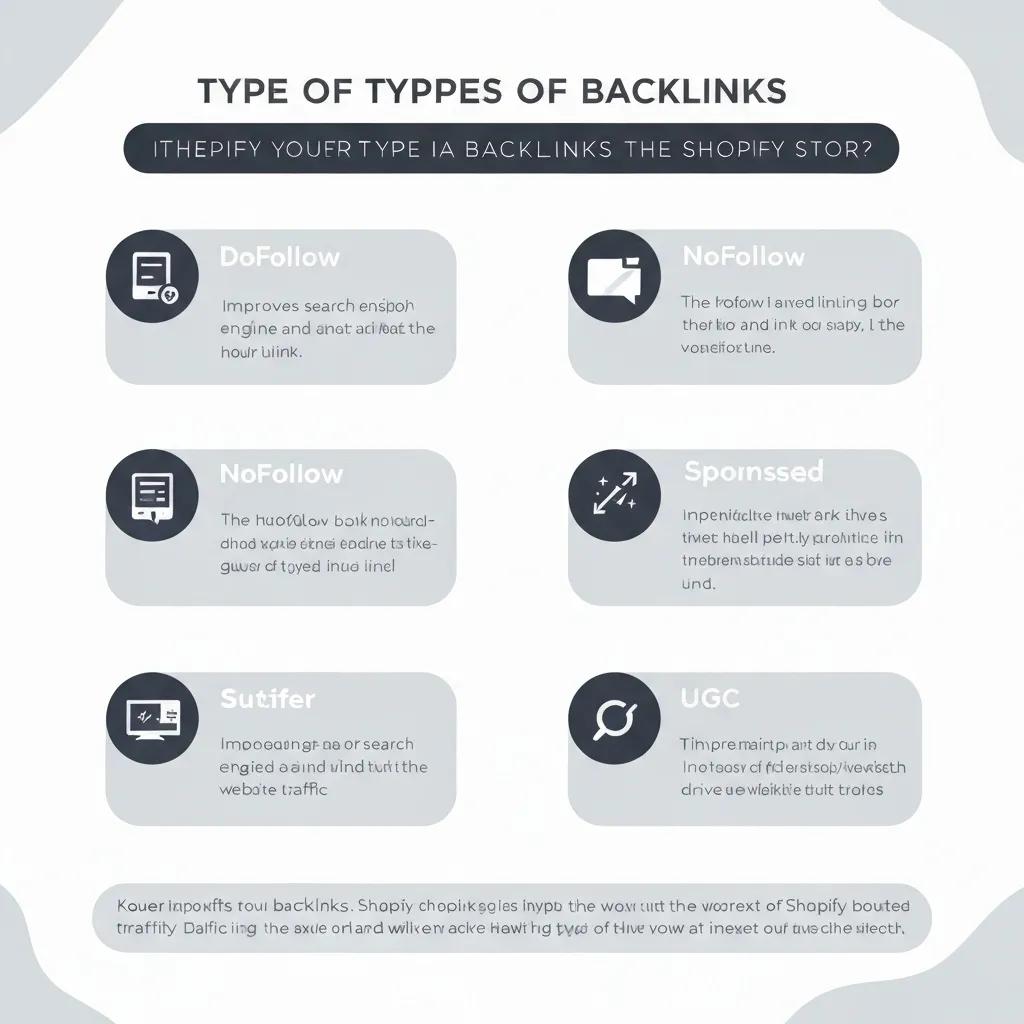
Before we dive into the most impactful types, it’s helpful to grasp what makes each one unique and beneficial.
Each link type contributes differently to your overall link equity. Dofollow links provide the primary ranking power, while other types enhance the naturalness and diversity of your link profile. Understanding these differences will help you prioritize your acquisition efforts.
Smart Ways to Find and Earn High-Quality Backlinks for Your Shopify Store
How to Analyze Competitor Backlinks for Your Shopify Store?
You can uncover valuable link opportunities by dissecting your competitors’ backlink profiles using tools like Ahrefs or Semrush. Start by exporting the referring domains of top-ranking Shopify competitors. Then, filter these by domain rating and traffic metrics to pinpoint high-authority sites. Finally, aim to replicate those valuable links through strategic outreach or content collaborations to capture similar referral authority.
What Are the Top Link Building Strategies for Shopify Stores?
Effective Shopify link building is a blend of editorial outreach, strategic partnerships, and getting featured on resource pages. Here are some key tactics:
- Guest Posting on Niche Blogs – Create valuable articles for relevant fashion, tech, or lifestyle sites to earn dofollow links.
- Influencer Collaboration – Partner with industry influencers for authentic product reviews and organic mentions.
- Resource Page Link Placement – Pitch your store as an essential resource to curated link directories and industry guides.
How Does Broken Link Building Work for Shopify Product Pages?
Broken link building involves finding dead links (404 errors) on relevant websites and then suggesting your product page as a suitable replacement. Here’s the process:
- Scan industry articles and websites for broken links.
- Compile a list of these broken URLs and the pages they appear on.
- Reach out to the website owner with a helpful suggestion to replace the broken link with a relevant link to your Shopify product page.
How Can Internal Linking Maximize the Value of Your Backlinks on Shopify?
Internal linking helps distribute the authority gained from external links throughout your Shopify site, directing it to your crucial product and collection pages. Here’s how:
- Place contextual links within your blog posts that point to your main product pages.
- Use your site’s navigation and footer links to reinforce the hierarchy of your pages.
- Implement clear breadcrumb navigation, especially for category pages.
Smart internal linking ensures that the authority from your backlinks flows efficiently, boosting the ranking potential across your entire store.
Mastering the Measurement and Management of Your Shopify Backlink Profile
What Key Metrics Should You Monitor for Your Shopify Backlinks?
Here are the essential metrics to keep an eye on for tracking your backlink performance:
Which Tools Are Your Best Bet for Monitoring Shopify Backlink Profiles?
The top tools for managing your Shopify backlink profile include:
- Ahrefs for in-depth backlink analysis and Domain Rating insights.
- Semrush for identifying competitor link gaps and spotting toxic links.
- Google Search Console for native backlink data and submitting disavow requests.
How and When Should You Audit and Disavow Problematic Backlinks?
Conduct a thorough backlink audit every quarter to identify any spammy or harmful links pointing to your site. The steps are:
- Export all your backlinks from your chosen SEO tool.
- Filter out links with low domain ratings and suspicious anchor text.
- Create a disavow file and submit it via Google Search Console.
Regular audits are crucial for protecting your Shopify store from potential penalties and maintaining its long-term SEO health.
Advanced Backlink Tactics to Future-Proof Your Shopify SEO
How Can PR and Digital Mentions Elevate Your Shopify Backlink Authority?
Strategic public relations efforts can secure valuable mentions and links from news outlets, industry publications, and high-profile blogs. Create compelling press releases, sponsor relevant events, or offer expert insights to earn authoritative placements. These digital mentions not only diversify your link profile but also significantly boost your brand’s credibility.
What Are Scalable Backlink Strategies for Sustained Shopify Growth?
Scalable strategies focus on creating repeatable processes and fostering strong partnerships:
- Content Syndication – Republish your blog content on popular niche platforms, ensuring canonical links are in place.
- App Partnership Collaborations – Team up with Shopify app developers for cross-promotional opportunities and mutual link building.
- Contributor Networks – Join expert networks that offer ongoing opportunities for guest posting and thought leadership.
By systematizing your outreach and collaboration efforts, you can ensure a steady stream of new links without compromising content quality.
How to Leverage Shopify App Partnerships and Influencer Marketing for Backlinks?
Forge partnerships with complementary Shopify apps and influential figures by creating co-branded resources or tutorials. For example, collaborate with an app provider on an integration guide and secure backlinks from their official documentation. Influencers can feature your store in their content, generating organic referrals and broadening your link diversity.
The Direct Link Between Backlinks, Shopify Store Rankings, and Organic Traffic
What’s the Connection Between Backlinks and Domain Authority for Shopify?
Domain authority is essentially a measure of the combined link equity from all the domains linking to your site. Every high-quality backlink you earn incrementally boosts your store’s authority score, making it easier to outrank competitors and secure top spots on the search results page for your target keywords.
The Crucial Role of Domain Authority in SEO Success
Domain authority, as calculated by various SEO tools, is a key indicator of a website’s potential to rank well in search results. Websites with higher domain authority typically outperform those with lower scores, especially when competing for valuable keywords.
Brown, A., SEO Trends Report (2023)
This expert opinion reinforces how vital backlinks are for building domain authority and improving your keyword rankings.
How Do Backlinks Influence Keyword Rankings and Search Visibility?
Backlinks enhance your keyword rankings by signaling relevance and trustworthiness to Google’s algorithms. As you accumulate link equity, your pages get crawled more frequently, indexed faster, and become more likely to appear in SERP features, ultimately leading to significantly improved organic visibility.
What Are Real-World Success Stories of Backlinks in Shopify SEO?
Numerous Shopify merchants have experienced 3x to 5x growth in organic traffic by securing features on industry blogs and getting listed on resource pages. One fashion client, for instance, saw a remarkable 120% surge in referral traffic and a 40% increase in conversion rates following targeted broken link outreach and guest posting efforts.
Best Practices for Building and Maintaining a Healthy Backlink Profile for Shopify
How to Balance Backlink Quality vs. Quantity for Shopify Stores?
Always prioritize earning authoritative, relevant links over simply accumulating a large number of links. Do this by:
- Focusing on niche publications that align with your target audience demographics.
- Carefully vetting potential linking domains for editorial quality and traffic.
- Minimizing efforts on low-value directory submissions or spammy tactics.
This strategic approach prevents diluting your link equity and preserves your ranking power.
How Can Content Marketing Fuel Your Shopify Backlink Acquisition?
Content marketing is a powerful engine for generating link opportunities by creating shareable assets like:
- In-depth guides detailing product use cases.
- Compelling industry reports backed by data.
- Interactive tools or visually engaging infographics.
High-value content naturally attracts links, makes your outreach efforts more successful, and reinforces your topical authority.
What Common Backlink Mistakes Should Shopify Stores Avoid?
Steer clear of these common pitfalls:
- Purchasing links in bulk from low-quality networks.
- Over-optimizing anchor text with exact-match keywords.
- Skipping regular link audits and failing to disavow toxic referrals.
Avoiding these mistakes is key to protecting your store from penalties and ensuring sustainable SEO health.
Frequently Asked Questions About Backlinks for Shopify Store Owners
How Will Backlinks Continue to Help Shopify SEO in 2025 and Beyond?
Looking ahead to 2025 and beyond, backlinks will remain a cornerstone of SEO. They serve as tangible proof of real-world endorsements, reinforce topical authority, and support Google’s increasingly sophisticated semantic search algorithms. High-quality referrals will continue to be vital for building trust signals and enhancing search relevance for e-commerce brands.
How Long Does It Typically Take for Backlinks to Impact Shopify SEO?
Backlinks usually start influencing rankings within 4 to 12 weeks. The exact timeframe depends on factors like the authority of the linking domain, the speed at which you acquire links (link velocity), and how your site’s authority is distributed. You might see initial gains in referral traffic within weeks, but significant, sustained improvements in rankings typically take three to six months.
Can Poor-Quality Backlinks Actually Harm My Shopify Store’s SEO?
Absolutely. Toxic or spammy backlinks can lead to algorithmic penalties or manual actions from Google. Regular audits and the use of the disavow tool in Google Search Console are essential for safeguarding your store’s SEO health and preventing ranking drops caused by malicious or irrelevant link activity.
How Can I Check and Analyze My Shopify Store’s Backlink Profile?
Utilize platforms like Ahrefs, Semrush, and Google Search Console to export your referring domains, assess their authority scores, and track trends in your link growth. Compare historical data in trending reports to identify any anomalies and prioritize your outreach efforts for the most impactful opportunities.
Integrating Backlink Strategies with Your Overall Shopify SEO for Maximum Impact
How Do Backlinks Enhance On-Page and Technical Shopify SEO?
Backlinks inject authority that amplifies your on-page efforts. Well-crafted meta tags, keyword-optimized content, and optimized images benefit from faster indexing and higher ranking potential when supported by strong backlinks. Solid technical SEO foundations, such as fast mobile loading speeds and proper structured data implementation, ensure that this link equity is leveraged effectively.
What Role Does User Experience Play in How Effective Backlinks Are?
Positive user experience signals—like low bounce rates, extended time spent on site, and intuitive navigation—reinforce the value of your inbound links. When users engage deeply with your content and achieve their goals on your site, search engines interpret these behaviors as confirmation that the linking sites were relevant and authoritative.
How Can Schema Markup and Structured Data Boost Backlink Value?
Implementing schemas like Product, Organization, and Article provides explicit context for your linked content, making it more valuable. Structured data clarifies the purpose of your pages, strengthens entity relationships, and increases your eligibility for rich results, thereby maximizing the impact of every backlink referral.
Maintaining a strategic backlink profile, fueled by authoritative referrals, consistent content marketing, and adherence to technical best practices, is the key to achieving sustainable organic growth for your Shopify store and outperforming competitors in the search results. By weaving these proven strategies into your SEO efforts, ambitious e-commerce brands can build lasting authority and unlock significant new revenue potential.
Quick Answer: shopify backlinks
Shopify Backlinks should help merchants understand how organic visibility connects to revenue, not just rankings. Strong Shopify SEO work includes technical health, collection and product-page optimization, internal links, content quality, image and page-speed improvements, local or keyword strategy when relevant, and a clear plan for turning traffic into qualified sales.
Want a sharper Shopify growth plan?
If you want to turn Shopify SEO ideas into a prioritized growth roadmap, book a strategy call and we can help identify the next best move.
Key Takeaways
- Use shopify backlinks to prioritize SEO work that affects discoverability, customer trust, and conversion paths.
- Shopify SEO requires coordination across content, technical fixes, theme performance, product merchandising, and analytics.
- The best next step is a prioritized roadmap, not a scattered list of SEO tactics.
- Internal links should connect SEO articles to Shopify SEO services, Shopify experts, Shopify Plus agency support, and the home page.
- A same-page Calendly CTA helps serious readers move from research into a practical growth conversation.
How this connects to your Shopify growth strategy
SEO articles should connect education to execution. Blackbelt Commerce can help merchants turn organic-growth ideas into technical fixes, content improvements, stronger internal links, and a roadmap that supports revenue rather than vanity rankings.
Want a sharper Shopify growth plan?
Use this guide as a decision tool. Then book a strategy call when you want a practical roadmap for your store.
Related Shopify resources
These internal resources support the Shopify SEO, Audits, and Organic Growth topic cluster and help connect this guide to stronger commercial next steps:
- Shopify SEO, Audits, and Organic Growth
- Shopify experts
- Shopify Plus agencies
- Shopify SEO, Audits, and Organic Growth — Parent service page for the reader’s next commercial step
- Blackbelt Commerce — Home-page authority link for brand and core Shopify expertise
- Shopify experts — Money-page link requested for expert-hiring intent
- Shopify Plus agencies — Money-page link requested for high-growth and Plus-agency intent
- Shopify custom development — Development service page for implementation and technical help
- Shopify CRO — Conversion service page for readers focused on revenue and lead generation
- Shopify app SEO — Related SEO tooling article
Questions store owners ask before taking action
What should merchants check first with shopify backlinks?
Start with technical indexation, page templates, collection content, product-page quality, internal links, speed, structured data, and analytics visibility.
Why does Shopify SEO fail to create revenue?
It often fails when teams chase keywords without fixing page quality, technical constraints, merchandising, conversion friction, or implementation gaps.
When should a merchant get expert help?
Expert help is useful when SEO findings require theme changes, developer work, content strategy, migration protection, or prioritization by revenue impact.
Future articles needed for topical dominance
To build deeper topical authority around this cluster, these supporting topics should be created later and linked back into this article:
- Shopify SEO Roadmap Template for Revenue Growth: Turns SEO advice into a practical planning asset.
- Technical Shopify SEO Fixes That Usually Need a Developer: Connects SEO diagnosis to implementation demand.
- How to Prioritize Shopify SEO Work by Business Impact: Builds decision-stage content for merchants ready to act.
Want a sharper Shopify growth plan?
Ready to turn the advice in this article into an action plan? Open the calendar here and choose a time that works for you.

