

Shopify Blog SEO Tips That Help Google Understand Your Store
shopify blog seo Shopify blog SEO helps your store earn organic traffic with keyword-focused posts, internal links, clear structure, helpful answers, and stronger content signals. If you need hands-on support, Blackbelt Commerce can help you turn this guidance into a practical Shopify growth plan.
Why Shopify Blog SEO Is Your Secret Weapon for More Sales
Shopify blog SEO is the practice of optimizing your Shopify store’s blog content to rank higher in search engines and drive more organic traffic to your products. Here’s what you need to know:
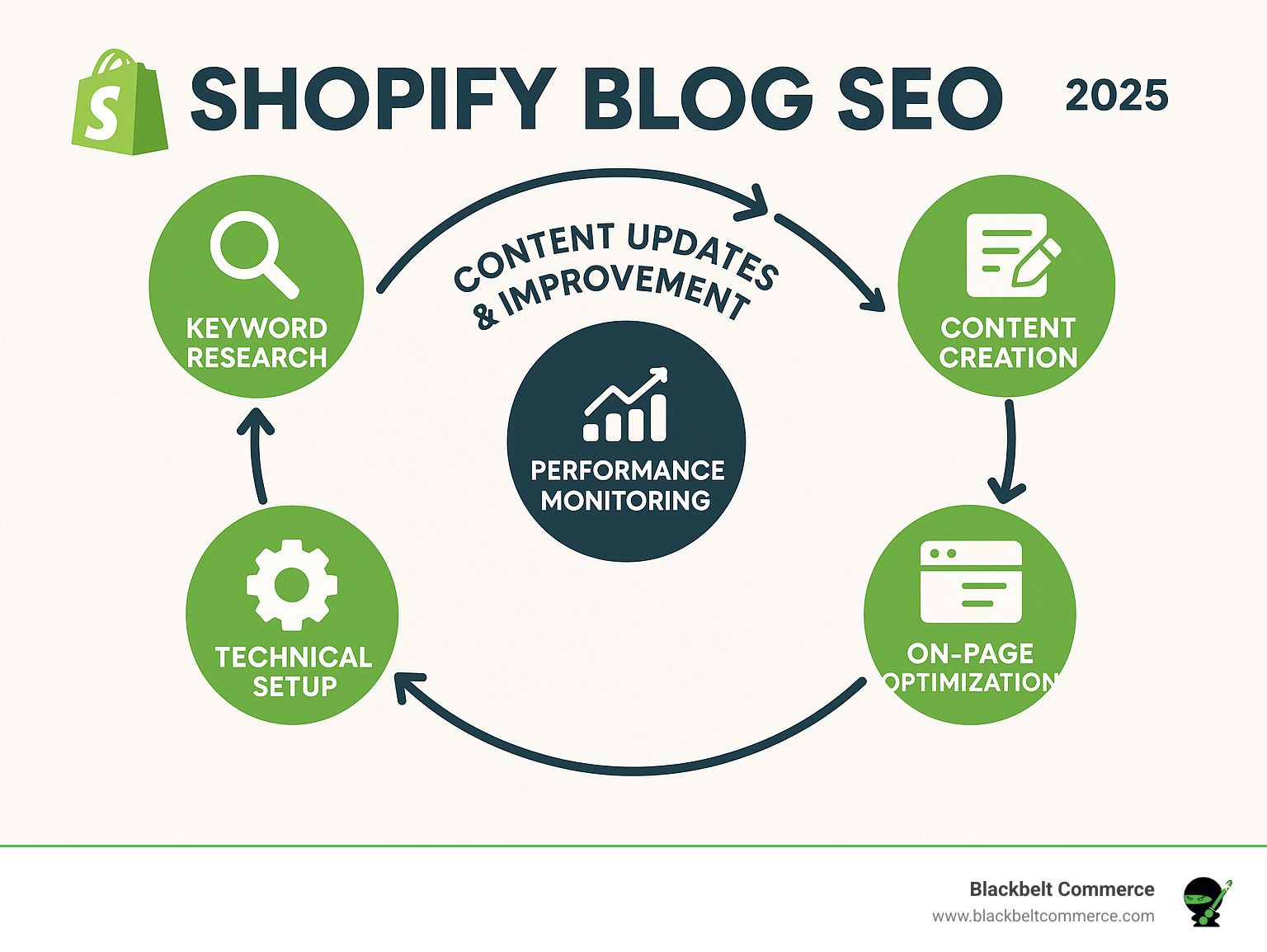
Key Elements of Shopify Blog SEO:
- Keyword Research – Find terms your customers actually search for
- On-Page Optimization – Use keywords in titles, URLs, and meta descriptions
- Content Structure – Organize posts with H1, H2, H3 headers and internal links
- Technical Setup – Ensure fast loading, mobile-friendly design, and proper indexing
- Performance Tracking – Monitor rankings, traffic, and conversions
The numbers don’t lie: the top five spots on Google’s first page generate 70% of all clicks. With 42% of online shoppers using search engines to research products, your blog can be the bridge between customer questions and your product solutions.
Most Shopify store owners focus only on product pages for SEO. But here’s what they’re missing: blog content targets customers in the research phase – when they’re looking for solutions but haven’t decided where to buy yet. This is your chance to build trust, demonstrate expertise, and guide them toward your products.
Mobile traffic now accounts for over 60% of all website visits, making mobile-optimized blog content essential for reaching today’s shoppers who research on their phones.
I’m Cesar A Beltran, Founder and CEO of Blackbelt Commerce, where I’ve helped over 1000+ businesses optimize their Shopify stores for better search performance over the past 15+ years. Through countless Shopify blog SEO implementations, I’ve seen how strategic blog optimization can transform a store from invisible to industry leader.
Shopify blog seo basics:
Want your Shopify blog to rank better?
Book a free strategy call and we’ll review your blog topics, keyword map, internal links, and SEO content opportunities.
What Is Shopify Blog SEO & Why It Matters
Shopify blog SEO goes beyond just writing blog posts – it’s about creating content that search engines can easily find, understand, and rank while providing genuine value to your customers. When done correctly, it becomes a powerful driver of organic visibility that compounds over time.
Think of your blog as a magnet for potential customers who are researching solutions to their problems. While your product pages target people ready to buy, your blog content captures those in the earlier stages of their buyer journey. This is where you build brand authority and establish trust before they’re ready to make a purchase.
The conversion impact is significant. Blog content that ranks well can drive thousands of monthly visitors to your store, and these visitors often have higher engagement rates because they’re actively seeking information. Unlike paid traffic that stops when you stop spending, organic blog traffic continues to deliver value 24/7.
With the rise of zero-click searches – where Google answers questions directly in search results – having well-optimized blog content increases your chances of appearing in featured snippets and AI-generated answers. This visibility, even without clicks, builds brand recognition and authority.
Consider this: Google processes over 16.4 billion searches daily, and search contributes around 68% of all trackable website traffic. Your blog content can capture a meaningful slice of this traffic by answering the questions your ideal customers are asking.
Shopify Blog SEO Fundamentals
Shopify Blog SEO Keyword Research
Effective shopify blog SEO starts with understanding what your customers are actually searching for. We’ve found that successful e-commerce blogs focus on long-tail keywords that reflect specific customer problems and questions.
Start with seed keywords related to your products, then expand using tools like Ahrefs, SEMrush, or the free Ubersuggest. Look for keywords with decent search volume but lower competition – these are your golden opportunities.
Pay special attention to search intent. Are people looking for information (how-to guides), comparing products (reviews and comparisons), or ready to buy (best X for Y)? Your blog should target primarily informational and commercial investigation queries.
The “People Also Ask” section in Google search results is a goldmine for blog topics. These questions represent real customer concerns and often have lower competition than broader terms.
For example, instead of targeting “dog toys” (highly competitive), focus on “what are dog chew toys made of” or “how to choose safe dog toys for puppies.” These long-tail variations have clearer intent and are easier to rank for.
More info about keyword research
Structuring Posts for Shopify Blog SEO
Proper content structure is crucial for both search engines and readers. Start every post with a clear H1 title that includes your target keyword, then use H2 and H3 headers to organize your content logically.
Create a table of contents for longer posts – this improves user experience and can help your content appear in featured snippets. Many readers scan content first, so make it easy for them to find what they’re looking for.
Include FAQ sections in your posts and mark them up with FAQ schema. This structured data helps Google understand your content better and increases your chances of appearing in rich results.
Internal linking is essential for Shopify blog SEO. Link to relevant product pages, other blog posts, and important category pages. This helps search engines understand your site structure and keeps readers engaged longer.
Focus on readability by using short paragraphs, bullet points, and plenty of white space. The average top-ranking article contains 1,447 words, but quality matters more than quantity. Write for your audience first, search engines second.
Essential On-Page Elements Checklist:
- H1 tag with primary keyword
- H2 and H3 subheadings for structure
- Table of contents for long posts
- FAQ section with schema markup
- Internal links to related content
- Short paragraphs and bullet points
- Images with descriptive alt text
- Meta description under 160 characters
On-Page Optimization Techniques That Make Google Love You
Using Keywords in Titles, Slugs & Meta Tags for Shopify Blog SEO
Your title tag is your first impression in search results, so make it count. Include your primary keyword near the beginning of the title and keep it under 55 characters to avoid truncation. Front-loading keywords in titles can improve click-through rates significantly.
URL slugs should be clean, descriptive, and include your target keyword. Instead of “/blog/post-123,” use “/blog/how-to-choose-organic-dog-food.” This helps both users and search engines understand what your page is about.
Meta descriptions don’t directly impact rankings, but they heavily influence click-through rates. Write compelling descriptions under 160 characters that include your primary keyword and a clear value proposition. Think of them as mini-advertisements for your content.
The key is natural keyword placement. Google’s algorithms are sophisticated enough to understand context and synonyms, so avoid keyword stuffing. Instead, use variations and related terms throughout your content.
Optimized vs Non-Optimized Title Comparison:
| Element | Non-Optimized | Optimized |
|---|---|---|
| Title | “Tips for Dog Owners” | “How to Choose Safe Dog Toys: 7 Expert Tips for Pet Owners” |
| URL | “/blog/post-456” | “/blog/how-to-choose-safe-dog-toys” |
| Meta Description | “Learn about dogs and toys” | “Find 7 expert tips for choosing safe, durable dog toys that keep your pet happy and healthy. Avoid toxic materials and choking hazards.” |
Internal Linking & Navigation Boosters
Strategic internal linking is one of the most underused aspects of Shopify blog SEO. Every blog post should link to 3-5 relevant pages on your site, including product pages, other blog posts, and important category pages.
Use descriptive anchor text that tells readers and search engines what to expect on the linked page. Instead of “click here,” use “organic dog food selection guide” or “best dog toys for aggressive chewers.”
Implement breadcrumb navigation to help users understand their location on your site and provide additional internal linking opportunities. This is especially important for e-commerce sites with complex category structures.
Avoid creating orphaned pages – content that has no internal links pointing to it. These pages are harder for search engines to find and typically perform poorly in rankings.
Contextual links within your content perform better than generic “related posts” sections. Link naturally when mentioning related topics, products, or concepts.
More info about content marketing
Image & Multimedia SEO
Images and multimedia content significantly impact engagement metrics, which are indirect ranking factors. Every image should have descriptive alt text that explains what’s in the image and includes relevant keywords when appropriate.
Shopify automatically serves images in WebP format, which offers over 30% file size reduction compared to JPEG or PNG. This built-in optimization gives Shopify stores a performance advantage.
Use descriptive file names before uploading images. Instead of “IMG_1234.jpg,” use “organic-dog-food-ingredients-comparison.jpg.” This helps search engines understand your image content.
Create original graphics and infographics when possible. These tend to earn more backlinks and social shares than stock photos. Tools like Canva make it easy to create professional-looking graphics even without design experience.
Consider adding captions to your images, especially for product photos or instructional content. Captions are read by users and can include additional keywords naturally.
Video content can significantly boost engagement metrics. Even simple product demonstration videos or talking-head explanations can increase time on page and reduce bounce rates.
Scientific research on image crawlability
Technical & Performance Checklist for Blog Success
Technical SEO forms the foundation of successful Shopify blog SEO. Without proper technical setup, even the best content won’t reach its ranking potential.
Site speed is crucial – Shopify stores load on average 1.8 times faster than other e-commerce platforms, but you can still optimize further. Core Web Vitals, including Largest Contentful Paint (LCP), First Input Delay (FID), and Cumulative Layout Shift (CLS), directly impact rankings.
Ensure your blog is mobile-friendly using Google’s Mobile-Friendly Test tool. With over 60% of website traffic coming from mobile devices, mobile optimization isn’t optional – it’s essential.
Your SSL certificate should be properly configured for HTTPS. This is both a ranking factor and a trust signal for visitors. Shopify handles this automatically, but verify it’s working correctly.
Submit your sitemap to Google Search Console and Bing Webmaster Tools. Shopify automatically generates sitemaps, but you need to submit them manually to help search engines find your content faster.
Configure your robots.txt file to ensure search engines can crawl your important pages while blocking unnecessary ones like admin areas and checkout pages.
Consider using a CDN (Content Delivery Network) to serve your content faster to global audiences. Shopify includes Fastly CDN by default, providing excellent performance worldwide.
Latest research on mobile shoppers
Monitoring & Fixing Issues with Search Console
Google Search Console is your direct line of communication with Google about your site’s performance. Set it up immediately and check it regularly for important insights about your Shopify blog SEO.
Monitor the Coverage report to identify crawl errors, indexing issues, and pages that aren’t being indexed. Common issues include redirect chains, duplicate content, and pages blocked by robots.txt.
The Performance report shows which queries are driving traffic to your blog and how your content performs in search results. Use this data to identify opportunities for improvement and content gaps.
Set up alerts for critical issues like manual actions, security problems, or significant drops in indexed pages. Early detection allows for quick fixes before problems impact your rankings.
Pay attention to the Page Experience report, which covers Core Web Vitals and other user experience factors. Poor page experience can limit your ranking potential even with great content.
Use the URL Inspection tool to troubleshoot specific pages that aren’t performing well. This tool shows exactly how Google sees your pages and identifies any issues preventing proper indexing.
More info about Shopify SEO quick wins
Measuring, Updating & Promoting Your Shopify Blog Content
Successful Shopify blog SEO requires ongoing measurement and optimization. Track key performance indicators (KPIs) including organic traffic, keyword rankings, click-through rates, and conversion rates from blog traffic.
Use Google Analytics to monitor user behavior on your blog posts. Look for metrics like time on page, bounce rate, and pages per session. High-quality content typically shows longer engagement times and lower bounce rates.
Set up rank tracking for your target keywords using tools like Ahrefs, SEMrush, or Surfer. Monitor your positions over time and identify opportunities for improvement.
Track backlink growth to your blog content. Quality backlinks remain one of the strongest ranking factors, so monitor which content earns links and try to replicate those successes.
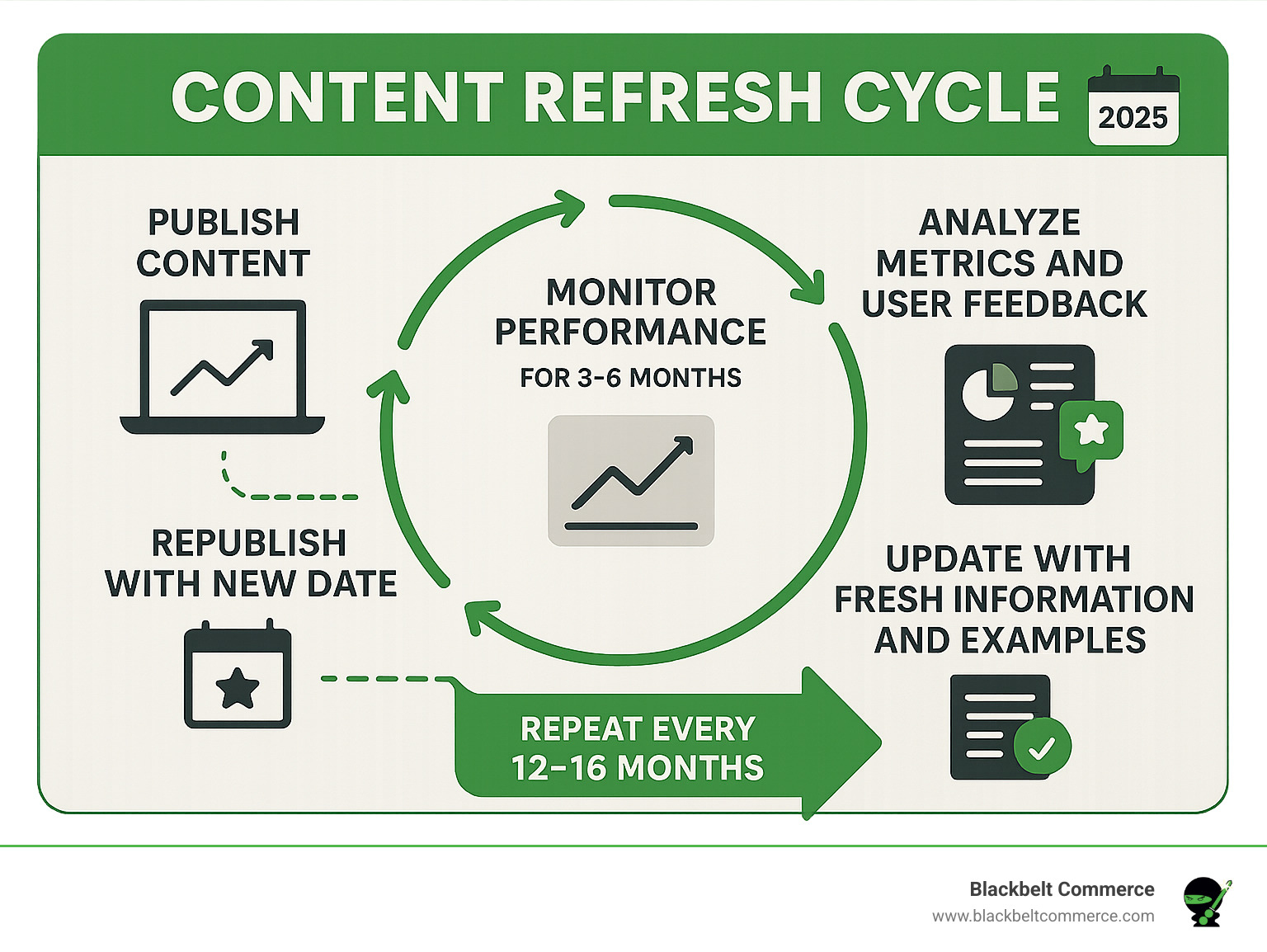
Content refresh is crucial for maintaining rankings. Update older blog posts every 12-16 months with new information, statistics, and examples. This signals freshness to search engines and can boost rankings significantly.
Don’t forget promotion beyond SEO. Share your blog content on social media, include it in email newsletters, and consider guest posting opportunities to expand your reach.
shopify blog seo: AI Search Summary
Direct answer: Shopify blog SEO helps your store earn organic traffic with keyword-focused posts, internal links, clear structure, helpful answers, and stronger content signals. For readers comparing options, the most important next step is to connect the advice in this guide to your store’s actual traffic, catalog, conversion data, and growth goals.
Key takeaways for improving Shopify blog SEO
- Primary topic: shopify blog seo
- Best fit: Shopify and ecommerce brands that need practical guidance, implementation support, or expert review.
- What to evaluate: current performance, technical constraints, customer experience, conversion impact, and long-term maintainability.
- Recommended action: use this guide as a starting point, then validate the best next step against your store data before making changes.
Frequently asked question
Can Blackbelt Commerce help with improving Shopify blog SEO? Yes. Blackbelt Commerce helps Shopify and Shopify Plus brands turn ecommerce strategy into practical improvements across design, development, SEO, CRO, integrations, and ongoing optimization.
Ready to get help with improving Shopify blog SEO?
Book a free strategy call and we’ll review your blog topics, keyword map, internal links, and SEO content opportunities.
Frequently Asked Questions about Shopify Blog SEO
How often should I refresh old blog posts?
We recommend reviewing and updating your blog content every 12-16 months. This historical optimization can significantly boost rankings for posts that have dropped in performance.
Focus on updating statistics, adding new examples, refreshing outdated information, and improving the overall user experience. Posts that receive regular updates often outperform newer content that’s left to stagnate.
Which Shopify apps help with blog SEO tracking?
Several apps can streamline your Shopify blog SEO efforts:
- Smart SEO – Automates meta tags and structured data
- TinyIMG – Optimizes images for faster loading
- SearchPie – Provides comprehensive SEO analysis
- Plug in SEO – Identifies and fixes common SEO issues
However, don’t rely entirely on apps. Manual optimization and strategic thinking remain essential for competitive success.
What mistakes should I avoid when optimizing my blog?
Common Shopify blog SEO mistakes include:
- Keyword stuffing – Using keywords unnaturally or excessively
- Thin content – Publishing short, low-value posts just to have content
- Broken internal links – Linking to pages that don’t exist or redirect
- Ignoring mobile optimization – Not testing how content appears on mobile devices
- Neglecting page speed – Publishing content with large, unoptimized images
- Duplicate content – Copying content from other sources without adding value
Focus on creating genuinely helpful content that serves your audience’s needs, and the SEO benefits will follow naturally.
Conclusion
Shopify blog SEO is a powerful long-term strategy that can transform your store’s organic visibility and drive consistent, high-quality traffic to your products. By implementing the techniques we’ve covered – from strategic keyword research to technical optimization – you’ll create a blog that both Google and your customers love.
SEO isn’t a one-time task but an ongoing process. Start with the fundamentals: keyword research, proper content structure, and technical optimization. Then build on that foundation with regular content creation, performance monitoring, and strategic updates.
The key is consistency and patience. While paid advertising delivers immediate results, Shopify blog SEO builds compound value over time. Posts that rank well today can continue driving traffic and sales for years to come.
At Blackbelt Commerce, we’ve helped hundreds of Shopify stores implement successful blog SEO strategies. Our experience shows that stores with well-optimized blogs typically see 3-5x more organic traffic than those focusing solely on product pages.
Ready to take your Shopify blog to the next level? Our team specializes in comprehensive SEO strategies that drive real business results. From technical optimization to content strategy, we’ll help you build a blog that consistently attracts and converts your ideal customers.
More info about Shopify SEO services
Quick Answer: shopify blog seo
Shopify blog SEO helps Google and AI answer engines understand how each article supports a store’s products, services, and expertise. The best approach combines search intent, internal links, structured answers, FAQs, and commercial bridges so informational content can earn traffic and support lead generation.
Want a sharper Shopify growth plan?
If this article connects to a current store decision, use the calendar to book a strategy call and turn the idea into a practical plan.
Key Takeaways
- Start with the search intent behind shopify blog seo: the reader needs a clear explanation before they are ready for a service conversation.
- Keep the advice practical and specific so the post feels editorial, useful, and worth sharing.
- Use the topic cluster links to connect the article to related BBC expertise instead of leaving it as a standalone blog post.
- Add a natural commercial bridge only after the article has answered the reader’s main question.
- Use the same-page Calendly CTA so qualified readers can book a strategy call without being sent to a long form.
How this connects to your Shopify growth strategy
This article should remain useful for readers researching shopify blog seo, but it also needs to show when the topic becomes a business decision. For the Shopify SEO cluster, the commercial bridge is practical: once the reader understands the concept, the next step is deciding whether their current Shopify setup can support the desired experience, conversion path, and operational workflow. That is where expert planning, design, development, CRO, and SEO support can turn the idea into measurable store improvements.
Want a sharper Shopify growth plan?
Use this guide as a decision tool. Then book a strategy call when you want a practical roadmap for your store.
Related Shopify resources
These internal resources support the Shopify SEO topic cluster and help connect this guide to stronger commercial next steps:
- Shopify Custom Development
- Shopify experts
- Shopify Plus agencies
- Shopify Custom Development — Parent service page for the reader’s next commercial step
- Shopify experts — Money-page link requested for expert-hiring intent
- Shopify Plus agencies — Money-page link requested for high-growth and Plus-agency intent
- Shopify CRO — Conversion service page for readers focused on revenue and lead generation
- Shopify app SEO — Related SEO tooling article
Questions store owners ask before taking action
What does shopify blog seo mean for a Shopify merchant?
For a Shopify merchant, shopify blog seo is about choosing or improving the store experience in a way that supports traffic, trust, conversion, and long-term operations.
When should a store owner get expert help?
Expert help becomes useful when the decision affects SEO, conversion, theme architecture, integrations, migration risk, or revenue-critical customer journeys.
How should this topic connect to a broader content cluster?
The post should link to a parent service page, related support articles, and money pages so Google and AI systems understand how the article supports a broader area of expertise.
What is the lead-generation goal of this article?
The article should educate first, then guide qualified readers toward booking a strategy call when they need help applying the advice to their own store.
What should be avoided during optimization?
Avoid filler, unrelated phrases, invented statistics, broken formatting, duplicated CTAs, and any edit that makes the article feel less helpful or less polished.
Future articles needed for topical dominance
To build deeper topical authority around this cluster, these supporting topics should be created later and linked back into this article:
- Shopify Blog Seo Checklist for Shopify Store Owners: Creates a practical support article that turns the Shopify SEO topic into an actionable review tool.
- Common Shopify Blog Seo Mistakes and How to Avoid Them: Captures problem-aware searches and gives BBC a natural place to explain implementation risks without hard selling.
- When to Hire Shopify Experts for Shopify Blog Seo: Connects informational demand to the expert-hiring money page while preserving educational intent.
Want a sharper Shopify growth plan?
Ready to turn the advice in this article into an action plan? Open the calendar here and choose a time that works for you.

