


Blog updated with the most recent Shopify and eCommerce strategies on 05/02/2026.
Uncovering Hidden Fees: What You Must Know Before Setting Up Your Shopify Store
Launching your Shopify store might seem straightforward, but unexpected charges can quickly chip away at your profits before you even ring up your first sale. Ever wondered, “Are there hidden fees when setting up a Shopify store?” This guide lays it all out, covering subscription tiers, transaction processing, app and theme expenses, scaling costs, and smart strategies to make every dollar count. You’ll discover how to pick the perfect plan for your current stage of growth, navigate payment gateway surcharges like a pro, budget for essential apps and premium themes, anticipate fulfillment and POS fees, and implement cost-saving measures that safeguard your bottom line. By mapping out every single cost—from recurring subscriptions to one-off development investments—this resource brings you total transparency, empowers you to make sharp decisions, and sets the foundation for a high-return Shopify venture.
What Are the True Costs of Shopify Subscription Plans?
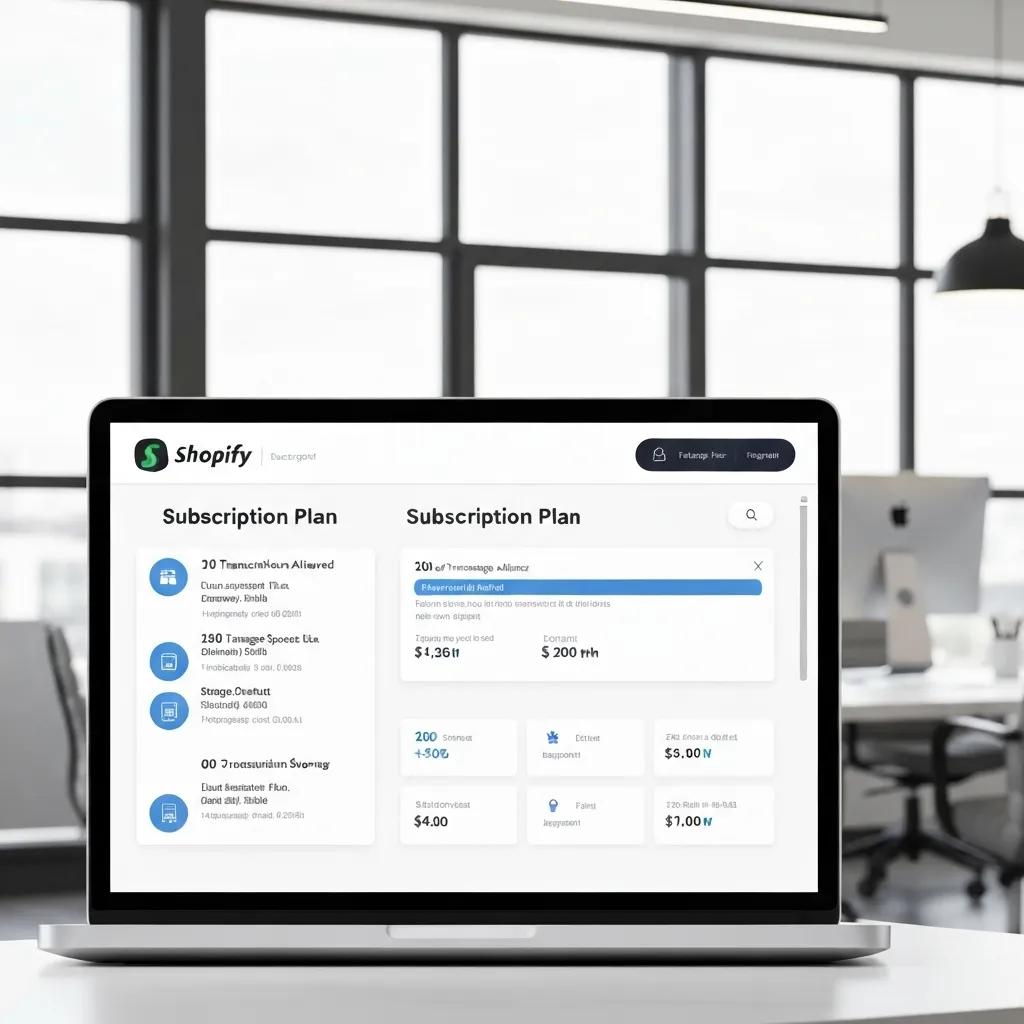
Your Shopify subscription plan dictates your foundational monthly and annual expenses, offering tiered features designed to support businesses at every stage. Understanding precisely what each plan includes and excludes is crucial for selecting the option that best balances functionality, growth potential, and budget control.
What Does Each Shopify Plan Include and Exclude?
The Basic, Shopify, and Advanced plans bundle core functionalities—like your online store, unlimited products, blogging capabilities, and discount codes—while differing in reporting depth, the number of staff accounts, and shipping discounts.
Each successive tier progressively lowers transaction fees and unlocks more sophisticated analytics. Knowing these distinctions helps you forecast when an upgrade will deliver an ROI that justifies the increased subscription cost. Moving from Basic to the Shopify plan often becomes financially advantageous once your monthly sales surpass a specific benchmark, while the Advanced plan is tailored for high-volume merchants who demand granular insights.
Shopify Pricing Plans Guide: Which One Is the Best?
Shopify offers a spectrum of pricing plans, each with distinct features, staff account limits, and transaction fee structures. The Basic plan provides standard reporting, whereas the Advanced plan offers expanded staff accounts and advanced custom reporting capabilities.
How Do Shopify Starter and Plus Plans Differ in Pricing?
The Shopify Starter plan operates on a pay-as-you-go model at just $5 per month, perfect for businesses focused on link-based selling, particularly those leveraging social media without a full-fledged website. In stark contrast, Shopify Plus is an enterprise-grade solution, starting at approximately $2,300 per month, and includes highly customizable workflows, dedicated support, and comprehensive concierge migration services.
- Starter Plan → Minimal setup cost → Limited storefront features
- Plus Plan → Premium subscription → Enterprise-grade automation
While Starter significantly lowers the barrier to entry, Plus is engineered to accelerate scaling with reduced transaction rates, dedicated wholesale channels, and expanded API call limits that are essential for powering high-traffic operations.
How Can You Choose the Right Shopify Plan for Your Business?
Carefully assess your average order volume, the number of staff accounts you require, the level of reporting sophistication you need, and your projected growth trajectory. For stores just starting out with monthly revenues under $5k, the Basic plan is often perfectly adequate. Growing retailers generating between $20k–$50k monthly should seriously consider the Shopify or Advanced plans for their enhanced reporting and fee savings. Enterprises with complex operational demands will find the greatest value in Shopify Plus. Align your plan selection with your operational complexity and margin targets to avoid overspending on features you won’t use or facing upgrade delays that could hinder your growth.
How Do Shopify Transaction and Payment Processing Fees Work?

Every single sale processed through Shopify incurs transaction and processing fees, which are influenced by your chosen payment gateway and your specific plan level. Gaining a clear understanding of these fee structures is key to minimizing costs per order and protecting your profit margins.
Understanding Shopify Transaction Fees
Shopify imposes transaction fees based on the plan you select and the payment gateway you utilize. These fees encompass standard processing charges and may include additional surcharges if you opt for third-party payment providers.
What Are Shopify Payments Fees and How Do They Affect Your Costs?
Shopify Payments is Shopify’s integrated payment gateway, designed to streamline the checkout process and eliminate extra transaction fees. It charges credit card processing rates of 2.9% + 30¢ for the Basic plan, 2.6% + 30¢ for the Shopify plan, and 2.4% + 30¢ for the Advanced plan.
- Using Shopify Payments → No extra gateway fee → Simplified reconciliation
By choosing Shopify Payments, merchants bypass the 0.5%–2% surcharge that is applied when using third-party processors, directly boosting your net revenue on every sale.
What Extra Charges Come from Third-Party Payment Gateways?
When you opt for external gateways like PayPal or Stripe, Shopify adds a 0.5%–2% per-transaction surcharge on top of the gateway’s own fee. For instance, using Stripe at 2.9% + 30¢ combined with a 1% Shopify surcharge results in a total cost of 3.9% + 30¢ per sale on the Basic plan.
- Gateway Fee (e.g., 2.9% + 30¢)
- Shopify Surcharge (e.g., 1%)
This often-overlooked surcharge can quietly erode your profitability, making Shopify Payments the more financially sensible default choice for the vast majority of merchants.
How Do International Sales Impact Shopify Transaction Fees?
Global transactions come with currency conversion fees (typically 1%–2%) in addition to standard processing rates, plus potential cross-border surcharges from banks. If you’re selling in multiple currencies, make sure to enable Shopify Markets and Shopify Payments’ multi-currency support to secure competitive exchange rates and minimize conversion markups.
- Efficient multi-currency setup → Lower exchange margins → Improved international competitiveness
What Are Chargeback Fees and How Can You Manage Them?
Chargebacks incur a fixed fee (a $15 charge on Shopify Payments) along with the loss of the sale revenue. To significantly reduce disputes, implement crystal-clear refund policies, require robust customer verification for high-value orders, and leverage Shopify’s built-in fraud analysis tools to flag potentially risky transactions. Maintaining open communication and thorough documentation is paramount to decreasing chargeback frequency and the associated penalties.
What Are the Real Costs Behind Shopify Apps and Themes?
Shopify’s power lies in its extensibility through apps and themes, enabling deep store customization. However, this also introduces recurring subscriptions and one-time investments that can rapidly escalate. Differentiating between essential plugins and nice-to-have enhancements is key to keeping your monthly expenses in check.
Which Shopify Apps Are Essential vs. Optional and What Are Their Fees?
Essential apps are those that support critical business functions like SEO optimization, inventory management, and abandoned-cart recovery. Optional apps—such as loyalty programs, advanced review systems, or subscription management tools—offer incremental value but can add $10–$50 per month each to your costs.
- SEO Optimizer: $29/mo
- Inventory Tracker: $15/mo
- Reviews & Ratings: $9/mo (optional)
- Loyalty Rewards: $49/mo (optional)
Make it a habit to regularly audit your app roster, deactivating underutilized tools and eliminating overlapping features to prevent unnecessary cost inflation.
When Should You Invest in Premium Shopify Themes?
While free themes provide basic storefront functionality, premium themes ($150–$350 one-time purchase) offer advanced customization options, built-in optimization features, and unique design layouts that significantly enhance user experience and conversion rates. Investing in a premium theme truly pays off when improved site speed and a superior design lead to higher average order values and longer session durations.
How Much Does Custom Shopify Development Cost?
Custom theme development, complex API integrations, and the creation of advanced features can range anywhere from $2,000 to $20,000, depending heavily on the project’s complexity and the expertise of the development agency. Partnering with seasoned Shopify developers ensures efficient coding, a scalable architecture, and reduced long-term maintenance costs, transforming the upfront investment into a strategic accelerator for sustained profitability.
What Hidden Costs Arise When Scaling Your Shopify Store?
As your business expands, new operational expenses inevitably emerge in areas like logistics, point-of-sale systems, marketing efforts, and team growth. Anticipating these costs proactively is crucial to prevent budget overruns during critical growth phases.
How Do Shipping, Fulfillment, and Shopify POS Fees Add Up?
Shipping carriers charge for postage plus label handling fees (typically 2%–5%), and the shipping discounts offered through Shopify Shipping vary by plan. If you integrate Shopify POS, be prepared for hardware expenses (like tablet stands and card readers) and transaction fees, which are 2.7% + 0¢ on the Shopify plan and 2.4% + 0¢ on the Advanced plan.
- Shipping Costs → Carrier rates + handling fees
- POS Costs → Hardware investment + payment fees
By combining fulfillment automation apps with strategically negotiated carrier rates, you can significantly reduce your per-order logistics spend as your volume scales.
What Are the Marketing, SEO, and Customer Support Tool Costs?
Ongoing promotional activities require investment in email marketing platforms ($20–$200/mo), dedicated paid advertising budgets, advanced SEO tools ($50–$100/mo), and helpdesk software ($15–$50 per agent/mo). When aggregated, these tools can represent 5%–10% of your total revenue. It’s vital to prioritize platforms with tiered pricing structures and proven ROI to maintain scalable profit margins.
How Do Staff Accounts and Advanced Features Affect Your Budget?
Each additional staff account incurs a cost of $0–$50/mo depending on your plan, in addition to expenses for Shopify Flow automations and advanced API calls on higher tiers. As your team grows, consolidating permissions and implementing role-based access controls can effectively curb license fees without compromising operational control.
How Can You Reduce and Optimize Your Shopify Fees Effectively?
Lowering your Shopify expenses involves making strategic choices regarding billing cycles, payment gateways, app utilization, and seeking professional guidance. Implementing these tactics diligently will keep your costs lean and efficient as your business scales.
Why Is Using Shopify Payments Key to Avoiding Extra Transaction Fees?
Shopify Payments completely eliminates the 0.5%–2% surcharge applied to third-party gateways and consolidates all payment processing under a single, easy-to-manage dashboard. Migrating all your credit card transactions to Shopify Payments not only simplifies bookkeeping but also maximizes your net revenue on every single order.
How Does Annual Billing Help Lower Shopify Subscription Costs?
Choosing to pay annually or biennially for your Shopify subscription grants you a 10% discount on the standard monthly rates. This effectively reduces the Basic plan from $39 to $35.10 per month, with proportional savings scaling up for higher tiers. Locking in these discounted rates also provides a shield against potential future price increases.
What Are Best Practices for Auditing and Managing Shopify Apps?
Conduct thorough app reviews on a quarterly basis:
- Identify any apps that are underutilized or have overlapping functionality.
- Evaluate the ROI of each tool and cancel subscriptions for those providing minimal value.
- Explore replacing expensive apps with features already built into your theme or consider custom-coded solutions.
This disciplined audit routine is essential for preventing the silent creep of monthly expenses and ensuring your app stack directly supports your actual business needs.
How Can Shopify Experts Help You Optimize Store Costs?
Engaging with seasoned consultants can uncover significant opportunities for reducing hidden fees through custom integrations, negotiating bulk app licensing, and implementing efficient workflow automations. Partner with Blackbelt Commerce – Shopify Experts for eCommerce Growth to leverage their proven strategies in selecting the optimal subscription plan, structuring your payment gateways, and implementing tailored development solutions that transform potential cost centers into powerful competitive advantages.
What Is the Long-Term Value of Investing in Shopify Despite Hidden Fees?
Thoughtful and strategic cost management elevates Shopify from a simple online storefront to a powerful, scalable revenue engine, delivering compounding returns on your initial investments.
How Does Proper Cost Management Improve Shopify Store Profitability?
Meticulous tracking and optimization of all fees can boost your net margins by an impressive 2%–5% annually. Reallocating these saved funds into strategic areas like marketing, user experience enhancements, or premium customer support services can drive higher conversion rates and increase customer lifetime value, ultimately fueling sustainable business growth.
What Are Industry Trends and Statistics Supporting Shopify’s Market Position?
Shopify currently powers over 4.6 million active online stores globally, processed an astounding $235.9 billion in Gross Merchandise Volume (GMV) in 2023, and commands a significant 29% market share in the U.S. With Shop Pay checkouts demonstrably boosting conversions by 72% and mobile devices accounting for 81% of all purchases, Shopify’s robust ecosystem consistently delivers proven growth potential that far outweighs its manageable fee structures.
How Does Blackbelt Commerce Support Sustainable Shopify Cost Optimization?
Through comprehensive audits, bespoke theme and app development, and strategic platform migrations, Blackbelt Commerce empowers merchants to slash unnecessary subscriptions, streamline payment processing flows, and automate fulfillment operations—unlocking potential cost reductions of 10%–20% that compound significantly over time.
What Are Common Questions About Shopify Hidden Fees?
Even experienced entrepreneurs often have questions about unexpected charges. Clarifying these fundamental concerns builds essential budget confidence.
What Are the Main Hidden Costs When Setting Up a Shopify Store?
Unexpected expenses commonly include third-party app subscriptions, the purchase of premium themes, transaction surcharges incurred when using non-Shopify payment processors, currency conversion fees, penalties for chargebacks, and the escalating costs of various tools as your store scales.
Shopify Hidden Costs in 2025 No One Tells You Before Starting
Key hidden costs on Shopify encompass transaction fees, app subscriptions, and expenses related to scaling your operations. Transaction fees are particularly relevant if you’re not utilizing Shopify Payments.
How Can You Avoid Extra Transaction Fees on Shopify?
The most effective strategy is to exclusively use Shopify Payments for all your credit card processing, enable multi-currency support directly within Shopify Markets, and steer clear of third-party gateways to completely eliminate surcharges that can range from 0.5% to 2% per order.
What Is the Difference Between Shopify Transaction Fees and Payment Processing Fees?
Shopify transaction fees are essentially surcharges that Shopify applies when you use external payment gateways. Payment processing fees, on the other hand, are the standard rates charged by any processor for handling credit card transactions. By adopting Shopify Payments, you effectively remove these additional transaction fees altogether.
How Does Shopify Compare to Other E-commerce Platforms in Terms of Costs?
A thorough assessment of platform economics reveals Shopify’s exceptional value, especially when optimized by expert guidance.
What Are the Cost Advantages and Disadvantages of Shopify vs. BigCommerce?
Shopify offers predictable, tiered pricing plans, includes free SSL certificates, and generally has lower entry-level fees. BigCommerce, conversely, bundles more built-in features but starts at higher price points and imposes revenue caps on its plans. Shopify’s vast app ecosystem and extensive network of experts provide granular optimization capabilities that often more than compensate for the cost of premium apps.
How Does Shopify’s Pricing Structure Compare to WooCommerce?
While WooCommerce itself is a free platform, it necessitates costs for hosting ($20–$100/mo), SSL certificates, security measures, and various plugins, which can quickly accumulate to match or even exceed Shopify’s bundled rates. Shopify’s unified platform significantly reduces the overall maintenance overhead and eliminates unexpected hosting cost overruns.
Why Choose Shopify When Optimized by Experts Like Blackbelt Commerce?
Expert guidance in selecting the right plan, implementing custom development, and providing ongoing support transforms Shopify’s fee structure from a potential cost center into a powerful growth amplifier. By meticulously aligning every expense with your strategic business objectives, merchants can achieve lean, efficient operations, significantly higher conversion rates, and sustainable, long-term profitability.
By systematically uncovering and expertly managing all your Shopify fees—from essential subscriptions and transaction costs to apps, themes, and scaling expenses—you’ll gain unparalleled clarity, complete control, and unwavering confidence. Focused cost optimization, combined with the strategic partnership of experts, transforms potentially hidden charges into transparent, value-driven investments that propel your store’s growth and ensure its long-term success. Ready to unlock your Shopify store’s maximum ROI? Reach out to Blackbelt Commerce today for a comprehensive Shopify cost optimization consultation.
Quick Answer: Hidden Shopify setup fees
Hidden Shopify Setup Fees should help merchants make a clearer decision about their store, customer experience, and growth priorities. A useful guide explains the concept, shows when it matters, and gives the reader a practical next step without forcing the topic into a generic template.
Key Takeaways
- Start with the search intent behind Hidden Shopify setup fees: the reader needs a clear explanation before they are ready for a service conversation.
- Keep the advice practical and specific so the post feels editorial, useful, and worth sharing.
- Use the topic cluster links to connect the article to related BBC expertise instead of leaving it as a standalone blog post.
- Add a natural commercial bridge only after the article has answered the reader’s main question.
- Use the same-page Calendly CTA so qualified readers can book a strategy call without being sent to a long form.
How this connects to your Shopify growth strategy
This article should remain useful for readers researching Hidden Shopify setup fees, but it also needs to show when the topic becomes a business decision. For the Shopify Cost and Payment Strategy cluster, the commercial bridge is practical: once the reader understands the concept, the next step is deciding whether their current Shopify setup can support the desired experience, conversion path, and operational workflow. That is where expert planning, design, development, CRO, and SEO support can turn the idea into measurable store improvements.
Related Shopify resources
These internal resources support the Shopify Cost and Payment Strategy topic cluster and help connect this guide to stronger commercial next steps:
- Shopify Cost and Payment Strategy
- Shopify experts
- Shopify Plus agencies
- Shopify Cost and Payment Strategy — Parent service page for the reader’s next commercial step
- Blackbelt Commerce — Home-page authority link for brand and core Shopify expertise
- Shopify experts — Money-page link requested for expert-hiring intent
- Shopify custom development — Development service page for implementation and technical help
- Shopify CRO — Conversion service page for readers focused on revenue and lead generation
- Cost of Shopify website — Related pricing article that helps readers compare platform, build, and expert investment decisions
- Shopify Plus checkout customization — Related Shopify Plus implementation guide for readers evaluating advanced Plus costs and capabilities
Questions store owners ask before taking action
What does Hidden Shopify setup fees mean for a Shopify merchant?
For a Shopify merchant, Hidden Shopify setup fees is about choosing or improving the store experience in a way that supports traffic, trust, conversion, and long-term operations.
When should a store owner get expert help?
Expert help becomes useful when the decision affects SEO, conversion, theme architecture, integrations, migration risk, or revenue-critical customer journeys.
How should this topic connect to a broader content cluster?
The post should link to a parent service page, related support articles, and money pages so Google and AI systems understand how the article supports a broader area of expertise.
What is the lead-generation goal of this article?
The article should educate first, then guide qualified readers toward booking a strategy call when they need help applying the advice to their own store.
What should be avoided during optimization?
Avoid filler, unrelated phrases, invented statistics, broken formatting, duplicated CTAs, and any edit that makes the article feel less helpful or less polished.
Future articles needed for topical dominance
To build deeper topical authority around this cluster, these supporting topics should be created later and linked back into this article:
- Hidden Shopify Setup Fees Checklist for Shopify Store Owners: Creates a practical support article that turns the Shopify Cost and Payment Strategy topic into an actionable review tool.
- Common Hidden Shopify Setup Fees Mistakes and How to Avoid Them: Captures problem-aware searches and gives BBC a natural place to explain implementation risks without hard selling.
- When to Hire Shopify Experts for Hidden Shopify Setup Fees: Connects informational demand to the expert-hiring money page while preserving educational intent.

