


Nearly 44 percent of online shoppers in the american market start their buying journey with a search engine query. For store owners, this means the battle for visibility is tougher than ever, especially on platforms like Shopify where competition is fierce. Mastering Shopify SEO can set your products apart from thousands of rivals and drive qualified traffic that actually converts. Learning the right techniques is key to rising above algorithm changes, staying visible, and sustaining long-term e-commerce growth.
Table of Contents
- Defining Shopify SEO And Core Principles
- How Shopify SEO Differs From General SEO
- Key Ranking Factors For Shopify Stores
- On-Page And Technical SEO Optimization Steps
- Common Shopify SEO Mistakes To Avoid
- Essential Shopify SEO Tools And Resources
Key Takeaways
| Point | Details |
|---|---|
| Shopify SEO Enhances Visibility | A strategic approach is essential for optimizing Shopify stores to rank higher in search results, driving more traffic and potential customers. |
| Focus on Technical and User Experience | Successful optimization requires balancing technical performance with high-quality content and user-friendly design. |
| Ongoing Process of Refinement | Shopify SEO is not a one-time effort; it demands continuous monitoring, content updates, and adaptability to algorithm changes. |
| Utilize Essential SEO Tools | Leveraging keyword research, technical analysis, and analytics tools is crucial for maximizing search engine performance. |
Defining Shopify SEO and Core Principles
Shopify SEO represents a strategic approach to enhancing your online store’s visibility and organic search performance within the competitive e-commerce landscape. At its core, Shopify SEO focuses on optimizing your digital storefront to rank higher in search engine results, driving more potential customers directly to your products and collections.
According to Shopify Help, effective search engine optimization involves several critical components for online stores. These include:
- Structuring your website with clear, logical navigation
- Adding relevant keywords to product descriptions
- Ensuring fast page loading speeds
- Creating mobile-responsive design elements
- Generating unique meta descriptions and titles
Research from Tijer highlights unique challenges for e-commerce platforms, emphasizing that product page optimization is not just about keywords but about creating comprehensive, user-friendly experiences. This means developing content that answers potential customer questions, showcases product value, and provides clear, compelling information that search engines can easily understand and rank.
Successful Shopify SEO isn’t a one-time task but an ongoing process of refinement. It requires consistent monitoring, updating content, improving site performance, and understanding how search algorithms evolve. By implementing a strategic approach that combines technical optimization, high-quality content, and user experience design, Shopify store owners can significantly improve their organic search visibility and attract more qualified traffic to their online businesses.
 Learn more about our Shopify SEO strategies to unlock your store’s growth potential.
How Shopify SEO Differs From General SEO
E-commerce SEO represents a specialized approach that sets it apart from traditional website search optimization strategies. Unlike standard SEO practices, Shopify SEO demands a more intricate understanding of product-specific optimization techniques, transactional search intent, and platform-specific technical requirements.
The fundamental differences between Shopify SEO and general SEO emerge through several critical dimensions:
- Product-Centric Optimization: Shopify requires deep product page optimization, including detailed descriptions, structured data, and compelling visual content
- Technical Platform Constraints: Shopify’s built-in architecture presents unique technical SEO challenges and opportunities
- Conversion-Focused Keyword Strategy: E-commerce SEO prioritizes transactional keywords over purely informational content
- Dynamic Inventory Management: Constantly changing product listings require more agile SEO approaches
Navigating these specialized requirements demands a strategic approach that goes beyond traditional website optimization. While general SEO focuses on broad content visibility, Shopify SEO Experts understand the nuanced ecosystem of e-commerce search performance. This means creating optimization strategies that not only improve search rankings but also enhance user experience and conversion potential.
The complexity of Shopify SEO lies in its multifaceted nature. Store owners must balance technical optimization, compelling content creation, site performance, and user experience to truly excel in search engine rankings. Unlike traditional websites, an e-commerce platform requires continuous refinement of product descriptions, metadata, site structure, and performance metrics to maintain competitive search visibility.
Key Ranking Factors for Shopify Stores
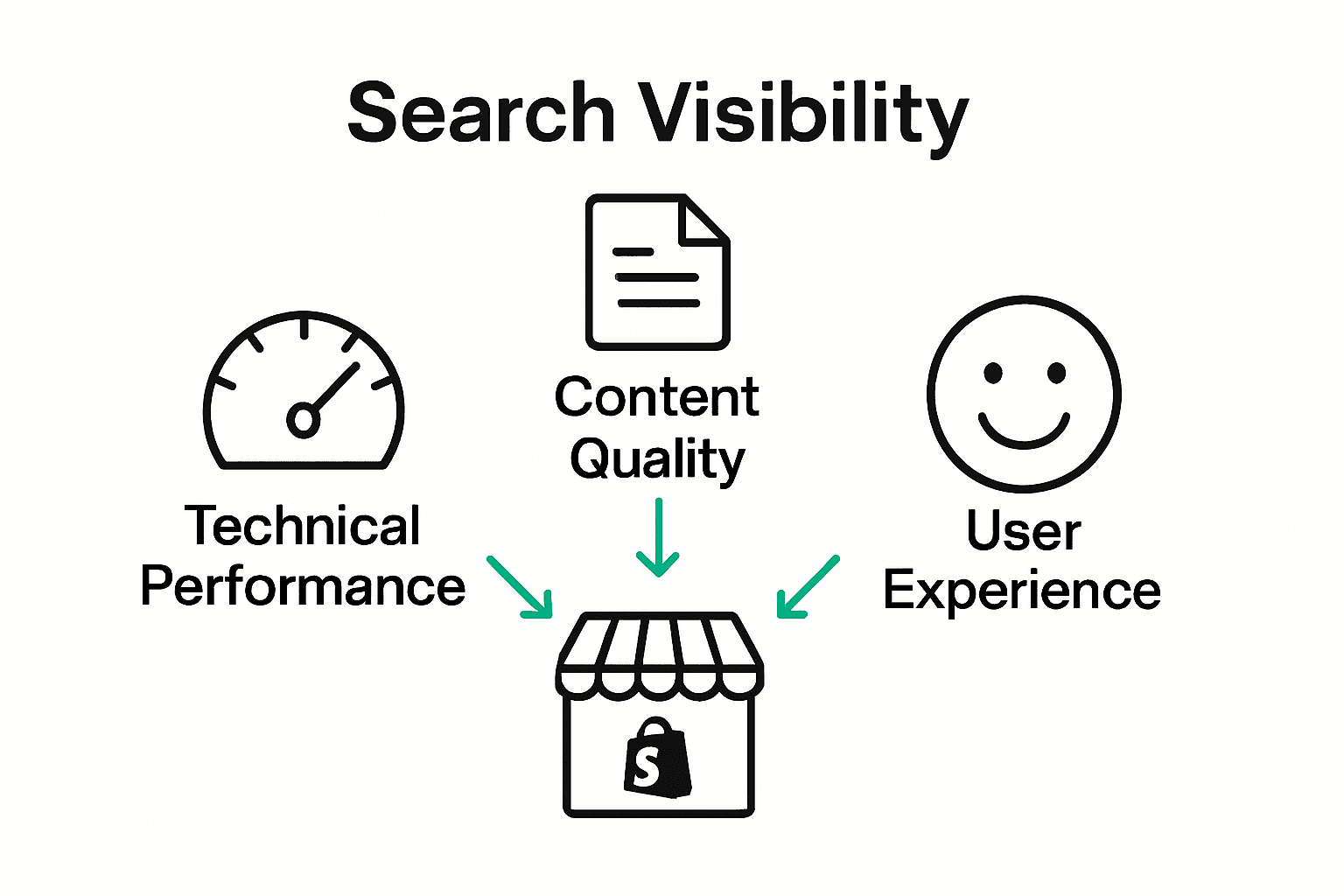
Search engine ranking for Shopify stores involves a complex ecosystem of technical, content, and user experience factors that go far beyond traditional website optimization. Unlike standard websites, e-commerce platforms must navigate a more intricate landscape of search engine requirements that directly impact visibility and organic traffic potential.
The critical ranking factors for Shopify stores can be categorized into several strategic dimensions:
- Technical Performance: Site speed, mobile responsiveness, secure hosting
- Content Quality: Product descriptions, unique metadata, semantic markup
- User Experience Signals: Conversion rates, engagement metrics, navigation structure
- Structural SEO: Internal linking, URL architecture, schema implementation
- External Authority: Backlink profile, social signals, domain reputation
Understanding these nuanced ranking elements requires a holistic approach. For instance, Shopify store owners must recognize that search engines prioritize websites that deliver exceptional user experiences alongside technically optimized content. Shopify Blog SEO strategies play a crucial role in developing comprehensive optimization tactics that address multiple ranking signals simultaneously.
The most successful Shopify stores approach SEO as a dynamic, ongoing process of continuous refinement. This means consistently analyzing performance metrics, updating product information, improving site speed, and adapting to evolving search algorithm requirements. By maintaining a proactive approach to optimization that balances technical precision with compelling, user-focused content, store owners can significantly enhance their organic search visibility and drive sustainable traffic growth.
On-Page and Technical SEO Optimization Steps
Technical SEO for Shopify stores demands a comprehensive approach that integrates multiple optimization strategies to enhance search engine visibility and user experience. According to Shopify Help, successful optimization requires a systematic implementation of technical and content-focused techniques that address both algorithmic requirements and user engagement signals.
The critical on-page and technical optimization steps include:
- URL Structure: Creating clean, descriptive, keyword-rich URLs for products and collections
- Metadata Optimization: Crafting unique, compelling title tags and meta descriptions
- Image SEO: Implementing descriptive alt text, compressing images, using appropriate file names
- Page Speed Enhancement: Minimizing large scripts, leveraging browser caching, optimizing image sizes
- Mobile Responsiveness: Ensuring seamless design across all device types and screen sizes
Research from Tijer emphasizes the critical role of structured data and technical optimization in improving organic search rankings. This means implementing schema markup, ensuring fast loading times, and creating a technically sound website architecture that search engines can easily crawl and index.
Ultimately, successful Shopify SEO requires a holistic approach that balances technical precision with compelling content. Store owners must continuously audit their site’s performance, implement best practices, and remain adaptable to evolving search engine algorithms. By treating SEO as an ongoing process of refinement and improvement, Shopify merchants can create a robust online presence that attracts and converts organic search traffic.
Common Shopify SEO Mistakes to Avoid
Shopify SEO requires strategic navigation through potential optimization pitfalls that can significantly impact a store’s search engine performance. According to Growth, the platform presents unique challenges that demand careful, proactive management to maintain robust organic visibility.
The most critical SEO mistakes Shopify store owners frequently encounter include:
- Duplicate Content: Generating multiple product pages with similar descriptions
- Neglecting Metadata: Failing to create unique, compelling title tags and meta descriptions
- Poor URL Structures: Using generic, non-descriptive URL patterns
Research from MRB Marketing highlights the importance of understanding platform limitations. Many store owners mistakenly assume that Shopify’s built-in features automatically resolve SEO challenges, when in reality, deliberate optimization strategies are crucial for overcoming inherent platform constraints.
Successful Shopify SEO demands a nuanced approach that goes beyond surface-level tactics. Store owners must actively audit their site’s technical infrastructure, content quality, and user experience. This means continuously refining product descriptions, implementing strategic internal linking, optimizing image alt texts, and ensuring mobile responsiveness. By adopting a proactive and holistic optimization strategy, Shopify merchants can transform potential SEO limitations into opportunities for improved search engine visibility and organic traffic growth.
Essential Shopify SEO Tools and Resources
Shopify SEO tools represent a critical ecosystem of solutions designed to enhance online store performance and search engine visibility. According to Shopify Help, merchants have access to a robust set of built-in and third-party resources that can significantly improve their optimization strategies.
The most essential categories of Shopify SEO tools include:
- Keyword Research Tools: Identifying high-value search terms relevant to products
- Technical SEO Apps: Analyzing site performance, fixing crawl errors
- Content Optimization Platforms: Improving product descriptions and metadata
- Analytics and Tracking Solutions: Monitoring organic search performance
- Backlink Analysis Tools: Evaluating and improving domain authority
Research from MRB Marketing emphasizes the importance of carefully selecting SEO apps that integrate seamlessly with the Shopify platform. Not all tools are created equal, and store owners must evaluate each solution based on specific performance metrics, compatibility, and actual optimization capabilities.
Successful implementation of SEO tools requires a strategic approach that goes beyond simple installation. Store owners must actively engage with these resources, continuously learn from the insights they provide, and adapt their optimization strategies accordingly. Shopify SEO Experts recommend developing a comprehensive toolkit that addresses technical performance, content quality, and ongoing performance monitoring to maximize organic search potential.
Unlock Your Shopify Store’s True Potential with Expert SEO Solutions
Struggling to navigate the complexities of Shopify SEO and achieve sustainable traffic growth can be frustrating. This article highlights common pain points like technical optimization challenges, crafting compelling product content, and maintaining a competitive edge through continuous refinement. Understanding these core principles is the first step, but turning them into real results demands expert guidance and tailored strategies.
At Blackbelt Commerce we specialize in delivering custom Shopify development and SEO services designed to tackle these challenges head-on. With proven success in increasing organic visibility and boosting conversion rates our team offers a comprehensive process that includes consultation design development and ongoing support to keep your store ahead of evolving search algorithms. When you need advanced solutions like custom theme development multi-language integration or AI-enhanced eCommerce capabilities rely on the experts that understand Shopify SEO like no other.
Ready to transform your store’s performance?

Discover how our Shopify SEO Experts can empower your business with strategies built for growth. Explore our comprehensive services at Blackbelt Commerce and take the first step towards unlocking consistent traffic and revenue increases today.
Frequently Asked Questions
What is Shopify SEO?
Shopify SEO refers to strategies and techniques used to enhance the visibility and organic search performance of your online store within search engine results, ultimately driving more traffic to your products and collections.
How does Shopify SEO differ from general SEO?
Shopify SEO is focused on e-commerce specifics, requiring product-centric optimization, attention to technical platform constraints, and a strategy that prioritizes transactional keywords, unlike general SEO which addresses broader content and website visibility concerns.
What are the key ranking factors for Shopify stores?
Important ranking factors include technical performance (site speed, mobile responsiveness), content quality (unique product descriptions, meta tags), user experience signals (engagement metrics), structural SEO (internal linking, URL architecture), and external authority (backlink profile).
What are common mistakes to avoid in Shopify SEO?
Common mistakes include creating duplicate content, neglecting unique metadata, and using poor URL structures, which can harm your store’s visibility. It’s crucial to continuously audit and optimize these elements for improved search performance.
Recommended
- 7 Essential Shopify Marketing Tips for Store Growth Success – Shopify Experts: Grow Your eCommerce Revenue
- Shopify Blog SEO: 10 Powerful Tips for Amazing Results 2025
- Attract Customers to Your Shopify Store – Expert Strategies
- Shopify SEO Experts – Shopify Experts: Grow Your eCommerce Revenue
- Social Media Marketing Strategies for Small Businesses – Hexrate
Quick Answer: What is shopify seo
Shopify SEO helps merchants make product, collection, blog, and technical pages easier for search engines and AI answer engines to understand. The strongest SEO work connects search intent, crawlable structure, internal links, useful content, page speed, and conversion paths so organic traffic can turn into customers or qualified strategy-call leads.
Want a sharper Shopify growth plan?
If this article connects to a current store decision, use the calendar to book a strategy call and turn the idea into a practical plan.
Key Takeaways
- Shopify SEO should improve crawlability, content depth, internal links, collection structure, and conversion paths together.
- Search intent matters because a visitor looking for definitions, audits, or expert help needs different next steps.
- Yoast green indicators are useful, but the article still needs editorial depth, topical authority, and lead-generation flow.
- Internal links should connect SEO guidance to Shopify SEO services, Shopify experts, Shopify Plus agencies, and technical implementation pages.
- The same-page Calendly CTA should appear after useful guidance so qualified readers can ask for help applying the SEO roadmap.
How this connects to your Shopify growth strategy
This article should remain useful for readers researching What is shopify seo, but it also needs to show when the topic becomes a business decision. For the Shopify SEO, Audits, and Organic Growth cluster, the commercial bridge is practical: once the reader understands the concept, the next step is deciding whether their current Shopify setup can support the desired experience, conversion path, and operational workflow. That is where expert planning, design, development, CRO, and SEO support can turn the idea into measurable store improvements.
Want a sharper Shopify growth plan?
Use this guide as a decision tool. Then book a strategy call when you want a practical roadmap for your store.
Related Shopify resources
These internal resources support the Shopify SEO, Audits, and Organic Growth topic cluster and help connect this guide to stronger commercial next steps:
- Shopify SEO, Audits, and Organic Growth
- Shopify experts
- Shopify Plus agencies
- Shopify SEO, Audits, and Organic Growth — Parent service page for the reader’s next commercial step
- Blackbelt Commerce — Home-page authority link for brand and core Shopify expertise
- Shopify experts — Money-page link requested for expert-hiring intent
- Shopify Plus agencies — Money-page link requested for high-growth and Plus-agency intent
- Shopify custom development — Development service page for implementation and technical help
- Shopify CRO — Conversion service page for readers focused on revenue and lead generation
- Shopify app SEO — Related SEO tooling article
Questions store owners ask before taking action
What does Shopify SEO include?
It includes technical structure, collection and product optimization, content strategy, metadata, internal links, page speed, structured answers, and conversion-aware improvements.
Is a green Yoast score enough for Shopify SEO?
No. Yoast can help with on-page basics, but rankings and leads also depend on search intent, authority, content quality, technical health, and internal linking.
When should a store hire Shopify SEO help?
Expert help is useful when SEO affects revenue-critical pages, migrations, technical fixes, competitive rankings, or lead-generation content strategy.
How do blog posts support Shopify SEO?
Blog posts can answer informational searches, build topical authority, support internal links, and guide qualified readers toward product pages, service pages, or a strategy call.
How should SEO content generate leads?
It should answer the query first, then show the reader where expert support can help them apply the advice to their own Shopify store.
Future articles needed for topical dominance
To build deeper topical authority around this cluster, these supporting topics should be created later and linked back into this article:
- What Is Shopify Seo Checklist for Shopify Store Owners: Creates a practical support article that turns the Shopify SEO, Audits, and Organic Growth topic into an actionable review tool.
- Common What Is Shopify Seo Mistakes and How to Avoid Them: Captures problem-aware searches and gives BBC a natural place to explain implementation risks without hard selling.
- When to Hire Shopify Experts for What Is Shopify Seo: Connects informational demand to the expert-hiring money page while preserving educational intent.
Want a sharper Shopify growth plan?
Ready to turn the advice in this article into an action plan? Open the calendar here and choose a time that works for you.

