


Nearly 60 percent of American online merchants have experienced at least one security incident in the past year. These threats put customer trust and revenue at risk, making ironclad protection more than just a technical requirement. For Shopify store owners looking to grow, understanding secure storefronts is the first step toward safeguarding financial data and boosting conversion rates in the competitive U.S. market.
Table of Contents
- Secure Online Storefronts Explained
- Shopify Security Features And Layers
- Common Cyber Threats Facing U.S. Merchants
- PCI Compliance And U.S. Legal Standards
- Costly Risks Of Insecure Storefronts
- Impact On Customer Trust And Conversions
Key Takeaways
| Point | Details |
|---|---|
| Importance of Digital Security | Secure online storefronts are crucial for protecting customer data and maintaining trust in eCommerce. Implementing robust security measures is essential for success. |
| Key Security Features | Utilizing SSL certificates, two-factor authentication, and regular security audits can significantly enhance the security of online storefronts. |
| Cyber Threat Awareness | Merchants must be aware of evolving cyber threats such as phishing and malware, which can have serious financial and reputational impacts. |
| Customer Trust and Conversions | Visible security measures increase customer trust and can lead to higher conversion rates, making it vital for merchants to showcase their commitment to data protection. |
Secure Online Storefronts Explained
Online storefronts represent the critical digital gateway between businesses and consumers, serving as the primary interface for digital transactions. Digital security has become paramount in protecting sensitive customer information and maintaining trust. When customers visit an online store, they expect their personal and financial details to remain confidential and protected from potential cyber threats.
Secure online storefronts implement multiple layers of protection to safeguard customer data. These security measures include web security protocols that prevent unauthorized access and encryption technologies that shield sensitive information during transmission. The fundamental goal is creating a safe digital environment where customers feel confident sharing payment details and personal information without fear of potential data breaches.
Key components of a secure online storefront include robust authentication systems, SSL certificates, secure payment gateways, and continuous monitoring for potential vulnerabilities. Shopify store owners must prioritize these security features to build customer trust and protect their business reputation. Regular security audits, implementing two-factor authentication, and staying updated on the latest cybersecurity practices are essential strategies for maintaining a secure digital storefront.
Pro tip: Conduct quarterly security assessments of your online storefront to proactively identify and address potential vulnerabilities before they become critical risks.
Shopify Security Features and Layers
Shopify security represents a comprehensive approach to protecting online businesses through sophisticated, multi-layered defense mechanisms. Security architecture in modern eCommerce platforms goes far beyond simple password protection, encompassing advanced strategies that proactively defend against potential cyber threats and unauthorized access attempts.
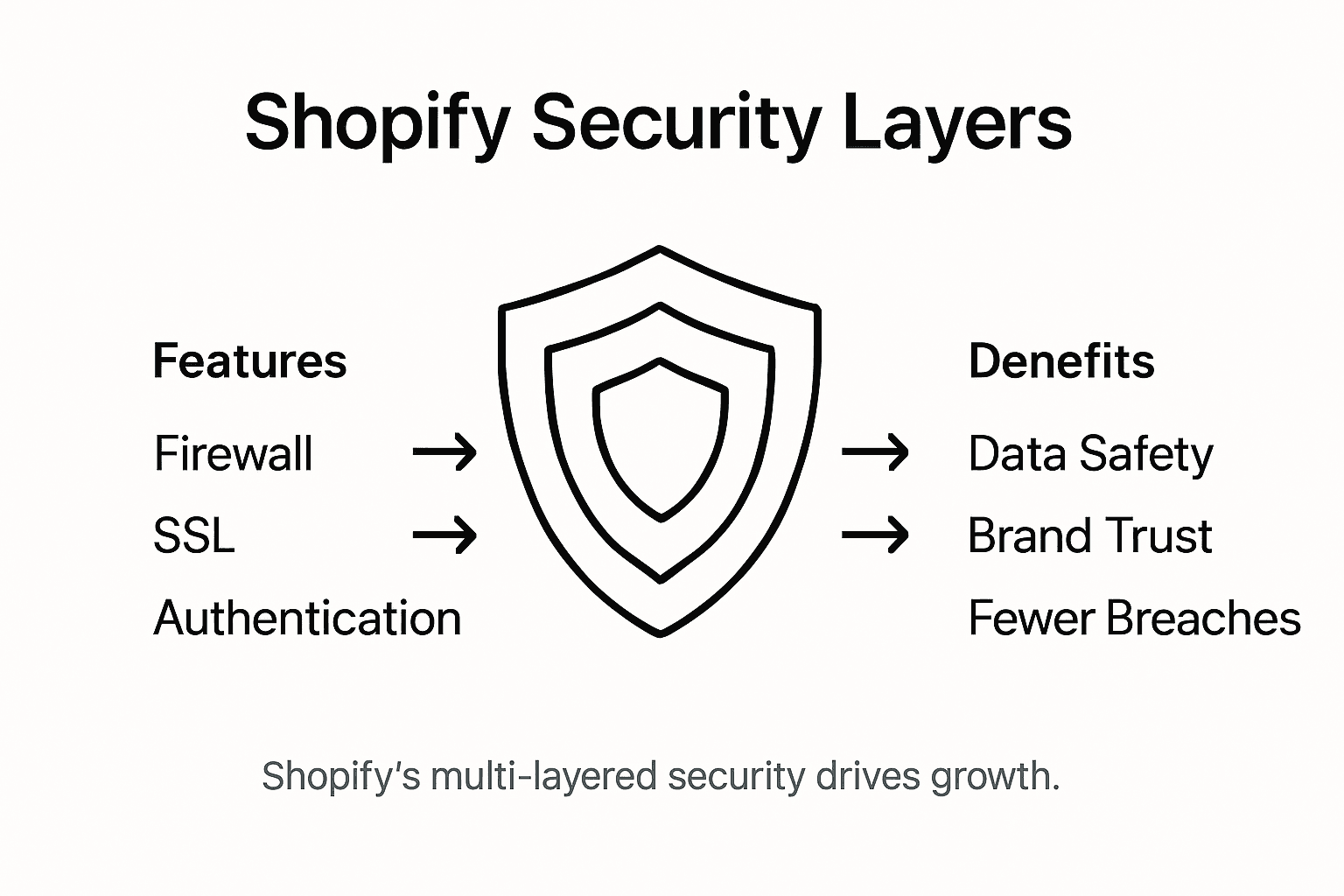
The platform incorporates secure coding practices that address multiple attack vectors and vulnerabilities, implementing robust security principles like Least Privilege and Zero Trust. These strategies create multiple defensive layers that continuously monitor and validate access permissions, ensuring that only authenticated and authorized users can interact with sensitive system components. Key security features include end-to-end encryption, real-time threat detection, and sophisticated authentication protocols that protect both merchant and customer data.
Shopify’s security framework includes several critical components designed to create a resilient digital environment. These include secure socket layer (SSL) certificates, two-factor authentication, regular security audits, and advanced fraud detection algorithms. Store owners can leverage built-in security tools that automatically scan for potential vulnerabilities, block suspicious activities, and provide comprehensive reporting on potential security incidents. By integrating these multilayered security approaches, Shopify helps merchants create a trustworthy digital storefront that can effectively protect against evolving cybersecurity challenges.
Pro tip: Enable all available security features and schedule monthly reviews of your store’s security settings to stay ahead of potential vulnerabilities.
Here’s a summary of essential Shopify security features and how each benefits your business:
| Security Feature | Function | Business Impact |
|---|---|---|
| SSL Certificates | Encrypt data between user and server | Increases customer trust |
| Two-Factor Authentication | Requires extra verification step | Reduces access by attackers |
| Real-Time Threat Detection | Alerts store owner to suspicious activity | Enables quick response to threats |
| Secure Payment Gateways | Processes payments securely | Protects financial transactions |
| Security Audits | Reviews and tests store defenses | Uncovers and fixes vulnerabilities |
Common Cyber Threats Facing U.S. Merchants
U.S. online merchants operate in an increasingly complex digital landscape where cybersecurity threats continually evolve and become more sophisticated. The digital marketplace presents unique vulnerabilities that cybercriminals systematically exploit, targeting small and medium-sized businesses with increasing precision and technological complexity.
Merchants face a range of critical cyber threats, including sophisticated phishing attacks and identity theft strategies designed to compromise sensitive customer and business data. These attacks can manifest through multiple channels: fraudulent email communications, compromised payment systems, malware infiltrations, and social engineering tactics that manipulate human psychology. Cybercriminals often employ advanced techniques like credential stuffing, where stolen login information from one platform is used to gain unauthorized access to multiple online storefronts, creating cascading security risks.
The financial implications of these cyber threats are substantial, with potential losses ranging from direct monetary theft to long-term reputation damage and customer trust erosion. Small to medium-sized Shopify merchants are particularly vulnerable, as they may lack comprehensive security infrastructure compared to larger enterprise organizations. Threats like payment fraud, account takeover, and data breaches can result in immediate financial losses, chargeback penalties, and potential legal complications that can devastate a growing online business.
Pro tip: Implement multi-factor authentication and conduct quarterly comprehensive security audits to proactively identify and mitigate potential cyber vulnerabilities in your online storefront.
Here is a comparison of common cyber threats and their effects on U.S. merchants:
| Threat Type | Method Used | Potential Impact |
|---|---|---|
| Phishing Attacks | Fake emails/site impersonation | Credential theft, data loss |
| Account Takeover | Credential stuffing or social hacks | Unauthorized access, financial loss |
| Payment Fraud | Use of stolen card details | Chargebacks, loss of funds |
| Malware | Infecting systems with malicious code | Data breaches, operational disruption |
PCI Compliance and U.S. Legal Standards
Payment Card Industry (PCI) compliance represents a critical legal framework that governs how online businesses handle sensitive customer financial information. For Shopify merchants, understanding and implementing these standards is not just a recommended practice but a mandatory requirement for operating a legitimate digital storefront in the United States.
The U.S. legal landscape mandates strict protocols for merchants, with the Federal Trade Commission enforcing comprehensive data security regulations designed to protect consumer financial information. These regulations require online businesses to implement robust security measures that safeguard customer payment data throughout every transaction. Compliance involves multiple layers of protection, including secure encryption protocols, regular security assessments, access controls, and comprehensive monitoring systems that prevent unauthorized data access and potential breaches.
Specifically, PCI compliance standards encompass a detailed set of requirements that Shopify merchants must meticulously follow. These include maintaining a secure network infrastructure, protecting cardholder data through advanced encryption techniques, implementing strong access control measures, regularly monitoring and testing network security, and developing comprehensive information security policies. Failure to comply can result in significant financial penalties, potential legal action, and the loss of merchant payment processing privileges, which could effectively shut down an online business.
Pro tip: Conduct an annual comprehensive PCI compliance audit and maintain detailed documentation of your security practices to demonstrate ongoing commitment to protecting customer financial information.
Costly Risks of Insecure Storefronts
Online storefront vulnerabilities represent a significant financial and reputational threat for Shopify merchants, with potential consequences that can devastate small to medium-sized businesses. The digital marketplace demands robust security measures to protect against increasingly sophisticated cyber threats that target vulnerable online platforms.

Insecure storefronts expose merchants to substantial financial and brand risks that extend far beyond immediate monetary losses. Cybercriminals can exploit system weaknesses to conduct fraudulent transactions, steal customer data, and compromise entire business infrastructures. The average data breach can result in direct financial losses, expensive legal remediation, chargeback penalties, and long-term reputation damage that can take years to overcome.
The cascading effects of an insecure online storefront are multifaceted and potentially devastating. Beyond direct financial losses, merchants risk losing customer trust, facing potential legal action, and experiencing significant disruptions to their business operations. Unauthorized access can lead to intellectual property theft, fraudulent transactions, and systematic exploitation of customer information. Small to medium-sized Shopify merchants are particularly vulnerable, as they often lack the comprehensive security infrastructure of larger enterprise organizations.
Pro tip: Invest in comprehensive cybersecurity assessments and implement multi-layered security protocols that go beyond basic protection mechanisms to create a robust defense against evolving digital threats.
Impact on Customer Trust and Conversions
Customer trust serves as the foundational currency of successful online commerce, directly influencing a Shopify store’s ability to attract, retain, and convert potential buyers. In the digital marketplace, customers make split-second decisions about whether to engage with an online storefront based on perceived security and professionalism.
Web security fundamentally shapes user trust and transaction willingness, creating a direct correlation between robust security measures and conversion rates. When customers observe visible security indicators like SSL certificates, secure payment gateways, and transparent privacy policies, they feel more confident completing purchases. This psychological reassurance translates into tangible business outcomes, with secure storefronts experiencing significantly higher conversion rates compared to platforms perceived as potentially risky.
The impact of security on customer behavior extends beyond immediate transactions. Shopify merchants who demonstrate a commitment to protecting customer data build long-term brand reputation and customer loyalty. Modern consumers are increasingly sophisticated, researching and evaluating online stores based on their security practices. A single data breach or security incident can instantaneously erode years of carefully cultivated trust, potentially causing irreparable damage to a brand’s reputation and customer relationships.
Pro tip: Display trust badges, security certifications, and transparent privacy policies prominently on your storefront to visibly communicate your commitment to customer data protection.
Strengthen Your Shopify Storefront Security to Drive Growth
The challenges outlined in the article highlight the critical need for secure online storefronts that protect your customers and build lasting trust. If you are concerned about threats like phishing attacks, payment fraud, or data breaches undermining your Shopify success, it is essential to prioritize multilayered security measures such as SSL certificates, two-factor authentication, and real-time threat detection. These steps not only shield your business from costly vulnerabilities but also enhance customer confidence which directly boosts conversion rates.
At Blackbelt Commerce, we specialize in delivering tailored Shopify development and optimization solutions that integrate advanced security protocols seamlessly with high-performance ecommerce features. Our expertise encompasses custom theme development, Shopify Plus implementations, and scalable digital storefronts designed to safeguard your business while maximizing growth potential. Partner with us to turn your security concerns into competitive advantages that empower your store and delight your customers.
Explore how our proven process can protect and advance your Shopify store today.
Secure your online storefront with Blackbelt Commerce now and experience the confidence of a robust ecommerce platform built to prevent threats and accelerate sales. Visit Blackbelt Commerce to learn more about our expert Shopify services and take the first step toward a safer, more profitable store.
Frequently Asked Questions
What are the key components of a secure online storefront?
Key components of a secure online storefront include SSL certificates, two-factor authentication, secure payment gateways, and regular security audits. These features help protect sensitive customer data and build trust.
How can I improve the security of my Shopify store?
To improve the security of your Shopify store, enable all available security features, conduct regular security audits, implement two-factor authentication, and stay up-to-date with the latest cybersecurity practices.
What impact does customer trust have on conversion rates?
Customer trust significantly impacts conversion rates as customers tend to engage more with online storefronts that demonstrate robust security measures, such as visible security indicators and transparent privacy policies.
Why is PCI compliance important for online merchants?
PCI compliance is crucial for online merchants because it outlines the standards necessary to protect customer payment data and avoid potential penalties, legal issues, and loss of payment processing privileges.
Recommended
- Complete Guide to Ecommerce Security Basics – Shopify Experts: Grow Your eCommerce Revenue
- What Is Digital Storefront and Its Impact on Sales
- Building a Website on Shopify: 10 Easy Steps for Success
- Why Multichannel Thinking is Key for Shopify Store Success
Quick Answer: Why secure online storefronts
Why secure online storefronts should improve how a Shopify store converts traffic into trust, customers, and revenue. The article should connect UX, store features, merchandising, analytics, performance, and conversion paths so readers understand what to fix and when expert help can accelerate results.
Want a sharper Shopify growth plan?
Want to turn Why secure online storefronts into a practical Shopify growth plan? Book a strategy call and we will help you clarify the next move.
Key Takeaways
- Use Why secure online storefronts to clarify the business problem and the highest-impact next step for a Shopify store.
- Connect recommendations to customer trust, UX, conversion, SEO, analytics, operations, and revenue.
- Link naturally to Blackbelt Commerce money pages and the home page without weakening editorial trust.
- Avoid generic ecommerce advice; make the guidance specific to Shopify constraints and opportunities.
- Use the same-page Calendly CTA only after the post has delivered useful guidance.
How this connects to your Shopify growth strategy
For the Shopify Growth, CRO, and Store Optimization cluster, this article should make Why secure online storefronts practical, specific, and commercially useful while protecting editorial trust. The bridge to Blackbelt Commerce should show when expert planning, implementation, SEO/CRO discipline, or Shopify Plus support can reduce risk and turn the reader’s next decision into measurable progress.
Want a sharper Shopify growth plan?
Use this guide as a decision tool. Then book a strategy call when you want a practical roadmap for your store.
Related Shopify resources
These internal resources support the Shopify Growth, CRO, and Store Optimization topic cluster and help connect this guide to stronger commercial next steps:
- Shopify CRO services
- Shopify experts
- Shopify Plus agencies
- Shopify CRO services — Primary money/service page for this search intent
- Blackbelt Commerce — Home-page authority link for brand and core Shopify expertise
- Shopify experts — Money-page link requested for expert-hiring intent
- Shopify custom development — Development service page for implementation and technical help
- Shopify checkout optimization — Related conversion article
- Shopify conversion optimization — Related CRO article
Questions store owners ask before taking action
Why does Why secure online storefronts matter for Shopify merchants?
It matters when the topic affects customer trust, conversion, operations, SEO, analytics, or the team’s ability to scale the store cleanly.
How should the article guide the reader?
It should answer the search intent first, then connect the topic to practical next steps, related resources, and expert support when that next step is useful.
What is the lead-generation goal?
The goal is a qualified strategy-call booking after the article has delivered enough value for the reader to trust Blackbelt Commerce with the next decision.
Future articles needed for topical dominance
To build deeper topical authority around this cluster, these supporting topics should be created later and linked back into this article:
- Why secure online storefronts Checklist for Shopify Stores: Creates an actionable support article that can earn long-tail searches and link back to relevant money pages.
- Common Why secure online storefronts Mistakes That Hurt Shopify Revenue: Targets problem-aware readers and explains UX, SEO, conversion, and implementation risk.
- How Shopify Experts Prioritize Why secure online storefronts: Links informational intent to expert support without turning the main article into a sales pitch.
Want a sharper Shopify growth plan?
Ready to turn the advice in this article into an action plan? Open the calendar here and choose a time that works for you.

