


Nearly 80 percent of american Shopify store owners miss out on sales because they overlook critical performance gaps. Running a successful online shop is never just about listing products. It takes a deep understanding of what drives customers to buy and what holds them back. By assessing your store’s real numbers and focusing on proven strategies, you can turn missed opportunities into lasting growth and secure your spot in the crowded e-commerce market.
Table of Contents
- Step 1: Assess Current Store Performance and Identify Gaps
- Step 2: Optimize Product Listings and Enhance Visual Appeal
- Step 3: Implement Effective Conversion Rate Optimization Tactics
- Step 4: Drive Targeted Traffic with Strategic Marketing Campaigns
- Step 5: Leverage Advanced Integrations and Automation Tools
- Step 6: Monitor Results and Refine Strategies Continuously
Quick Summary
| Main Insight | Clarification |
|---|---|
| 1. Analyze Key Performance Indicators (KPIs) | Measure conversion rate, average order value, cart abandonment rate, and traffic sources to assess store health. |
| 2. Optimize Product Listings | Use high-quality images and compelling descriptions to create engaging product pages that drive conversions. |
| 3. Refine Conversion Rate Strategies | Identify friction points in the customer journey and streamline the checkout process to enhance user experience. |
| 4. Develop a Multi-Channel Marketing Approach | Leverage SEO, social media, and email campaigns to effectively connect with targeted customer segments. |
| 5. Continuously Monitor and Adjust Performance | Use analytics tools to regularly assess store metrics and refine strategies based on concrete data insights. |
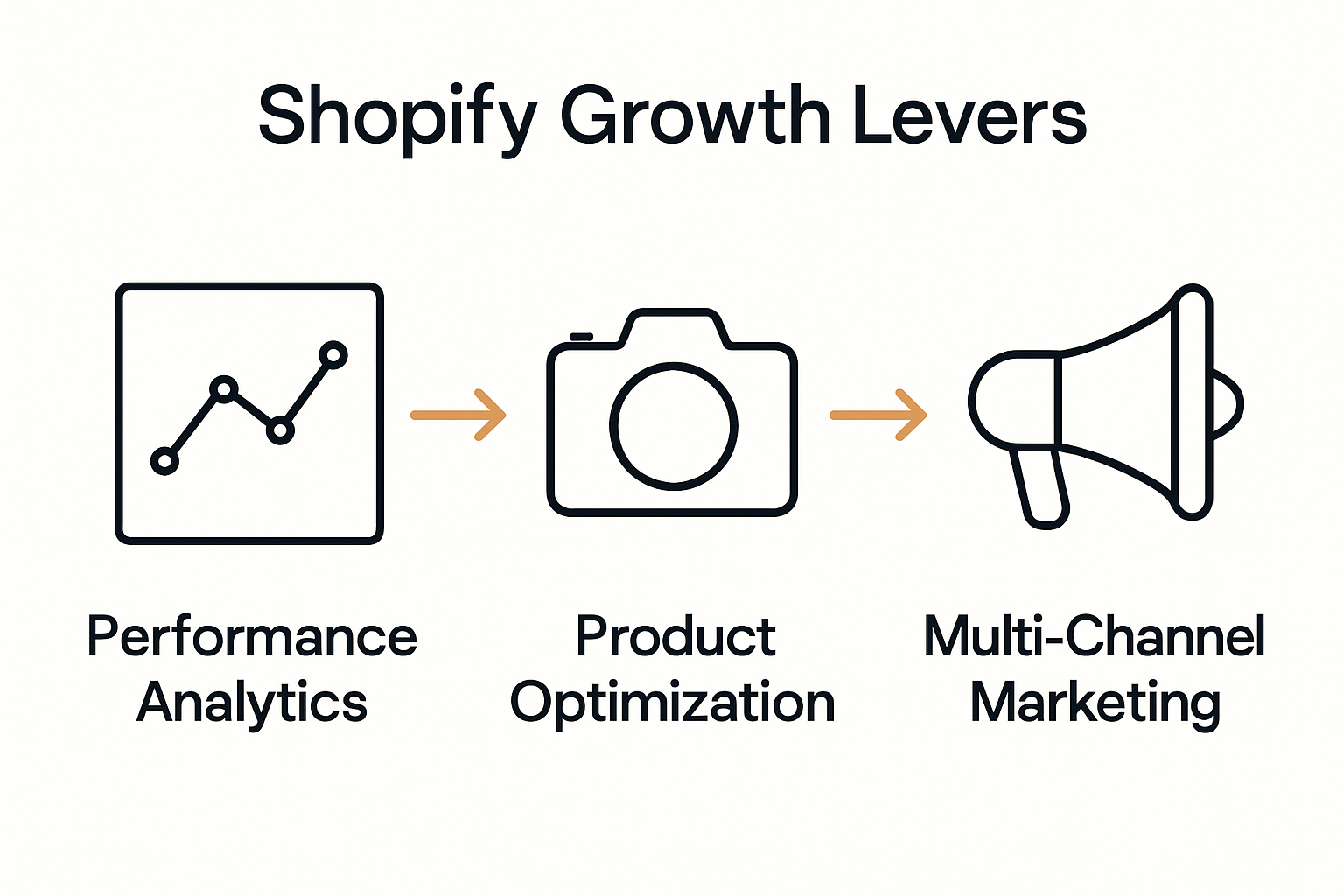
Step 1: Assess Current Store Performance and Identify Gaps
Measuring your Shopify store’s performance is foundational to driving sales growth. You’ll want to dive deep into your store’s current metrics and uncover hidden opportunities for optimization. According to research from arxiv.org, understanding multimodal product insights can significantly enhance your e-commerce strategy.
Start by examining key performance indicators (KPIs) that reveal your store’s health. Critical metrics include conversion rate, average order value, cart abandonment rate, and traffic sources. Leverage Shopify’s built-in analytics dashboard to pull these insights. Pay special attention to pages with high exit rates or low engagement times these are potential conversion bottlenecks. Master Shopify Performance Tracking Solutions to Boost Sales can provide additional guidance on interpreting these metrics effectively.
Beyond standard metrics, conduct a comprehensive audit of your product descriptions and visual content. Research indicates that multimodal approaches using visual and textual information can dramatically improve product presentation. Analyze each product page for clarity, persuasiveness, and alignment with customer expectations. Look for inconsistent image quality, unclear descriptions, or missing critical product details that might discourage potential buyers from completing their purchase.
Warning: Avoid getting overwhelmed by data. Focus on actionable insights that directly impact sales performance. Your next step will be strategically addressing the gaps you’ve identified in this assessment phase.
Step 2: Optimize Product Listings and Enhance Visual Appeal
Transforming your Shopify product listings from basic to compelling requires strategic visual and descriptive optimization. Your goal is to create product pages that not only showcase items beautifully but also drive customer engagement and conversion. We’ll focus on crafting irresistible product presentations that turn browsers into buyers.
Start by implementing a comprehensive visual strategy for your product pages. Utilize high-resolution images that showcase your products from multiple angles. When selecting and preparing product images, consider the product page template guidelines that can help you create more professional and appealing listings. Include zoom functionality, lifestyle shots, and detailed close-ups that help customers understand exactly what they are purchasing. Pay special attention to image quality color accuracy and lighting to ensure your products look their most attractive.
Enhance your product descriptions by going beyond basic specifications. Write compelling narratives that highlight unique features benefits and solve specific customer problems. Use clear concise language that speaks directly to your target audience. Include critical details like dimensions materials care instructions and potential use cases. Optimize your image alt tags with descriptive keywords this not only improves accessibility but can also boost your SEO performance.

Warning: Avoid generic or overly technical descriptions that fail to connect emotionally with your customers. Your product listings should tell a story and create a desire to own the item. The next step will involve implementing these optimizations and monitoring their impact on your store’s conversion rates.
Step 3: Implement Effective Conversion Rate Optimization Tactics
Conversion rate optimization transforms casual browsers into committed buyers by strategically refining your Shopify store’s user experience. According to insights from the Shopify community, successful stores focus on creating seamless pathways that guide customers toward purchase decisions.
Begin by analyzing your current conversion funnel and identifying potential friction points. Implement clear and compelling calls to action that stand out visually and emotionally. How to Increase Shopify Conversions suggests several key strategies like simplifying checkout processes reducing form fields and providing transparent pricing information. Consider adding trust signals such as customer reviews secure payment icons and satisfaction guarantees that reduce purchase anxiety.
Test and iterate your conversion strategies using A/B testing techniques. Experiment with different page layouts button colors product descriptions and checkout processes. Focus on creating a smooth intuitive user journey that anticipates and addresses customer hesitations.
Pay special attention to mobile responsiveness since an increasing number of purchases happen on smartphones and tablets.
Warning: Avoid making too many changes simultaneously. Implement modifications incrementally and measure their specific impact on your conversion rates. Your next step will involve continuous monitoring and refinement of these optimization tactics.
Step 4: Drive Targeted Traffic with Strategic Marketing Campaigns
Driving targeted traffic requires a sophisticated multi channel approach that connects your Shopify store with potential customers precisely where they spend their time. According to insights from moldstud.com, successful marketing strategies leverage multiple digital touchpoints to maximize visibility and engagement.
Craft a comprehensive marketing strategy that combines organic and paid channels. Start with search engine optimization by creating high quality content that answers your target audiences questions. Best Practices for Shopify Ads can help you develop targeted advertising campaigns that reach your ideal customer segments. Implement social media marketing strategies that showcase your products through compelling visuals and storytelling. Focus on platforms where your target audience is most active whether thats Instagram TikTok Facebook or Pinterest.
Expand your reach through strategic partnerships and influencer collaborations. Develop an email marketing strategy that nurtures leads and provides value beyond direct product promotion. Use retargeting ads to re engage visitors who have previously shown interest in your products but didnt complete a purchase. Track your marketing performance using analytics tools to continuously refine and optimize your approach.
Warning: Avoid spreading your marketing budget too thin across multiple channels. Start with 2 3 platforms where your target audience is most concentrated and gradually expand your strategy. Your next step will involve measuring and analyzing the performance of these marketing campaigns to drive continuous improvement.
Step 5: Leverage Advanced Integrations and Automation Tools
Advanced integrations and automation transform your Shopify store from a basic online shop into a sophisticated sales powerhouse. According to groundbreaking research from arxiv.org, emerging technologies are revolutionizing how e-commerce platforms generate product descriptions and recommendations through intelligent multimodal frameworks.
Start by exploring Essential Shopify Apps List to identify automation tools that streamline your operations. Focus on integrations that handle critical functions like inventory management customer segmentation email marketing and personalized product recommendations. Look for solutions that can automatically sync your product catalog update pricing sync customer data and trigger targeted marketing campaigns based on specific customer behaviors.
Implement AI powered tools that enhance product presentation and customer experience. Utilize machine learning algorithms to generate dynamic product descriptions optimize pricing strategies and create personalized shopping experiences. Integrate advanced analytics tools that provide real time insights into customer behavior purchase patterns and potential optimization opportunities. Consider API integrations that connect your Shopify store with CRM systems email marketing platforms and customer support tools to create a seamless operational ecosystem.
Warning: Avoid over integrating or selecting tools that create unnecessary complexity. Choose automation solutions that directly address your specific business needs and can scale with your growth. Your next step will involve carefully testing and monitoring these integrations to ensure they deliver tangible improvements to your store performance.
Step 6: Monitor Results and Refine Strategies Continuously
Successful Shopify store growth demands a systematic approach to tracking performance and making data driven improvements. As highlighted by the Shopify community, ongoing monitoring and strategic refinement are critical for sustainable e-commerce success.
Establish a comprehensive analytics framework using tools like Google Analytics Shopify built in reporting and additional performance tracking software. Create a monthly performance dashboard that tracks key metrics such as conversion rates average order value traffic sources customer acquisition costs and revenue per visitor. Look beyond surface level numbers to understand the underlying trends and customer behaviors that drive your stores performance.
Develop a disciplined approach to strategic iteration. Schedule quarterly deep dive analysis sessions where you critically examine your stores performance identify potential bottlenecks and develop targeted improvement strategies. Use A/B testing methodologies to experiment with different approaches to product presentation pricing marketing messaging and user experience. Be prepared to make incremental adjustments based on concrete data rather than assumptions or gut feelings.
Warning: Avoid analysis paralysis. While data is crucial, dont get so caught up in metrics that you become unable to make decisive actions. Your goal is to use insights as a guide for continuous improvement not as a roadblock to progress.
Unlock Your Shopify Store’s True Potential with Expert Guidance
Many Shopify store owners struggle with boosting sales because of unclear strategies, poor conversion rates and ineffective marketing efforts. This article highlights key pain points such as optimizing product listings, streamlining checkout experiences and driving targeted traffic. If these challenges sound familiar you are not alone. The good news is you do not have to face them on your own. At Blackbelt Commerce we specialize in tackling exactly these problems using proven Shopify growth strategies backed by data and experience.
Take the next step toward remarkable sales growth by partnering with an expert agency that understands your unique needs. Explore our comprehensive process at Blackbelt Commerce where we offer tailored Shopify store development, optimization and marketing that delivers measurable results. Discover how our custom theme development, AI integrations and advanced eCommerce solutions drive conversions and elevate user experience by visiting our portfolio and case studies. Don’t let unconverted traffic and low engagement hold you back any longer. Contact us today to start transforming your Shopify store into a high-performing sales machine.
Frequently Asked Questions
How can I assess my Shopify store’s current performance?
To assess your Shopify store’s current performance, start by examining key performance indicators (KPIs) such as conversion rate, average order value, and cart abandonment rate. Use Shopify’s built-in analytics dashboard to gather this data, focusing on pages with high exit rates or low engagement times. Analyze these metrics to identify areas for improvement within 30 days.
What steps should I take to optimize my product listings on Shopify?
To optimize your product listings, enhance both visual and descriptive elements. Use high-resolution images from multiple angles and create compelling product descriptions that highlight key features and benefits clearly. Implement these changes to improve customer engagement within 60 days.
How can I improve my Shopify store’s conversion rate?
Improving your Shopify store’s conversion rate involves analyzing your conversion funnel to identify friction points and implementing clear calls to action. Test different page layouts and checkout processes to find what works best, aiming for a smoother user experience. Monitor your conversion rate changes regularly to see improvements over the next few weeks.
What marketing strategies should I use to drive traffic to my Shopify store?
To drive traffic to your Shopify store, combine organic and paid marketing strategies, including search engine optimization and social media marketing. Focus on platforms where your target audience is active and consider setting up retargeting ads for previous visitors. Evaluate the effectiveness of these campaigns within the first month to refine your approach.
How do I leverage automation tools for my Shopify store?
You can leverage automation tools by integrating solutions that enhance inventory management, customer segmentation, and personalized product recommendations. Choose tools that align with your business needs to improve efficiency, aiming to see real results in streamlining operations within 30 days.
Why is continuous monitoring important for Shopify sales strategies?
Continuous monitoring is vital for Shopify sales strategies because it enables you to track performance and make data-driven improvements. Establish a routine for reviewing key metrics and be ready to make informed adjustments to boost sales and optimize store performance. Start your monitoring process immediately to see ongoing benefits.
Recommended
- Innovative Ways To Increase Your Shopify Store Sales – Shopify Experts: Grow Your eCommerce Revenue
- 7 Essential Shopify Marketing Tips for Store Growth Success – Shopify Experts: Grow Your eCommerce Revenue
- Innovative Tips to Boost Shopify Sales
- E-commerce growth strategy: Top 3 Pillars
Quick Answer: How to increase shopify sales
How to increase shopify sales should improve how a Shopify store converts traffic into trust, customers, and revenue. The article should connect UX, store features, security, automation, performance, analytics, and conversion paths so readers understand what to fix and when expert help can accelerate results.
Want a sharper Shopify growth plan?
Want to turn How to increase shopify sales into a practical Shopify growth plan? Book a strategy call and we will help you clarify the next move.
Key Takeaways
- Use How to increase shopify sales to clarify the business problem and the highest-impact next step for a Shopify store.
- Connect recommendations to customer trust, UX, conversion, SEO, analytics, operations, and revenue.
- Link naturally to Blackbelt Commerce money pages and the home page without weakening editorial trust.
- Avoid generic ecommerce advice; make the guidance specific to Shopify constraints and opportunities.
- Use the same-page Calendly CTA only after the post has delivered useful guidance.
How this connects to your Shopify growth strategy
For the Shopify Growth, CRO, and Store Optimization cluster, this article should make How to increase shopify sales practical, specific, and commercially useful while protecting editorial trust. The bridge to Blackbelt Commerce should show when expert planning, implementation, SEO/CRO discipline, or Shopify Plus support can reduce risk and turn the reader’s next decision into measurable progress.
Want a sharper Shopify growth plan?
Use this guide as a decision tool. Then book a strategy call when you want a practical roadmap for your store.
Related Shopify resources
These internal resources support the Shopify Growth, CRO, and Store Optimization topic cluster and help connect this guide to stronger commercial next steps:
- Shopify CRO services
- Shopify experts
- Shopify Plus agencies
- Shopify CRO services — Primary money/service page for this search intent
- Blackbelt Commerce — Home-page authority link for brand and core Shopify expertise
- Shopify experts — Money-page link requested for expert-hiring intent
- Shopify custom development — Development service page for implementation and technical help
- Shopify checkout optimization — Related conversion article
- Shopify conversion optimization — Related CRO article
Questions store owners ask before taking action
Why does How to increase shopify sales matter for Shopify merchants?
It matters when the topic affects customer trust, conversion, operations, SEO, analytics, or the team’s ability to scale the store cleanly.
How should the article guide the reader?
It should answer the search intent first, then connect the topic to practical next steps, related resources, and expert support when that next step is useful.
What is the lead-generation goal?
The goal is a qualified strategy-call booking after the article has delivered enough value for the reader to trust Blackbelt Commerce with the next decision.
Future articles needed for topical dominance
To build deeper topical authority around this cluster, these supporting topics should be created later and linked back into this article:
- How to increase shopify sales Checklist for Shopify Stores: Creates an actionable support article that can earn long-tail searches and link back to relevant money pages.
- Common How to increase shopify sales Mistakes That Hurt Shopify Revenue: Targets problem-aware readers and explains UX, SEO, conversion, and implementation risk.
- How Shopify Experts Prioritize How to increase shopify sales: Links informational intent to expert support without turning the main article into a sales pitch.
Want a sharper Shopify growth plan?
Ready to turn the advice in this article into an action plan? Open the calendar here and choose a time that works for you.

