

Blog updated with the most recent Shopify and eCommerce strategies on 05/02/2026.

Key Metrics to Evaluate the Impact of Your Shopify SEO Expert’s Strategies for Ecommerce Growth
To truly gauge the effectiveness of your Shopify SEO expert, you need to track specific, quantifiable indicators that connect optimization efforts to tangible sales and customer engagement. Store owners often grapple with answering “how do I measure the success of my Shopify SEO expert’s work” because raw traffic figures don’t reveal conversion quality or return on investment. In this guide, you’ll learn how to transform organic traffic into revenue, assess metrics focused on conversions, benchmark technical performance, calculate SEO ROI, leverage essential analytics tools, implement data-driven improvements, and draw inspiration from real-world Shopify success stories. Our team at Blackbelt Commerce excels at turning these metrics into actionable roadmaps, empowering store owners to optimize growth and maximize profitability.
Why Is Measuring Shopify SEO Performance Metrics Critical for Your Store’s Success?
Defining Shopify SEO performance metrics means quantifying how search optimization activities directly impact store visits, conversions, and revenue, enabling evidence-based strategy refinements that drive sustainable growth. Tracking these metrics uncovers which keywords, pages, and technical improvements yield the highest returns and ensures your investment in an SEO expert delivers measurable business value rather than vanity numbers.
What Are the Business Benefits of Tracking Shopify SEO Metrics?
Monitoring SEO metrics empowers store owners to allocate marketing budgets more effectively by revealing which optimization efforts generate qualified traffic and sales. It also identifies content gaps, highlights emerging keyword opportunities, and reduces wasted ad spend by prioritizing channels with proven ROI. This data-driven approach fosters transparency between you and your SEO expert and builds confidence in long-term collaboration.
How Does SEO Impact Organic Traffic and Conversion Rates on Shopify?
SEO improvements increase organic sessions by elevating your site’s visibility for high-intent search queries, which in turn raises the pool of potential buyers. As your Shopify expert optimizes on-page content, site structure, and backlink profile, organic traffic trends upward, and conversion rates improve because visitors find relevant products faster and trust your brand’s authority.
Why Is ROI Measurement Essential for Evaluating Your Shopify SEO Expert?
Calculating return on investment (ROI) for SEO clarifies the financial impact of optimization activities by comparing revenue generated from organic traffic to the costs of SEO services. This metric justifies ongoing investment, informs budget adjustments, and ensures that your SEO expert’s strategies translate into profitable growth rather than open-ended expenses.
What Are the Core Organic Traffic Metrics to Track for Shopify SEO Success?
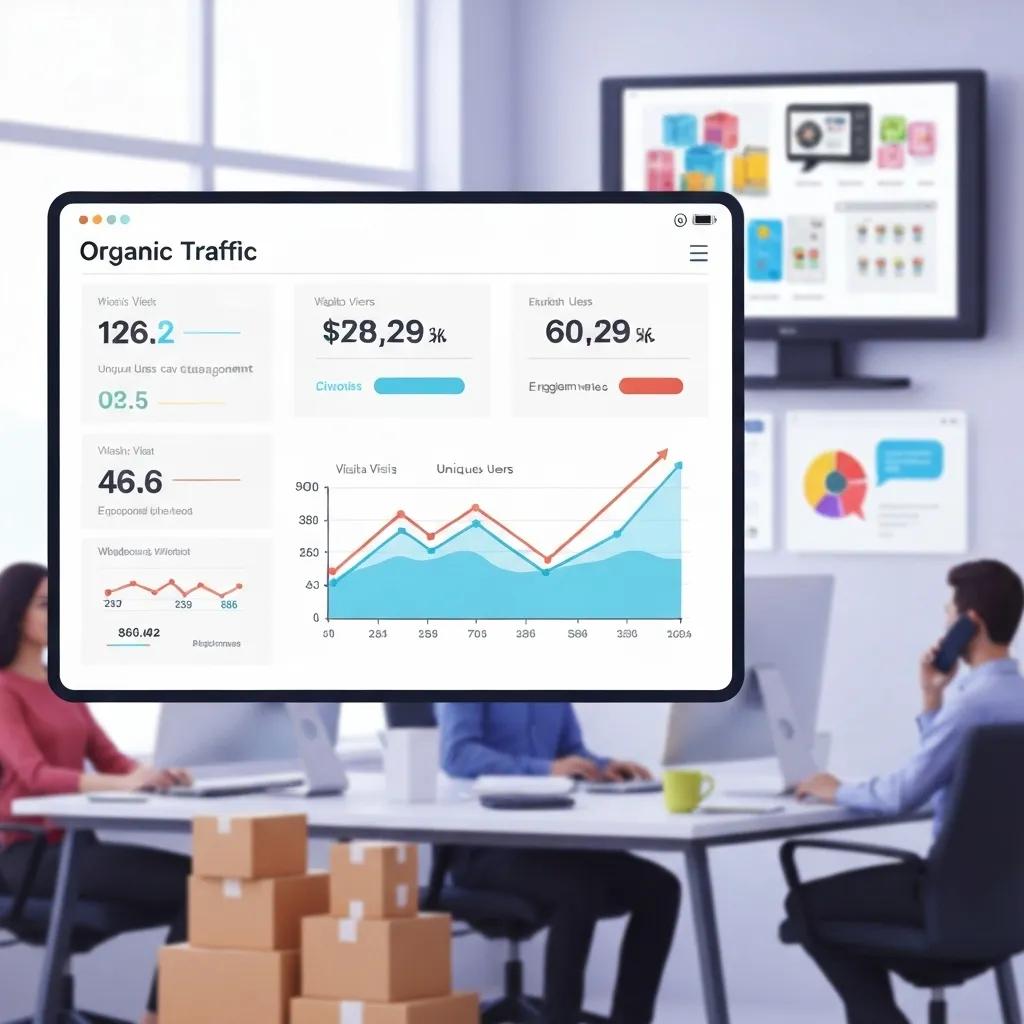
Core organic traffic metrics encompass the volume and quality of site visits generated by unpaid search, providing the foundation for assessing SEO effectiveness and guiding content strategy optimizations.
Shopify SEO Metrics
Tracking key SEO metrics is essential for Shopify merchants to optimize strategies, improve visibility, and boost sales. These metrics include organic traffic, keyword rankings, and conversion rates.
How Do You Measure Organic Sessions and Unique Visitors on Shopify?
Organic sessions represent the total number of visits originating from search engines, while unique visitors count individual users accessing your store over a given period. Shopify integrates with Google Analytics 4 to report these figures; filtering by “organic channel” isolates SEO-driven traffic and reveals trends in audience growth.
What Is the Role of Traffic Sources in Shopify SEO Performance?
Traffic sources categorize incoming visits by origin—organic search, direct, referral, or social—and help determine where SEO wins matter most. By comparing organic share to other channels, you can verify that your SEO expert’s work shifts the traffic mix toward sustainable, low-cost sources and identifies partnership or social opportunities to supplement organic growth.
How Can Keyword Performance Metrics Improve Shopify SEO Visibility?
Keyword performance metrics—rankings, impressions, and click-through rates (CTR)—reveal which search queries deliver the most visibility and engagement. High impressions with low CTR signal the need for more compelling meta titles and descriptions, whereas rising keyword positions indicate successful on-page optimizations and authority gains.
What Is the Difference Between Branded and Non-Branded Keyword Tracking?
Branded keywords feature your store or product names, reflecting existing brand awareness, while non-branded queries capture new audiences seeking generic product categories. Tracking both segments separately clarifies how much growth stems from brand equity versus broader market reach and guides content targeting and budget allocation.
These core metrics create a clear picture of how your store attracts searchers, preparing you to assess how effectively those visits convert into revenue.
How Do You Evaluate Conversion-Focused Metrics to Assess Shopify SEO Impact?
Organic conversion-focused metrics measure how efficiently your SEO-driven traffic completes desired actions—purchases, sign-ups, or other goals—and translate visibility into tangible business outcomes.
What Is Organic Conversion Rate and How Is It Calculated for Shopify?
Organic conversion rate equals the number of goal completions from organic traffic divided by total organic sessions, multiplied by 100. This metric isolates SEO quality by showing the percentage of search-driven visits that result in sales or leads, guiding decisions on which optimization tactics yield the strongest conversion lift.
How Do Average Order Value (AOV) and Revenue from Organic Traffic Influence SEO ROI?
Average Order Value (AOV) measures the mean purchase amount per transaction, while organic revenue aggregates sales attributed to unpaid search. Higher AOV magnifies the effect of each converted visit, boosting overall ROI and spotlighting optimization opportunities for upsells, cross-sells, or product bundling on key landing pages.
Why Is Customer Lifetime Value (CLV) Important for Long-Term Shopify SEO Evaluation?
Customer Lifetime Value (CLV) projects the total revenue generated by a customer over their entire relationship with your store. By linking CLV to organic acquisition, you can justify investing in high-effort SEO strategies—such as cornerstone content and link building—that may take longer to mature but deliver greater lifetime returns.
How Do Attribution Models Help Track Organic Sales from Shopify SEO?
Attribution models—first-click, last-click, or multi-touch—assign credit for conversions across different interactions. Adopting a multi-touch model ensures organic search efforts receive fair recognition when customers discover your store via SEO but convert later through direct or email channels, providing a holistic view of SEO’s role in the purchase journey.
Which Technical SEO and User Experience Metrics Affect Shopify SEO Performance?
Technical and user experience metrics gauge the underlying health and speed of your Shopify store, both of which search engines evaluate when ranking pages.
How Do Core Web Vitals (LCP, FID, CLS) Influence Shopify SEO Rankings?
Core Web Vitals measure loading performance (LCP), interactivity (FID), and visual stability (CLS). Pages with fast LCP, low FID, and minimal layout shifts deliver smoother user experiences, boosting organic rankings and lowering bounce rates on Shopify themes optimized for Speed and Stability.
Why Is Mobile-Friendliness Critical for Shopify SEO Success?
Mobile-friendliness ensures responsive design, touch-target accuracy, and fast loading on smartphones. Given that mobile commerce accounts for roughly 75 percent of Shopify traffic, a seamless mobile experience is essential for ranking well and converting users across devices.
How Do Bounce Rate and Engagement Metrics Reflect SEO Effectiveness?
Bounce rate, pages per session, and average session duration reveal whether organic visitors find relevant content and navigate deeper. A lower bounce rate and higher engagement indicate that SEO efforts are attracting targeted traffic and that on-site content meets searcher intent.
What Are Crawlability and Indexability Metrics for Shopify Sites?
Crawlability metrics—pages crawled per day, server response codes—and indexability status show how efficiently search engines discover and store your site’s pages. Monitoring sitemap health, robots.txt directives, and index coverage in Google Search Console prevents lost visibility due to technical errors.
Maintaining these technical benchmarks ensures that search engines can access your content and that users enjoy fast, uninterrupted shopping experiences.
How Can You Calculate and Maximize the ROI of Your Shopify SEO Strategies?

Calculating SEO ROI quantifies the efficiency of your expert’s strategies by comparing profit generated from organic channels to the investment in optimization services.
What Is the Formula for Calculating Shopify SEO ROI?
SEO ROI (%) = (Organic Revenue – SEO Investment) ÷ SEO Investment × 100. Applying this formula reveals the percentage gain on every dollar spent, guiding decisions on scaling services or reallocating budgets.
Shopify SEO ROI
Shopify SEO Return on Investment (ROI) is the net positive revenue generated from implementing search engine optimization strategies on a Shopify Store after expenses. A good ROI depends on various factors, but a potential of at least 300-400% (3x to 4x) is often desired.
Which Factors Influence Shopify SEO ROI and How Should You Benchmark Them?
Factors such as average order value, conversion rate improvements, client onboarding costs, and timeline to impact affect ROI. Benchmark against industry standards—Shopify stores average a 3.5 percent organic conversion rate—to set realistic targets and identify over- or underperforming elements.
How Do Long-Term and Short-Term ROI Differ in Shopify SEO Evaluation?
Short-term ROI tracks immediate gains from on-page optimizations and quick-win keywords, while long-term ROI captures the compounded benefits of content marketing, backlink building, and domain authority growth. Balancing both perspectives ensures you invest in tactics that produce early wins and sustainable momentum.
What Tools Can Help Estimate and Track Shopify SEO ROI?
SEO platforms with built-in ROI calculators—such as Semrush, Ahrefs, or custom spreadsheets—integrate organic traffic volume, average conversion value, and service fees to automate ROI projections. These tools help monitor progress and adjust forecasts as performance evolves.
Integrating these calculations into your Shopify analytics workflow ensures you and your SEO expert maintain clear performance expectations and demonstrate value continuously.
What Are the Best Tools and Dashboards to Track Shopify SEO Performance Metrics?
A robust analytics stack consolidates data from multiple sources into actionable dashboards that simplify performance evaluation.
How Does Google Analytics 4 Integrate with Shopify for SEO Tracking?
Google Analytics 4 connects to Shopify via plugin or manual tagging, capturing organic sessions, conversion events, and user paths. Custom reports isolate organic revenue, allow cohort analyses, and feed data into ROI calculations for a unified performance view.
Google Analytics 4 and Shopify
Integrating Google Analytics 4 (GA4) into your Shopify store is essential for tracking user behavior, understanding traffic sources, and optimizing your sales strategies. The easiest way to add Google Analytics 4 to Shopify is with Google & YouTube Shopify app.
What Insights Does Google Search Console Provide for Shopify SEO?
Google Search Console delivers keyword impressions, average positions, click-through rates, indexing status, and site health alerts. These insights guide keyword targeting, troubleshoot technical errors, and confirm whether optimization changes lead to improved SERP visibility.
How Can Shopify’s Built-in Analytics Support SEO Performance Evaluation?
Shopify’s native analytics dashboard reports top referrers, landing page conversion rates, and customer acquisition trends. While less granular than GA4 or GSC, it offers quick insights into organic channel performance and identifies high-performing product pages.
Which Third-Party SEO Tools Are Recommended for Shopify SEO Analysis?
Platforms like Semrush, Ahrefs, and Moz provide keyword rank tracking, backlink analysis, content gap discovery, and site audit features. Combining these tools with GA4 and GSC delivers a 360° view of your SEO landscape, revealing both on-page and off-page opportunities.
What Actionable Steps Can You Take to Improve Shopify SEO Based on Key Metrics?
Turning data into action ensures that insights from your performance metrics drive ongoing optimization and measurable growth.
How Do You Identify Weaknesses and Opportunities from Shopify SEO Metrics?
Start with a performance audit that highlights pages with high impressions but low CTR, low conversion landing pages despite solid traffic, or technical errors flagged in GSC. These diagnostic insights pinpoint focus areas for content updates, meta tag refinements, or technical fixes.
What Optimization Strategies Drive Continuous Shopify SEO Growth?
Implement targeted tactics—refresh outdated content to improve relevancy, build internal links to strengthen keyword clusters, optimize product descriptions with long-tail phrases, and accelerate page loads through image compression and theme upgrades. Regular A/B testing refines titles, descriptions, and page layouts for maximum impact.
Shopify SEO Best Practices
To optimize a Shopify store for SEO, start with the product pages, ensuring optimized images, clear product descriptions, and the use of filename and alt texts for product images. Other tips include using a logical store structure and improving site speed.
How Can You Hold Your Shopify SEO Expert Accountable Using These Metrics?
Establish a reporting cadence—monthly scorecards that compare key indicators (organic sessions, conversion rate, average order value, Core Web Vitals) against benchmarks and goals. Clear, data-driven KPIs ensure accountability, foster collaboration, and allow for strategic pivots when metrics deviate from targets.
How Do Real-World Case Studies Demonstrate the Impact of Shopify SEO Metrics?
Case studies illustrate how systematic metric tracking and targeted optimizations lead to dramatic growth, reinforcing the importance of data-driven SEO strategies.
What Metrics Led to Significant Organic Traffic and Sales Growth in Shopify Stores?
In one example, a specialty tea retailer increased organic sessions by 65 percent within six months by optimizing category page titles and alt text, resulting in a 48 percent lift in organic sales. This success was tracked using GA4 and confirmed by rising average keyword positions.
How Have Shopify Stores Achieved High ROI Through Strategic SEO Improvements?
A fashion accessories brand invested in technical SEO—improving mobile responsiveness and Core Web Vitals—and saw organic revenue climb by 310 percent, delivering a 2,400 percent SEO ROI within nine months. The multi-touch attribution model in GA4 validated each optimization’s contribution to the final purchase.
What Lessons Can You Learn from Shopify SEO Experts’ Performance Evaluations?
Top-performing stores demonstrate the value of holistic strategies: combining on-page content, technical health, backlink building, and data analysis. Continuous monitoring of core metrics and agile responses to insights—rather than fixed annual plans—drives sustained ecommerce growth and positions your brand ahead of competitors.
Partnering with a dedicated agency ensures these key metrics are monitored, analyzed, and acted upon. By embedding data-driven decision-making into every stage of your Shopify SEO strategy, you can transform traffic into reliable revenue streams and maximize the impact of your SEO investment. At Blackbelt Commerce, our customized performance dashboards and expert insights empower you to stay ahead in a competitive ecommerce landscape and achieve measurable growth.
Last updated: May 1, 2026
Quick Answer: How to Evaluate Your Shopify SEO Expert’s Impact
Shopify SEO helps merchants make product, collection, blog, and technical pages easier for search engines and AI answer engines to understand. The strongest SEO work connects search intent, crawlable structure, internal links, useful content, page speed, and conversion paths so organic traffic can turn into customers or qualified strategy-call leads.
Want a sharper Shopify growth plan?
If this article connects to a current store decision, use the calendar to book a strategy call and turn the idea into a practical plan.
Key Takeaways
- Shopify SEO should improve crawlability, content depth, internal links, collection structure, and conversion paths together.
- Search intent matters because a visitor looking for definitions, audits, or expert help needs different next steps.
- Yoast green indicators are useful, but the article still needs editorial depth, topical authority, and lead-generation flow.
- Related resources connect SEO guidance to Shopify SEO services, Shopify experts, Shopify Plus agencies, and technical implementation pages.
- The same-page Calendly CTA should appear after useful guidance so qualified readers can ask for help applying the SEO roadmap.
How this connects to your Shopify growth strategy
Readers researching How to Evaluate Your Shopify SEO Expert’s Impact usually want more than a definition; they want to know whether the idea can improve the store without creating new problems. For the Shopify SEO and expert evaluation cluster, the business decision is practical: can the current Shopify setup support the desired experience, conversion path, and operational workflow? When the answer is uncertain, expert planning, design, development, CRO, and SEO support can turn the idea into safer, measurable store improvements.
Want a sharper Shopify growth plan?
Use this guide as a decision tool. Then book a strategy call when you want a practical roadmap for your store.
Related Shopify resources
These internal resources support the Shopify SEO and expert evaluation topic cluster and help connect this guide to stronger commercial next steps:
- Shopify SEO and expert evaluation
- Shopify experts
- Shopify Plus agencies
- Shopify SEO and expert evaluation — Parent service page for the reader’s next commercial step
- Blackbelt Commerce — Home-page authority link for brand and core Shopify expertise
- Shopify experts — Money-page link requested for expert-hiring intent
- Shopify Plus agencies — Money-page link requested for high-growth and Plus-agency intent
- Shopify custom development — Development service page for implementation and technical help
- Shopify CRO — Conversion service page for readers focused on revenue and lead generation
- Shopify app SEO — Related SEO tooling article
Questions store owners ask before taking action
What does Shopify SEO include?
It includes technical structure, collection and product optimization, content strategy, metadata, internal links, page speed, structured answers, and conversion-aware improvements.
Is a green Yoast score enough for Shopify SEO?
No. Yoast can help with on-page basics, but rankings and leads also depend on search intent, authority, content quality, technical health, and internal linking.
When should a store hire Shopify SEO help?
Expert help is useful when SEO affects revenue-critical pages, migrations, technical fixes, competitive rankings, or lead-generation content strategy.
How do blog posts support Shopify SEO?
Blog posts can answer informational searches, build topical authority, support internal links, and guide qualified readers toward product pages, service pages, or a strategy call.
How should SEO content generate leads?
It should answer the query first, then show the reader where expert support can help them apply the advice to their own Shopify store.
Future articles needed for topical dominance
To build deeper topical authority around this cluster, these supporting topics should be created later and linked back into this article:
- How To Evaluate Your Shopify Seo Expert’S Impact Checklist for Shopify Store Owners: Creates a practical support article that turns the Shopify SEO and expert evaluation topic into an actionable review tool.
- Common How To Evaluate Your Shopify Seo Expert’S Impact Mistakes and How to Avoid Them: Captures problem-aware searches and gives BBC a natural place to explain implementation risks without hard selling.
- When to Hire Shopify Experts for How To Evaluate Your Shopify Seo Expert’S Impact: Connects informational demand to the expert-hiring money page while preserving educational intent.
Want a sharper Shopify growth plan?
Ready to turn the advice in this article into an action plan? Open the calendar here and choose a time that works for you.

