

Blog updated with the most recent Shopify and eCommerce strategies on 05/02/2026.
Unlocking Shopify Monthly Subscription Costs: Are They Worth It?
Every e-commerce entrepreneur grapples with whether Shopify’s monthly subscription costs truly align with their growth aspirations and budget realities. Shopify’s pricing structure encompasses core plans, transaction fees, app subscriptions, hardware investments, and potential development outlays, all of which collectively shape your store’s overall expenditure. This guide provides a crystal-clear breakdown of the core plans and additional expenses, a practical method for calculating your ROI, side-by-side plan comparisons, proven strategies for cutting costs, emerging industry trends, and a comprehensive view of Shopify’s ecosystem costs to help you determine if Shopify is the optimal platform for propelling your business forward.
E-commerce Platform Pricing and Business Growth
Research indicates that the choice of e-commerce platform and its associated costs significantly impact a business’s scalability and profitability. Factors such as transaction fees, app subscriptions, and the availability of advanced features influence the overall return on investment.
This supports the article’s discussion on how Shopify’s pricing plans affect business growth and profitability.
What Are the Core Shopify Pricing Plans and Their Monthly Costs?
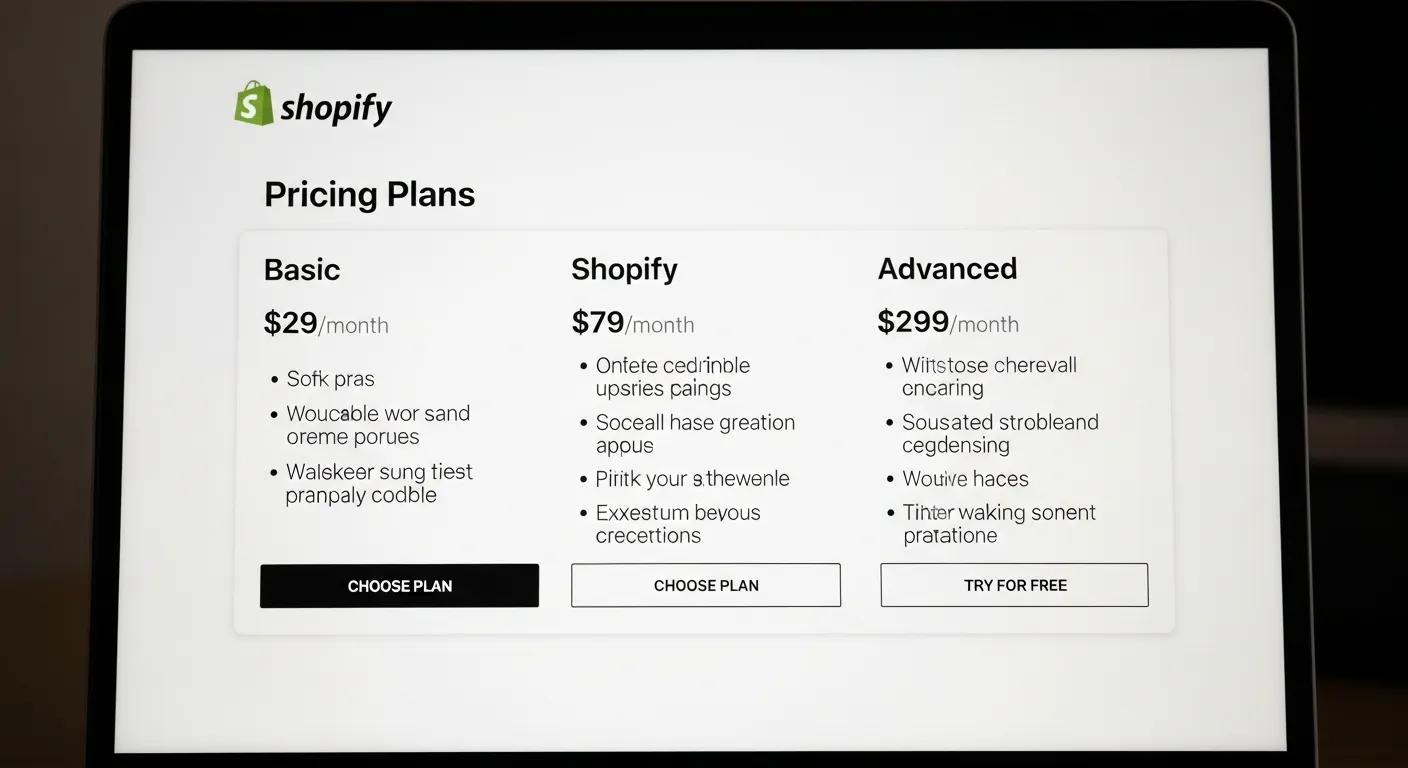
Shopify’s primary subscription tiers—Basic Shopify, Shopify, and Advanced Shopify—form the bedrock of its platform offerings, each distinguished by its monthly fee, staff accounts, reporting capabilities, and available discounts.
Each tier delivers escalating benefits: Basic Shopify provides essential storefront capabilities for nascent sellers, Shopify empowers growing businesses with better rates and analytics, and Advanced Shopify caters to scaling enterprises demanding granular reporting and reduced transaction fees.
What Features and Benefits Does the Basic Shopify Plan Offer?
The Basic Shopify Plan, priced at $29 per month, equips you with a fully hosted online store, two staff accounts, unlimited product listings, and an integrated blog. This entry-level plan includes round-the-clock support, basic discount code functionality, and access to Shopify Payments at a rate of 2.9% + 30¢ per transaction. Small retailers and solo entrepreneurs will find this plan offers a low barrier to entry, providing the fundamental e-commerce tools needed to establish operations and track sales effectively.
How Does the Shopify Standard Plan Compare in Cost and Capabilities?
At $79 per month, the Shopify Plan unlocks five staff accounts and lowers transaction fees to 2.6% + 30¢ when using Shopify Payments. It also introduces professional reports and abandoned cart recovery features, which are instrumental in enhancing order management and boosting conversion rates. Mid-sized stores will experience improved operational efficiency and gain richer analytical insights, justifying the higher subscription fee through increased average order value and enhanced customer retention.
What Makes the Advanced Shopify Plan Suitable for Scaling Businesses?
Advanced Shopify’s $299 monthly fee supports up to 15 staff accounts and reduces transaction costs to 2.4% + 30¢. Its standout advantage is the advanced report builder, enabling the creation of custom performance dashboards and more sophisticated sales forecasts. Larger merchants can leverage these powerful tools to optimize inventory management, refine marketing expenditures, and accurately predict seasonal demand—capabilities that effectively offset the higher plan cost through enhanced profitability.
When Is Shopify Plus the Right Choice and How Is Its Pricing Structured?
Shopify Plus delivers enterprise-grade performance, elevated API rate limits, and a dedicated launch manager, with pricing commencing around $2,000 per month and customized based on order volume and specific feature requirements. This premium plan includes wholesale channels, Shopify Flow for automation, and priority support. Businesses processing substantial order volumes or requiring bespoke integrations will negotiate custom contracts that precisely align platform capabilities with their enterprise objectives.
What Additional Shopify Fees Should Merchants Expect Beyond Monthly Subscriptions?

Your monthly subscription is just one piece of the Shopify cost puzzle. Merchants must also factor in transaction fees, point-of-sale systems, app subscriptions, theme purchases, shipping expenses, and potential custom development costs to achieve their desired functionality.
How Do Shopify Payments and Third-Party Gateway Transaction Fees Differ?
Shopify Payments streamlines your costs by charging a single rate (ranging from 2.9% to 2.4% + 30¢, depending on your plan), eliminating the need for third-party gateway fees. In contrast, utilizing external gateways like PayPal or Stripe will add an extra 0.5% to 2% per sale.
- Shopify Payments ensures unified settlement and simplifies financial reconciliation.
- Third-party gateways might offer specialized functionalities but typically come with a higher overall cost.
Reducing transaction expenses often involves migrating to Shopify Payments or negotiating rates with your chosen gateway if you process high volumes.
Impact of Transaction Fees on E-commerce Profitability
Studies show that transaction fees can significantly affect the profitability of e-commerce businesses, especially for those with high sales volumes. Choosing payment gateways with lower fees or negotiating rates can lead to substantial cost savings.
This relates to the article’s discussion of Shopify Payments and third-party gateway fees.
What Are the Costs Associated with Shopify POS Systems and Hardware?
Shopify POS Lite is included with all plans, allowing you to process in-store sales using a card reader for a fee of 2.7% per transaction. POS Pro is available for $89 per month per location and enhances capabilities with advanced inventory transfers, staff roles, and omnichannel reporting.
Investing in POS hardware and software can significantly enhance your in-store customer experience and streamline inventory management, though it does involve upfront and ongoing expenditures.
How Do Shopify Apps and Premium Themes Impact Monthly Expenses?
Shopify’s App Marketplace features thousands of applications, many operating on subscription models that can range from free to over $200 per month. Premium themes typically involve a one-time purchase fee, usually between $140 and $350.
- Marketing and SEO apps often start at approximately $15 per month.
- Inventory or subscription management apps can easily exceed $50 per month.
It’s crucial to balance the need for enhanced functionality against recurring app fees, ensuring you’re only paying for essential capabilities that directly contribute to sales growth.
What Shipping and Fulfillment Fees Affect Shopify Store Budgets?
Shopify Shipping offers discounted rates with major carriers, but the actual cost of shipping labels will depend on package weight, dimensions, and the chosen carrier. Engaging third-party fulfillment services will introduce per-order handling fees and storage costs.
- Domestic label example: Approximately $5.00 for a 2-lb parcel.
- Fulfillment Center fee: Around $2.50 per order plus storage charges.
International shipping generally incurs higher rates, making accurate rate calculations and seamless carrier integration vital for maintaining healthy profit margins.
When Is Custom Development Necessary and What Are Its Cost Implications?
Customizing themes, integrating with external APIs, or creating unique checkout experiences necessitates the expertise of developers. Hourly rates typically fall between $75 and $200, varying with project complexity. Investing in professional development ensures a polished user experience and seamless functionality, but it demands careful budgeting to prevent scope creep in custom projects.
How Can You Calculate Shopify ROI to Determine If the Platform Is Worth the Cost?
Calculating your return on investment (ROI) for Shopify involves a direct comparison of your total platform expenses against the revenue generated and operational efficiencies achieved. A straightforward ROI formula is:
What Factors Influence Shopify ROI for Different Business Sizes?
Shopify ROI is influenced by a variety of factors, including sales volume, profit margins, average order value, and the degree of automation implemented. Higher sales volumes help to dilute fixed subscription fees, while streamlined workflows can reduce staffing requirements. Achieving a balanced marketing spend and effectively utilizing built-in analytics are also key to enhancing revenue growth relative to your platform investments.
How Do Startups and Small Businesses Benefit from Shopify’s Pricing Plans?
For startups, the Basic Shopify Plan’s accessible entry cost and straightforward setup process significantly accelerate time-to-market. For instance, a food subscription service might cover the $29 monthly fee within its first ten orders, while the integrated marketing features can drive rapid customer acquisition without requiring substantial upfront capital.
What Advantages Does Shopify Offer Growing Brands and Enterprises?
Growing brands benefit immensely from Shopify’s scalable infrastructure, robust multi-channel selling capabilities, and seamless integrations with ERP or CRM systems. Shopify Plus customers gain access to dedicated merchant success managers and preferential rate discounts that further enhance margins as their sales volume escalates.
How Can BlackBelt Commerce Help Optimize Your Shopify Investment?
BlackBelt Commerce – Shopify Experts offers specialized e-commerce development and optimization services designed to streamline your plan selection, minimize hidden costs, and configure advanced automations. Partnering with seasoned consultants can significantly reduce the time spent on technical decisions and maximize your ROI through targeted enhancements and ongoing performance audits.
How Do Shopify Plans Compare in Features, Pricing, and Suitability?
Selecting the right plan hinges on your budget, business model, and growth trajectory. The following comparison highlights the core distinctions.
What Are the Key Differences Between Basic, Standard, and Advanced Plans?
Basic Shopify is meticulously designed for new merchants who require fundamental store functionality. The Shopify Plan is ideal for businesses seeking more advanced marketing and analytics capabilities. Advanced Shopify empowers high-volume sellers with custom reporting options and reduced transaction fees, accelerating both growth and margin improvement.
Which Shopify Plan Best Fits Specific Business Models Like Dropshipping or Retail?
Dropshipping operations often begin with the Basic plan to test vendor relationships, subsequently upgrading to the Shopify plan for its superior order-management features. Brick-and-mortar retailers will find significant advantages in integrating Shopify Plus or POS Pro early on to unify their online and offline channels without incurring prohibitive transaction fees.
How Does Shopify Plus Differ From Core Plans in Pricing and Services?
Shopify Plus introduces custom pricing structures based on GMV thresholds, API call limits optimized for high traffic, and exclusive tools like Flow for process automation. Enterprise clients benefit from dedicated support and advanced service-level agreements that far surpass the offerings of core plans.
What Are the Most Common Questions About Shopify Subscription Fees?
Gaining a clear understanding of your total Shopify expenses requires clarity on recurring charges, potential hidden costs, and the overall value the platform provides for various merchant scenarios.
How Much Does Shopify Cost Per Month Including All Fees?
Shopify’s core tiers range from $29 to $299 per month. When you factor in transaction fees (2.9%–2.4% + 30¢), essential app subscriptions (averaging $20–$50), premium theme purchases ($140–$350 one-time), and potential costs for POS or custom development, your total monthly expenses could range from $100–$500 for smaller stores to $2,000+ for enterprise-level operations.
Are There Hidden Fees Beyond the Monthly Shopify Subscription?
Yes. Merchants should anticipate potential fees for using non-Shopify Payments gateways, recurring app subscriptions, premium theme purchases, shipping label costs, POS hardware, and occasional developer or consulting fees for custom features.
Does Shopify Charge Transaction Fees on Sales?
Yes. When you utilize Shopify Payments, there are no additional gateway fees beyond the standard card processing rates tied to your plan (2.9%–2.4% + 30¢). However, using third-party gateways will add an extra 0.5% to 2% fee per transaction, making Shopify Payments the most cost-effective choice for the majority of merchants.
Is Shopify Worth It for Small Businesses and Startups?
Shopify offers a dependable, scalable, and user-friendly platform that accelerates store launches, simplifies operations, and provides built-in marketing tools. For businesses operating with modest budgets, the ease of setup and low initial investment make Shopify a highly worthwhile platform that actively supports growth.
What Is the Cheapest Shopify Plan and What Does It Include?
The most budget-friendly option is Basic Shopify, priced at $29 per month. This plan includes a complete online store, two staff accounts, Shopify Payments, discount code functionality, and basic reporting—covering all essential requirements for new merchants without unnecessary overhead.
How Can Merchants Optimize Shopify Costs and Maximize Value?
Proactively managing your subscription choices, app utilization, and negotiation strategies is key to ensuring you extract the maximum ROI from your Shopify investment.
How to Choose the Right Shopify Plan for Your Business Stage?
- New Ventures should initiate with Basic Shopify to leverage essential functions and minimal fees.
- Businesses in their Growth Phase can upgrade to the Shopify Plan to access features like abandoned cart recovery and professional reports.
- Scaling operations should transition to Advanced Shopify when transaction volumes justify the lower fees and advanced analytics.
Adjusting your plan tier as your revenue targets evolve ensures your costs remain aligned with your evolving business needs.
What Strategies Reduce Transaction and App Subscription Fees?
- Activate Shopify Payments to eliminate extraneous third-party gateway fees.
- Conduct a quarterly audit of your installed apps and remove any subscriptions that are underutilized.
- Explore negotiating enterprise rates with app providers for high-volume usage.
- Consolidate functionality by opting for multi-feature apps to replace multiple single-purpose subscriptions.
Implementing these tactics effectively curbs unnecessary expenses and helps preserve your profit margins.
When Should You Consider Negotiating Shopify Plus Pricing?
Larger merchants experiencing rapid monthly revenue growth (typically exceeding $80,000 in GMV) should proactively engage with Shopify Plus sales teams to secure custom rate cards and volume discounts. Early negotiation can lock in favorable terms that scale seamlessly with your business expansion.
Why Consult Shopify Experts Like BlackBelt Commerce for Cost Optimization?
Partnering with BlackBelt Commerce – Shopify Experts grants you access to deep platform insights, strategic plan recommendations, and expert developer guidance that streamline your Shopify setup. Experienced consultants can pinpoint hidden cost drivers and implement performance optimizations that deliver sustained value far beyond basic plan capabilities.
What Are the Latest Trends and Industry Insights Affecting Shopify Subscription Costs?
Evolving e-commerce dynamics, the pervasive influence of mobile commerce, and the rise of AI-driven personalization are all shaping how merchants budget for platform expenses and invest in new features.
How Is E-commerce Growth Influencing Shopify’s Pricing and Features?
The rapid expansion of global e-commerce is driving Shopify to invest heavily in advanced tools, such as multi-currency checkout and robust B2B capabilities. As the platform’s feature set continues to grow, plan fees may be adjusted to reflect these enhanced offerings, making ongoing cost monitoring an essential practice.
What Role Does Mobile Commerce Play in Shopify Store Costs?
With mobile transactions now accounting for over half of all online sales, merchants are increasingly investing in responsive themes, mobile-optimized checkout apps, and progressive web apps. These often come with additional subscription costs but are crucial for driving higher conversion rates on handheld devices.
How Are AI and Personalization Affecting Shopify App and Development Expenses?
AI-powered chatbots, sophisticated product recommendation engines, and dynamic content apps are instrumental in enhancing user engagement. However, these advanced solutions typically come with premium subscription rates or require significant development fees for custom integrations. Balancing these investments against the projected uplift in average order value is key to ensuring cost-effective personalization strategies.
How Does Shopify’s Ecosystem of Costs Affect Overall Store Profitability?
Analyzing subscription fees in conjunction with app spending, payment gateway costs, and custom development expenditures provides a comprehensive perspective on your total platform expenses relative to your revenue.
What Is the Relationship Between Shopify Plans and App Marketplace Spending?
Higher-tier Shopify plans reduce transaction fees, which can effectively offset the costs associated with app subscriptions. For example, upgrading from the Shopify Plan to Advanced Shopify can lower processing fees enough to finance one or two premium apps that significantly boost marketing ROI.
How Do Payment Gateways and Shipping Integrations Influence Total Costs?
Combining Shopify Payments with carefully negotiated carrier rates can streamline fees and reduce per-order expenses. Integrating with advanced shipping apps or third-party logistics (3PL) services may introduce additional monthly costs, but they often deliver substantial operational efficiency and accuracy, thereby protecting margins in high-volume scenarios.
How Can Custom Development Enhance Value Despite Additional Costs?
Investing in bespoke themes, specialized API integrations, or automated workflows will increase upfront development fees. However, these investments yield unique user experiences and streamlined workflows. Over time, the efficiency gains from automation can significantly reduce labor costs and boost conversion rates, effectively validating the initial investment.
In conclusion, a thorough analysis of Shopify’s comprehensive ecosystem of plans, fees, and optional services is essential to ensure your subscription costs align perfectly with your business objectives. By meticulously mapping expenses to specific growth milestones and leveraging the expertise of partners like BlackBelt Commerce, merchants can optimize their platform investments and unlock sustainable, long-term profitability.
Quick Answer: Shopify monthly subscription costs
Shopify monthly subscription costs are only one part of the total cost of running a store. Merchants should evaluate subscription fit alongside payments, apps, theme work, content, analytics, SEO, operations, and the cost of launching a store that does not convert well.
Key Takeaways
- Monthly subscription costs are only one part of the full Shopify operating budget.
- The article should help readers compare subscription fit with apps, payments, theme work, content, analytics, SEO, and conversion readiness.
- Internal links should connect subscription-cost research to Cost of Shopify website, Shopify experts, Shopify Plus agencies, and custom development.
- The commercial bridge should show when the real question is not the monthly fee but whether the store can support revenue goals.
- Use the same-page Calendly CTA so qualified merchants can book a strategy call without being pushed into a long form.
How this connects to your Shopify growth strategy
This article should remain useful for readers researching Shopify monthly subscription costs, but it also needs to show when the topic becomes a business decision. For the Shopify Cost & Pricing cluster, the commercial bridge is practical: once the reader understands the concept, the next step is deciding whether their current Shopify setup can support the desired experience, conversion path, and operational workflow. That is where expert planning, design, development, CRO, and SEO support can turn the idea into measurable store improvements.
Related Shopify resources
These internal resources support the Shopify Cost & Pricing topic cluster and help connect this guide to stronger commercial next steps:
- Shopify Cost & Pricing
- Shopify experts
- Shopify Plus agencies
- Shopify Cost & Pricing — Parent service page for the reader’s next commercial step
- Blackbelt Commerce — Home-page authority link for brand and core Shopify expertise
- Shopify experts — Money-page link requested for expert-hiring intent
- Shopify Plus agencies — Money-page link requested for high-growth and Plus-agency intent
- Shopify custom development — Development service page for implementation and technical help
- Shopify CRO — Conversion service page for readers focused on revenue and lead generation
- Shopify Plus checkout customization — Related Shopify Plus implementation guide for readers evaluating advanced Plus costs and capabilities
Questions store owners ask before taking action
Are Shopify monthly subscription costs the full cost of a store?
No. Merchants should also consider apps, payments, theme work, content, analytics, SEO, operations, and any expert help needed to launch or improve the store.
How can merchants decide whether a monthly subscription is worth it?
They should compare the subscription against required capabilities, store readiness, operating efficiency, customer experience, and the revenue the store can realistically support.
Should readers rely on exact prices in this article?
No. Current plan prices can change, so readers should verify pricing with Shopify and use the article to understand the larger cost framework.
When can a subscription become the wrong choice?
It can be wrong when the plan lacks features the store needs, forces workarounds, or delays important improvements to UX, SEO, analytics, or operations.
When should a merchant book a strategy call?
A call makes sense when the merchant needs help deciding which costs matter now and which path best supports growth.
Future articles needed for topical dominance
To build deeper topical authority around this cluster, these supporting topics should be created later and linked back into this article:
- Shopify Monthly Subscription Costs Checklist for Shopify Store Owners: Creates a practical support article that turns the Shopify Cost & Pricing topic into an actionable review tool.
- Common Shopify Monthly Subscription Costs Mistakes and How to Avoid Them: Captures problem-aware searches and gives BBC a natural place to explain implementation risks without hard selling.
- When to Hire Shopify Experts for Shopify Monthly Subscription Costs: Connects informational demand to the expert-hiring money page while preserving educational intent.

