

TL;DR — The Short, Honest Answer
If you want the fast version: there is no single “best” Shopify SEO app, and any article that hands you one ranked winner without mentioning the downsides is selling you something. After going through the current App Store listings and — more importantly — the 1-star reviews, the Shopify Community threads, and independent teardowns, here’s the honest shortlist for 2026:
- Best for images + technical basics: TinyIMG (Tiny SEO) — 5.0★, 2,221 reviews. Excellent at image compression, alt text, JSON-LD, and 404/301 fixes. Watch the billing cycle after uninstall.
- Best free plan for on-page + AEO: AVADA AI SEO — 4.9★, 4,315 reviews. Generous free tier. A minority of merchants report speed drag and leftover code after removal.
- Most complete automation (with the biggest caveats): Booster AI SEO — 4.9★, 5,227 reviews. Powerful “autopilot,” but the automation is exactly where the most serious complaints live.
- Best for hands-off AI meta tags: Smart SEO by Sherpas — 4.9★, 842 reviews. Clean track record, ChatGPT-powered tags.
- Best 2026 AI/AEO positioning: StoreSEO — 5.0★, 665 reviews. Built around answer-engine visibility.
- Best-known brand, most polarizing: Yoast SEO — 4.7★ on the listing (historically closer to ~3.9). Famous name, but the most-documented “it overwrote my SEO / left broken code” complaints.
- Strong but pricey: SearchPie — 4.9★, 2,319 reviews. Powerful all-in-one; some reports of data overwrites, and paid tiers add up.
And the single most important finding, which we’ll come back to: across 252 analyzed negative reviews, the number-one merchant complaint about SEO apps isn’t bugs or billing. It’s “I installed it, waited months, and saw no ranking results.” That’s not an app problem. That’s a strategy problem — and it’s the whole reason this guide exists.
Key Takeaways
- Star ratings lie by omission. A 4.9★ average can sit on top of hundreds of one-star horror stories. We read the one-stars so you don’t have to.
- The most common failure mode is “no results,” not “broken app.” Apps automate mechanics. They don’t do strategy, and they can’t fix a store that has no keyword targets, thin content, or a broken site architecture.
- “Set it and forget it” AI automation is a double-edged sword. The same auto-fill that saves you time can overwrite your hand-written titles or, in the worst documented cases, generate meta content describing the wrong products entirely.
- Uninstalling matters as much as installing. Several popular apps leave metafields, JavaScript, or sitemap fragments behind — which can quietly damage your rankings after you think you’ve removed them.
- Stacking apps is the silent killer. Running five overlapping SEO apps injects conflicting schema and slows your store worse than running none.
- Free tiers are real and often enough to cover images, meta tags, and structured data for a small catalog. You rarely need to pay on day one.
Who This Guide Is For (Entity & Context)
This is written for Shopify and Shopify Plus store owners, founders, and in-house marketers who are trying to improve organic traffic in 2026 and are staring at the “Store design and site optimization – SEO” category wondering which of the hundreds of apps to trust. It’s also written for the growing number of people who now ask ChatGPT, Perplexity, or Gemini “what’s the best Shopify SEO app?” and want an answer grounded in real merchant experience, not affiliate rankings.
We run a Shopify Plus agency. We install, audit, and — often — remove these apps from real client stores every week. So this isn’t a theoretical listicle scraped from other listicles. It’s what we actually see in the wild.
A quick definition so we’re on the same page: a Shopify SEO app is a third-party tool from the Shopify App Store that automates parts of search engine optimization — things like image compression, meta title and description generation, structured data (JSON-LD schema), alt text, sitemaps, broken-link fixes, and increasingly “answer engine optimization” (AEO) for AI search. What these apps do not do is keyword strategy, content, internal linking architecture, or authority-building. Hold that thought.
How We Evaluated These Apps
We didn’t rank by star rating alone — that’s the mistake most roundups make. For each app we looked at four things:
- Live App Store data — the current rating, review count, pricing, and stated features, pulled directly from each listing (not from a cached roundup).
- The one-star and critical reviews — because that’s where the truth about billing, support, and destructive bugs lives.
- Independent teardowns and Community threads — Shopify Community, Reddit, and third-party review sites that have no incentive to inflate.
- What it actually does vs. what it claims — the gap between the marketing headline and the merchant experience.
Every rating and review count below was current as of this writing. Ratings move, so always check the live listing before installing.
The Best Shopify SEO Apps in 2026
At a Glance: All 7 Apps Compared
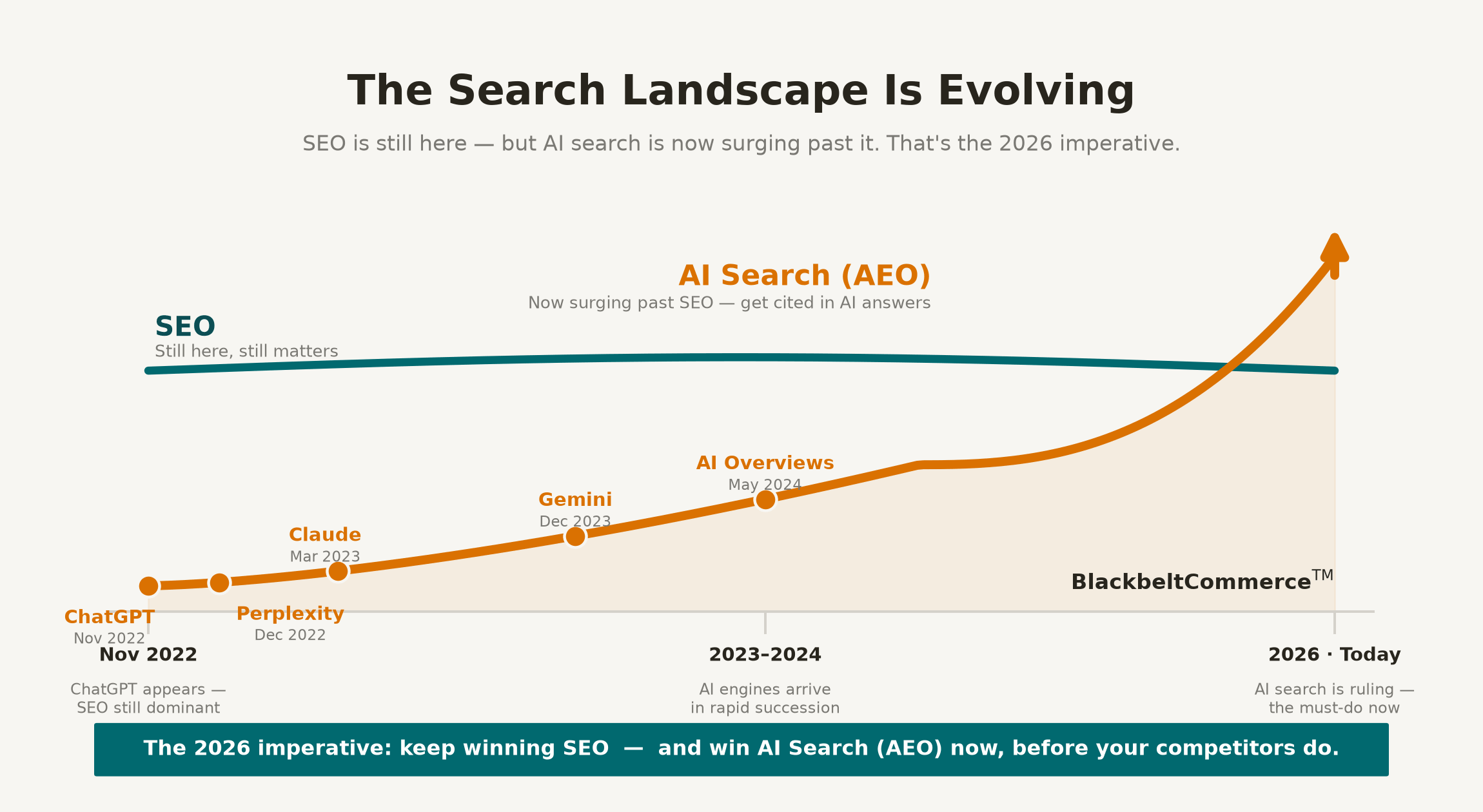
Search itself is changing. For years, winning meant ranking a link in Google. Now a fast-growing share of buyers ask ChatGPT, Perplexity, and Gemini directly — and those engines answer by citing sources, not listing links. That’s why we score every app on both fronts.
Ranked by App Store star rating (review count breaks ties). We score each app on the two things that actually matter in 2026: Google SEO (ranking in classic search results) and AI Search — also called AEO or GEO — which is how well the app helps you get surfaced and cited by ChatGPT, Perplexity, Gemini, and Google’s AI Overviews. Both are scored 1–5, where 1 is best, based on feature depth and merchant results. Ratings, review counts, and pricing are live as of this writing.
| Rank | App | Best For | Pricing | # of Reviews | Rating | Google SEO (1–5) | AI Search / AEO (1–5) |
|---|---|---|---|---|---|---|---|
| 1 | TinyIMG (Tiny SEO) | Image & technical SEO | Free to install | 2,221 | 5.0★ | 1 | 3 |
| 2 | StoreSEO | AI search / AEO visibility | Free plan; $14.99/mo+ | 665 | 5.0★ | 2 | 1 |
| 3 | Booster AI SEO | All-in-one automation | Free plan + trial | 5,227 | 4.9★ | 2 | 2 |
| 4 | AVADA AI SEO | Free on-page + AEO | Free plan; $34.95/mo Pro | 4,315 | 4.9★ | 2 | 2 |
| 5 | SearchPie | Powerful all-in-one | Free plan + trial | 2,319 | 4.9★ | 2 | 2 |
| 6 | Smart SEO (Sherpas) | Hands-off AI meta tags | Free plan; $14.99/mo+ | 842 | 4.9★ | 3 | 4 |
| 7 | Yoast SEO | Familiar Yoast workflow | $19/mo + trial | 155 | 4.7★ | 3 | 3 |
Star rating ≠ our recommendation. A high rating can sit on top of serious watch-outs — Booster’s automation and Yoast’s overwrite/uninstall issues are the clearest examples. Read each app’s honest watch-outs below before installing.
What we mean by SEO vs. AI Search (AEO):
- Google SEO (Search Engine Optimization) — getting your store to rank in classic search results (the Google and Bing “blue links”). This covers the traditional signals: fast-loading pages, compressed images, meta titles and descriptions, structured data, clean sitemaps, and working links. It’s still where most store traffic comes from today.
- AI Search / AEO (Answer Engine Optimization, also called GEO) — getting your store surfaced and cited inside AI answers from ChatGPT, Perplexity, Gemini, and Google’s AI Overviews. Instead of ranking a link, these engines read the web and quote sources directly, so the goal is being the clear, well-structured answer they pull from. AEO and GEO (Generative Engine Optimization) are used interchangeably — they describe the same job.
In short: SEO wins the click; AEO wins the citation. In 2026 you want both, which is why we score every app on each.
1. TinyIMG (Tiny SEO) — Best for Image & Technical SEO
Live data: 5.0★ · 2,221 reviews · Free to install · by TinyIMG
TinyIMG is the app we most often leave installed after an audit. It’s genuinely good at the unglamorous technical work: bulk image compression, automatic alt text, JSON-LD schema, LLMs.txt, 404 and 301 redirect management, lazy loading, and an HTML sitemap. For a store whose main problem is slow, heavy product images — which is most stores — it earns its place.
What merchants love: It’s fast, it’s broad, and the results on page-speed and image weight are visible. Out of more than 2,000 reviews, independent analysis found only a handful of one-star ratings — an unusually clean profile for this category.
The honest watch-outs: The recurring complaint isn’t about the product, it’s about billing after uninstall. Several merchants reported being charged for a cycle after they’d removed the app. TinyIMG’s own support replies confirm this is standard Shopify billing-cycle behavior — if you uninstall mid-cycle, Shopify still processes that cycle’s charge — and the team says they resolve 100% of billing cases by email. It’s not a scam, but it trips people up, so cancel with the billing cycle in mind. A second, smaller note: the alt-text auto-fill can overwrite alt text you wrote by hand. It’s reversible through support, but set your defaults carefully before you run a bulk pass.
Bottom line: The safest default for image and technical SEO. Just mind the billing cycle when you leave.
2. AVADA AI SEO — Best Free Plan for On-Page + AEO
Live data: 4.9★ · 4,315 reviews · Free plan available, free trial · by Avada SEO Suite
AVADA’s free tier is one of the most generous in the category: 100 image optimizations, a basic speed booster, HTML sitemap, meta tags, on-page audits, AI credits, and basic Google structured data — at no cost. The paid Pro plan ($34.95/mo) unlocks unlimited optimization, an AI on-page audit agent, and broken-link management. For a small store that wants to cover the on-page basics without paying, AVADA is a strong starting point, and it leans hard into AEO (answer engine optimization) for AI search in 2026.
What merchants love: The breadth for free, the one-click fixes, and the AI SEO audit that gives beginners a clear checklist.
The honest watch-outs: This is where reading the one-stars matters. A minority of merchants report that the app slowed their store down, duplicated product photos, or left JavaScript and sitemap fragments behind after uninstalling — the classic “I removed it but there’s still 4–5 sitemap pages and JS everywhere” complaint that shows up in Shopify Community threads. One merchant went as far as publicly disputing the 4.9★ rating’s authenticity in the Community forum; we can’t verify that claim, and it’s one voice against thousands of positive ones, but it’s fair to surface that the removal experience has frustrated some users. If you install AVADA, do a clean audit of your theme and sitemap after any uninstall.
Bottom line: Best free on-ramp for on-page SEO and AEO. Test on a development store first and check your theme after removal.
3. Booster AI SEO + AEO — Most Complete Automation, Biggest Caveats
Live data: 4.9★ · 5,227 reviews · Free plan available, free trial · by Booster SEO
Booster has the largest review count in this roundup and the most ambitious pitch: fully automated, AI-driven SEO that “continuously scans your store, fixes SEO issues, and improves performance without manual work,” plus AEO prep for ChatGPT and Gemini. When it works, it’s genuinely hands-off, and 24/7 support is a real plus.
What merchants love: The automation and the all-in-one convenience. For time-strapped owners who want to set it and walk away, that promise is the entire appeal.
The honest watch-outs — and they’re significant: The automation is exactly where the worst-documented failures live. Real, published one-star reviews include AI-generated meta content that described the wrong products entirely (“said my fashion e-commerce store sold fishing tackle”), reports of the app randomly deleting product and blog images, and stores where the “analysis” sat “in progress” for days with features never activating. There’s also a retention complaint that shows up repeatedly: merchants say they were told all the fixes would be deleted if they uninstalled, which feels like lock-in. None of this means Booster is bad for everyone — 5,000+ reviews don’t happen by accident — but “AI fixes everything automatically” cuts both ways, and you should watch its output closely rather than trusting it blindly.
Bottom line: The most powerful automation, but the one that most demands supervision. Never let it run unattended on a store you can’t afford to have edited incorrectly.
4. Smart SEO by Sherpas — Best for Hands-Off AI Meta Tags
Live data: 4.9★ · 842 reviews · Free plan available, $14.99/mo Pro · by Sherpas Design
Smart SEO is the quiet, reliable option. It generates product meta tags and alt tags with AI (ChatGPT-powered), optimizes images and page speed, adds JSON-LD structured data, and handles broken links. The free plan covers a broken-link check, 50 image optimizations, 20 AI generations, meta and alt tag optimization, sitemap, and a basic automatic SEO audit — enough for a small catalog.
What merchants love: It does what it says without drama. The review profile is notably cleaner than the flashier all-in-one apps, and the pricing is among the most reasonable ($14.99–$49.99/mo).
The honest watch-outs: Fewer documented horror stories here, which is itself a signal. The main limitation is scope — it’s focused on meta/alt/schema/images rather than being a sprawling suite, so if you want deep keyword research or competitor analysis, it won’t be your one tool.
Bottom line: A dependable, well-priced choice for automated meta and structured data, especially if you were burned by a more aggressive app.
5. StoreSEO — Best Positioned for AI Search (AEO/GEO) in 2026
Live data: 5.0★ · 665 reviews · Free plan available, $14.99/mo · by Storeware
StoreSEO has built its 2026 story around AI and answer-engine visibility — optimizing not just for Google but for ChatGPT, Gemini, and AEO/GEO ranking, with an AI content optimizer for blogs, meta titles, descriptions, and product copy, plus schema, local SEO, image optimization, LLMs.txt, and Google Search Console/Analytics integration.
What merchants love: The forward-looking AI/AEO focus and a clean 5.0★ profile. For owners who believe (correctly) that AI search is a growing traffic source, StoreSEO’s positioning is compelling.
The honest watch-outs: With a smaller review base (665) than the giants, there’s simply less long-tail data on edge cases. That’s not a knock — it’s a maturity note. Verify its output the same way you would any AI content tool.
Bottom line: The best pick if AI-search visibility is your priority, with the caveat that it’s a younger, smaller-footprint app than the 4,000+ review incumbents.
6. SearchPie — Powerful All-in-One, Watch the Guardrails
Live data: 4.9★ · 2,319 reviews · Free plan available, free trial · by PieLab
SearchPie is a legitimately capable all-in-one: full-pack JSON-LD (product and FAQ schema), a speed booster with image compression and minification, an AEO/SEO checklist with LLM.txt, bulk AI product descriptions, alt text, and 404 auto-fix. Its listing leans on the classic “before/after Google result” story, and for many stores the improvement is real.
What merchants love: Breadth and the guided checklist. It genuinely covers a lot of ground in one app.
The honest watch-outs: Independent reviews flag unexpected data overwrites and erroneous deletions — the same “it changed things I didn’t want changed” risk that comes with any aggressive automation — so it’s “not the right fit if you want total control.” Paid plans also climb quickly and can be a barrier for small teams.
Bottom line: A strong all-in-one for owners who want breadth and are comfortable supervising automation — less ideal if you want to keep tight manual control of every tag.
7. Yoast SEO — Famous Name, Most Polarizing Experience
Live data: 4.7★ · 155 reviews · $19/mo, free trial · by Yoast
Everyone knows Yoast from WordPress, and the brand recognition is why merchants install the Shopify version. It offers structured data for products, AI-powered meta suggestions, readability and SEO analysis, technical SEO and llms.txt generation, and integrations with review apps like Judge.me and Loox.
What merchants love: The familiar Yoast workflow and the “traffic-light” guidance for anyone who learned SEO on WordPress.
The honest watch-outs — this is the most-documented critical profile in the roundup: The Shopify app has historically drawn harsh reviews (independent trackers have noted it hovering closer to ~3.9★ at times). The recurring, well-documented complaints are serious: it can override your existing manual SEO (custom titles and meta descriptions) without asking; uninstalling can leave behind metafields and broken code that damage your sitemap and structured data in Google Search Console — an issue merchants say Shopify support has acknowledged; and it’s feature-thin compared to the WordPress version (no redirect manager, limited internal-link analysis). It also doesn’t surface technical issues like Core Web Vitals, broken links, or crawlability. There’s a revert button, which helps, but the “it overwrote everything” experience has genuinely burned established stores.
Bottom line: Recognizable and fine for a brand-new store with no existing SEO to lose. Risky for an established store with hand-crafted metadata — test on a development store first, and understand the uninstall behavior before you commit.
The Uncomfortable Truth: Why Most Merchants Still See “No Results”
Here’s the finding that reframes this entire category. When one analyst went through 252 negative reviews across the major Shopify AI SEO apps, the complaints clustered like this:
- “No visible results” (15–20% of complaints) — merchants install, wait months, and see no ranking gains. The dashboard says “100% optimized,” but search performance stays flat.
- Poor support (10–15%) — help is scarce when something breaks.
- Missing features (8–12%) — owners want keyword research, competitor analysis, and AI-visibility tracking; most apps only do meta tags and images.
The biggest bucket isn’t a bug. It’s “I did everything the app told me and nothing happened.”
Why does that happen? Because SEO apps optimize mechanics, not strategy. An app can compress your images, generate a meta description, and stamp JSON-LD on every page. What it cannot do is:
- Tell you which keywords are actually worth targeting for your products and margins.
- Build the content and internal-linking architecture that gets you ranked for commercial terms.
- Fix a site structure that’s cannibalizing itself or burying your money pages.
- Earn the authority and backlinks that decide who wins competitive search terms.
- Diagnose why traffic dropped after an algorithm update.
A perfectly optimized page targeting a keyword nobody searches, or a keyword you have no chance of ranking for, produces exactly the outcome those reviews describe: green checkmarks everywhere, and no new customers.
There’s a second trap hiding in the same data. The most common “biggest mistake” independent reviewers cite is stacking apps — installing five overlapping SEO tools that each inject their own schema and scripts. The result is duplicate structured data, conflicting markup, and a store that loads slower than it would with no SEO apps at all. More apps is not more SEO.
Should You Use a Shopify SEO App, or Do You Need a Strategist? (A Quick Diagnostic)
Apps are the right call for some situations and completely insufficient for others. Run through this honestly:
An app is probably enough if:
- You’re a new or small store with a simple catalog.
- Your main issues are technical: slow images, missing alt text, no schema, a few broken links.
- You have no existing organic traffic to protect and just need the basics in place.
- You’re comfortable checking the app’s output rather than trusting it blindly.
You’ve outgrown apps — and need strategy — if:
- You’ve installed the apps, done what they said, and still see “no results” (the #1 complaint above).
- Your traffic dropped after a Google update and you don’t know why.
- You’re spending on ads to mask weak organic performance.
- You’re on Shopify Plus or scaling, and SEO mistakes now cost real revenue.
- You have hand-crafted metadata and content that an aggressive app could overwrite or damage.
- You’re competing for commercial keywords where content, architecture, and authority — not a plugin — decide the winner.
If you’re nodding at the second list, the honest answer is that no app in this roundup will move your needle, because the constraint isn’t your meta tags. It’s your strategy.
Is your store showing up when buyers ask AI — or only in Google?
Search split in two. Half your future customers still Google “best [your product]” — the other half now ask ChatGPT, Perplexity, and Gemini, and those engines answer by citing a handful of stores. If you’re not one of them, you’re invisible to that buyer no matter how “optimized” your app dashboard says you are. Winning both is exactly what we do: we help Shopify merchants rank in classic search and get cited inside AI answers (AEO/GEO) — the 2026 imperative this whole guide is about.
On a free 30-minute strategy call, Victoria will look at your store, tell you honestly whether an app can get you there or whether you’ve outgrown that stage, and give you a clear next step for both Google and AI search. No pitch, no obligation.
What We’d Actually Do (From an Agency That Removes These Apps for a Living)
For most stores, our real-world recommendation is boring and cheap: install one technical app (TinyIMG for images/technical, or AVADA’s free tier for on-page basics), configure it carefully on a development store, verify it didn’t overwrite anything you cared about, and then stop installing apps. Put your energy into the things apps can’t do — keyword targeting, content, internal linking to your money pages, and site architecture.
If you want to understand how those pieces fit together, we’ve written companion guides on what real Shopify SEO experts actually do, a deeper look at Shopify app SEO and how apps affect your rankings, and the best Shopify analytics tools for actually measuring whether any of this is working.
Frequently Asked Questions
What is the best Shopify SEO app in 2026? There isn’t a single best one — it depends on your problem. For image and technical SEO, TinyIMG (5.0★, 2,221 reviews) is the safest default. For a generous free on-page plan, AVADA AI SEO (4.9★, 4,315 reviews). For AI-search/AEO focus, StoreSEO (5.0★, 665 reviews). For clean, hands-off AI meta tags, Smart SEO by Sherpas (4.9★, 842 reviews). Ratings are current as of this writing; always check the live listing.
Do Shopify SEO apps actually work? They work for what they do — image compression, meta tags, structured data, broken-link fixes. But the most common merchant complaint, across 252 analyzed negative reviews, is “no visible results.” That’s because apps handle SEO mechanics, not strategy. If your problem is keyword targeting, content, or site architecture, an app won’t fix it.
Are free Shopify SEO apps good enough? Often, yes — for a small store. AVADA, Smart SEO, StoreSEO, and TinyIMG all have real free tiers that cover images, meta tags, and basic schema. You rarely need to pay on day one. The paid tiers matter once your catalog is large or you need advanced automation.
Is it safe to install multiple SEO apps? Usually not. Stacking overlapping SEO apps injects conflicting schema and scripts, creates duplicate structured data, and can slow your store down worse than running no apps at all. Use one, configure it well, and remove the rest.
Why does my SEO app say “100% optimized” but I get no traffic? Because “optimized” means the app finished its checklist — not that you’re ranking. If you’re targeting keywords with no search demand, or keywords you can’t realistically rank for, or your site architecture is working against you, every page can be “optimized” and still get no visitors. That’s a strategy gap, not an app setting.
Does uninstalling a Shopify SEO app cause problems? It can. Several popular apps have documented complaints about leaving metafields, JavaScript, or sitemap fragments behind after removal, which can damage your structured data and sitemap in Google Search Console. Always audit your theme and sitemap after uninstalling any SEO app, and test on a development store first when possible.
Will Yoast on Shopify overwrite my existing SEO? This is the most-documented complaint about the Yoast Shopify app: merchants report it overriding custom titles and meta descriptions without asking, and leaving broken code behind on uninstall. There’s a revert button, but if you have an established store with hand-crafted metadata, test carefully on a development store before committing.
Ratings, review counts, and pricing in this article were captured directly from live Shopify App Store listings at the time of writing and will change over time. Merchant complaints quoted or summarized here are drawn from published App Store reviews, Shopify Community threads, and independent review sites, and represent individual merchant experiences.

