

Blog updated with the most recent Shopify and eCommerce strategies on 05/02/2026.
Shopify Plus Pricing: Is It Worth the Investment for Your Enterprise E-commerce Business?
Securing a scalable platform often hinges on balancing upfront costs with long-term gains. Shopify Plus Pricing: Is It Worth the Investment for Your Enterprise E-commerce Business? answers precisely how licensing fees, transaction costs, and hidden expenses translate into measurable growth. We’ll break down the Shopify Plus pricing model, uncover its impact on revenue and operations, compare it to alternative platforms, and reveal a step-by-step ROI framework. Whether you’re evaluating monthly license tiers, transaction fee structures, or integration expenses, this guide equips you to decide with confidence—and shows how Blackbelt Commerce’s Shopify Plus development expertise can maximize the return on your investment.
What Is the Shopify Plus Pricing Structure?
Understanding the Shopify Plus Pricing Structure begins by defining its core components, explaining how fees scale with revenue thresholds, and illustrating typical enterprise-grade cost breakdowns. Enterprise merchants select a fixed monthly license fee plus variable charges based on payment processing, while anticipating app, theme, and custom integration expenses. This section clarifies each pricing element within a unified framework that supports high-volume operations.
How Are the Core Monthly License Fees Calculated?
Monthly license fees on Shopify Plus start at a base rate of $2,300 and adjust according to annual sales volume. The mechanism uses revenue tiers such as up to $800,000, $800K–$2M, and above $2M to determine tiered pricing—and each higher tier unlocks lower percentage transaction fees and premium support. Enterprises benefit from predictable budgeting and the ability to negotiate custom terms based on projected growth, creating a foundation for accurate financial planning.
Shopify Plus Pricing Structure and Transaction Fees
Shopify Plus typically starts at a base monthly fee of $2,000 to $2,300, which can increase based on a variable platform fee of 0.25% for monthly revenues exceeding $800,000, capped at $40,000. When using third-party payment gateways, an additional transaction fee of 0.15% to 0.20% is applied by Shopify, on top of the payment processor’s own fees.
This research verifies the core monthly license fees and transaction fee structures for Shopify Plus, aligning with the article’s detailed breakdown of costs.
What Are the Transaction Fees for Shopify Payments vs. Third-Party Gateways?
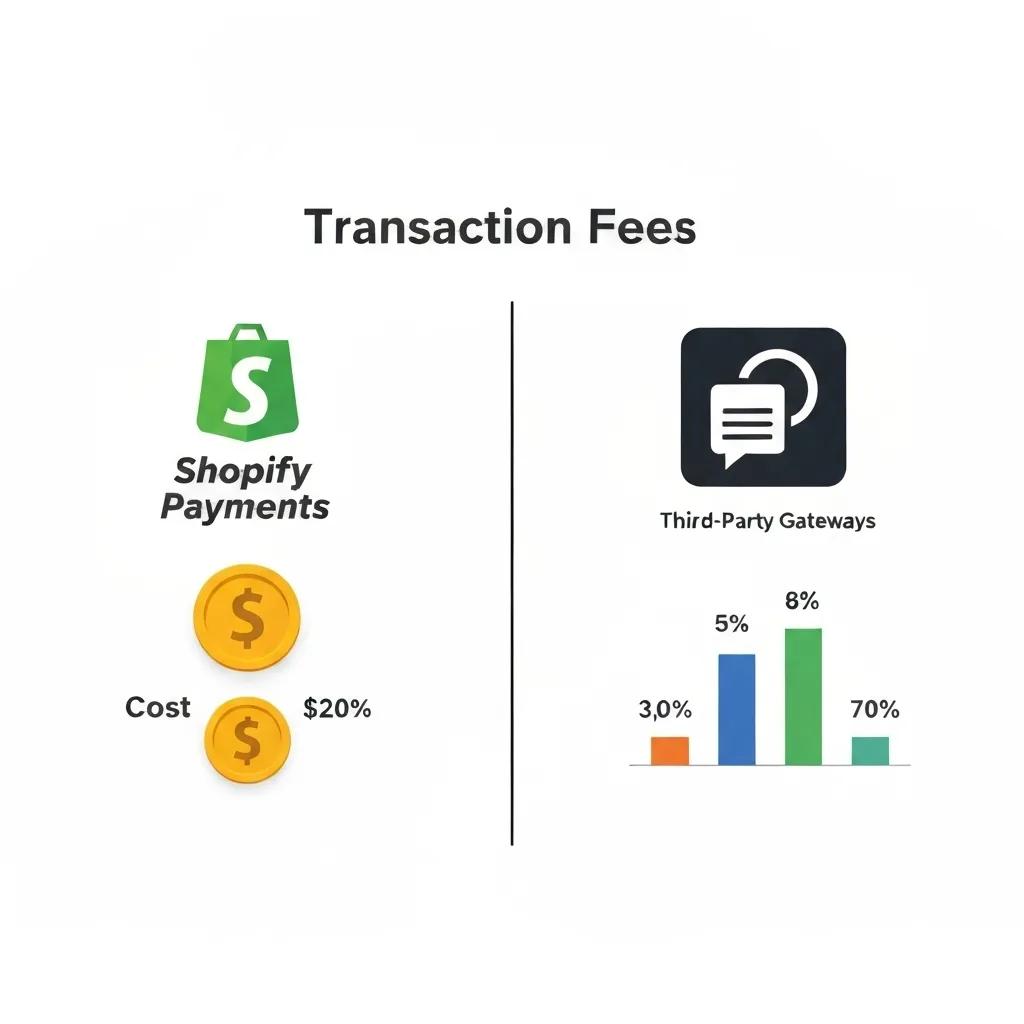
Shopify Payments charges a transaction fee of 0.15% for domestic cards and 0.25% for international cards, while third-party gateways incur an additional fee of 0.15% to 0.20% per transaction. Entities processing thousands of orders daily see significant savings by using Shopify Payments’ native integration. Choosing the built-in gateway supports cost efficiency, and integration with multiple currencies ensures consistent margins in global markets—ultimately reducing overall payment friction and boosting net revenue.
Which Additional Costs Should You Expect?
Beyond licenses and transaction fees, enterprises invest in apps, premium themes, and custom storefront development.
Apps for headless commerce, multi-currency conversion, and advanced analytics typically range from $50 to $300 per month.
Custom theme development, API integrations, and Launchpad scheduling can add one-time fees of $5,000–$20,000 depending on complexity.
Budgeting for these services ensures smooth performance during peak traffic and maintains brand consistency across channels.
How Does Shopify Plus Pricing Vary by Region or Business Size?
Regional pricing reflects localized tax, compliance, and currency conversion rates—so European merchants often see VAT-inclusive quotes while APAC clients negotiate GST adjustments. Smaller enterprises just crossing $1M in annual revenue may incur incremental fees until they reach the next revenue threshold, whereas larger operations benefit from volume discounts and bespoke enterprise plans. This flexibility aligns costs with local regulations and business scale, promoting equitable access for global brands.
What Are the Key Benefits and Drawbacks of Shopify Plus?
Evaluating the Key Benefits and Drawbacks of Shopify Plus requires defining its value proposition, explaining how advanced features drive efficiency, and weighing potential complexities that enterprises may face. Shopify Plus delivers scalability, customization, and dedicated support, yet invites considerations around platform dependency and specialized maintenance costs.
How Does Shopify Plus Deliver Scalability and Performance for High-Growth Businesses?
Shopify Plus supports unlimited bandwidth and auto-scaling during traffic surges, ensuring consistent load times for millions of daily sessions. The global CDN and horizontal server scaling mechanism eliminate downtime risks, enabling holiday campaigns and flash sales without performance degradation. This capacity empowers businesses to capture more revenue during peak demand while preserving conversion rates and user experience.
What Enterprise-Grade Features and Customizations Does Shopify Plus Offer?
Shopify Plus provides checkout.liquid access, advanced API rate limits, and Launchpad—a scheduling tool for flash sales and theme adjustments. Checkout customization drives higher conversion by tailoring upsells and dynamic discounts, while robust API endpoints enable headless commerce architectures. These capabilities allow brands to deliver differentiated shopping experiences, integrate complex ERP systems, and innovate without sacrificing stability.
How Does Shopify Plus Improve Operational Efficiency and Automation?
Shopify Flow automates inventory restocking, customer tagging, and order routing, while Shopify Scripts customizes pricing logic at checkout. Integrations with BI tools sync real-time data for forecasting and fulfillment automation. These mechanisms streamline workflows, reduce manual errors, and free teams to focus on strategy—translating into measurable savings in labor costs and faster time-to-market for new campaigns.
What Support and Account Management Services Are Included?
Every Shopify Plus plan includes a dedicated merchant success manager, 24/7 priority support, and quarterly business reviews. This account management framework provides proactive optimization recommendations, access to technical audits, and early feature previews. Enterprises benefit from strategic guidance that aligns platform capabilities with growth objectives and ensures rapid issue resolution during critical periods.
What Are the Common Drawbacks or Limitations of Shopify Plus Pricing?
Shopify Plus pricing can rise sharply if annual sales cross tier thresholds, and custom development costs may exceed initial projections. Dependence on an external platform introduces migration complexity if switching providers, and some ultra-custom integrations require specialized developer resources. Awareness of these factors and partnering with an experienced agency like Blackbelt Commerce ensures transparent cost management and reduces surprises.
How Can You Calculate the Return on Investment (ROI) for Shopify Plus?
Calculating the Return on Investment (ROI) for Shopify Plus involves defining key performance indicators, explaining how improved metrics translate into profit, and applying a step-by-step framework. By quantifying increased conversion rates, average order values, and operational cost savings, enterprises can project payback periods and long-term profitability.
What Key Metrics Should You Track to Measure ROI?
Track conversion rate lift, average order value (AOV) increase, customer lifetime value (CLV), and operational cost reductions from automation. Each metric functions as a lever: a 10% conversion improvement multiplies revenue without added marketing spend, while a 15% AOV boost drives margin expansion. Monitoring these indicators establishes a clear link between platform upgrades and bottom-line growth.
How Do Real Businesses Achieve ROI with Shopify Plus?
Case studies show that fashion retailers see a 20% revenue jump by customizing checkout experiences, and electronics brands reduce fulfillment costs by 30% through automated workflows. Implementing headless storefronts has cut page-load times by 40%, lifting conversion rates by 2 points. These examples demonstrate how strategic use of Shopify Plus features delivers tangible financial gains.
What Framework Can Help You Estimate Your Shopify Plus ROI?
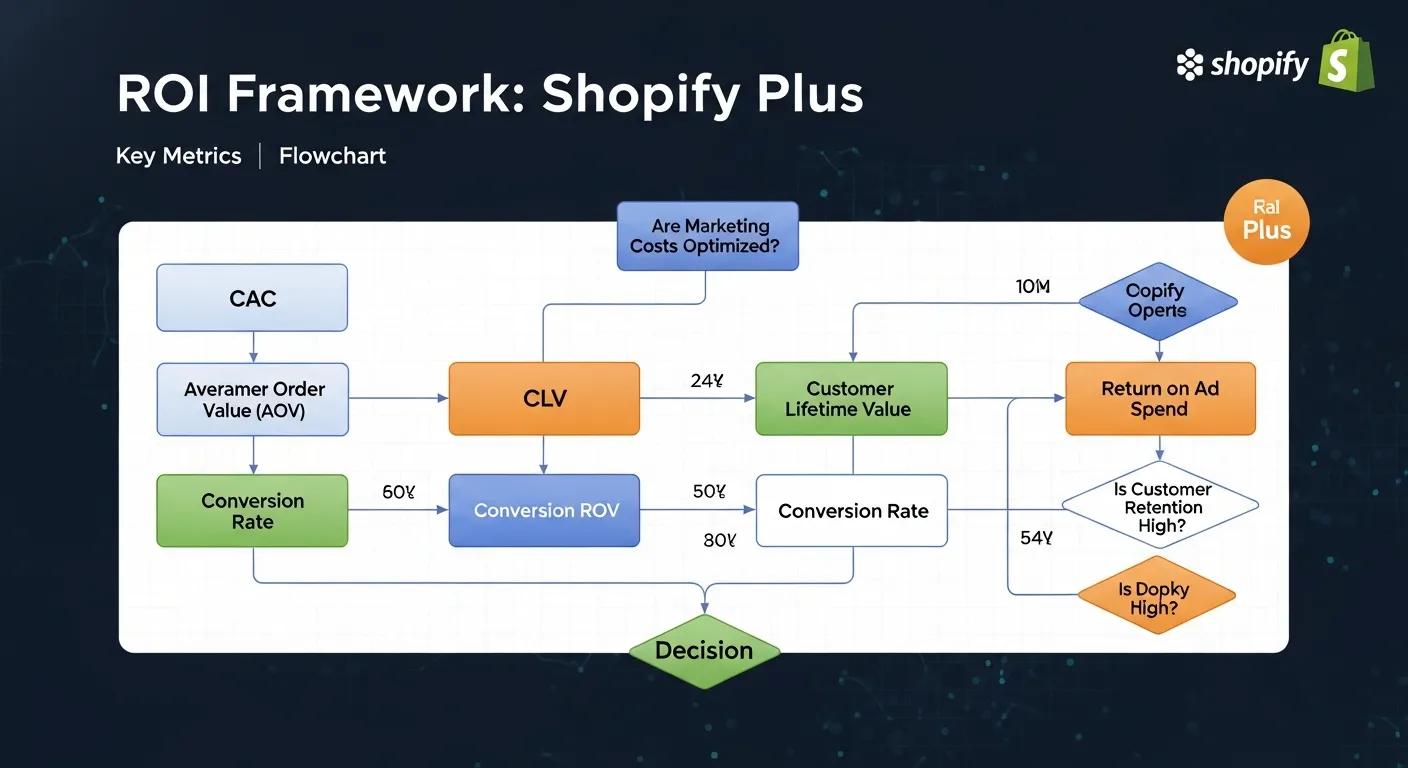
- Calculate baseline monthly revenue and average transaction costs.
- Apply projected lifts (e.g., +15% conversion, +10% AOV) to forecast incremental revenue.
- Subtract additional costs (license increase, app fees, development).
- Divide net gain by incremental investment to derive ROI percentage.
This formula provides a transparent view of payback timelines and guides investment decisions based on specific business goals and risk tolerance.
How Does Shopify Plus Pricing Compare to Competitors?
Comparing Shopify Plus Pricing to Competitors requires defining each platform’s cost model, contrasting feature sets, and highlighting where Shopify Plus delivers superior value. A side-by-side analysis against Magento Enterprise and BigCommerce Enterprise reveals cost-to-benefit differentials that inform the selection of the optimal enterprise solution.
What Are the Pricing Differences Between Shopify Plus and Magento Enterprise?
A comparative table of pricing and features illustrates that Shopify Plus starts at $2,300/month with built-in PCI compliance and global CDN, whereas Magento Enterprise licensing often begins at $22,000/year plus hosting and security fees.
Factual table note: Shopify Plus pricing changes by contract term, region, and business model. Use official Shopify pricing as the source of truth.
How Does Shopify Plus Compare to BigCommerce Enterprise in Cost and Features?
BigCommerce Enterprise starts around $1,000/month plus surcharges for high volumes, but lacks advanced checkout customization and dedicated account management included in Shopify Plus. Although both platforms offer unlimited products and staff accounts, Shopify Plus provides API rate limits and Launchpad for campaign scheduling—features that justify its relative premium for enterprise use cases.
Why Choose Shopify Plus Over WooCommerce for Enterprise Scale?
WooCommerce is free but relies on WordPress hosting, security plugins, and manual updates, incurring hidden costs for SSL, caching, and developer time. Shopify Plus delivers built-in reliability, PCI compliance, and seamless upgrades. This integrated approach reduces operational risk and frees resources for strategic growth rather than platform maintenance.
What Does a Feature Comparison Matrix Reveal About Shopify Plus vs. Alternatives?
A detailed matrix underscores that Shopify Plus leads in native automation, global CDN performance, and specialized account management, while some alternatives require third-party apps to achieve similar functionality. This inherent feature set accelerates time-to-value and reduces dependency on external development resources.
What Are the Implementation and Ongoing Costs of Shopify Plus?
Assessing Implementation and Ongoing Costs of Shopify Plus involves defining agency engagement fees, explaining migration processes, and outlining support plans. Businesses should budget for expert services that ensure seamless transitions and continuous optimization.
What Should You Expect When Hiring a Shopify Plus Agency?
Partnering with a certified Shopify Plus agency typically involves a discovery phase ($5,000–$10,000), storefront design and development ($15,000–$50,000), and integration work ($10,000+). Agencies like Blackbelt Commerce bring expertise in headless commerce, performance tuning, and custom app development to minimize risk and accelerate ROI—transforming platform capabilities into competitive advantages.
How Much Does Migration to Shopify Plus Typically Cost?
A typical migration covers data transfer, theme recreation, and custom integration, averaging $20,000–$40,000 for mid-market merchants. Complex B2B or wholesale implementations can reach $80,000. Transparent scoping and phased deployments ensure that migration costs align with expected revenue uplifts.
What Are the Ongoing Maintenance and Support Fees?
Ongoing retainer fees range from $2,000 to $10,000 per month, covering feature updates, security audits, and performance monitoring. This continuous engagement model delivers proactive improvements and rapid response to incidents—safeguarding revenue streams and preserving user experience.
What Hidden Costs Should Businesses Watch Out For?
Unforeseen expenses often include premium app subscriptions, custom API connectors, and compliance audits for new markets. Allocating a 10–15% buffer for additional integrations and theme enhancements prevents budget overruns and ensures that strategic upgrades aren’t stalled by funding shortfalls.
Is Shopify Plus the Right Investment for Your Business?
Determining if Shopify Plus is the Right Investment for Your Business starts by defining growth thresholds, explaining when enterprise features become indispensable, and illustrating how expert partners can amplify value. Companies surpassing $1 million in annual revenue or experiencing rapid volume spikes often benefit most from Shopify Plus’s advanced capabilities and support.
When Should You Consider Upgrading to Shopify Plus?
Upgrade triggers include surpassing $1 million in annual revenue, needing multi-store or headless architectures, or requiring granular checkout customizations. When site performance or cart abandonment rates become strategic bottlenecks, migrating unlocks tools that directly address these challenges—and drives measurable ROI.
What Is the Ideal Business Size and Revenue for Shopify Plus?
Brands generating $1 million to $100 million in revenue benefit most from Shopify Plus’s scalability, dedicated management, and automation. Smaller operations may not fully leverage the enterprise features, while very large enterprises often negotiate custom enterprise plans. Matching platform capabilities to business scale ensures that investment delivers proportional returns.
How Can You Assess Your E-commerce Needs and Goals for Shopify Plus?
Perform a gap analysis of current platform limitations—such as checkout flexibility, API throughput, and support responsiveness—and quantify potential revenue uplifts from addressing each gap. This structured decision-making framework aligns technology investments with strategic objectives and risk budgets.
How Can Partnering with a Shopify Plus Expert Like Blackbelt Commerce Maximize Your Investment?
Blackbelt Commerce leverages certified Shopify Plus expertise to design custom architectures, streamline migrations, and implement performance optimizations that lift conversion rates by up to 25%. Their data-driven approach to A/B testing, automation, and headless commerce ensures that technical investments translate directly into revenue gains and operational efficiency.
What Are the Latest Trends and Market Insights Impacting Shopify Plus Pricing?
Exploring the Latest Trends and Market Insights Impacting Shopify Plus Pricing involves defining global e-commerce growth drivers, explaining mobile commerce imperatives, and highlighting migration patterns. These forces influence platform architecture decisions and total cost of ownership.
How Is Global E-commerce Growth Driving Demand for Shopify Plus?
Global e-commerce sales are projected to exceed $6 trillion in 2024 and are forecast to reach $8.09 trillion by 2028. Mobile devices are increasingly central to this growth, accounting for over 60% of all website traffic and more than 70% of e-commerce traffic, with approximately 57% of global e-commerce sales originating from mobile devices.
Global E-commerce Growth and Mobile Commerce Dominance
Global e-commerce sales are projected to exceed $6 trillion in 2024 and are forecast to reach $8.09 trillion by 2028. Mobile devices are increasingly central to this growth, accounting for over 60% of all website traffic and more than 70% of e-commerce traffic, with approximately 57% of global e-commerce sales originating from mobile devices.
This information supports the article’s claims regarding the significant growth of global e-commerce and the critical role of mobile commerce in driving sales and traffic.
Why Is Mobile Commerce Important for Shopify Plus Users?
Over 56% of e-commerce traffic originates on mobile devices, making responsive design and mobile-first performance essential. Shopify Plus’s optimized PWA themes and accelerated mobile pages reduce load times by up to 60%, boosting mobile conversion rates and ensuring consistent user experiences across devices.
How Are Platform Migration Trends Affecting Shopify Plus Adoption?
Enterprises increasingly shift from legacy systems to headless or API-driven platforms for agility and personalization. Shopify Plus’s GraphQL APIs and storefront SDK accelerate these migrations, enabling brands to launch progressive web apps and custom checkouts in weeks—rather than months—outpacing traditional enterprise platforms.
What Do Industry Statistics Reveal About Shopify Plus Conversion Rates and Performance?
Data shows Shopify Plus merchants enjoy an average conversion rate of 2.1%, nearly 50% higher than the industry average, and page load times under two seconds.
Shopify Store Conversion Rates and Performance
The average conversion rate for Shopify stores is reported to be around 1.4% to 1.8%, with top-performing stores achieving rates as high as 4.7%. Mobile devices contribute significantly to e-commerce traffic, with over 70% of e-commerce traffic originating from mobile, underscoring the importance of optimized mobile experiences for conversion.
This research provides context for the conversion rate expectations on Shopify platforms and highlights the impact of mobile optimization on user experience and sales.
What Frequently Asked Questions Do Businesses Have About Shopify Plus Pricing?
Factual table note: Payment fees vary by country, card type, and gateway. Confirm current fees with Shopify or the merchant’s payment provider before making a financial decision.
This table connects common inquiries to strategic insights, preparing teams to align budgets with expectations.
Shopify Plus’s enterprise pricing aligns with robust performance, reliability, and growth tools essential for scaling brands. By systematically evaluating costs, projecting ROI, and leveraging expert agency support, businesses can transform licensing fees into strategic investments. Blackbelt Commerce’s certified Shopify Plus services ensure that every dollar spent on the platform yields measurable improvements in conversion, efficiency, and global reach. As the digital commerce landscape evolves, embracing Shopify Plus’s comprehensive feature set and dedicated management will position enterprises to outpace competitors and achieve sustainable growth.
Quick Answer: Shopify Plus pricing
Shopify Plus Pricing should help merchants make a clearer decision about their store, customer experience, and growth priorities. A useful guide explains the concept, shows when it matters, and gives the reader a practical next step without forcing the topic into a generic template.
Key Takeaways
- Start with the search intent behind Shopify Plus pricing: the reader needs a clear explanation before they are ready for a service conversation.
- Keep the advice practical and specific so the post feels editorial, useful, and worth sharing.
- Use the topic cluster links to connect the article to related BBC expertise instead of leaving it as a standalone blog post.
- Add a natural commercial bridge only after the article has answered the reader’s main question.
- Use the same-page Calendly CTA so qualified readers can book a strategy call without being sent to a long form.
How this connects to your Shopify growth strategy
This article should remain useful for readers researching Shopify Plus pricing, but it also needs to show when the topic becomes a business decision. For the Shopify Plus Pricing and Strategy cluster, the commercial bridge is practical: once the reader understands the concept, the next step is deciding whether their current Shopify setup can support the desired experience, conversion path, and operational workflow. That is where expert planning, design, development, CRO, and SEO support can turn the idea into measurable store improvements.
Related Shopify resources
These internal resources support the Shopify Plus Pricing and Strategy topic cluster and help connect this guide to stronger commercial next steps:
- Shopify Plus Pricing and Strategy
- Shopify experts
- Shopify Plus agencies
- Shopify Plus Pricing and Strategy — Parent service page for the reader’s next commercial step
- Blackbelt Commerce — Home-page authority link for brand and core Shopify expertise
- Shopify experts — Money-page link requested for expert-hiring intent
- Shopify custom development — Development service page for implementation and technical help
- Shopify CRO — Conversion service page for readers focused on revenue and lead generation
- Cost of Shopify website — Related pricing article that helps readers compare platform, build, and expert investment decisions
- Shopify Plus checkout customization — Related Shopify Plus implementation guide for readers evaluating advanced Plus costs and capabilities
Questions store owners ask before taking action
What does Shopify Plus pricing mean for a Shopify merchant?
For a Shopify merchant, Shopify Plus pricing is about choosing or improving the store experience in a way that supports traffic, trust, conversion, and long-term operations.
When should a store owner get expert help?
Expert help becomes useful when the decision affects SEO, conversion, theme architecture, integrations, migration risk, or revenue-critical customer journeys.
How should this topic connect to a broader content cluster?
The post should link to a parent service page, related support articles, and money pages so Google and AI systems understand how the article supports a broader area of expertise.
What is the lead-generation goal of this article?
The article should educate first, then guide qualified readers toward booking a strategy call when they need help applying the advice to their own store.
What should be avoided during optimization?
Avoid filler, unrelated phrases, invented statistics, broken formatting, duplicated CTAs, and any edit that makes the article feel less helpful or less polished.
Future articles needed for topical dominance
To build deeper topical authority around this cluster, these supporting topics should be created later and linked back into this article:
- Shopify Plus Pricing Budget Checklist for Shopify Merchants: Creates a practical support article that turns the Shopify Plus Pricing and Strategy topic into an actionable planning worksheet without relying on stale price claims.
- Hidden Cost Drivers Behind Shopify Plus Pricing: Captures cost-aware searches and explains apps, design, content, SEO, integrations, QA, and rework risks without hard selling.
- When to Hire Shopify Experts for Shopify Plus Pricing: Connects pricing research to the expert-hiring money page while preserving educational intent and lead-generation flow.

