


Most American shoppers spend less than eight seconds deciding whether to stay on a homepage or click away. In this digital-first marketplace, every second matters for driving engagement and sales. A well designed Shopify homepage is not just about eye catching visuals but about shaping clear goals and guiding each visitor toward meaningful action. Discover how to transform casual interest into loyal customers by mastering strategic homepage design.
Table of Contents
- Step 1: Define Strategic Homepage Objectives
- Step 2: Map User Journeys and Essential Features
- Step 3: Design Visual Hierarchy and Layout
- Step 4: Customize Content for Brand Alignment
- Step 5: Test and Optimize User Experience
Quick Summary
| Key Insight | Explanation |
|---|---|
| 1. Define Clear Homepage Objectives | Establish clear goals like brand credibility and user engagement to guide your homepage design effectively. |
| 2. Map User Journeys Intuitively | Understand customer navigation to create a seamless and engaging shopping experience, ensuring each step is clear and purposeful. |
| 3. Implement Visual Hierarchy | Use visual elements strategically to guide visitors’ attention towards important information, influencing their purchasing decisions. |
| 4. Customize Content for Brand Alignment | Align all content with your brand identity to evoke emotional connections and build trust with visitors. |
| 5. Continuously Test and Optimize | Regularly analyze user data and feedback to refine your homepage, enhancing its effectiveness in driving conversions. |
Step 1: Define Strategic Homepage Objectives
Defining strategic homepage objectives sets the foundation for a high performing Shopify store design that transforms casual visitors into committed customers. Your homepage serves as the digital storefront window that either invites potential buyers in or sends them searching elsewhere.
Successful homepage design starts with clarity around precise goals. Similar to how universities craft web strategies to attract specific audiences, your Shopify store must strategically communicate core objectives that resonate with your target market. These objectives typically include generating immediate interest, providing quick navigation paths, and encouraging specific customer actions like product exploration or purchase initiation.
Start by identifying three primary goals for your homepage. Common objectives include establishing brand credibility, showcasing top products, creating emotional connection, and streamlining user pathways to conversion. Each goal should connect directly to your broader business strategy and customer experience vision. Research your target audience deeply understand their motivations, pain points, and decision making triggers. This insight allows you to craft homepage elements that speak directly to their needs and aspirations, transforming your digital storefront from a mere information page into a powerful conversion engine.
Step 2: Map User Journeys and Essential Features
Mapping user journeys transforms your Shopify homepage from a static page into a strategic conversion pathway. This crucial step involves understanding how potential customers interact with your digital storefront and designing an intuitive experience that guides them seamlessly towards purchase.
To effectively create comprehensive user journey maps, start by identifying key customer personas and their specific navigation patterns. Visualize the entire customer experience from first landing on your homepage to completing a purchase. This process involves tracking potential emotional responses, identifying potential friction points, and designing clear pathways that address user needs at each interaction point. Consider elements like product placement, information accessibility, visual hierarchy, and conversion triggers that make navigation feel natural and compelling.
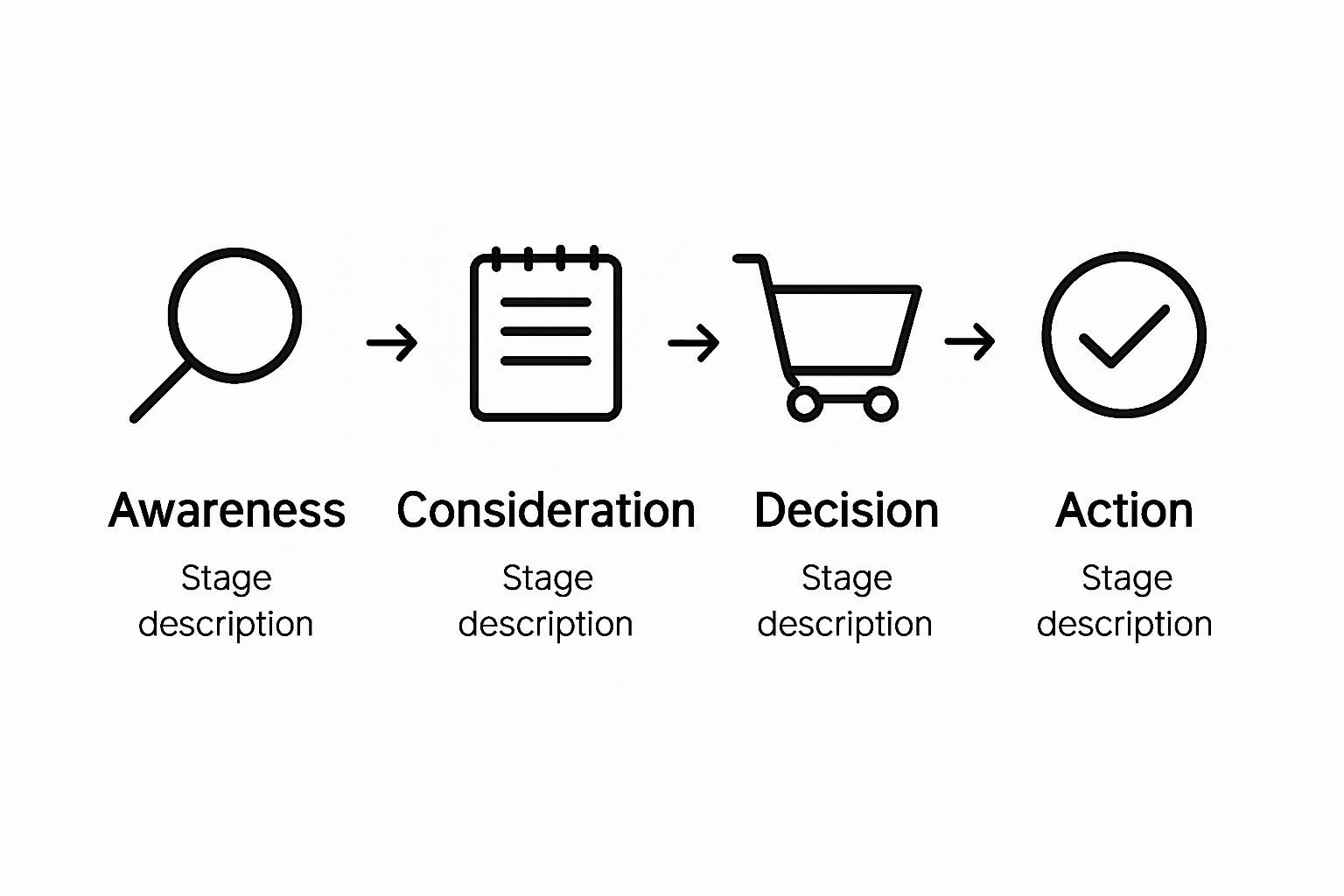
Break down your user journey into distinct stages: awareness, consideration, decision, and action. For each stage, map specific homepage features that facilitate smooth progression. This might include strategically placed product collections, clear value propositions, social proof elements like testimonials, and streamlined navigation menus. Remember that an effective user journey is not about overwhelming visitors with information but creating an intuitive path that feels personalized and effortless. By meticulously designing each interaction point, you transform your Shopify homepage from a simple landing page into a powerful conversion engine that anticipates and meets customer needs.
Step 3: Design Visual Hierarchy and Layout
Designing a visual hierarchy transforms your Shopify homepage from a cluttered collection of elements into a strategic conversion instrument. Your layout must guide visitors eyes exactly where you want them to look creating an intuitive path toward purchasing.
Applying user centered design principles, focus on creating a clear visual narrative that communicates your brand story instantly. Start by establishing a dominant visual element that captures attention immediately such as a bold hero image or compelling headline. This primary focal point should represent your core value proposition and set the emotional tone for the entire browsing experience. Subsequent visual elements should be scaled and positioned to create a natural reading flow that leads visitors through key information areas progressively.

Structure your homepage using clear visual weights and proportions. Larger elements suggest higher importance while smaller supporting elements provide context and depth. Strategic use of white space prevents visual overwhelm and allows critical information to breathe. Color contrast, typography size, and placement all contribute to guiding user attention. Critically analyze each design element asking yourself how it serves your primary conversion goals. An exceptional homepage design doesnt just look good it creates an invisible pathway that intuitively moves potential customers from curiosity to commitment.
Step 4: Customize Content for Brand Alignment
Customizing your Shopify homepage content is about creating a compelling narrative that transforms visitors from casual browsers into committed brand advocates. Your homepage becomes a strategic storytelling platform that communicates your unique brand identity within seconds of arrival.
Developing a content strategy that reflects organizational values requires deep understanding of your brand’s core messaging and audience expectations. Start by defining your brand voice elements such as tone personality language patterns and emotional triggers. Every word image and design element should work harmoniously to communicate your brands distinctive personality. This means aligning your copywriting style product descriptions visual imagery and overall messaging to create a cohesive and authentic brand experience that resonates emotionally with your target audience.
Consider each content element as a strategic touchpoint that builds trust and connection. Your headlines should be more than descriptive they should evoke emotion and curiosity. Product descriptions need to go beyond technical specifications and tell a story that connects with your customers aspirations. Integrate customer testimonials social proof and brand mission statements that provide context and depth to your offerings. Remember that truly effective brand alignment is not about being perfect but about being genuine transparent and consistently true to your brands core identity.
Step 5: Test and Optimize User Experience
Testing and optimizing your Shopify homepage transforms good design into an exceptional conversion engine that constantly evolves with user behavior. This critical phase moves your homepage from static presentation to dynamic interaction mechanism that learns and improves continuously.
Developing comprehensive customer journey mapping strategies requires systematic approaches to understanding how visitors interact with your digital storefront. Begin by implementing robust analytics tools that track user movements mouse clicks scroll depths and conversion funnel performance. Pay close attention to micro interactions such as hover states button clicks and navigation patterns that reveal subtle user preferences. Use heatmap technologies screen recording tools and A/B testing frameworks to generate quantitative insights into user experience.
Implement a continuous optimization cycle where data drives design decisions. Create multiple homepage variants and systematically test different layouts headlines imagery and call to action placements. Monitor key performance indicators like bounce rate time on page conversion rate and scroll depth. Remember that optimization is not a one time event but an ongoing process of incremental improvements. Each test provides valuable insights that help you refine your homepage into a precision instrument designed to guide visitors seamlessly from initial curiosity to committed purchase.
Elevate Your Shopify Homepage into a High-Impact Conversion Engine
Designing a Shopify homepage that truly connects with your audience involves more than just aesthetics. The challenge lies in defining clear strategic objectives, mapping seamless user journeys, and creating a visual hierarchy that directs visitors toward action. Many store owners struggle with testing and optimizing their homepage to transform casual browsers into loyal customers. This detailed Shopify Homepage Design Process for High-Impact Stores article highlights the critical steps needed to build an intuitive, emotionally engaging storefront that reflects your brand’s unique identity.
At Blackbelt Commerce, we understand how overwhelming it can be to customize content, implement user-centered layouts, and continuously optimize user experience amid evolving customer expectations. Our expert team specializes in tailored Shopify solutions including custom theme development and advanced eCommerce capabilities designed to increase conversions and grow your revenue. With a proven process of consultation, design, development, and testing, we help you bring strategic clarity and emotional connection directly to your homepage to uplift your entire store performance.
Ready to create a Shopify homepage that drives real results?

Discover how our expert Shopify development and optimization services can turn your homepage into a strategic conversion engine. Visit Blackbelt Commerce today to learn more and start building a high-impact store that truly stands out in the crowded marketplace.
Frequently Asked Questions
What are the primary objectives for designing a Shopify homepage?
Establishing three main objectives is crucial for your Shopify homepage design. Focus on goals like building brand credibility, showcasing key products, and encouraging customer actions such as exploration or purchase initiation.
How can I map user journeys to improve my Shopify homepage?
Map user journeys by identifying customer personas and their navigation patterns. Break down the journey into stages like awareness and decision, and include features that facilitate smooth progression toward purchase.
What are key elements of visual hierarchy in Shopify homepage design?
A clear visual hierarchy guides visitors’ attention to important elements on your homepage. Use a dominant visual element, like a hero image, and strategically position supporting elements to create a natural flow that leads customers towards a purchase.
How should I customize content for brand alignment on my homepage?
Customize your homepage content to reflect your brand’s unique narrative. Develop a strategic approach that includes a cohesive brand voice, emotional headlines, and engaging product descriptions that resonate with your audience’s aspirations.
What steps should I take to test and optimize my Shopify homepage?
Implement analytics tools to track user interactions and gather insights about their behavior. Create multiple homepage variants and conduct A/B testing to optimize layouts, imagery, and call-to-action placements based on performance metrics.
Recommended
- Want to Create a Killer Home Page on Shopify? – Shopify Experts: Grow Your eCommerce Revenue
- The 3 Shopify Design Mistakes To Avoid – Shopify Experts: Grow Your eCommerce Revenue
- Shopify landing page design: 1 Perfect Guide
- Building a Website on Shopify: 10 Easy Steps for Success
Quick Answer: Shopify homepage design process
Shopify homepage design process should improve how a Shopify store converts traffic into trust, customers, and revenue. The article should connect UX, store features, security, automation, performance, analytics, and conversion paths so readers understand what to fix and when expert help can accelerate results.
Want a sharper Shopify growth plan?
Want to turn Shopify homepage design process into a practical Shopify growth plan? Book a strategy call and we will help you clarify the next move.
Key Takeaways
- Use Shopify homepage design process to clarify the business problem and the highest-impact next step for a Shopify store.
- Connect recommendations to customer trust, UX, conversion, SEO, analytics, operations, and revenue.
- Link naturally to Blackbelt Commerce money pages and the home page without weakening editorial trust.
- Avoid generic ecommerce advice; make the guidance specific to Shopify constraints and opportunities.
- Use the same-page Calendly CTA only after the post has delivered useful guidance.
How this connects to your Shopify growth strategy
For the Shopify Growth, CRO, and Store Optimization cluster, this article should make Shopify homepage design process practical, specific, and commercially useful while protecting editorial trust. The bridge to Blackbelt Commerce should show when expert planning, implementation, SEO/CRO discipline, or Shopify Plus support can reduce risk and turn the reader’s next decision into measurable progress.
Want a sharper Shopify growth plan?
Use this guide as a decision tool. Then book a strategy call when you want a practical roadmap for your store.
Related Shopify resources
These internal resources support the Shopify Growth, CRO, and Store Optimization topic cluster and help connect this guide to stronger commercial next steps:
- Shopify CRO services
- Shopify experts
- Shopify Plus agencies
- Shopify CRO services — Primary money/service page for this search intent
- Blackbelt Commerce — Home-page authority link for brand and core Shopify expertise
- Shopify experts — Money-page link requested for expert-hiring intent
- Shopify custom development — Development service page for implementation and technical help
- Shopify checkout optimization — Related conversion article
- Shopify conversion optimization — Related CRO article
Questions store owners ask before taking action
Why does Shopify homepage design process matter for Shopify merchants?
It matters when the topic affects customer trust, conversion, operations, SEO, analytics, or the team’s ability to scale the store cleanly.
How should the article guide the reader?
It should answer the search intent first, then connect the topic to practical next steps, related resources, and expert support when that next step is useful.
What is the lead-generation goal?
The goal is a qualified strategy-call booking after the article has delivered enough value for the reader to trust Blackbelt Commerce with the next decision.
Future articles needed for topical dominance
To build deeper topical authority around this cluster, these supporting topics should be created later and linked back into this article:
- Shopify homepage design process Checklist for Shopify Stores: Creates an actionable support article that can earn long-tail searches and link back to relevant money pages.
- Common Shopify homepage design process Mistakes That Hurt Shopify Revenue: Targets problem-aware readers and explains UX, SEO, conversion, and implementation risk.
- How Shopify Experts Prioritize Shopify homepage design process: Links informational intent to expert support without turning the main article into a sales pitch.
Want a sharper Shopify growth plan?
Ready to turn the advice in this article into an action plan? Open the calendar here and choose a time that works for you.

