


Blog updated with the most recent Shopify and eCommerce strategies on 05/02/2026.
7 Critical Hurdles Shopify SEO Pros Tackle with E-Commerce Clients
With global e-commerce sales poised to surpass $5 trillion by 2028, Shopify SEO experts still grapple with inherent platform limitations and client-side roadblocks that hinder visibility and sales. This guide dives deep into the most common obstacles—from content duplication and rigid URLs to speed issues, missing structured data, content constraints, international complexities, internal linking gaps, client limitations, and proactive upkeep—and reveals expert tactics for sustainable growth. As a premier Shopify Partner, Blackbelt Commerce – Shopify Experts and BigCommerce Developers collaborates with ambitious online retailers to conquer these challenges through conversion-focused development and strategic SEO mastery.
Key areas we’ll explore:
- The roots of duplicate content, its impact, and canonical solutions
- URL structure limitations and slug optimization techniques
- Page speed culprits, image optimization, and Core Web Vitals
- Essential schema markup types and implementation best practices
- Content limitations and strategies for rich, authoritative descriptions
- International SEO hurdles, hreflang management, and global reach
- Internal linking architecture and navigation optimization
- Client collaboration challenges and expectation management
- Essential monitoring tools, audit cadences, and reporting frameworks
What Are the Most Common Duplicate Content Issues Shopify SEO Experts Face?
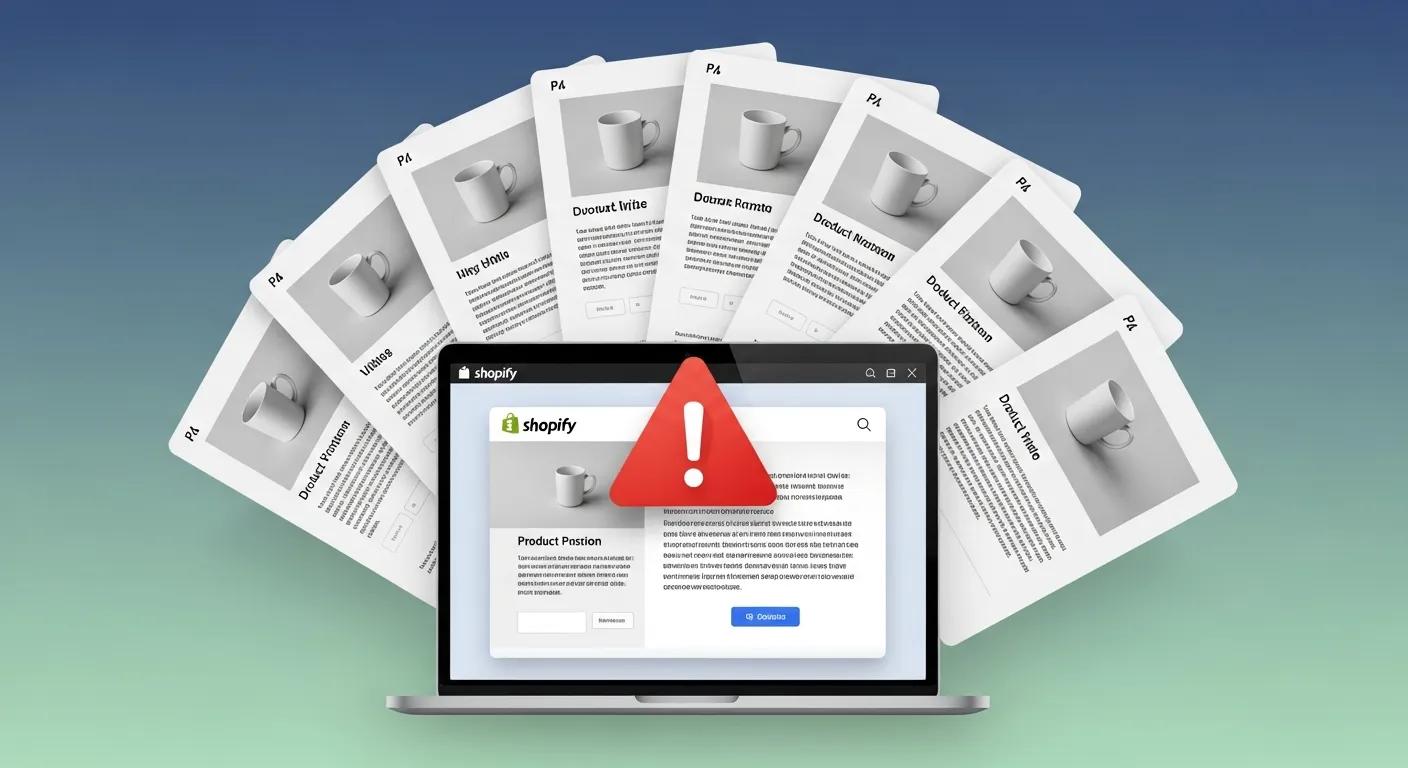
Duplicate content on Shopify occurs when identical or highly similar pages vie for the same search terms, weakening authority and squandering valuable crawl budget. Shopify’s default handling of product variants, tags, collections, and filter parameters generates numerous URLs with nearly identical content, making it tough for search engines to discern unique page signals.
How Does Shopify’s Platform Generate Duplicate Content?
Shopify automatically generates multiple URL variations for products and collections—think , , and —meaning the same product description appears across several addresses. This URL sprawl undermines SEO by fragmenting inbound link equity and confusing search engine indexing.
How Can Canonical Tags Resolve Shopify Duplicate Content?
Implementing tags on variant and tag pages clearly tells search engines which URL is the definitive version. By directing canonical tags to the primary product URL, SEO pros consolidate ranking signals and prevent dilution across redundant pages.
Tackling Duplicate Content Head-On in Shopify
Duplicate content on Shopify can stem from various sources, including product variants and similar product descriptions. Employing canonical tags is a crucial step to guide search engines toward the preferred indexed version, consolidating ranking signals and preventing dilution across duplicate pages.
What Are Best Practices for Managing Tag and Collection Page Duplication?
Before diving into duplicate content issues, let’s outline actionable management tactics:
- Consolidate low-value tag pages by disabling unwanted tags within theme.liquid
- Apply canonical references on collection filter pages, pointing them to the parent collection URL
- Utilize noindex meta tags for automatically generated or thin tag pages
These measures prevent unnecessary pages from entering the search index, preserve crawl budget, and concentrate link equity on your most important product and category pages.
How Do Duplicate Content Issues Impact E-Commerce Clients’ SEO Performance?
- Diminished organic rankings due to fragmented signals
- Wasted crawl budget on redundant URL variations
- Reduced conversion rates from weakened primary page authority
Eliminating duplication through canonical tags and strategic indexing boosts organic visibility, drives more qualified traffic, and ultimately fuels sales growth.
Why Is Shopify’s Rigid URL Structure a Challenge for SEO Experts?
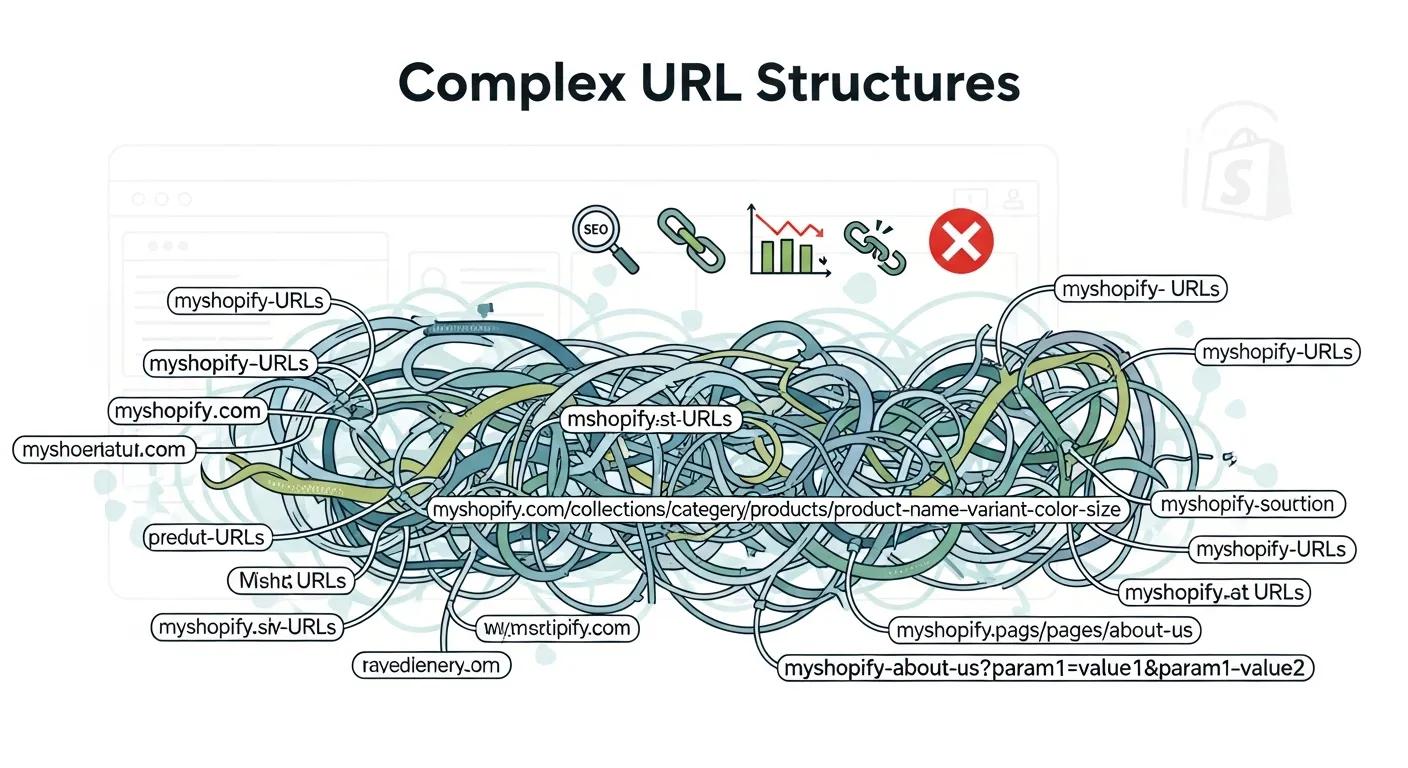
Shopify mandates and prefixes and prohibits placing product pages at the root level, resulting in longer, less keyword-optimized slugs. These fixed paths restrict customization and push primary keywords further down the URL, impacting their prominence.
How Does Shopify’s URL Format Affect SEO Optimization?
By default, a product like “Blue Leather Jacket” becomes https://store.com/products/blue-leather-jacket, pushing the core keyword “blue leather jacket” deeper into the URL structure. This format dilutes keyword prominence within URLs, which can subtly affect ranking relevance.
What Strategies Can Optimize Shopify URL Slugs for Better Search Visibility?
- Edit product handles to remove unnecessary stop words and emphasize primary keywords
- Shorten collection handles to align with common user search queries (e.g., /collections/jackets)
- Consistently use hyphens to separate words within slugs
These customized slugs enhance clarity and ensure your most critical keywords are positioned closer to the domain root.
Shopify URL Structure and Its SEO Implications
Shopify’s default URL structure includes prefixes like and , which can limit customization and obscure key keywords. Optimizing URL slugs by removing stop words and focusing on primary keywords can significantly improve clarity and search visibility.
How Do URL Structure Limitations Contribute to SEO Challenges?
The enforced prefixes exacerbate duplicate content risks—collection pages linking to product URLs with tags can create multiple pathways. Coupled with limited batch editing capabilities, these rigid structures slow down optimization workflows and extend development timelines, impacting project budgets and deadlines.
How Do Shopify SEO Experts Address Slow Store Speed and Core Web Vitals?
Page speed issues on Shopify stores often stem from unoptimized images, an excessive number of apps, bloated theme scripts, and third-party widgets. Slow loading times lead to higher bounce rates, degrade user experience, and negatively impact Core Web Vitals scores, which Google considers a ranking factor.
Mastering Shopify Speed Optimization
Page speed problems on Shopify stores frequently arise from unoptimized images, too many apps, and heavy theme scripts. Optimizing images, removing underperforming apps, and choosing lightweight theme architectures can reduce render-blocking resources and boost Core Web Vitals scores.
What Are the Main Causes of Slow Page Speed on Shopify Stores?
- Large, uncompressed product images
- Numerous installed apps injecting scripts and code
- Outdated or inefficient theme code
- Excessive redirects and unminified CSS/JavaScript files
These factors prolong metrics like First Contentful Paint (FCP) and Cumulative Layout Shift (CLS), resulting in poorer user experience indicators.
How Can Image Optimization Improve Shopify Store Performance?
Implementing these optimizations can enhance page speed by up to 30%, directly improving Core Web Vitals scores.
What Role Do App Performance and Theme Efficiency Play in SEO?
Every app installed adds network requests and JavaScript execution to your site. By auditing and removing underperforming apps, consolidating functionalities, and selecting lean theme architectures, experts can minimize render-blocking resources and decrease the time it takes for a page to become interactive (TTI).
How Do Core Web Vitals Influence Shopify SEO Rankings?
Core Web Vitals—comprising Largest Contentful Paint (LCP), First Input Delay (FID), and CLS—measure the real-world user experience on your site. Stores that meet Google’s recommended thresholds (LCP under 2.5s, FID under 100ms, CLS under 0.1) gain a competitive edge in search rankings and see higher user engagement, translating into improved conversion rates.
How Can Advanced Structured Data Implementation Enhance Shopify SEO?
Structured data enriches search engine results pages (SERPs) with rich snippets—like product ratings, pricing, and FAQs—which significantly boost click-through rates and solidify your e-commerce authority. JSON-LD markup is the cornerstone for unlocking these enhanced features.
What Types of Schema Markup Are Essential for Shopify Stores?
- Product schema for detailed pricing, availability, and review information
- FAQPage schema for surfacing answers in search results for support and shipping queries
- HowTo schema for guiding users through product setup or usage instructions
Leveraging Schema Markup for Shopify Success
Structured data, or schema markup, enhances search listings with rich snippets, such as product ratings and pricing, which can increase click-through rates. Implementing product schema, FAQPage schema, and HowTo schema is vital for improving Shopify SEO performance.
How Does Product Schema Enable Rich Snippets in Search Results?
Product schema properties like , , and generate rich snippets that display star ratings and pricing directly in search results. Stores featuring visible ratings often experience a 20–30% uplift in organic click-through rates.
How Can FAQ and How-To Schema Improve Shopify Blog SEO?
Embedding FAQPage markup on pages covering shipping, returns, or sizing can lead to answers appearing in Google’s “People Also Ask” sections. HowTo schema applied to installation or care instruction guides positions your store as a trusted authority, enhancing user trust and increasing on-site dwell time.
What Are Expert Tips for Implementing JSON-LD on Shopify?
- Insert JSON-LD within the theme.liquid head section for consistent application across all pages
- Utilize dynamic Liquid tags to automatically populate product-specific data
- Validate your implementation using Google’s Rich Results Test before going live
These steps ensure accurate, scalable structured data implementation across potentially thousands of product pages.
What Content and Blogging Limitations Do Shopify SEO Experts Encounter?
Shopify’s native blog functionality offers limited content customization, restricting URL structures, category hierarchy, and author metadata. This can hinder the creation of long-form content and entity-rich articles that are crucial for building topical authority.
How Can SEO Experts Create Entity-Rich Product Descriptions on Shopify?
Experts craft unique, detailed descriptions that weave in brand narratives, material specifics, and practical use-case scenarios. By embedding relevant entities—such as fabric types, care instructions, or complementary product suggestions—descriptions can rank for a wider range of long-tail search queries.
What Are Effective Strategies for Developing a Shopify Blog Content Plan?
Overcoming platform limitations requires a strategic approach:
- Consider integrating an external CMS for advanced blogging capabilities
- Consistently use tags and categories to structure topical content clusters
- Interlink blog posts strategically to build entity hubs around core themes
Optimizing Shopify Blog Content for SEO
Shopify’s native blog has limitations in content customization, affecting URL structures and category hierarchy. Experts can overcome these by crafting entity-rich product descriptions and developing a robust blog content plan.
This content strategy fosters deeper internal linking networks and signals comprehensive topic coverage to search engines.
How Do Content Limitations Affect E-Commerce Client SEO Success?
Thin or duplicated blog content often leads to low user engagement and weak topical signals. Without robust blogging capabilities, stores miss valuable opportunities to rank for informational queries that guide users through the purchase funnel, ultimately limiting organic traffic growth.
How Do Shopify SEO Experts Overcome International SEO Challenges?
Shopify’s built-in localization features offer limited hreflang support and lack a true multi-site architecture, making global targeting a complex endeavor. Experts must implement workarounds to accurately signal language and regional targeting to search engines.
What Are Shopify’s Limitations for International SEO and Multilingual Stores?
Key constraints include:
- Inability to host language versions on distinct country-specific subdomains
- Limited automation for hreflang tag implementation within native settings
- Absence of built-in features for region-specific currency or shipping information
Navigating International SEO Hurdles on Shopify
Shopify’s native localization provides limited hreflang support and no true multi-site architecture, complicating global targeting. Implementing hreflang annotations and strategic multilingual content is essential for Shopify stores aiming to reach international audiences.
How Is Hreflang Tag Implementation Managed on Shopify?
SEO experts inject hreflang annotations directly into the head tag using Liquid code, meticulously mapping each language version to its correct URL. Automated scripts or specialized apps are then used to keep these tags synchronized as content evolves, ensuring search engines serve the most relevant page to each user.
What Multilingual Content Strategies Help Shopify Stores Reach Global Audiences?
- Engage professional translators for product and blog content
- Develop country-specific landing pages incorporating local trust signals
- Conduct region-tailored keyword research and content mapping
These strategies align content with user intent across diverse markets and significantly boost international organic visibility.
How Do Internal Linking and Site Architecture Affect Shopify SEO Performance?
A meticulously structured internal link network guides search engine crawlers efficiently and distributes link equity to your most critical pages, thereby enhancing indexation and boosting ranking potential.
What Are Best Practices for Building Semantic Internal Link Networks on Shopify?
- Link from high-authority pages (like the homepage and top collections) to key product pages
- Employ descriptive anchor text that incorporates target keywords and relevant entities
- Group related blog posts and collection pages into distinct, siloed clusters
Internal Linking and Site Architecture: The Foundation of SEO
A well-structured internal link network guides crawlers and distributes link equity to priority pages, improving indexation and ranking potential. Key practices include linking from high-authority pages to crucial product pages and using descriptive anchor text.
How Can Shopify Navigation Be Optimized for SEO and User Experience?
Optimized navigation reduces bounce rates and makes content discovery intuitive, enhancing both user experience and search engine performance.
How Does Strategic Internal Linking Help Overcome Shopify SEO Challenges?
By strategically interconnecting product, collection, and blog pages, experts concentrate link equity on priority targets, mitigate the impact of content duplication, and improve overall crawl efficiency—effectively addressing multiple SEO challenges with a single structural approach.
What Client-Side Challenges Do Shopify SEO Experts Face When Working With E-Commerce Clients?
Even the most sophisticated technical and content strategies can falter if clients lack the necessary budget, technical understanding, or commitment to the ongoing SEO process.
How Do Budget and Technical Understanding Limit SEO Implementation?
Clients often underestimate the development time required for theme modifications or structured data integration, leading to constrained budgets and reduced project scope. A lack of in-house technical expertise can also delay critical tasks like canonical tag implementation or JSON-LD insertion.
What Are Effective Communication Strategies for Educating Clients on SEO?
- Explain the rationale behind each change using clear, non-technical language
- Present projected performance improvements based on relevant case studies
- Schedule regular check-ins to ensure alignment on progress and upcoming tasks
Navigating Client-Side Hurdles in Shopify SEO
Client budget constraints and limited technical understanding can impede SEO implementation. Employing effective communication strategies, such as using clear language and presenting performance projections, is key to aligning client goals with Shopify SEO best practices.
These tactics build trust, establish realistic expectations, and secure client buy-in for essential ongoing optimizations.
How Can SEO Experts Align Client Goals With Shopify SEO Best Practices?
By translating SEO initiatives into tangible business outcomes—such as projected increases in traffic, improvements in conversion rates, and estimated ROI—experts clearly demonstrate the value of their work. Collaboratively developing a roadmap with prioritized tasks ensures clients have a clear view of milestones and understand the impact of their investment.
How Can Ongoing SEO Maintenance and Monitoring Improve Shopify Store Performance?
SEO is not a one-off project but a continuous cycle of auditing, updating, and reporting designed to sustain and grow organic visibility over time.
What Tools and Metrics Are Essential for Monitoring Shopify SEO Health?
- Google Search Console for identifying indexing issues and reviewing performance data
- Core Web Vitals assessment using tools like Lighthouse or PageSpeed Insights
- Rank tracking in platforms like Ahrefs or Semrush for target keywords
- Analytics platforms to monitor bounce rate, time on page, and conversion trends
The Importance of Ongoing SEO Maintenance and Monitoring
SEO requires a continuous process of auditing, updating, and reporting to maintain and enhance organic visibility. Essential tools for monitoring Shopify SEO health include Google Search Console and robust rank tracking solutions.
How Should Shopify SEO Experts Conduct Regular Audits and Updates?
Quarterly audits should encompass technical checks (e.g., broken links, mobile usability errors), content freshness (e.g., outdated blog posts, missing product details), and structured data validation. Promptly addressing issues like implementing redirects, updating metadata, or correcting schema ensures the store remains optimized for evolving search engine algorithms.
What Reporting Practices Help Demonstrate SEO Value to E-Commerce Clients?
Delivering concise monthly reports that highlight key achievements—such as traffic growth, ranking improvements, and Core Web Vitals gains—reinforces authority and builds trust. Utilizing visual dashboards and narrative summaries that connect metrics to business objectives effectively showcases ROI and informs future strategic priorities.
Systematically addressing Shopify’s core technical and client-related SEO challenges empowers store owners to maximize traffic, elevate rankings, and drive conversions. By tackling content duplication, URL constraints, speed bottlenecks, structured data gaps, content limitations, international targeting, site architecture, client collaboration, and ongoing maintenance, SEO experts unlock the full potential of every Shopify store. Partnering with seasoned agencies ensures these strategies are implemented with precision and effectiveness, transforming technical optimizations into measurable business growth and a lasting competitive advantage.
Quick Answer: Shopify SEO challenges
Shopify SEO challenges usually come from a mix of technical limits, theme decisions, app bloat, duplicate content, weak collection architecture, poor internal linking, and content that does not match buyer intent. A useful fix starts by identifying which issues are actually blocking rankings, traffic quality, and conversions instead of treating every SEO warning as equally urgent.
Key Takeaways
- Shopify SEO challenges should be prioritized by impact on rankings, qualified traffic, customer experience, and revenue.
- Common issues include app bloat, slow themes, duplicate content, weak collection pages, poor internal links, and content that misses buyer intent.
- Internal links should connect this article to Shopify SEO experts, Shopify experts, Shopify Plus agency support, and implementation resources.
- The commercial bridge should show when SEO challenges require expert technical, content, or development support.
- Use the same-page Calendly CTA so qualified merchants can book a strategy call without being pushed into a long form.
How this connects to your Shopify growth strategy
This article should remain useful for readers researching Shopify SEO challenges, but it also needs to show when the topic becomes a business decision. For the Shopify SEO cluster, the commercial bridge is practical: once the reader understands the concept, the next step is deciding whether their current Shopify setup can support the desired experience, conversion path, and operational workflow. That is where expert planning, design, development, CRO, and SEO support can turn the idea into measurable store improvements.
Related Shopify resources
These internal resources support the Shopify SEO topic cluster and help connect this guide to stronger commercial next steps:
- Shopify SEO
- Shopify experts
- Shopify Plus agencies
- Shopify SEO — Parent service page for the reader’s next commercial step
- Blackbelt Commerce — Home-page authority link for brand and core Shopify expertise
- Shopify experts — Money-page link requested for expert-hiring intent
- Shopify Plus agencies — Money-page link requested for high-growth and Plus-agency intent
- Shopify custom development — Development service page for implementation and technical help
- Shopify CRO — Conversion service page for readers focused on revenue and lead generation
- Shopify app SEO — Related SEO tooling article
Questions store owners ask before taking action
What are the most common Shopify SEO challenges?
Common challenges include slow themes, app bloat, duplicate content, weak collection pages, poor internal linking, missing metadata, thin content, and technical issues caused by apps or templates.
Which SEO problems should Shopify merchants fix first?
Prioritize issues that affect crawlability, indexation, page speed, important collection or product pages, buyer-intent content, and internal links to revenue-critical pages.
Can Shopify apps create SEO problems?
Yes. Apps can add scripts, duplicate elements, conflicting metadata, slow load times, or template changes that require technical review.
When should a merchant hire Shopify SEO experts?
Expert help is useful when SEO issues involve technical implementation, migration risk, content architecture, rankings loss, or revenue-critical pages.
How should this article generate leads?
It should help merchants identify likely SEO blockers, then invite them to book a strategy call when they need help prioritizing and fixing them.
Future articles needed for topical dominance
To build deeper topical authority around this cluster, these supporting topics should be created later and linked back into this article:
- Shopify Seo Challenges Checklist for Shopify Store Owners: Creates a practical support article that turns the Shopify SEO topic into an actionable review tool.
- Common Shopify Seo Challenges Mistakes and How to Avoid Them: Captures problem-aware searches and gives BBC a natural place to explain implementation risks without hard selling.
- When to Hire Shopify Experts for Shopify Seo Challenges: Connects informational demand to the expert-hiring money page while preserving educational intent.

