

Blog updated with the most recent Shopify and eCommerce strategies on 05/02/2026.
Shopify vs. Etsy for Handmade Sellers: Which Platform Is More User-Friendly for Selling Handmade Products Online?
Launching your online shop for handcrafted treasures hinges on picking the platform that’s not just easy to use, but also cost-effective and built for growth. When you’re weighing whether Shopify or Etsy is the better bet for user-friendliness when selling handmade goods online, you’ve got to look at things like how many eyeballs are already on the platform, how much you can tweak your store’s look and feel, what the fees are going to eat into your profits, and how big you can realistically grow. This guide is packed with practical insights on the key differences, how to get started, the nitty-gritty on costs, how to really make your brand shine, scaling up, marketing smarts, whether you can do both, and what real sellers are saying—all to help you make a sharp decision and get expert e-commerce development on your side to boost those sales.
Shopify vs. Etsy for Handmade Sellers
When you’re deciding between Shopify and Etsy for your handmade creations, it’s super important to think about what your business truly needs and what your budget can handle. Shopify gives you a ton of control if you’re already established, while Etsy is a fantastic launchpad for sellers with unique, niche products just starting out.
What Makes Shopify and Etsy Different for Handmade Sellers?
Shopify and Etsy are designed for totally different types of sellers, with distinct business models, customization capabilities, and user interfaces. Getting a handle on these core differences will make it crystal clear which environment is the best fit for your craft, your brand aspirations, and how you run your business.
How Does Etsy’s Marketplace Model Benefit Handmade Sellers?

Etsy’s marketplace model throws you right into a massive community of people who love handmade stuff, without you having to build your own store from scratch.
- Instant Audience Access – Over 90 million shoppers are actively hunting for handmade gems every single day.
- Super Simple Setup – You can get your shop up and running in mere minutes with their guided process.
- Community Vibes – Connect with fellow makers and buyers through forums, teams, and special events.
These perks are gold for hobbyists and new creators looking to make their first sales fast, setting you up perfectly to explore more advanced platforms as your business gains momentum.
Etsy Business Model
Etsy’s marketplace model hooks sellers up with a huge crowd of craft lovers. This ready-made audience can really speed up those initial sales for makers who are just getting started.
What Customization and Branding Options Does Shopify Offer Artisans?
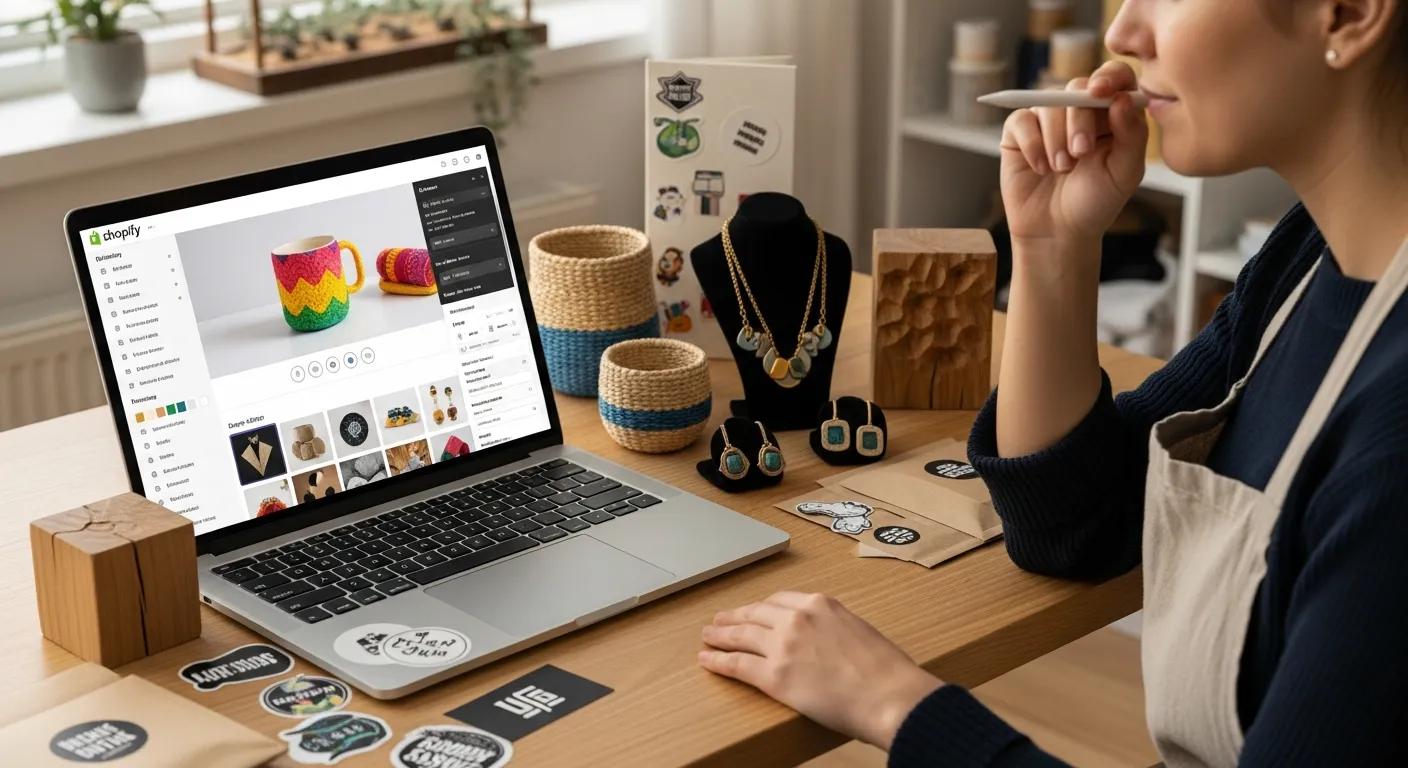
Shopify acts as your own fully hosted online store, giving you complete command over every single design choice and functional feature.
- Unique Storefront Designs – Pick from a wide array of templates or build your own distinctive look.
- Your Own Web Address – Cement your brand identity with a custom domain name.
- Expand Your Store’s Power – Boost your shop’s capabilities with over 8,000 available apps.
The extensive branding freedom on Shopify lets you tell your unique artisan story and create a seamless customer experience, laying the groundwork for serious long-term growth beyond the confines of a shared marketplace.
Shopify Branding Customization
Shopify empowers sellers to have total control over their branding, from logos and color schemes to fonts, helping them craft a truly unforgettable brand presence.
How Do Shopify and Etsy Compare in Terms of User-Friendliness?
Both platforms aim for simplicity, but they achieve it in different ways: Etsy makes it incredibly fast to jump into a marketplace, while Shopify strikes a balance between ease of use and deep customization options.
Etsy’s straightforward interface is perfect for makers testing out new product ideas, while Shopify’s intuitive backend and powerful features reward sellers who are ready to invest in a fully branded online presence.
How Easy Is It to Set Up and Manage a Handmade Store on Shopify vs. Etsy?
How quickly you can list products, ship orders, and focus on what you love to create—rather than getting bogged down in admin—all comes down to how easy it is to set up and manage your store day-to-day. Comparing how you list items and the management tools available really highlights what each platform does best.
What Is the Step-by-Step Process to List Handmade Products on Etsy?
- Product Details – Fill in the title, description, category, and all the important attributes.
- Photos and Videos – Upload a variety of high-quality visuals, making sure to add ALT text descriptions.
- Pricing and Inventory – Set your price, how many you have in stock, and your SKU.
- Shipping Options – Define your shipping costs, where you ship to, and how long it takes to get orders out.
This straightforward process usually takes about 5–10 minutes per item, letting you quickly fill your shop and start bringing in orders.
How Does Shopify’s Store Setup and Product Management Work for Artisans?
- Create Your Store – Sign up for a free trial and give your store a name.
- Pick Your Theme – Install a free or paid theme and customize it using the built-in editor.
- Add Your Products – Input product titles, descriptions, variations, media, and SEO details.
- Connect Sales Channels – Link your online store, social media profiles, and other marketplaces.
While getting the design just right might take a bit more time, Shopify’s bulk product editor and automation apps can seriously streamline your operations as your product catalog grows.
Which Platform Offers Better Tools for Order and Inventory Management?
Having solid tools for managing orders and inventory means less manual work and fewer mistakes.
Shopify’s advanced toolkit is designed to support growth across multiple channels and scale your inventory processes, paving the way for smooth expansion.
What Are the Fee Structures and Profitability Differences Between Shopify and Etsy?
The fees you pay directly impact how much profit you make on every single sale. Comparing listing fees, transaction fees, and payment processing fees will give you a clear picture of the cost dynamics that are crucial for your bottom line.
How Do Etsy’s Listing, Transaction, and Payment Fees Affect Handmade Sellers?
- Listing Fee: $0.20 for each item, which renews every four months.
- Transaction Fee: 6.5% of the item’s price.
- Payment Processing: 3% + $0.25 per transaction (for U.S. sellers).
These variable costs work well for sellers with low sales volume, but they can really eat into your profits as your order numbers climb, signaling that a fixed-fee model might be a better choice.
When Does Shopify Become More Cost-Effective for Growing Handmade Businesses?
Factual table note: Platform pricing changes frequently, and enterprise quotes depend on contract terms. This table avoids unsupported exact ranges.
Once your monthly revenue hits around $2,200, the predictable subscription costs and lower percentage fees on Shopify start to offer better profitability compared to Etsy’s per-listing and tiered marketplace fees.
How Do Payment Processing Options Impact Seller Profits on Both Platforms?
- Etsy Payments is the only option, limiting your choices.
- Shopify Payments means you won’t pay extra transaction fees and allows for multi-currency checkouts.
Sellers get full control over refunds, how disputes are handled, and when they get paid, which really helps make cash flow more predictable.
How Do Shopify and Etsy Support Branding and Customization for Handmade Businesses?
Your brand’s identity and the customer’s experience are absolutely vital for artisans looking to make their creations stand out. The flexibility of a platform’s design directly impacts how deeply you can weave your brand values into your store.
What Branding Limitations Do Handmade Sellers Face on Etsy?
- Samey Storefronts – All listings follow a consistent layout.
- Limited Navigation – Your menu structure has restricted options.
- Etsy-Branded Checkout – The checkout pages have Etsy’s branding on them.
These limitations create a standardized shopping experience for buyers but restrict your ability to tell your brand’s story beyond product photos and your shop banner.
How Can Shopify’s Custom Themes and Domain Control Elevate Artisan Brands?
- Tweak Your Theme’s Code – You can directly edit HTML, CSS, and sections.
- Professional Website Address – Use yourbrand.com to ensure consistent branding.
- Customer Accounts – Build lasting loyalty by offering personalized experiences.
The greater creative freedom allows for cohesive brand narratives that flow seamlessly from your homepage all the way through to the checkout process.
What Role Does Blackbelt Commerce Play in Enhancing Shopify Stores for Artisans?
- Custom Storefront Designs – We create unique store designs tailored just for you.
- Smart App Integration and Automation – We build custom workflows to save you valuable time.
- Boosted SEO and Performance – We make your site load faster and rank higher in search results.
These services free up artisans to concentrate on creating amazing products while ensuring their Shopify store effectively turns visitors into loyal customers.
Which Platform Offers Better Scalability and Growth Potential for Handmade Sellers?
Your business’s long-term success depends on platform features, integrations, and the support of an ecosystem that goes way beyond just getting your store launched.
How Does Shopify Support Handmade Businesses Scaling Beyond Etsy’s Marketplace?
- Sell Everywhere – Sync your store with social media, other marketplaces, and even physical retail POS systems.
- Deep Dive Analytics – Get valuable insights into customer behavior and sales trends.
- Automated Processes – Set up automatic order routing, back-in-stock alerts, and subscription models.
Shopify’s Scalability
Shopify is built for growth, allowing businesses to handle more website visitors and sales as they expand. It also provides tools to enhance your store’s functionality.
What Are Etsy’s Marketplace Limitations for Growing Handmade Sellers?
- Tough Competition – Your products are up against thousands of similar listings.
- Limited Features – Access to advanced tools is restricted or requires workarounds.
- Branding Restrictions – It’s hard to showcase your company’s story outside of individual product listings.
These limitations often push high-volume artisans to look for their own dedicated storefront solutions.
How Can Sellers Transition from Etsy to Shopify Successfully?
- Export Your Data – Download your listings, customer info, and past order history from Etsy.
- Choose Your Theme – Select a Shopify theme that matches your current brand style.
- Import Your Content – Use CSV import tools to move over your products and collections.
- Set Up Redirects and SEO – Map your old Etsy URLs to your new Shopify pages to keep your search engine rankings.
- Staggered Launch – Keep both platforms running for a bit to fine-tune everything before fully switching.
Following these steps helps minimize any disruption and keeps your customers happy throughout the move.
How Do Marketing and Traffic Generation Compare on Shopify vs. Etsy?
Getting people to visit your store and turning those visitors into buyers requires different tactics, depending on the platform’s marketing tools and how shoppers behave on each site.
What Built-In Marketing Advantages Does Etsy Provide Handmade Sellers?
- Smart Search Algorithm – Listings are prioritized based on how relevant and recent they are.
- Promoted Listings – Ads within the platform that target shoppers already on Etsy.
- Community Events – Seasonal promotions and online craft fairs.
Etsy’s Marketing Advantages
Etsy offers built-in marketing perks like its search algorithm, promoted listings, and community events, which can help sellers drive more traffic to their shops.
How Does Shopify Enable Custom Marketing and SEO for Handmade Stores?
- Full SEO Control – You can edit meta tags, structured data, and integrate a blog.
- Email Marketing Power – Set up automated campaigns using built-in tools or apps.
- Vast App Store – Connect loyalty programs, affiliate networks, and SMS marketing tools.
Which Platform Offers Better Support and Resources for Handmade Seller Success?
- Etsy Seller Handbook and community forums provide guidance focused on the marketplace.
- Shopify Help Center, developer communities, and certified partners offer expert technical and strategic advice.
Artisans looking for complete store customization and ongoing optimization often find the specialized support networks within the Shopify ecosystem incredibly beneficial.
What Are the Pros and Cons of Using Both Shopify and Etsy Together?
A hybrid approach lets you reach a wide audience while also building your own branded online store. Juggling both platforms effectively means having clear, streamlined processes in place.
How Can Sellers Leverage Etsy’s Audience While Building a Shopify Brand?
- Test Products on Etsy – See if there’s demand with a low-investment entry point.
- Gather Customer Info – Include email sign-up options and special offers with your Etsy packages.
- Encourage Direct Purchases – Put your Shopify store URL on your Etsy packaging to guide repeat buyers to your own site.
This strategy combines the visibility of a marketplace with a gradual shift towards your own branded Shopify store.
What Are the Best Practices for Managing Handmade Sales Across Both Platforms?
- Keep Inventory Synced – Make sure your stock levels are updated in real time across both platforms.
- One Place for Orders – Use apps or tools to manage fulfillment from a single dashboard.
- Consistent Brand Look – Use similar visuals and messaging on both Etsy and Shopify.
Having organized processes cuts down on administrative headaches and keeps your brand looking cohesive.
When Should Sellers Fully Transition to Shopify for Handmade Business Growth?
- When your monthly orders consistently go above 50-100 listings.
- When having full control over your branding and optimizing for SEO become key to driving traffic.
- When the marketing strategies you want to use aren’t possible within the marketplace.
At this point, a standalone Shopify store is your best bet for maximizing profits and building strong brand authority.
How Do User Experiences Differ for Handmade Sellers on Shopify vs. Etsy?
How happy sellers are with a platform often comes down to how easy it is to use, the resources available, and the support from the community. Hearing directly from real makers sheds light on the common hurdles and successes they encounter.
What Are Common User Challenges When Selling Handmade Products on Etsy?
- Listing Burnout – Having to relist items every four months and do manual renewals.
- Hidden Fees Adding Up – Costs increasing across multiple layers of transactions.
- Standing Out is Tough – It’s hard to get noticed without paying for ads.
These frustrations often lead sellers to explore storefront environments where they have more control.
How Does Shopify’s Interface Support Artisan Sellers’ Unique Needs?
- Create Your Own Workflows – Automate order tagging, customer grouping, and notifications.
- Flexible Page Building – Arrange content blocks to tell your product’s story effectively.
- Integrated Support – Get help from theme developers and app experts for custom solutions.
This adaptability is perfect for artisans with diverse product lines and specialized ways of fulfilling orders.
What Feedback Do Handmade Sellers Give About Each Platform’s Usability?
- New Etsy sellers love the instant visibility but find growth potential unclear.
- Shopify users rave about the easy drag-and-drop editor and 24/7 tech support.
- Both groups stress how crucial it is to pick a platform that matches their long-term business goals.
These insights really highlight that what feels “user-friendly” depends a lot on what a seller prioritizes and where they are in their business journey.
How to Choose the Best Platform for Your Handmade Business Goals?
Picking the perfect platform means lining up your business objectives with the strengths and weaknesses of each environment.
What Business Goals Align Best with Etsy’s Platform Strengths?
- Quickly testing new product lines to see if they’ll sell.
- Getting in front of an audience that’s actively looking for handmade items.
- Starting with minimal investment and technical setup required.
These advantages make Etsy a fantastic starting point for passion projects and niche artisans.
Which Handmade Sellers Benefit Most from Shopify’s Features and Flexibility?
- Building a unique brand that can scale significantly.
- Implementing advanced marketing, loyalty programs, and subscription services.
- Connecting multiple sales channels into one streamlined system.
Established artisan businesses and those planning for rapid expansion will get the most out of Shopify’s robust infrastructure.
How Can Blackbelt Commerce Help You Maximize Shopify’s Potential for Handmade Sales?
- High-Converting Store Design – We create designs tailored specifically for artisan brands.
- Performance Optimization – We speed up your pages and boost your search engine rankings.
- Custom App Development and Automation – We build custom solutions to make your operations more efficient.
Our expert guidance ensures you can fully leverage Shopify’s capabilities while staying focused on crafting your exceptional handmade products.
Handmade sellers who are ready to grow need platforms that match their vision and how they operate. Etsy offers an easy entry point with built-in traffic, while Shopify provides deeper control, scalability, and the ability to build a truly authentic brand. By carefully considering your sales volume, marketing ambitions, and the customer experience you want to create, you can choose the environment that supports both immediate sales and your long-term business success. Partnering with specialized e-commerce experts will ensure your chosen platform stays optimized, user-friendly, and perfectly positioned for future expansion.
Last updated: May 1, 2026
Quick Answer: Discover User-Friendly Handmade Selling: Shopify vs. Etsy
Discover User-Friendly Handmade Selling: Shopify Vs. Etsy becomes useful when it is tied to a real Shopify business decision: what the store owner is trying to improve, which risks or tradeoffs matter, and which action moves the store forward. For merchants working through shopify growth and operations, the practical value is clarity: understand the issue, protect the customer experience, and decide when expert Shopify help can turn the idea into measurable improvement.
Key Takeaways
- Discover User-Friendly Handmade Selling: Shopify vs. Etsy matters when it changes customer trust, conversion, operations, store performance, or the cost of future rework.
- A strong decision starts by identifying the business goal, the customer-experience risk, and the fastest safe improvement.
- Related resources connect this topic to Blackbelt Commerce, Shopify experts, Shopify Plus agencies, and the most relevant service pages.
- This topic belongs in the Shopify growth and operations cluster because it affects how merchants plan, improve, and scale a Shopify store.
- The same-page Calendly CTA lets qualified readers book a strategy call without leaving the article.
How this connects to your Shopify growth strategy
Readers researching Discover User-Friendly Handmade Selling: Shopify vs. Etsy usually want more than a definition; they want to know whether the idea can improve the store without creating new problems. For the Shopify growth and operations cluster, the business decision is practical: can the current Shopify setup support the desired experience, conversion path, and operational workflow? When the answer is uncertain, expert planning, design, development, CRO, and SEO support can turn the idea into safer, measurable store improvements.
Related Shopify resources
These internal resources support the Shopify growth and operations topic cluster and help connect this guide to stronger commercial next steps:
- Shopify growth and operations
- Shopify experts
- Shopify Plus agencies
- Shopify growth and operations — Parent service page for the reader’s next commercial step
- Blackbelt Commerce — Home-page authority link for brand and core Shopify expertise
- Shopify Plus agencies — Money-page link requested for high-growth and Plus-agency intent
- Shopify custom development — Development service page for implementation and technical help
- Shopify CRO — Conversion service page for readers focused on revenue and lead generation
Questions store owners ask before taking action
Why does Discover User-Friendly Handmade Selling: Shopify vs. Etsy matter for Shopify merchants?
Discover User-Friendly Handmade Selling: Shopify vs. Etsy matters when it affects customer trust, store performance, conversion, operations, or the ability to grow without avoidable rework.
What should the reader do first?
They should identify the business goal, review the current customer journey, and decide which improvement would have the clearest impact.
How do internal links help this article?
Internal links connect the educational topic to related service pages, Shopify experts, Shopify Plus agency support, and deeper resources.
When is expert help useful?
Expert help is useful when the decision affects revenue, SEO, conversion, integrations, technical implementation, or a high-risk store change.
How does this article support lead generation?
It educates first, then gives qualified readers a same-page option to book a strategy call when they need help applying the advice.
Future articles needed for topical dominance
To build deeper topical authority around this cluster, these supporting topics should be created later and linked back into this article:
- Discover User-Friendly Handmade Selling: Shopify Vs. Etsy Checklist for Shopify Store Owners: Creates a practical support article that turns the Shopify growth and operations topic into an actionable review tool.
- Common Discover User-Friendly Handmade Selling: Shopify Vs. Etsy Mistakes and How to Avoid Them: Captures problem-aware searches and gives BBC a natural place to explain implementation risks without hard selling.
- When to Hire Shopify Experts for Discover User-Friendly Handmade Selling: Shopify Vs. Etsy: Connects informational demand to the expert-hiring money page while preserving educational intent.

