Shopify Pricing Plans 2026: Real Costs & Fees for Every Tier
TL;DR — Shopify Pricing at a Glance (2026)
Plan
Monthly
Annual (per mo)
3rd-party txn fee
Best for
Starter
$5
$5
5%
Social/link selling, no full store
Basic
$39
$29
2.0%
New stores, solo founders
Grow (was “Shopify”)
$105
$79
1.0%
Growing stores needing reports
Advanced
$399
$299
0.6%
Scaling stores, lower fees
Plus
from $2,300
from $2,300
~0.15% (often waived)
High-volume / enterprise, custom checkout
Prices reflect 2026 (Shopify raised prices and renamed the mid-tier to “Grow”). Third-party fees apply only when not using Shopify Payments. Not sure which fits? Get a free plan-fit check.
Shopify has five pricing tiers in 2026, from the $5 Starter plan to custom-priced Shopify Plus—and the right one depends less on price than on which features unlock your next stage of growth. This guide breaks down real monthly costs, transaction fees, and the feature differences that actually matter, so you can pick a plan without overpaying or outgrowing it in six months.
Founder note: after 10+ years running Shopify builds, the most common mistake we see is merchants overpaying for a tier they don’t need yet—or capping growth on one they’ve outgrown. If you want a second opinion, book a free plan-fit call.
Unlock Shopify’s Pricing Tiers: A Deep Dive into Features and Costs for Every Business
For example, added technical reference, review the Shopify Help Center while planning your next Shopify improvements.
However, selecting the right Shopify plan level can greatly improve your online store’s performance by aligning platform features with your revenue targets, catalog needs, and growth plans.
What this Shopify plan guide covers
This guide will reveal Shopify’s available pricing plans and their included features, compare costs and transaction fees, and help you pinpoint the tier that best suits your business size and operational model. We’ll also explore the core features across each package, discuss migration considerations with expert Shopify development guidance from Blackbelt Commerce, and show you how to maximize your return on investment through customized optimization and performance tracking. This thorough breakdown equips you to choose the ideal Shopify plan and leverage advanced development services for enduring e-commerce success.
Shopify Pricing Plans: An Overview
Shopify offers a spectrum of pricing plans designed to meet the diverse needs of businesses, from nascent startups to established enterprises. These plans encompass essential features such as online store builders, dedicated customer support, and a suite of tools for managing and scaling your e-commerce operations.
This source provides a foundational understanding of Shopify’s various plans, crucial for contextualizing the information presented in this article.
Not sure which Shopify plan fits your store?
As a result, we can help you match your Shopify plan to your catalog, sales goals, integrations, and growth stage during a focused strategy call.
What Are the Different Shopify Pricing Plans Available in 2025?
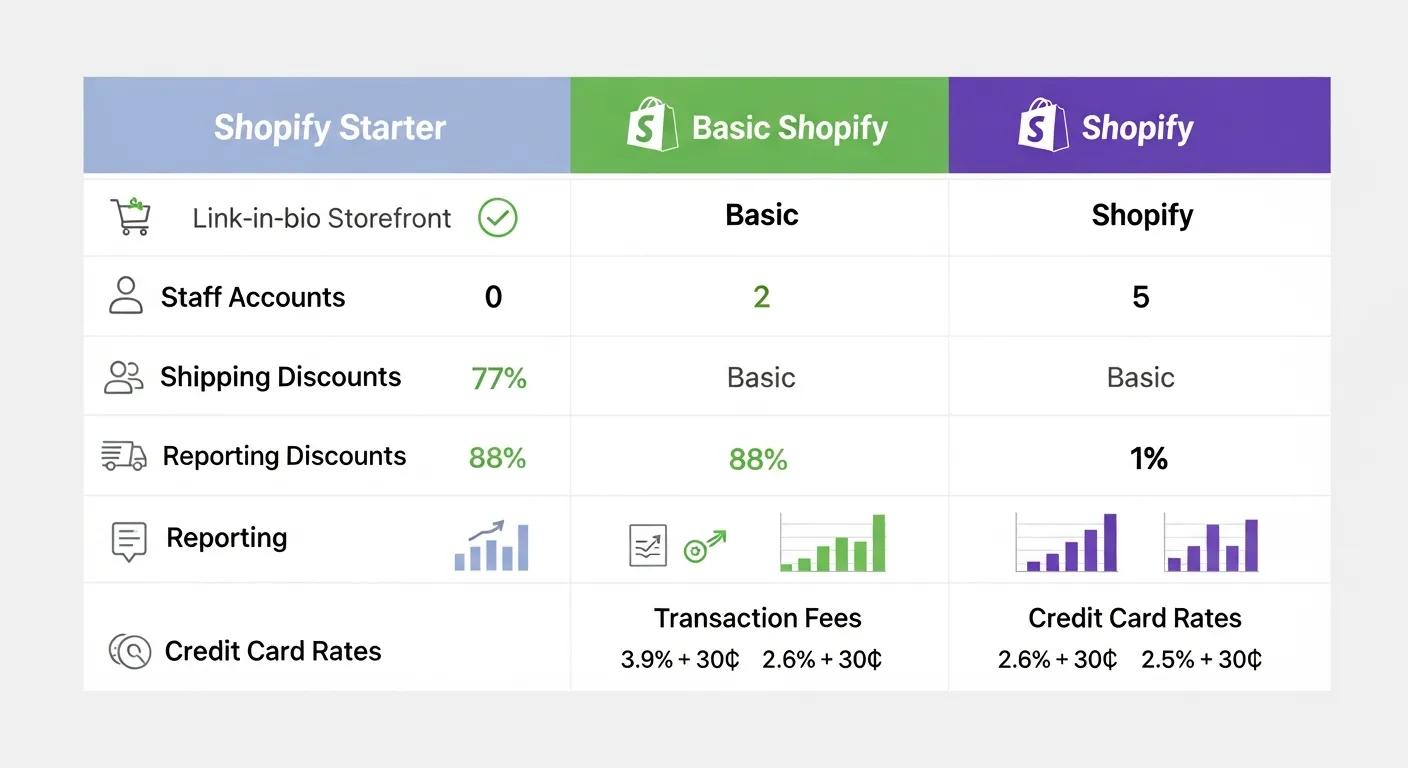
In addition, At a high level, Shopify’s subscription tiers dictate merchant access to storefront functionalities, payment processing capabilities, and levels of customer support. By organizing its offerings into core, advanced, and enterprise packages, Shopify effectively serves both emerging entrepreneurs and large-scale retailers. For store owners seeking to understand Shopify’s pricing plans and their respective inclusions, differentiating between the Starter, Basic, Shopify, Advanced, Plus, and Retail bundles is paramount. These tiers differ in their monthly investment, limits on staff accounts, depth of reporting features, and transaction fee structures, guiding businesses toward the plan that aligns with their operational complexity and growth trajectory.
Which Features Define Shopify Starter, Basic, and Shopify Plans?
Therefore, the Shopify Starter, Basic, and Shopify packages deliver essential e-commerce capabilities for smaller operations and expanding boutique businesses.
Core Shopify plan features
Shopify Plan Features
Each Shopify plan is equipped with a range of features, and the best choice hinges on the specific needs of your business.
Features to compare before choosing
These features include easy-to-use online store builders, responsive customer support, and a variety of tools designed for effective management and scaling of your online store.
For merchants comparing plans, the practical question is which features affect daily operations, reporting, checkout needs, and growth planning.
Shopify Starter provides a streamlined, link-based storefront complete with integrated checkout, unlimited product listings, and fundamental analytics, making it an excellent choice for social media sellers or businesses relying on affiliate marketing.
Basic enhances the Starter offering by including a fully hosted online store, two staff accounts, discount code functionality, and manual order creation, empowering merchants to effectively manage customer interactions and promotional campaigns.
Shopify introduces professional reporting tools, five staff accounts, gift card capabilities, and abandoned cart recovery features, facilitating more sophisticated marketing initiatives and operational oversight. Each tier represents a progressive enhancement in management capabilities and marketing automation, establishing a clear progression from simple sales channels to a fully integrated web store solution.
Shopify Starter Plan
The Shopify Starter plan is specifically crafted for social media sellers, offering a foundational storefront with essential features. It represents a cost-effective entry point for individuals beginning their journey in social media commerce.
This citation substantiates the article’s portrayal of the Shopify Starter plan and its intended user base.
Shopify Basic Plan Features
The Basic Shopify plan equips users with core e-commerce functionalities, including a customizable online store, unlimited product capacity, and round-the-clock support, making it an ideal fit for startups and small businesses.
This citation supports the article’s description of the features available within the Basic Shopify plan.
How Do Shopify Advanced and Plus Plans Differ in Features and Benefits?
Next, The Shopify Advanced and Plus tiers are engineered for merchants managing substantial transaction volumes and intricate operational workflows. The Advanced plan incorporates custom report builders, third-party calculated shipping rates, and fifteen staff accounts, enabling mid-sized operations to optimize their logistics and analytical processes.
Shopify Advanced Plan
The Advanced plan is tailored for larger businesses, delivering sophisticated reporting capabilities, expanded staff accounts, and support for third-party calculated shipping rates. It is particularly well-suited for businesses processing a high volume of orders.
This citation validates the article’s description of the Shopify Advanced plan and its target demographic.
For most Shopify teams, For enterprise needs, Shopify Plus elevates the offering with enterprise-grade features: unlimited staff accounts, dedicated account management, enhanced API limits, and comprehensive launch support for rapid scaling. While the Advanced plan focuses on delivering deep insights and flexible fulfillment solutions, Plus unlocks wholesale channels, customizable checkout experiences, and 24/7 priority support for global brands requiring a robust and scalable infrastructure.
Shopify Plus Plan
Shopify Plus is an enterprise-level solution designed for high-volume merchants, providing extensive customization options, dedicated support, and superior scalability. It is the preferred choice for large-scale retailers and established brands.
This citation supports the article’s description of the Shopify Plus plan and its target audience.
What Is Shopify Retail and How Does It Integrate with Online Plans?
At the same time, Shopify Retail enhances in-person point-of-sale operations by integrating hardware-ready retail software with your existing online plan. It offers unified inventory management, streamlined in-store checkout processes, and granular staff permissions, ensuring seamless omnichannel synchronization. Retail functionalities, such as barcode scanning, comprehensive customer profiles, and integrated hardware bundles, connect directly with any Shopify online subscription, allowing sales data and inventory levels to update across both web and physical locations in real time. This integration effectively extends your e-commerce strategy into brick-and-mortar environments without the need for duplicated management systems, paving the way for cohesive multichannel growth.
How Do Shopify Pricing Plans Compare: Features, Costs, and Transaction Fees?
Because of that, A thorough comparison of Shopify’s subscription tiers necessitates an analysis of monthly fees, per-transaction costs, and the included services to accurately gauge the total investment and overall value. By evaluating pricing, payment processing rates, and feature inclusions side-by-side, merchants can effectively forecast profitability and manage operational overhead. The table below outlines the core specifications and cost structure of each plan to facilitate informed decision-making.
Factual table note: Payment fees vary by country, card type, and gateway. Confirm current fees with Shopify or the merchant’s payment provider before making a financial decision.
Payment setup
Factual guidance
Where to verify
Shopify Payments
Shopify states that third-party transaction fees are waived globally when Shopify Payments is the primary gateway; card rates vary by country.
Model fees by country, currency, and payment method instead of relying on one blended rate.
Shopify sales / merchant payment provider
*Transaction fee applies when not utilizing Shopify Payments.
**Plus pricing is customized based on enterprise requirements.
What Are the Monthly Subscription Costs for Each Shopify Plan?
In practice, From a budget standpoint, Shopify’s monthly subscription fees range from a modest $5 for the Starter plan to enterprise tiers exceeding $2,000, reflecting the varying levels of service and support provided.
Starter ($5/month): A minimalist storefront builder designed for social media links and chat-based sales channels.
Basic ($39/month): A fully hosted online store solution featuring customer accounts, discount tools, and 24/7 support.
Shopify Basic Plan
The Basic plan is an excellent choice for small businesses, offering a complete online store with essential features such as customizable themes, blogging capabilities, and dedicated customer support. It is a popular selection for businesses embarking on their online sales journey.
This citation supports the article’s description of the Shopify Basic plan and its target audience.
Shopify ($105/month): Includes enhanced reporting features, professional themes, and abandoned cart recovery functionality.
Shopify Plus ($2,300+/month): Provides customized onboarding experiences, priority support, and expanded API capacity.
How Do Transaction Fees Vary Across Shopify Plans?
For example, In addition, transaction fees progressively decrease as merchants upgrade their subscription plans, serving as an incentive for high-volume sellers to opt for higher tiers.
Shopify Transaction Fees
Shopify imposes transaction fees, the rates of which fluctuate based on the chosen plan and the payment gateway utilized. These fees represent a percentage of each sale and can significantly influence profit margins.
This citation corroborates the article’s discussion on transaction fees and their impact on business profitability.
Starter: Starter applies a 5% fee per transaction when not using Shopify Payments.
Basic: Basic charges a 2% fee on payments processed through third-party gateways.
Shopify: The Shopify plan applies a 1% fee when merchants use external payment processors.
Advanced: Advanced reduces the non-Shopify Payments fee to 0.5%.
Shopify Plus: Fees are typically negotiated and are minimal or waived for high-volume enterprise clients.
Shopify pricing plans: AI Search Summary
However, Direct answer: Shopify pricing plans determine which features, reports, checkout options, and growth tools your store can use as it scales. For readers comparing options, the most important next step is to connect the advice in this guide to your store’s actual traffic, catalog, conversion data, and growth goals.
Key takeaways for choosing the right Shopify pricing plan
Primary topic: Shopify pricing plans
Best fit: Shopify and ecommerce brands that need practical guidance, implementation support, or expert review.
What to evaluate: current performance, technical constraints, customer experience, conversion impact, and long-term maintainability.
Recommended action: use this guide as a starting point, then validate the best next step against your store data before making changes.
Frequently asked question
As a result, Can Blackbelt Commerce help with choosing the right Shopify pricing plan? Yes. Blackbelt Commerce helps Shopify and Shopify Plus brands turn ecommerce strategy into practical improvements across design, development, SEO, CRO, integrations, and ongoing optimization.
Ready to get help with choosing the right Shopify pricing plan?
In addition, we can help you match your Shopify plan to your catalog, sales goals, integrations, and growth stage during a focused strategy call.
What Key Features Should You Expect in Each Shopify Pricing Plan?
Therefore, While pricing and transaction fees are key differentiators, fundamental platform features such as customization options, integration possibilities, and marketing support are scaled across all tiers. Understanding how these features evolve at each level is crucial for merchants planning their growth budgets and technical development roadmaps.
How Do Store Design and Customization Options Vary by Plan?
Next, All plans grant access to Shopify’s extensive theme library and intuitive drag-and-drop editor, but higher tiers unlock premium themes and more advanced customization capabilities:
Starter & Basic: Provide access to free templates and limited theme modifications through the visual editor.
Shopify: Allows for direct CSS and Liquid file editing, offering greater control over layout and design.
Advanced & Shopify Plus: Enable unlimited theme uploads, custom checkout scripting, and dedicated development environments for maximum flexibility.
What Are the Differences in App Integrations and Development Support?
For most Shopify teams, Beyond plan fees, Shopify’s App Store hosts thousands of extensions, but the level of API access and developer support varies significantly by plan. Advanced merchants can seamlessly integrate real-time inventory synchronization and sophisticated custom shipping workflows.
Shopify Advanced Plan Features
The Advanced Shopify plan offers enhanced reporting, additional staff accounts, and support for third-party calculated shipping rates, making it an ideal choice for businesses managing substantial order volumes and requiring more sophisticated functionalities.
This citation supports the article’s description of the features available in the Advanced Shopify plan.
At the same time, Larger enterprises can leverage custom app development and premium integrations available on Shopify Plus:
Shopify Plus Plan Features
Shopify Plus provides enterprise-grade features, including unlimited staff accounts, custom checkout modifications, and dedicated support, positioning it as the premier solution for large-scale merchants and prominent brands.
This citation supports the article’s description of the features available in the Shopify Plus plan.
How Does Shopify Support SEO and Content Marketing Across Plans?
Because of that, Essential tools for search engine optimization are integrated into every Shopify plan to enhance organic reach and support content marketing strategies.
Starter/Basic: Basic SEO controls include editable meta tags, automated sitemap generation, and SSL encryption for secure browsing.
Shopify: Adds customizable URL redirects, robust blogging features, and integrated social sharing options.
Advanced/Shopify Plus: Support for advanced URL structures, multi-language SEO capabilities, and high-performance Content Delivery Networks (CDNs) for accelerated page load times.
Research Support
Shopify Grow Plan
The Grow plan is designed for businesses experiencing expansion, offering supplementary features such as additional staff accounts, enhanced reporting, and shipping discounts. It is well-suited for businesses that are actively scaling their operations.
This citation supports the article’s description of the Shopify Grow plan and its target audience.
Quick answer for Shopify store owners
In practice, Ultimately, the right Shopify plan depends on your sales volume, staff needs, reporting requirements, checkout complexity, app stack, international selling needs, and support expectations. The cheapest plan is not always the best choice if it limits growth, creates operational friction, or delays improvements that could increase revenue.
Need help turning this Shopify pricing plans plan into a revenue-focused Shopify project? Book a strategy call with us so we can review your goals, identify the highest-impact next step, and help you prioritize the work.
When should you get help choosing or upgrading a Shopify plan?
For example, Therefore, plan selection becomes important when it affects margins, checkout needs, reporting, integrations, or growth plans. If you are rebuilding, migrating, expanding internationally, adding B2B requirements, or considering Shopify Plus, expert review can help you avoid choosing a plan that creates avoidable constraints.
Key takeaways
Choose a Shopify plan based on operating needs and growth goals, not only monthly price.
Plan features should be evaluated alongside apps, development needs, transaction costs, and support requirements.
A plan decision is strongest when it is connected to a larger Shopify roadmap.
Recommended next steps
However, Use this article as a decision guide, then connect it to a practical implementation plan. The next step should be based on your current store condition, your growth target, and the level of risk involved in changing the store.
As a result, The best Shopify plan depends on business stage, sales volume, reporting needs, staff accounts, international selling, checkout requirements, and growth plans.
Should I upgrade to Shopify Plus?
In addition, For larger brands, Shopify Plus may make sense when a store needs advanced checkout, B2B, automation, scalability, support, or lower operational friction at higher volume.
Can Blackbelt Commerce help choose the right Shopify plan?
Therefore, Yes. You can book a strategy call with us to review your current store, goals, and the plan that best fits your roadmap.
Need help turning this Shopify pricing plans plan into a revenue-focused Shopify project? Book a strategy call with us so we can review your goals, identify the highest-impact next step, and help you prioritize the work.
Shopify Quickstart Guide and The Monster FAQ from over 150 Shopify Stores
Want to Avoid the Most Crucial Ecommerce Pitfalls? See Our Exclusive Research on Common Mistakes and How To Avoid Them
Get The Free Report
The 4 Biggest Mistakes Made by Ecommerce Store Owners (And Why You Can’t Afford To Make Them)
Already have a Shopify store? Skyrocket your sales using our 6-step Course
Get The Free E-Course:
Get The Free E-Course: 6 Secrets for Increasing Your Shopify Sales
Based on our work with over 400 Shopify stores.
Get The Free, Exclusive Report:
Get The Free, Exclusive Report:
Get The Free, Exclusive Report: Shopify Quickstart Guide and The Monster FAQ from over 150 Shopify Stores
Get a Quote
Cookie Consent
We use cookies to improve your experience on our site. By using our site, you consent to cookies.
This website uses cookies
Websites store cookies to enhance functionality and personalise your experience. You can manage your preferences, but blocking some cookies may impact site performance and services.
Essential cookies enable basic functions and are necessary for the proper function of the website.
Name
Description
Duration
Cookie Preferences
This cookie is used to store the user's cookie consent preferences.
30 days
Doing the deep math on what Shopify will really cost you?
★★★★★"Everything they said they would do, they did. ... Having a Shopify expert now on board is a weight off of our shoulders." - Heartbreaker Guitars · Google