

Blog updated with the most recent Shopify and eCommerce strategies on 05/02/2026.
Supercharge Your E-commerce with Shopify Plus ERP Integration: Achieve Seamless Operations
Connecting Shopify Plus with your ERP system transforms fragmented sales, inventory, and financial data into a unified, automated powerhouse. This boosts accuracy, fuels scalability, and accelerates operational speed. Ambitious merchants often wrestle with stock discrepancies and manual order processing, but integrating Shopify Plus with an Enterprise Resource Planning system centralizes your workflows and banishes error-prone tasks. This guide walks you through the entire process: defining integration, uncovering its core advantages, detailing inventory and order enhancements, comparing top ERP solutions, outlining a clear implementation roadmap, exploring technical approaches, measuring your return on investment, and demonstrating how BlackBelt Commerce can be your trusted partner in achieving flawless Shopify Plus ERP integration.
What Exactly Is Shopify Plus ERP Integration, and Why Is It Non-Negotiable?
Shopify Plus ERP integration is the vital link between your high-volume e-commerce platform and your enterprise resource planning software. Its purpose? To centralize operations, automate data exchange, and elevate your business intelligence. This powerful mechanism streamlines everything from order fulfillment to inventory control by eliminating manual updates. Imagine automatically synchronizing stock levels across all your sales channels in real-time, preventing overselling before it even happens. Understanding this fundamental concept sets the stage for exploring the profound impact ERP integration has on Shopify Plus merchants.
What Does ERP Integration Truly Mean for Shopify Plus Merchants?
For Shopify Plus merchants, ERP integration means weaving your back-office processes—think inventory adjustments, accounting entries, and customer data—directly into your storefront’s ecosystem. By connecting these data streams through real-time APIs or robust connectors, you dramatically reduce manual effort, accelerate your order cycles, and gain a single, authoritative source of truth for all your reporting. This unified view empowers you to make faster, more informed decisions about product restocking, financial forecasting, and overall business strategy.
How Does Shopify Plus Play Nicely with ERP Systems?
Shopify Plus communicates with ERP systems through secure API endpoints, specialized middleware connectors, or custom webhooks. These channels facilitate the bidirectional transfer of crucial data, including sales orders, returns, product catalogs, and customer details. When a purchase is made on Shopify Plus, the platform instantly sends the order to your ERP. In return, the ERP updates Shopify Plus with the latest inventory levels and fulfillment status. This automated loop ensures that both systems are always in sync, reflecting accurate data without any manual intervention, paving the way for effortless scaling.
Which ERP Systems Are the Go-To Choices for Shopify Plus Integrations?
The leading ERP platforms that integrate seamlessly with Shopify Plus include NetSuite, SAP Business One, and Microsoft Dynamics 365. These robust systems offer comprehensive capabilities across finance, inventory, procurement, and customer relationship management, designed to handle enterprise-level demands. They are built to accommodate multi-location fulfillment, complex pricing structures, and extensive product catalogs, making them the ideal selections for high-growth brands aiming for tighter operational control.
What Are the Game-Changing Benefits of Integrating Shopify Plus with Your ERP?
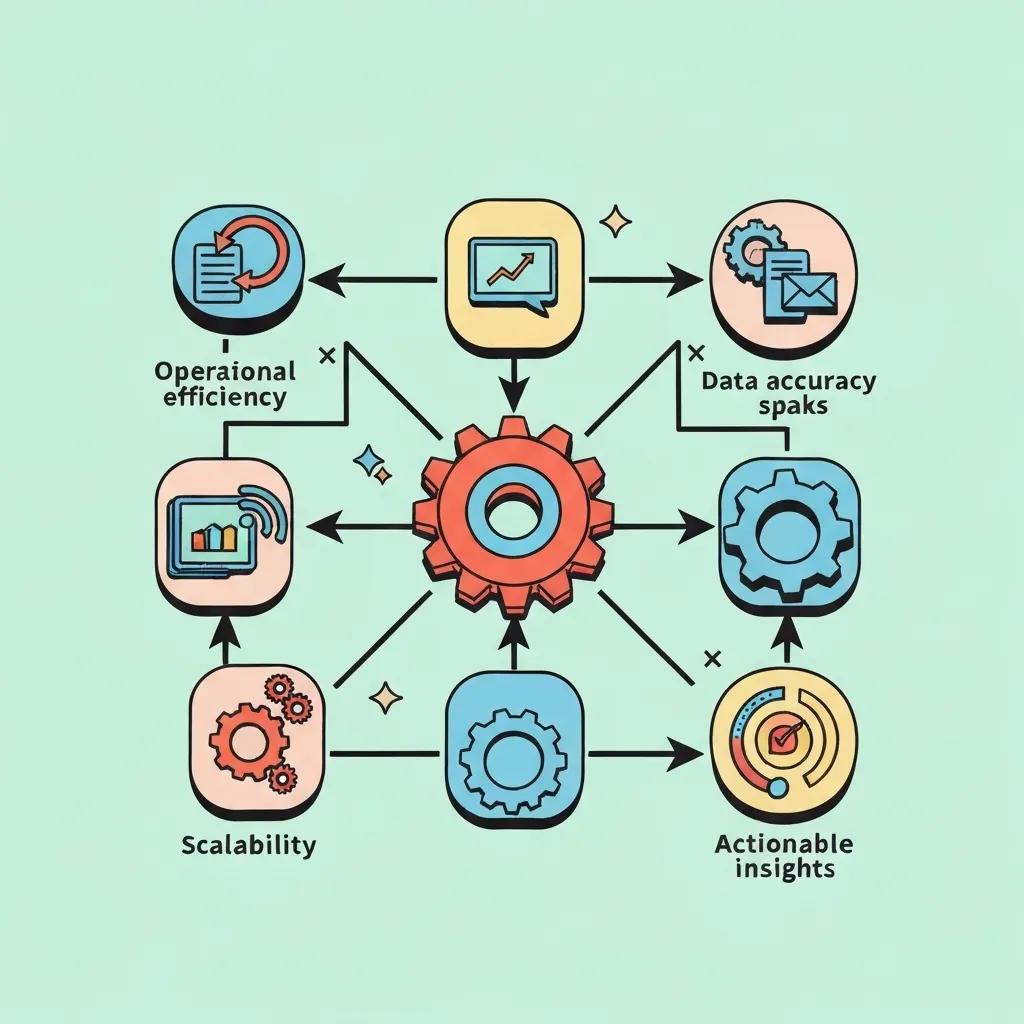
Integrating your ERP system unlocks four primary advantages:
- Boosted Operational Efficiency – Automated workflows slash order processing times by up to 50%.
- Unrivaled Data Accuracy – Real-time synchronization eradicates stock discrepancies and manual entry errors.
- Effortless Scalability – Your automated infrastructure effortlessly handles order volume surges without requiring additional headcount.
- Actionable Business Insights – Unified dashboards provide superior forecasting, demand planning, and financial reporting capabilities.
Collectively, these benefits translate into faster fulfillment, happier customers, and a healthier bottom line.
Real-Time E-commerce Integrations with ERP: A Deep Dive into a Leading Manufacturing Company’s Success
This academic paper meticulously examines the real-time integration of e-commerce platforms with Enterprise Resource Planning (ERP) systems, featuring a detailed case study of a manufacturing company. The research compellingly demonstrates that such integration can lead to a significant 30% reduction in order processing time and a 25% decrease in stockouts, all thanks to real-time inventory updates.
This research provides powerful, empirical evidence that directly supports our claims regarding the operational efficiency and inventory accuracy improvements achieved through Shopify Plus ERP integration, offering specific, verifiable metrics.
How Does Shopify Plus ERP Integration Revolutionize Inventory and Order Management?
Shopify Plus ERP integration brings your inventory counts and order statuses into a single, synchronized hub across all your channels. This eliminates stock discrepancies, slashes fulfillment delays, and prevents overselling. The integration facilitates a seamless, bi-directional data exchange: every sale, return, or stock adjustment made in Shopify Plus instantly updates your ERP, and vice versa. With accurate counts feeding both systems, you can confidently manage multiple warehouses and marketplaces, knowing your data is always current.
What Inventory Management Headaches Plague Shopify Plus Stores Without ERP?
Shopify Plus stores operating without an ERP system often suffer from inconsistent stock levels, a high risk of overselling, and the constant drain of manual reconciliation. For instance, high-velocity sales channels can easily deplete stock that isn’t yet reflected in the warehouse, leading to frustrating customer order cancellations and lost revenue. These persistent pain points highlight the critical need for end-to-end automation.
How Does ERP Enable Real-Time Inventory Synchronization for Shopify Plus?
ERP solutions leverage event-driven APIs or sophisticated connectors to push inventory changes the moment they occur into Shopify Plus. Whether stock is received, transferred, or sold, your Shopify Plus store is updated instantly. This mechanism ensures that your available-to-sell quantities always mirror your actual warehouse status across every sales channel. Real-time data feeds maintain precise stock counts by accurately matching SKU identifiers, lot numbers, and location attributes.
What Key Features Elevate Order Fulfillment Through ERP Integration?
Before diving into the specifics, let’s review a concise summary of the transformative features and benefits:
How Does Integration Drastically Reduce Manual Errors and Boost Accuracy?
By eliminating the need for manual CSV uploads and tedious data re-entry, integration dramatically cuts down human error in both order and inventory management. Automated mapping of product codes, customer records, and transaction amounts ensures absolute consistency across all your systems. This reliable data flow minimizes exceptions, supports accurate financial closing processes, and builds unwavering trust in your operational metrics.
E-commerce ERP Integration: Streamlining Operations for Smarter, Faster, and More Profitable Business
This article powerfully illustrates how integrating an ERP system with an e-commerce platform centralizes and automates critical business workflows. A compelling case study featured in the article reveals that integrating Microsoft Dynamics 365 with an e-commerce backend resulted in an impressive 35% reduction in order-to-ship time and a remarkable 80% decrease in inventory discrepancies.
This source powerfully reinforces our discussion on how ERP integration streamlines inventory and order management, significantly reduces manual errors, and enhances overall operational efficiency, providing concrete examples of substantial performance improvements.
Which ERP Systems Offer the Best Integration with Shopify Plus, and What Are Their Unique Strengths?
Integrating Shopify Plus with leading enterprise resource planning platforms like NetSuite, SAP Business One, and Microsoft Dynamics 365 creates distinct operational advantages tailored to your business. Each ERP brings its own specialized features and flexibility to accommodate unique business models, whether you’re a wholesale distributor or a direct-to-consumer brand.
How Does NetSuite Integration Elevate Shopify Plus for E-commerce Growth?
NetSuite integration utilizes a robust, prebuilt connector designed to synchronize orders, inventory, customer records, and financial transactions in real time. This connector intelligently maps Shopify Plus webhooks to NetSuite’s powerful SuiteScript logic, enabling automated journal entries and sophisticated demand planning. This tight coupling significantly reduces your order-to-cash cycles and provides a solid foundation for omnichannel growth.
What Are the Key Advantages of SAP Business One Integration with Shopify Plus?
SAP Business One integration typically relies on specialized middleware to perfectly align product catalogs, pricing lists, and stock levels between your platforms. This setup is particularly beneficial for smaller enterprises, as it drastically reduces manual updates, offers essential multi-currency support, and ensures accurate, localized tax calculations. As a result, merchants experience faster invoicing and simplified compliance without the burden of heavy IT investments.
How Does Microsoft Dynamics 365 Supercharge Your Shopify Plus Operations?
Microsoft Dynamics 365 integration leverages the Common Data Service to create a unified view of customer, order, and inventory data across your sales and finance modules. The platform’s AI-driven demand forecasting capabilities predict future stock requirements based on historical Shopify Plus sales patterns, effectively minimizing overstock situations and enhancing customer satisfaction through reliable product availability.
How Can Custom ERP Solutions Be Seamlessly Integrated with Shopify Plus?
Custom ERP integrations involve blending Shopify Plus APIs with bespoke middleware or microservices to precisely match unique workflows—whether it’s subscription billing, manufacturing resource planning, or specialized logistics. Expert developers meticulously craft mapping logic for entity synchronization and robust error handling, ensuring perfect alignment with your proprietary data structures and specific reporting requirements.
What Is the Proven Step-by-Step Process for Achieving Successful Shopify Plus ERP Integration?

Adopting a structured approach, from initial discovery through ongoing optimization, guarantees a smooth ERP integration that scales effectively with your business growth.
How Does BlackBelt Commerce Masterfully Approach Shopify Plus ERP Integration?
BlackBelt Commerce, your Shopify Plus Experts, begins with a comprehensive audit of your existing systems, meticulously identifies critical data touchpoints, and defines clear, KPI-aligned objectives. Our methodology champions modular development, iterative testing, and continuous stakeholder collaboration to deliver robust, future-proof integrations that drive measurable ROI.
What Are the Crucial Phases: Discovery, Planning, Development, Testing, and Launch?
- Discovery – We gather detailed requirements, map intricate data flows, and prioritize integration touchpoints.
- Planning – We design the optimal architecture, select the most effective integration methods (API vs. connector), and establish clear project milestones.
- Development – We build precise mapping scripts, robust middleware, and custom extensions to seamlessly sync orders, inventory, and customer data.
- Testing – We execute rigorous unit, integration, and user acceptance tests to validate data accuracy and system performance.
- Launch – We deploy to production with meticulously planned rollback strategies and real-time monitoring dashboards in place.
These phases ensure complete transparency, effective risk mitigation, and unwavering alignment with your core business objectives before going live.
How Is Ongoing Support and Optimization Expertly Managed Post-Integration?
Following the launch, our dedicated support team diligently monitors data sync metrics and error logs, applies performance tuning optimizations, and delivers comprehensive quarterly business reviews. This ongoing partnership ensures your integrations continuously evolve alongside new Shopify Plus features, ERP updates, and your changing operational demands.
What Common Integration Challenges Arise, and How Are They Expertly Overcome?
Integrations frequently encounter hurdles such as SKU mismatches, complex custom pricing rules, and API rate limits. We address these issues by establishing standardized product codes, designing sophisticated error-handling routines, and leveraging efficient bulk sync strategies. Close collaboration between your IT and operations teams further accelerates problem resolution and adaptation.
How Do Integration Methods Like API and Connectors Stack Up for Shopify Plus ERP?
Merchants typically choose between native APIs and prebuilt connectors based on their specific customization needs, budget constraints, and desired time-to-value. Each method presents distinct trade-offs regarding flexibility, real-time performance, and ongoing maintenance overhead.
What Are the Fundamental Differences Between API and Connector Integration Methods?
API integration offers unparalleled granular control and extensive customization capabilities, allowing for bespoke data mapping and highly tailored workflows. Connectors, on the other hand, provide quicker deployment with standard mapping templates but offer limited adaptability. The optimal selection hinges on the complexity of your business logic and your existing technical resources.
Which Method Delivers Superior Real-Time Data Synchronization?
APIs are engineered to deliver true real-time synchronization by instantly pushing events as they occur. Connectors, conversely, often rely on scheduled polling intervals (e.g., every five minutes) to retrieve data. For high-velocity sales environments that demand up-to-the-second accuracy, custom API integrations are unequivocally the preferred choice.
How Do Scalability and Automation Capabilities Differ Between Integration Approaches?
API-driven integrations are built for horizontal scalability, allowing you to add microservices or serverless functions to effortlessly support millions of transactions per hour. Connectors may encounter throttling at vendor-defined limits, potentially requiring additional licenses or infrastructure upgrades. Automation capabilities also diverge: APIs excel at enabling event-driven workflows, while connectors typically operate based on preset job schedules.
How Can You Quantify the ROI and Business Value of Your Shopify Plus ERP Integration?
Tracking key performance indicators (KPIs) both before and after integration is crucial for quantifying its impact on costs, efficiency, and revenue growth.
What Metrics Clearly Demonstrate Operational Efficiency Gains?
Monitor metrics such as order processing time, inventory accuracy rate, and the reduction in labor hours previously spent on manual reconciliation. A typical integration project yields a significant 40–60% reduction in order-to-fulfillment time and a remarkable 70% improvement in stock accuracy.
How Does ERP Integration Enhance Data Accuracy and Empower Better Decision-Making?
Unified data eliminates duplicate records and provides consistent, reliable financial reporting, which in turn enables more accurate forecasting models. Decision-makers gain the confidence to make better strategic choices regarding demand planning and budgeting, often reducing working capital tied up in excess inventory by up to 20%.
What Are the Typical Cost Considerations and Expected ROI Timelines?
Integration costs can vary widely based on complexity, but the investment is generally recouped within 6–12 months through substantial labor savings and the elimination of costly stockouts. Key budget factors include middleware licensing, development hours, and ongoing support fees. Diligently tracking ROI timelines ensures your project remains aligned with your financial targets.
What Are the Most Common Questions Surrounding Shopify Plus ERP Integration?
B2B merchants frequently seek clear answers regarding integration scope, timelines, and benefits before committing to a project. Below are concise, expert responses to five frequently asked questions.
What Is ERP Integration for Shopify Plus, in Simple Terms?
ERP integration for Shopify Plus is the process of unifying your storefront with your back-office systems. It automates order routing, inventory updates, and financial transactions using APIs or connectors, delivering consistent, real-time data across all your business functions.
Which ERP Systems Are the Top Performers with Shopify Plus?
NetSuite, SAP Business One, and Microsoft Dynamics 365 stand out as leading ERP platforms that are highly compatible with Shopify Plus’s API-first architecture. They offer comprehensive modules for finance, inventory management, and supply chain operations, specifically designed for high-volume merchants.
How Long Does a Typical Shopify Plus ERP Integration Project Take?
A standard ERP integration project typically spans 8–16 weeks from kickoff to launch. This timeframe can vary depending on data complexity, the need for custom workflows, and the thoroughness of testing requirements. Clear scoping and phased development approaches can often accelerate the time-to-value.
What Is the Estimated Cost of Shopify Plus ERP Integration?
Integration projects generally range from $30,000 to $120,000 USD. This estimate accounts for middleware licenses, development resources, and support contracts. The final investment is influenced by the project’s scope, customization needs, and any associated ERP vendor fees.
How Does Integration Enhance Customer Data Synchronization?
By enabling bidirectional syncing of customer records, ERP integration ensures that order histories, loyalty tiers, and contact preferences remain consistently updated across all platforms. This unified view significantly enhances personalized marketing efforts, improves customer service efficiency, and ensures the accuracy of your reporting.
How Can BlackBelt Commerce Empower You to Achieve Shopify Plus ERP Integration Success?
Leveraging our deep expertise in the Shopify Plus ecosystem and our proven ERP partnerships, BlackBelt Commerce delivers custom integration solutions meticulously designed to optimize your operations and fuel your growth.
What Sets BlackBelt Commerce Apart as a Shopify Plus ERP Integration Expert?
Our team combines the prestigious Shopify Plus Advanced Partner status with certified ERP developers to craft scalable, secure, and high-performance integrations. Our proprietary best practices streamline the discovery process, minimize technical debt, and ensure strict compliance with enterprise governance standards.
Can You Share Some Client Success Stories Highlighting Integration Benefits?
A prominent apparel brand experienced a 30% reduction in order-processing time after integrating Shopify Plus with NetSuite. Additionally, a multi-region distributor successfully reduced stockouts by an impressive 75% through SAP Business One synchronization, expertly implemented by BlackBelt Commerce.
How Do I Initiate My Shopify Plus ERP Integration Journey with BlackBelt Commerce?
To embark on your Shopify Plus ERP integration journey, simply visit BlackBelt Commerce – Shopify Plus Experts and request a discovery consultation. Our expert team will meticulously assess your current systems, define your project goals, and outline a clear roadmap that strategically aligns technology with your ambitious growth strategy.
Unlock unparalleled efficiency, achieve unwavering data accuracy, and embrace effortless scalability by partnering with specialists who possess an intimate understanding of both platforms. Let us tailor a solution that drives automation, empowers your teams, and delivers measurable ROI from day one.
Quick Answer: shopify plus erp integration
Shopify Plus Erp Integration should help merchants make a clearer decision about their store, customer experience, and growth priorities. A useful guide explains the concept, shows when it matters, and gives the reader a practical next step without forcing the topic into a generic template.
Key Takeaways
- Start with the search intent behind shopify plus erp integration: the reader needs a clear explanation before they are ready for a service conversation.
- Keep the advice practical and specific so the post feels editorial, useful, and worth sharing.
- Use the topic cluster links to connect the article to related BBC expertise instead of leaving it as a standalone blog post.
- Add a natural commercial bridge only after the article has answered the reader’s main question.
- Use the same-page Calendly CTA so qualified readers can book a strategy call without being sent to a long form.
How this connects to your Shopify growth strategy
This article should remain useful for readers researching shopify plus erp integration, but it also needs to show when the topic becomes a business decision. For the Shopify Plus Strategy and Implementation cluster, the commercial bridge is practical: once the reader understands the concept, the next step is deciding whether their current Shopify setup can support the desired experience, conversion path, and operational workflow. That is where expert planning, design, development, CRO, and SEO support can turn the idea into measurable store improvements.
Related Shopify resources
These internal resources support the Shopify Plus Strategy and Implementation topic cluster and help connect this guide to stronger commercial next steps:
- Shopify Plus Strategy and Implementation
- Shopify experts
- Shopify Plus agencies
- Shopify Plus Strategy and Implementation — Parent service page for the reader’s next commercial step
- Blackbelt Commerce — Home-page authority link for brand and core Shopify expertise
- Shopify experts — Money-page link requested for expert-hiring intent
- Shopify custom development — Development service page for implementation and technical help
- Shopify CRO — Conversion service page for readers focused on revenue and lead generation
- Cost of Shopify website — Related pricing article that helps readers compare platform, build, and expert investment decisions
- Shopify Plus checkout customization — Related Shopify Plus implementation guide for readers evaluating advanced Plus costs and capabilities
Questions store owners ask before taking action
What does shopify plus erp integration mean for a Shopify merchant?
For a Shopify merchant, shopify plus erp integration is about choosing or improving the store experience in a way that supports traffic, trust, conversion, and long-term operations.
When should a store owner get expert help?
Expert help becomes useful when the decision affects SEO, conversion, theme architecture, integrations, migration risk, or revenue-critical customer journeys.
How should this topic connect to a broader content cluster?
The post should link to a parent service page, related support articles, and money pages so Google and AI systems understand how the article supports a broader area of expertise.
What is the lead-generation goal of this article?
The article should educate first, then guide qualified readers toward booking a strategy call when they need help applying the advice to their own store.
What should be avoided during optimization?
Avoid filler, unrelated phrases, invented statistics, broken formatting, duplicated CTAs, and any edit that makes the article feel less helpful or less polished.
Future articles needed for topical dominance
To build deeper topical authority around this cluster, these supporting topics should be created later and linked back into this article:
- Shopify Plus Erp Integration Checklist for Shopify Store Owners: Creates a practical support article that turns the Shopify Plus Strategy and Implementation topic into an actionable review tool.
- Common Shopify Plus Erp Integration Mistakes and How to Avoid Them: Captures problem-aware searches and gives BBC a natural place to explain implementation risks without hard selling.
- When to Hire Shopify Experts for Shopify Plus Erp Integration: Connects informational demand to the expert-hiring money page while preserving educational intent.

