

Blog updated with the most recent Shopify and eCommerce strategies on 05/02/2026.
Is Shopify Plus Worth It for Growing Businesses? Unpacking Pricing, ROI, and Strategic Advantages
For ambitious businesses aiming for enterprise-level e-commerce, a key question arises: how does Shopify Plus deliver exceptional value without sacrificing the ability to scale or the depth of its features? By dissecting its pricing, highlighting its value drivers, comparing its costs against competitors, and exploring strategic enhancements, this guide reveals how Shopify Plus strikes the perfect balance between investment and return for forward-thinking merchants. You’ll discover:
- The core components of Shopify Plus subscriptions and associated expenses
- How to measure your return on investment through enhanced scalability, automation, and conversion boosts
- A comprehensive cost comparison with other leading enterprise platforms
- Expert strategies to maximize your platform investment and identify potential hidden costs
- Industry-specific advantages and how they translate to cost savings
- Answers to common cost-related questions and tactics to leverage features for maximum value
This in-depth look clarifies Shopify Plus’s transparent pricing and provides actionable insights, demonstrating how working with seasoned partners can amplify the impact of every dollar invested.
What Are the Core Pricing Elements of Shopify Plus for Expanding Businesses?
Shopify Plus pricing is a blend of its base subscription, transaction fees, app and integration expenses, and potential custom development costs. Understanding each element provides a clear picture of your total investment and pinpoints opportunities for optimization.
How Is Shopify Plus Base Pricing Structured?
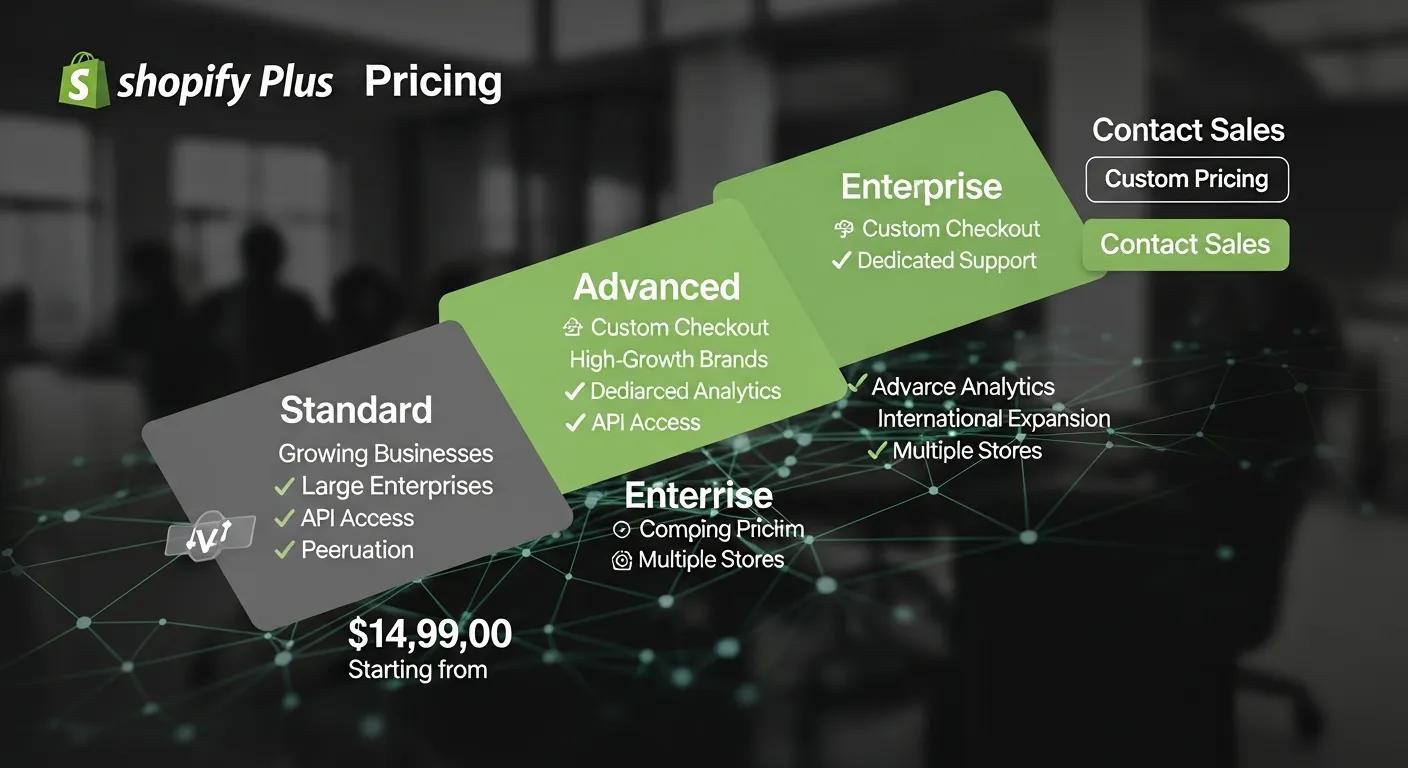
Shopify Plus offers tiered subscription plans designed to grow alongside your revenue and support needs. Plans begin with a monthly fee that covers unlimited products, multiple stores, SSL certificates, and dedicated 24/7 VIP support. As your sales volume increases, your plan can be upgraded to include advanced tools like Launchpad, Shopify Flow, and comprehensive organization-wide permissions.
What Are Shopify Plus Transaction Fees, and How Do They Measure Up?
Merchants on Shopify Plus have the flexibility to negotiate transaction fees or utilize Shopify Payments to bypass additional gateway charges. When compared to third-party gateways often used on other platforms, negotiated rates can lead to savings of 0.10–0.20% per transaction, resulting in significant long-term cost reductions for high-volume businesses.
What App and Integration Expenses Should Growing Businesses Anticipate?
Essential integrations, such as ERP connectors, advanced analytics tools, and loyalty program software, typically incur monthly fees ranging from $20 to $300+, depending on their complexity. Optional apps for A/B testing, SMS marketing, and interactive product showcases may add further incremental costs.
- Essential ERP Sync: $50–$150 per month
- Advanced Analytics Suite: $100–$250 per month
- Customer Loyalty & Rewards: $30–$80 per month
Regularly reviewing your subscriptions ensures you’re only paying for tools that actively contribute to your revenue, before considering the need for additional integrations.
When Is Custom Development Necessary, and How Does It Affect the Budget?
Customizing themes or checkout processes becomes essential when businesses require unique branding elements, specialized operational workflows, or tailored B2B portals. Agency development rates typically fall between $100–$200 per hour; a moderately complex project might cost between $10,000–$30,000. Careful project scoping and a modular design approach can help control these costs by enabling component reuse and preventing scope creep.
How Can Growing Businesses Quantify the ROI of Shopify Plus Beyond Initial Outlays?

Measuring your return on investment involves evaluating gains in scalability, improvements in operational efficiency, enhancements in conversion rates, and the capture of new B2B revenue streams. These value drivers translate directly into tangible cost savings and increased revenue.
What Scalability Advantages Does Shopify Plus Offer for Rapid Growth?
Shopify Plus is engineered to handle massive traffic surges with its auto-scaling infrastructure, eliminating the need for costly investments in on-premise hosting or constant performance tuning. The risk of downtime is virtually eliminated, ensuring that peak sales events convert at their full potential and maximizing revenue during crucial promotional periods.
How Does Shopify Flow Enhance Operational Efficiency?
Shopify Flow automates routine workflows—such as order categorization, fraud detection alerts, and inventory replenishment triggers—reducing manual tasks by as much as 30%. This level of automation significantly cuts labor costs and frees up your team to concentrate on strategic growth initiatives.
Shopify, “Workflow Automation in 2025: Streamline Your Ecommerce Business”, 2025
Research from Forrester highlights that low-code automation solutions, like Shopify Flow, can yield an impressive 248% return on investment over a three-year span. This capability empowers businesses to streamline operations, minimize manual effort, and boost overall efficiency and productivity.
This insight directly supports the article’s points on how Shopify Flow automation enhances operational efficiency and delivers measurable ROI by reducing labor expenses and allowing staff to focus on high-impact growth strategies.
In What Ways Does Shopify Plus Elevate Customer Acquisition and Conversion Rates?
Features within Shopify Plus, such as Shopify Scripts, highly customizable checkouts, and multi-store segmentation, empower brands to create seamless customer journeys. Personalized promotions and one-click upsell opportunities can elevate conversion rates by 10–20%, effectively lowering the cost of acquiring each new customer.
Icecube Digital, “10 Reasons to Migrate Your Online Store to Shopify Plus”, 2024; Praella, “Shopify Plus ROI Analysis: Understanding the Value of an Enterprise-Level E-commerce Platform”, 2024
Recent data indicates that Shopify Plus merchants often experience substantially higher conversion rates, with some reports showing an average increase of 126% compared to merchants on other platforms. Furthermore, Shopify Plus is built for peak performance and scalability, ensuring flawless operation during high-traffic sales periods and guaranteeing 99.99% uptime.
This verification reinforces the article’s claims about Shopify Plus’s capacity to improve customer acquisition and conversion rates through features like customizable checkout, alongside its robust infrastructure for managing high traffic and ensuring unwavering reliability.
What B2B Functionality Adds Significant Value for Growing Enterprises?
Dedicated wholesale channels, custom pricing tiers, and net payment terms enable mid-sized enterprises to effectively serve distributors and bulk purchasers with tailored product catalogs. B2B storefronts developed on Shopify Plus can increase average order values by 25–40% when contrasted with standard B2C checkout experiences.
How Does Shopify Plus’s Cost Structure Compare to Other Enterprise E-commerce Platforms?
Examining the total cost of ownership (TCO) clarifies why numerous businesses transition to Shopify Plus, opting for predictable, scalable expenses over the variable costs associated with on-premise or self-hosted solutions.
What Is the Total Cost of Ownership: Shopify Plus vs. Magento/Adobe Commerce?
Here’s an illustrative comparison of the first-year TCO for a rapidly expanding retailer:
Factual table note: Shopify Plus pricing changes by contract term, region, and business model. Use official Shopify pricing as the source of truth.
Shopify, “Shopify has the best total cost of ownership in commerce, with up to 36% better TCO than the competition”, 2024
A commissioned study by Shopify revealed that its Total Cost of Ownership (TCO) is, on average, 33% more favorable than competitors, with some instances showing improvements of up to 36%. This advantage stems from lower platform, operational, and implementation expenses compared to other leading e-commerce platforms.
This research directly substantiates the article’s assertion that Shopify Plus offers a more advantageous total cost of ownership when compared to enterprise platforms like Magento/Adobe Commerce and BigCommerce Enterprise.
How Does Shopify Plus Pricing Compare to BigCommerce Enterprise?
When stacked against other SaaS enterprise solutions, Shopify Plus delivers more sophisticated automation, checkout customization, and B2B capabilities at comparable or lower subscription price points. Negotiable transaction fees and integrated fraud protection further reduce the effective cost per sale.
What Are the Costs and Benefits of Migrating to Shopify Plus?
Migration expenses typically range from $15,000 to $50,000, contingent on catalog complexity and existing customizations. Key benefits include immediate access to PCI-compliant hosting, seamless multi-channel integrations, and a guaranteed 99.99% uptime. The return on investment is often realized within 6–12 months through increased conversion rates, streamlined operations, and reduced maintenance overhead.
How Does BlackBelt Commerce Enhance Shopify Plus Cost-Effectiveness for Growing Businesses?
Collaborating with specialized agencies can significantly reduce unnecessary expenditures and accelerate ROI by leveraging proven methodologies and deep platform expertise.
How Does BlackBelt Commerce Lower Development and Maintenance Expenses?
As dedicated Shopify Plus Experts, BlackBelt Commerce prioritizes reusable code libraries, modular theme architectures, and industry-leading workflows. By standardizing components and rigorously managing scope, they typically reduce development hours by 25–35% compared to generalist agencies. Discover more about their approach at BlackBelt Commerce – Shopify Plus Experts.
What Strategic Consulting Services Are Available to Optimize Shopify Plus Investments?
Their consulting offerings encompass strategic roadmap planning, in-depth performance audits, sophisticated A/B testing strategies, and comprehensive automation blueprints. By aligning platform capabilities precisely with your business objectives, BlackBelt Commerce ensures that every feature actively contributes to revenue growth and cost control.
Which Real-World Case Studies Showcase Shopify Plus Cost Savings?
Clients across the fashion, electronics, and B2B sectors have achieved platform cost reductions of up to 40%, coupled with a 20% increase in conversions.
- A prominent fashion retailer slashed annual maintenance costs by $50,000 through strategic theme optimization.
- An electronics brand boosted its average order value by 30% by implementing custom upsell scripts.
- A B2B wholesaler reduced manual order processing by 60% by leveraging Shopify Flow automations.
These examples clearly illustrate how targeted strategic interventions translate into substantial savings and enhanced revenue streams.
What Potential Hidden Costs Should Growing Businesses Be Aware of with Shopify Plus?
Beyond the stated subscription fees, certain expenses can impact cost-effectiveness if not managed proactively; expert guidance and foresight are key to mitigating these risks.
How Do App Ecosystem and Integration Fees Influence Overall Costs?
Monthly app fees can accumulate rapidly when ten or more integrations are active simultaneously. Popular categories like advanced search, loyalty programs, and real-time shipping calculators can cost between $50–$200 per app. Consolidating functionalities into a single, custom-built app can reduce cumulative fees by 20–30%.
What Are the Potential Expenses for Custom Theme Development and Ongoing Maintenance?
Intricate theme builds featuring bespoke sections and dynamic content necessitate ongoing maintenance to ensure compatibility with platform updates. Allocating 10–15% of the initial development cost annually for upkeep is crucial for maintaining theme stability and security.
How Can Expert Agency Support Help Prevent Unexpected Shopify Plus Expenses?
Professional support agreements typically include proactive system monitoring, performance optimization, and preventative maintenance. These services are designed to avert costly downtime and minimize emergency developer interventions, thereby stabilizing monthly operational budgets.
What Industry-Specific Advantages Make Shopify Plus a Cost-Effective Choice for Growing Businesses?
Shopify Plus’s modular features offer tailored ROI across various sectors by addressing unique industry demands without the need for expensive, custom platform extensions.
How Is Shopify Plus Cost-Effective for Fashion and Apparel E-commerce?
Integrated lookbooks, intuitive size-swatch selectors, and dynamic collection sequencing enable fashion brands to present their collections effectively with minimal custom coding. This accelerates development timelines and can boost customer engagement by up to 15%.
What Benefits Does Shopify Plus Provide for Electronics and Tech Retailers?
Seamless integration with advanced inventory management systems and omnichannel POS solutions ensures consistent SKU synchronization. The auto-scaling infrastructure effortlessly handles flash sales without requiring additional hosting investments, perfectly supporting high-volume product launches.
How Does Shopify Plus Assist B2B Businesses in Reducing Operational Costs?
Features such as custom price lists, customer segmentation capabilities, and net payment terms eliminate the need for separate B2B platforms. Businesses can achieve significant cost savings by consolidating both B2C and B2B operations onto a single, unified platform.
What Are the Most Frequent Inquiries Regarding Shopify Plus Cost-Effectiveness?
Growing businesses commonly seek clarification on investment justification, fee structures, comparative pricing, ideal user profiles, and ROI calculation methodologies. Key areas of interest include the platform’s overall value proposition, the distinction between monthly and standard plan costs, the impact of transaction fees, optimal use cases, and effective methods for quantifying returns—all of which are thoroughly addressed throughout this guide.
How Can Growing Businesses Leverage Shopify Plus Features to Maximize Cost-Effectiveness?
By strategically implementing built-in tools and platform capabilities, merchants can simultaneously drive revenue growth and reduce operational overhead.
What Impact Does Checkout Customization Have on Increasing Revenue?
Customizable checkout scripts facilitate strategic upsells, bundled offers, and dynamic discounts, which can elevate average order values by 10–20% without incurring additional app fees.
How Do Shopify Flow and Launchpad Automations Contribute to Reduced Operational Costs?
Automations streamline essential tasks such as inventory synchronization, customer segmentation, and the scheduling of flash sales. These no-code workflows eliminate the need for manual intervention, freeing up valuable team resources to focus on strategic priorities.
How Does Shopify Plus Support Mobile Commerce for Growing Businesses?
Responsive themes, accelerated mobile pages (AMP), and one-tap checkout functionality deliver seamless shopping experiences on smartphones, driving up to 50% of total revenue in mobile-centric markets.
What Integrations Enhance Shopify Plus Cost-Effectiveness?
Combining Shopify POS Pro, advanced headless storefront frameworks, and AI-driven merchandising applications ensures optimized performance, data-informed recommendations, and unified omnichannel management—unlocking deeper customer insights and sales growth without the burden of recurring infrastructure costs.
As growing businesses evaluate enterprise-grade e-commerce solutions, Shopify Plus stands out as a highly cost-effective option that balances predictable subscription costs with powerful, advanced features. By thoroughly understanding its pricing architecture, meticulously measuring ROI beyond initial investments, comparing total ownership costs, and engaging with specialized partners like BlackBelt Commerce, merchants can solidify their profitability while accelerating their growth trajectory. Take the next decisive step in optimizing your e-commerce investment by consulting with experts who transform every platform capability into measurable business value.
Last updated: May 1, 2026
Quick Answer: Boost Your Business: Cost Effectiveness of Shopify Plus
Boost Your Business: Cost Effectiveness Of Shopify Plus becomes useful when it is tied to a real Shopify business decision: what the store owner is trying to improve, which risks or tradeoffs matter, and which action moves the store forward. For merchants working through shopify plus growth and migration, the practical value is clarity: understand the issue, protect the customer experience, and decide when expert Shopify help can turn the idea into measurable improvement.
Key Takeaways
- Boost Your Business: Cost Effectiveness of Shopify Plus matters when it changes customer trust, conversion, operations, store performance, or the cost of future rework.
- A strong decision starts by identifying the business goal, the customer-experience risk, and the fastest safe improvement.
- Related resources connect this topic to Blackbelt Commerce, Shopify experts, Shopify Plus agencies, and the most relevant service pages.
- This topic belongs in the Shopify Plus growth and migration cluster because it affects how merchants plan, improve, and scale a Shopify store.
- The same-page Calendly CTA lets qualified readers book a strategy call without leaving the article.
How this connects to your Shopify growth strategy
Readers researching Boost Your Business: Cost Effectiveness of Shopify Plus usually want more than a definition; they want to know whether the idea can improve the store without creating new problems. For the Shopify Plus growth and migration cluster, the business decision is practical: can the current Shopify setup support the desired experience, conversion path, and operational workflow? When the answer is uncertain, expert planning, design, development, CRO, and SEO support can turn the idea into safer, measurable store improvements.
Related Shopify resources
These internal resources support the Shopify Plus growth and migration topic cluster and help connect this guide to stronger commercial next steps:
- Shopify Plus growth and migration
- Shopify experts
- Shopify Plus agencies
- Shopify Plus growth and migration — Parent service page for the reader’s next commercial step
- Blackbelt Commerce — Home-page authority link for brand and core Shopify expertise
- Shopify experts — Money-page link requested for expert-hiring intent
- Shopify custom development — Development service page for implementation and technical help
- Shopify CRO — Conversion service page for readers focused on revenue and lead generation
- Cost of Shopify website — Related pricing article that helps readers compare platform, build, and expert investment decisions
- Shopify Plus checkout customization — Related Shopify Plus implementation guide for readers evaluating advanced Plus costs and capabilities
Questions store owners ask before taking action
Why does Boost Your Business: Cost Effectiveness of Shopify Plus matter for Shopify merchants?
Boost Your Business: Cost Effectiveness of Shopify Plus matters when it affects customer trust, store performance, conversion, operations, or the ability to grow without avoidable rework.
What should the reader do first?
They should identify the business goal, review the current customer journey, and decide which improvement would have the clearest impact.
How do internal links help this article?
Internal links connect the educational topic to related service pages, Shopify experts, Shopify Plus agency support, and deeper resources.
When is expert help useful?
Expert help is useful when the decision affects revenue, SEO, conversion, integrations, technical implementation, or a high-risk store change.
How does this article support lead generation?
It educates first, then gives qualified readers a same-page option to book a strategy call when they need help applying the advice.
Future articles needed for topical dominance
To build deeper topical authority around this cluster, these supporting topics should be created later and linked back into this article:
- Boost Your Business: Cost Effectiveness Of Shopify Plus Checklist for Shopify Store Owners: Creates a practical support article that turns the Shopify Plus growth and migration topic into an actionable review tool.
- Common Boost Your Business: Cost Effectiveness Of Shopify Plus Mistakes and How to Avoid Them: Captures problem-aware searches and gives BBC a natural place to explain implementation risks without hard selling.
- When to Hire Shopify Experts for Boost Your Business: Cost Effectiveness Of Shopify Plus: Connects informational demand to the expert-hiring money page while preserving educational intent.

