

Blog updated with the most recent Shopify and eCommerce strategies on 05/02/2026.
10 Essential Metrics to Gauge Your Shopify Plus Partner’s ROI
Are you wondering how to effectively measure the return on investment from your Shopify Plus partner and seeking a clear path to tangible results? Tracking specific metrics transforms abstract agency efforts into accountable growth. This guide reveals the ten crucial performance indicators every forward-thinking e-commerce leader needs to assess partner effectiveness, complete with strategies for precise measurement and ongoing optimization. We’ll explore:
- Conversion Rate Optimization (CRO) and its direct impact
- Customer Lifetime Value (CLTV) versus Customer Acquisition Cost (CAC)
- Marketing Spend Efficiency, including ROAS and Klaviyo email ROI
- Customer Service ROI through NPS, CSAT, and retention rates
- Website Performance metrics like page load speed and uptime
- Loyalty Program engagement and repeat purchase frequency
- Integration and Automation benefits via Shopify Flow, Klaviyo, Recharge
- Crucial qualitative aspects: communication, strategic alignment, and innovation
- A practical framework for establishing baselines, review cadences, and essential tools
By the end, you’ll possess a comprehensive strategy to translate every partner action into measurable ROI—empowering you to collaborate with specialists like BlackBelt Commerce – Your Shopify Plus Experts to maximize your outcomes.
What Are the Key ROI Metrics to Track for Your Shopify Plus Partner?
Return on Investment (ROI) quantifies how effectively your Shopify Plus partner drives revenue growth relative to the investment made. By defining core indicators and monitoring them consistently, you ensure accountability and foster continuous improvement. For instance, a partner who boosts site speed by 25% and achieves a 15% increase in conversion rate directly contributes to top-line revenue expansion. Here are the seven critical metrics to evaluate:
- Conversion Rate Optimization (CRO)
- Customer Lifetime Value (CLTV)
- Marketing Spend Efficiency (ROAS, Email ROI, Automation ROI)
- Customer Service ROI (Retention, NPS, CSAT)
- Website Performance (Load Speed, Uptime, Organic Traffic Growth)
- Loyalty Program Engagement (Repeat Purchase Rate, Rewards ROI)
- Integrations & Automation Impact (Shopify Flow, Klaviyo, Recharge)
Each of these metrics represents a vital component of partner performance, collectively painting a complete picture of your ROI.
How Does Conversion Rate Optimization Impact Your Shopify Plus ROI?
Conversion Rate Optimization (CRO) measures the percentage of website visitors who complete desired actions, such as making a purchase, signing up for a newsletter, or initiating a subscription. By refining the user experience, conducting A/B tests, and optimizing the checkout process, your Shopify Plus partner directly enhances conversion rates, leading to increased revenue from your existing traffic.
- Entity → Relationship → Entity: Shopify Plus partner executes CRO strategies.
Improved CRO not only boosts average order values but also alleviates pressure on customer acquisition costs, establishing a strong foundation for sustainable growth.
Why Is Customer Lifetime Value Critical for Measuring Partner Success?
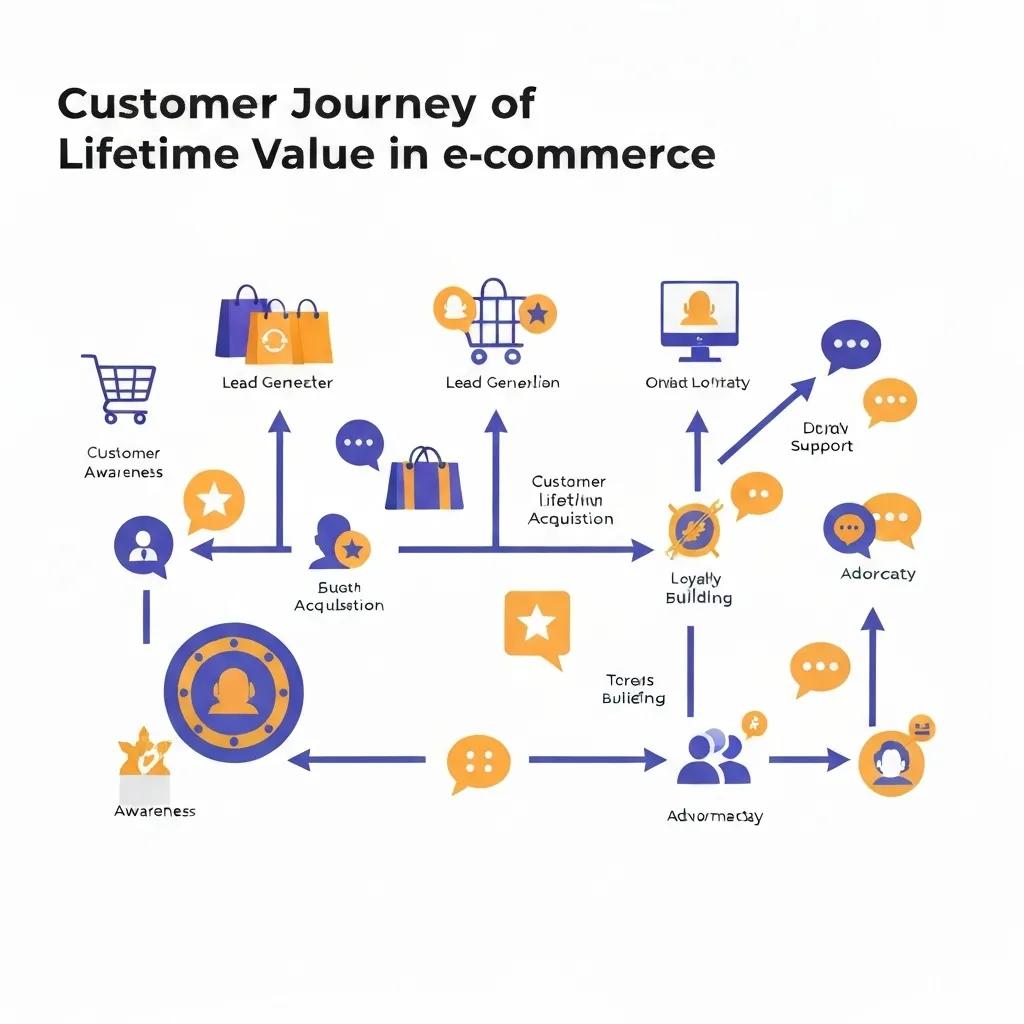
Customer Lifetime Value (CLTV) calculates the total projected revenue a business can expect from a single customer throughout their entire relationship. A partner who excels at enhancing personalization, loyalty programs, and retention strategies effectively increases CLTV, securing long-term profitability.
- Entity → Relationship → Entity: Shopify Plus partner designs retention programs.
A higher CLTV provides a buffer for marketing expenditures and amplifies ROI across all customer acquisition efforts.
How Do Marketing Spend Efficiency Metrics Reflect Partner Performance?
Marketing spend efficiency assesses how effectively your partner converts investments in advertising and email marketing into revenue. Key sub-metrics include Return on Ad Spend (ROAS), Email Marketing ROI via Klaviyo, and Marketing Automation ROI.
- Entity → Relationship → Entity: Klaviyo drives Email Marketing ROI.
Monitoring these figures reveals whether your partner is allocating budgets strategically and continuously refining campaigns for maximum return on investment.
What Marketing Spend Metrics Should You Track to Evaluate Your Shopify Plus Partner?
Marketing spend metrics evaluate the effectiveness of your partner’s budget allocation across various channels. Tracking these numbers offers direct insight into campaign efficiency and revenue generation capabilities.
- ROAS measures the revenue generated for every dollar spent on advertising.
- Email Marketing ROI via Klaviyo tracks revenue derived from newsletters and automated email flows.
- Marketing Automation ROI demonstrates efficiency gains and associated cost reductions.
Collectively, these indicators highlight your partner’s proficiency in maximizing marketing investments.
How Is Return on Ad Spend (ROAS) Measured and Optimized?
Return on Ad Spend (ROAS) is calculated by dividing the revenue generated by the ad spend. A ROAS of 4:1 signifies $4 in revenue for every $1 invested in advertising. Optimizing ROAS involves refining audience targeting, testing creative assets, and adjusting bid strategies. A higher ROAS indicates that your partner is prioritizing campaigns with the greatest revenue potential.
What Is the ROI of Email Marketing With Klaviyo Integration?
Email Marketing ROI measures the incremental revenue generated from email campaigns relative to the associated costs. Integrating Klaviyo enables sophisticated segmentation, personalization, and automated flows, often contributing 20%–30% of a store’s total revenue from email alone. Quantifying this ROI demonstrates your partner’s effectiveness in email marketing execution.
Exceptional Return on Investment in E-commerce Email Marketing
Email marketing consistently delivers a high return on investment (ROI) for e-commerce businesses. Industry benchmarks indicate that for every dollar invested in email marketing, businesses can anticipate an average return of $40 to $45. Certain studies, such as those by Litmus, have reported an outstanding 4500% return on ad spend (ROAS) specifically within the retail and e-commerce sectors, underscoring its power as a revenue-generating channel.
This data validates the article’s emphasis on email marketing’s efficiency and its substantial contribution to overall store revenue, particularly when integrated with platforms like Klaviyo.
How Does Marketing Automation Increase Sales Productivity and Reduce Costs?
Marketing Automation ROI calculates the revenue uplift and cost savings achieved through automated workflows, such as welcome series, cart recovery sequences, and post-purchase follow-ups. Automation can lead to a 14.5% increase in sales productivity while simultaneously reducing manual marketing expenses by 12.2%, demonstrating significant partner value.
What Role Does Customer Service ROI Play in Partner Effectiveness?
Customer Service ROI measures the impact of support initiatives on customer retention, lifetime value, and brand advocacy. By integrating helpdesk platforms like Gorgias and optimizing support workflows, your partner can significantly improve Net Promoter Score (NPS) and Customer Satisfaction (CSAT), thereby reducing churn and fostering referrals.
- Entity → Relationship → Entity: Gorgias enhances CSAT.
How Can Customer Service Metrics Demonstrate Your Shopify Plus Partner’s Value?
Customer Service ROI quantifies the returns generated from investments in support operations. By analyzing support costs against their revenue impact—through customer retention, upsells, and referrals—you can clearly demonstrate your partner’s effectiveness in elevating the overall customer experience.
What Is Customer Service ROI and How Is It Measured?
Customer Service ROI = (Revenue impact of retained/upgraded customers – Service costs) ÷ Service costs. Implementing efficient workflows and proactive support strategies can yield ROI ratios of 5:1 or higher, showcasing the direct contribution of customer service to profitability.
How Do Net Promoter Score (NPS) and Customer Satisfaction (CSAT) Reflect Partner Effectiveness?
Net Promoter Score (NPS) gauges customer loyalty by assessing their likelihood to recommend your brand. Customer Satisfaction (CSAT) evaluates satisfaction with specific customer interactions. Improvements in both NPS and CSAT indicate that your partner’s customer experience strategies are successfully building trust and encouraging advocacy.
How Does Customer Retention Rate Tie Into Customer Service Success?
High-quality customer support minimizes churn by resolving issues promptly and enhancing overall satisfaction. Even a modest 5% increase in customer retention can boost profits by up to 25%, making customer service optimization a powerful metric for measuring partner ROI.
The Profound Impact of Customer Retention on Business Profitability
Research consistently highlights that even minor improvements in customer retention can lead to substantial profit growth. Studies suggest that enhancing customer retention rates by just 5% can elevate profits by a significant margin, ranging from 25% to 95%. This underscores the financial efficiency and strategic importance of retaining existing customers over solely focusing on acquiring new ones.
This research directly supports the article’s assertion that a 5% increase in customer retention can significantly boost profits, emphasizing the strategic value of customer service and loyalty initiatives.
Factual table note: Performance and ROI results depend on the store’s traffic, baseline conversion rate, implementation quality, and measurement window.
Why Is Website Performance a Critical Metric for Shopify Plus Partner ROI?

Website performance is fundamental to every visitor interaction. Faster load times and minimal downtime directly contribute to higher conversion rates, improved search engine rankings, and enhanced customer satisfaction. Technical optimizations translate directly into measurable revenue gains.
How Does Page Load Speed Affect Conversion and Revenue?
Page load speed measures the time it takes for a webpage to fully render. Even a 100ms improvement can drive a 1% increase in conversions. By optimizing images, minimizing script usage, and leveraging CDN caching, your partner effectively accelerates load times and proportionally boosts conversion rates.
Why Is Website Uptime Important for E-commerce Success?
Website uptime refers to the percentage of time your online store is accessible to customers. Periods of downtime result in lost sales opportunities and can damage brand credibility. Maintaining 99.9% uptime ensures continuous revenue flow and maximizes the impact of every marketing dollar invested.
How Does Organic Traffic Growth Reflect Technical SEO Improvements?
Organic Traffic Growth tracks the increase in non-paid website visits driven by search engine optimization (SEO). Technical SEO enhancements—such as structured data implementation, mobile optimization, and site architecture improvements—executed by your partner drive sustained organic growth, thereby enhancing ROI without requiring additional ad spend.
Factual table note: Performance and ROI results depend on the store’s traffic, baseline conversion rate, implementation quality, and measurement window.
How Do Loyalty Programs and Customer Engagement Metrics Drive ROI?
Loyalty program engagement measures how effectively customers participate in reward initiatives, which in turn drives repeat purchases and increases CLTV. Platforms like LoyaltyLion and Yotpo empower your partner to implement structured reward systems, with repeat purchase rates serving as a key indicator of program success.
- Entity → Relationship → Entity: LoyaltyLion enhances loyalty engagement.
What Is Loyalty Program ROI and How Can It Be Measured?
Loyalty Program ROI = (Incremental revenue generated from program participants – Program costs) ÷ Program costs. Measuring reward redemptions, average customer spend, and retention rates among loyalty members quantifies the program’s success.
How Do Repeat Purchase Rates Indicate Partner Success?
Repeat Purchase Rate is the percentage of customers who make a subsequent purchase within a defined timeframe. A 10% increase in repeat purchases often correlates with targeted retention campaigns and loyalty incentives that your partner implements effectively.
How Do Platforms Like LoyaltyLion and Yotpo Enhance Loyalty ROI?
Integrating platforms like LoyaltyLion or Yotpo enables gamified rewards, tiered benefits, and social proof mechanisms. These tools streamline program management and provide valuable analytics to optimize customer engagement, ultimately driving higher program ROI and fostering deeper customer loyalty.
How Can Shopify Plus Integrations and Automation Boost Your ROI?
Integrations and automation unlock significant efficiencies, enable deeper personalization, and facilitate new business models, such as subscription revenues, advanced email marketing flows, and streamlined customer support. Each integration directly contributes to measurable ROI.
What Is the ROI of Shopify Flow Automation?
Shopify Flow automates routine operational tasks—including order tagging, inventory alerts, and customer segmentation—thereby saving valuable manual labor time and reducing errors. Calculating the time saved against the implementation cost yields a clear ROI, often recouping the initial setup investment within weeks.
How Do Integrations With Klaviyo, Gorgias, and Recharge Improve Performance?
Klaviyo enables highly targeted email campaigns for superior ROI.
Gorgias streamlines customer support operations to elevate CSAT and retention.
Recharge facilitates subscription offerings that significantly boost CLTV.
How Does Subscription Revenue Growth From Recharge Affect Overall ROI?
Subscription models provide a predictable stream of recurring revenue. Tracking new subscription sign-ups, average subscription value, and churn rates following Recharge integration demonstrates how your partner effectively expands revenue streams and stabilizes cash flow.
Factual table note: Shopify Plus pricing changes by contract term, region, and business model. Use official Shopify pricing as the source of truth.
What Qualitative Factors Should You Consider When Evaluating Shopify Plus Partner Effectiveness?
Quantitative metrics provide only a partial view of performance. Qualitative factors—such as communication clarity, strategic alignment, and proactive innovation—are crucial drivers of the long-term impact of your partnership.
How Does Communication and Collaboration Influence Partner ROI?
Clear, timely communication and transparent reporting build trust and accelerate decision-making processes. Partners who schedule regular strategy sessions and share performance insights effectively strengthen collaboration, ensuring that every metric aligns with your evolving business objectives.
Why Is Strategic Alignment Essential for Measuring Partner Success?
When a partner’s strategic roadmap closely mirrors your business objectives, every initiative—from new feature implementations to marketing campaigns—delivers demonstrable value. Strategic alignment ensures that resources are allocated to high-impact projects, thereby maximizing your overall ROI.
How Does Partner Innovation and Proactivity Drive Long-Term ROI?
Partners who proactively propose new marketing channels, emerging technologies, or advanced strategic techniques help keep your store competitive. Proactive innovation—such as exploring new Shopify Plus features—secures future results and drives incremental returns beyond baseline performance metrics.
How Do You Implement an Effective Framework to Measure ROI From Your Shopify Plus Partner?
Establishing a repeatable measurement framework is key to ensuring consistent accountability and facilitating continuous optimization.
- Establish Baselines and Define Goals
- Determine Reporting Cadence
- Select Appropriate Tracking Tools
What Baselines and Goals Should You Set for ROI Measurement?
Begin by documenting your current performance for each key metric—conversion rate, CLTV, ROAS, NPS, page speed. Subsequently, set SMART goals (Specific, Measurable, Achievable, Relevant, Time-bound) that align with your growth ambitions. Clear baselines make progress tangible and set realistic expectations for your partner.
How Often Should You Review and Report on ROI Metrics?
Conducting monthly performance reviews keeps strategies agile and responsive to market dynamics. Quarterly deep-dive analyses allow for strategic course corrections and informed investment planning. Regular reporting ensures transparency and fosters ongoing partner accountability.
Which Tools Are Best for Tracking Shopify Plus Partner Performance?
- Google Analytics for comprehensive traffic, conversion, and funnel analysis.
- Shopify Analytics for store-level performance data and CLTV calculations.
- Klaviyo and Recharge dashboards for detailed email and subscription insights.
- Gorgias reporting for evaluating support performance metrics.
- Project management tools (e.g., Asana, Trello) for communication and task oversight.
Utilizing a combination of these platforms provides a unified view of your ROI and empowers data-driven decision-making.
Measuring the ROI from your Shopify Plus partner is not merely an option—it’s imperative for achieving sustainable e-commerce growth. By diligently tracking these ten metrics, evaluating qualitative factors, and implementing a structured framework, you ensure that every invested dollar yields measurable returns. Empower your team with clear objectives, consistent reporting, and expert partners like BlackBelt Commerce to transform insights into impactful business actions.
Quick Answer: Shopify Plus Partner ROI Metrics
Shopify Plus Partner ROI Metrics should be judged by scope, risk, growth impact, and total implementation value rather than a generic price range. Merchants should verify current Shopify, app, agency, and payment terms, then compare the cost of expert support with the cost of rework, weak architecture, poor conversion, and operational friction.
Want a sharper Shopify growth plan?
Trying to understand Shopify Plus Partner ROI Metrics without overpaying or under-scoping the work? Book a strategy call and we will help you identify the cost drivers and risks.
Key Takeaways
- Treat Shopify Plus Partner ROI Metrics as a scope-and-risk decision, not a simple rate comparison.
- Verify current Shopify, app, payment, agency, and developer terms before relying on any price assumption.
- Compare quotes against implementation quality, technical debt, SEO protection, CRO impact, QA, and post-launch support.
- Link the article naturally to Blackbelt Commerce, Shopify experts, and Shopify Plus agencies so the post supports lead generation without weakening editorial trust.
- Use the same-page Calendly CTA only after useful guidance has been delivered, so the booking step feels like help rather than interruption.
How this connects to your Shopify growth strategy
Readers researching Shopify Plus Partner ROI Metrics are trying to avoid budget surprises and partner mistakes. The article should explain cost drivers and verification steps first, then guide qualified merchants toward a strategy call when they need help turning cost research into a realistic Shopify Plus scope.
Want a sharper Shopify growth plan?
Use this guide as a decision tool. Then book a strategy call when you want a practical roadmap for your store.
Related Shopify resources
These internal resources support the Shopify Plus Support, Pricing, and Agency Strategy topic cluster and help connect this guide to stronger commercial next steps:
- Shopify Plus Support, Pricing, and Agency Strategy
- Shopify experts
- Shopify Plus agencies
- Shopify Plus Support, Pricing, and Agency Strategy — Parent service page for the reader’s next commercial step
- Blackbelt Commerce — Home-page authority link for brand and core Shopify expertise
- Shopify experts — Money-page link requested for expert-hiring intent
- Shopify custom development — Development service page for implementation and technical help
- Shopify CRO — Conversion service page for readers focused on revenue and lead generation
- Cost of Shopify website — Related pricing article that helps readers compare platform, build, and expert investment decisions
- Shopify Plus checkout customization — Related Shopify Plus implementation guide for readers evaluating advanced Plus costs and capabilities
Questions store owners ask before taking action
What drives Shopify Plus Partner ROI Metrics?
The biggest drivers are scope, theme and checkout-adjacent complexity, integrations, apps, data, content, SEO requirements, QA, support, and the level of senior Shopify Plus judgment required.
Should merchants rely on exact Shopify Plus cost examples?
No. Exact figures can become stale quickly, so merchants should verify current terms and use pricing content mainly to understand cost drivers, risk, and planning logic.
When should cost research turn into a strategy call?
A call is useful when the merchant needs help comparing partner options, scoping the work, avoiding rework, or deciding whether Plus support is justified by the business case.
Future articles needed for topical dominance
To build deeper topical authority around this cluster, these supporting topics should be created later and linked back into this article:
- Shopify Plus Partner ROI Metrics Budget Checklist for Shopify Plus Merchants: Captures cost-aware searches and links back to Plus agency support without relying on stale price claims.
- Hidden Cost Drivers Behind Shopify Plus Partner ROI Metrics: Builds topical depth around scope, integrations, QA, SEO risk, and post-launch support.
- When to Hire a Shopify Plus Agency for Shopify Plus Partner ROI Metrics: Connects pricing research to the Shopify Plus agency money page while preserving educational intent.
Want a sharper Shopify growth plan?
Ready to turn the advice in this article into an action plan? Open the calendar here and choose a time that works for you.

