


Nearly 80 percent of American shoppers say a seamless online experience influences their buying decisions. For e-commerce managers driving high-growth Shopify brands, the digital storefront is far more than a virtual shelf. It is the gateway that shapes customer perceptions, determines trust, and drives conversions. Understanding the essentials of powerful digital storefronts helps American brands create online shopping experiences that turn browsers into loyal buyers.
Table of Contents
- Defining Digital Storefronts In E-Commerce
- Core Features Of Successful Digital Storefronts
- Types: Hosted, Custom, And Headless Solutions
- How Digital Storefronts Drive Conversions
- Common Mistakes When Building Digital Storefronts
Key Takeaways
| Point | Details |
|---|---|
| Digital Storefront Importance | Digital storefronts enhance retail by providing 24/7 accessibility, personalized experiences, and efficient customer engagement. |
| Core Features | Successful digital storefronts integrate features like real-time inventory tracking, secure payment processing, and personalized recommendations to drive sales and improve user experience. |
| Solution Types | Businesses can choose from hosted, custom, and headless digital storefront solutions based on their specific needs, complexity, and scalability requirements. |
| Conversion Optimization | Effective digital storefronts focus on reducing friction in the customer journey through personalization and intuitive design to maximize conversion rates. |
Defining Digital Storefronts in E-Commerce
A digital storefront represents the modern evolution of retail commerce, transforming how businesses interact with customers through online platforms. Digital storefronts combine dynamic web interfaces with intelligent transaction systems, enabling companies to create immersive, personalized shopping experiences without traditional physical retail limitations.
At its core, a digital storefront functions as a comprehensive web-based platform that allows businesses to showcase and sell products directly to consumers. These platforms serve as centralized hubs with integrated features for product management, customer engagement, payment processing, and marketing automation. Unlike traditional brick-and-mortar stores, digital storefronts operate 24/7, providing unprecedented accessibility and convenience for customers across geographic boundaries.
Key characteristics of effective digital storefronts include:
- Intuitive user interface design
- Seamless mobile responsiveness
- Secure payment gateway integration
- Advanced product visualization tools
- Personalized customer recommendation engines
Digital storefronts leverage technology to create interactive shopping environments that adapt to individual customer preferences, transforming online transactions from transactional exchanges into engaging, relationship-driven experiences.
Pro tip: Invest in a responsive design that provides consistent user experience across desktop, tablet, and mobile platforms to maximize customer engagement and reduce bounce rates.
Core Features of Successful Digital Storefronts
Digital storefronts have evolved far beyond simple online product listings, becoming sophisticated platforms that integrate interactive web interfaces with intelligent customer targeting strategies. Modern e-commerce businesses require robust digital storefronts that offer comprehensive features designed to enhance user experience and drive sales performance.
Successful digital storefronts incorporate multiple critical components that work together to create seamless shopping experiences. These core features include advanced product catalogs with high-resolution imagery, detailed descriptions, customer review systems, and intuitive navigation frameworks. Key elements that distinguish top-performing digital storefronts encompass:
- Comprehensive product management systems
- Real-time inventory tracking
- Multiple payment gateway integrations
- Personalized customer recommendation engines
- Secure transaction processing
- Mobile-responsive design
- Advanced analytics and reporting tools
The most effective digital storefronts go beyond transactional interactions by creating personalized, engaging environments that adapt to individual customer preferences. They leverage intelligent technologies to anticipate customer needs, provide tailored product suggestions, and streamline the entire shopping journey from initial product discovery to final purchase completion.

The following table summarizes the business impact of core digital storefront features:
| Feature | What It Does | Business Impact |
|---|---|---|
| Product Catalog Management | Organizes and displays products | Improves discoverability |
| Real-time Inventory Tracking | Monitors stock levels instantly | Reduces overselling and errors |
| Analytics & Reporting Tools | Tracks sales, behavior, and trends | Enables data-driven decisions |
| Recommendation Engine | Suggests products to users | Boosts cross-selling opportunities |
| Secure Payment Processing | Ensures safe transactions | Builds trust and credibility |
Pro tip: Implement a dynamic pricing strategy that adjusts in real-time based on inventory levels, customer segments, and market demand to maximize conversion rates and profitability.
Types: Hosted, Custom, and Headless Solutions
Digital storefronts represent a spectrum of technological approaches, each offering unique advantages for businesses seeking to optimize their online sales channels. These solutions range from traditional hosted platforms to fully customized and headless architectures, each designed to meet specific business requirements.
Hosted Solutions provide small to medium businesses with a straightforward approach to digital commerce. These platforms combine content management and presentation layers into a single, integrated system, offering quick deployment and minimal technical complexity. Characteristics include:
- Pre-configured templates
- Built-in design and functionality
- Lower initial development costs
- Simplified maintenance
- Quick time-to-market
Custom Solutions empower businesses to create unique digital experiences tailored precisely to their brand and customer needs. These storefronts offer maximum flexibility, allowing companies to design every aspect of their online presence from scratch. Key benefits include:
- Complete design control
- Unique user experience
- Advanced feature integration
- Brand-specific functionality
- Scalable architecture
Headless Commerce represents the most advanced digital storefront approach, separating the frontend presentation layer from backend commerce functions to enable unprecedented flexibility. This architecture allows businesses to deliver consistent experiences across multiple digital platforms while maintaining robust backend capabilities.
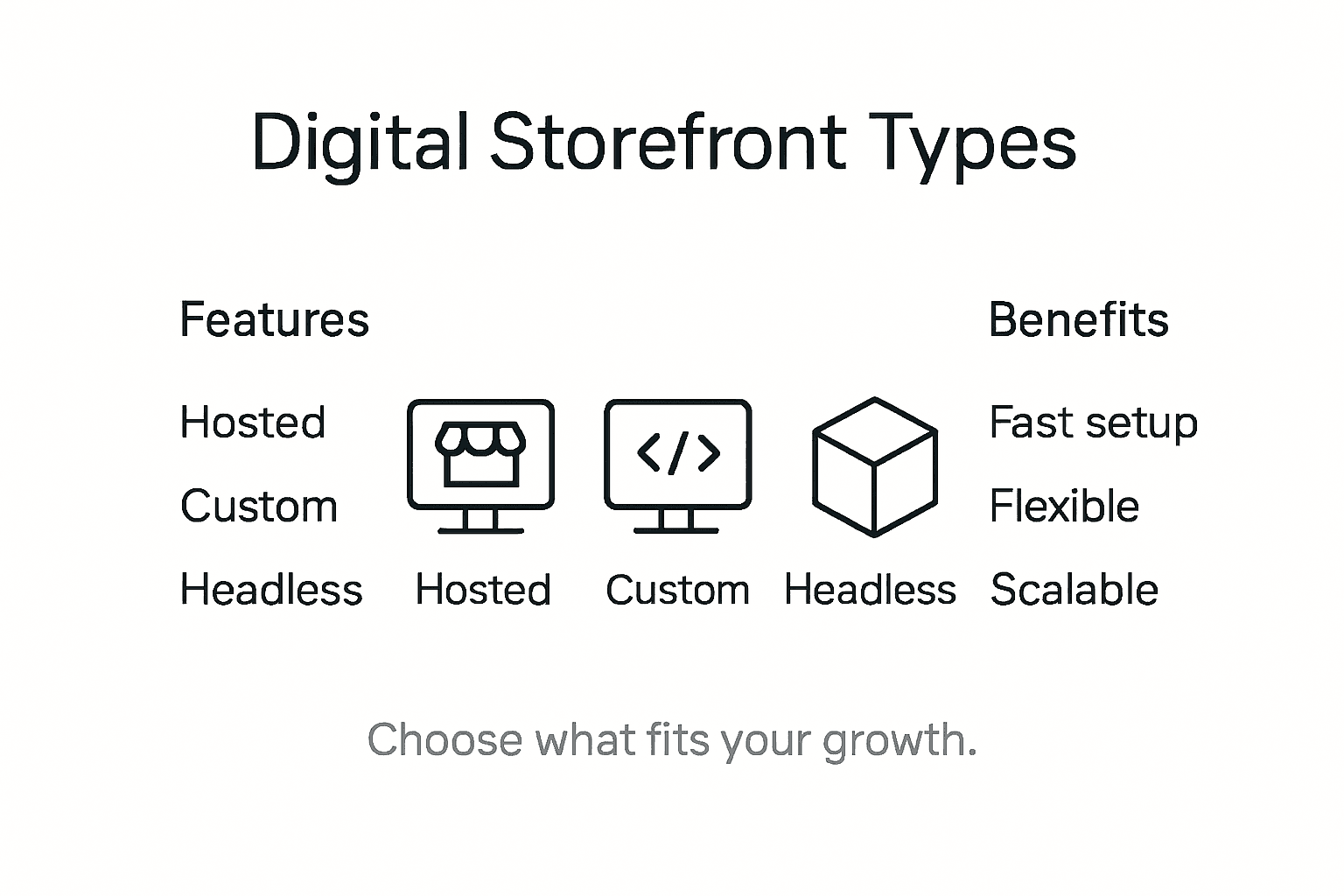
Here is a concise comparison of digital storefront solutions to guide platform selection:
| Solution Type | Customization Level | Scalability | Typical Use Case |
|---|---|---|---|
| Hosted | Limited design options | Suitable for SMBs | Fast deployment for small stores |
| Custom | Fully controlled design | Scales with growth | Unique brand experience |
| Headless | Maximum flexibility | High, multi-channel | Large omnichannel enterprises |
Pro tip: Evaluate your business complexity, technical resources, and growth trajectory before selecting a digital storefront solution to ensure optimal long-term performance and scalability.
How Digital Storefronts Drive Conversions
Digital storefronts transform online shopping by creating sophisticated conversion ecosystems that go far beyond traditional transaction platforms. Advanced conversion strategies leverage intelligent targeting and interactive experiences to systematically increase purchase probability.
The core mechanism of conversion optimization involves understanding and eliminating friction points in the customer journey. Successful digital storefronts strategically analyze user behavior, optimizing mobile compatibility, traffic sources, and checkout processes to reduce abandonment rates. Key conversion drivers include:
- Personalized product recommendations
- Seamless mobile responsiveness
- Intuitive navigation pathways
- Streamlined checkout experiences
- Real-time customer support integration
- Trust-building elements like reviews and security badges
Intelligent digital storefronts employ advanced techniques such as adaptive interfaces that dynamically adjust based on individual user preferences. These platforms use sophisticated algorithms to create personalized shopping experiences, presenting products, promotions, and content uniquely tailored to each customer’s browsing history, demographic profile, and previous interaction patterns.
By combining data-driven insights with user-centric design, digital storefronts transform passive browsing into active purchasing, converting casual visitors into committed customers through precision-engineered engagement strategies.
Pro tip: Implement A/B testing on critical conversion elements like call-to-action buttons, product descriptions, and checkout flows to continuously refine and improve your digital storefront’s performance.
Common Mistakes When Building Digital Storefronts
Digital storefronts require strategic planning to avoid critical design and functionality pitfalls that can undermine business performance. Neglecting user-centric design and failing to integrate comprehensive marketing strategies are among the most significant errors businesses make.
One fundamental mistake is creating digital platforms that lack true accessibility and inclusivity. Many businesses unintentionally exclude potential customers by not addressing fundamental digital divide challenges, such as language barriers, device compatibility, and varied user technological literacy. Common accessibility mistakes include:
- Designing without mobile responsiveness
- Using complex navigation structures
- Ignoring international user experience standards
- Implementing small, unreadable text
- Lacking alternative text for images
- Creating non-intuitive checkout processes
Technical implementation errors can significantly impact user experience and conversion rates. Businesses often underestimate the complexity of creating seamless digital storefronts, resulting in platforms that fail to deliver smooth, personalized interactions. This includes inadequate performance optimization, poor integration of marketing channels, and insufficient use of analytics for continuous improvement.
Successful digital storefronts require a holistic approach that combines technical excellence, user-centered design, and continuous adaptation to changing customer expectations and technological landscapes.
Pro tip: Conduct regular user testing with diverse participant groups to identify and eliminate potential accessibility and usability barriers before full platform deployment.
Elevate Your Sales with a Custom Digital Storefront Tailored for Growth
The article highlights the challenge many businesses face when launching digital storefronts that lack personalization, seamless mobile responsiveness, and conversion-focused features. Customers expect intuitive navigation, secure payment gateways, and personalized recommendations that transform casual visits into loyal relationships. If you want to overcome these pain points and unlock the true potential of your online store you need a partner with deep expertise in creating custom, scalable solutions that adapt as your business grows.
At Blackbelt Commerce we specialize in building tailored Shopify storefronts designed to boost conversion rates, increase traffic, and drive revenue growth. Our approach covers every step from consultation and custom theme development to advanced eCommerce integrations including Shopify Plus and headless architectures. We empower businesses with intuitive user experiences, dynamic pricing strategies, and robust analytics, precisely addressing the challenges outlined in the article.
Bring your digital storefront vision to life today with expert Shopify solutions crafted for your unique brand.

Ready to leave behind cookie-cutter shops and embrace a high-performance storefront that converts visitors into customers? Visit Blackbelt Commerce to explore how our custom Shopify development and optimization services turn e-commerce challenges into your greatest growth opportunities.
Frequently Asked Questions
What is a digital storefront?
A digital storefront is an online platform that allows businesses to showcase and sell products directly to consumers, combining dynamic web interfaces with intelligent transaction systems for an immersive shopping experience.
How can digital storefronts impact sales performance?
Digital storefronts enhance sales performance by offering features like personalized recommendations, advanced product visualization, and streamlined checkout processes, which collectively improve user experience and encourage conversions.
What are the key features of successful digital storefronts?
Successful digital storefronts typically include intuitive user interface design, mobile responsiveness, secure payment processing, advanced product management, and analytics tools for tracking behavior and sales trends.
What are the different types of digital storefront solutions?
Digital storefront solutions can be categorized into hosted solutions, custom solutions, and headless commerce solutions, each offering varying levels of customization, scalability, and complexity suited to different business needs.
