


Research shows that more than 60 percent of global shoppers prefer to buy from websites in their own language. For American Shopify store owners, ignoring multi-language capabilities can mean missing out on millions of international customers who expect localized experiences. Expanding beyond the United States calls for more than simple translation. Clear strategies and advanced tools are needed to help your store succeed with diverse audiences worldwide.
Table of Contents
- Internationalization In Ecommerce Explained
- Types Of Ecommerce Internationalization Strategies
- Key Elements Of Global-Ready Online Stores
- Localization, Translation, And Currency Adaptation
- Legal, Tax, And Compliance Challenges
- Common Pitfalls And Best Practices
Key Takeaways
| Point | Details |
|---|---|
| Ecommerce Internationalization | Internationalization involves adapting digital platforms to support multiple languages, currencies, and cultural preferences for global market access. |
| Localization Strategies | Successful localization transcends translation, requiring cultural adaptation and design modifications to resonate with local audiences. |
| Legal Compliance | Understanding and adhering to international legal, tax, and regulatory requirements is crucial for seamless cross-border operations. |
| Common Pitfalls | Businesses should avoid superficial market research and ensure proactive legal strategies to navigate the complexities of global expansion effectively. |
Internationalization in ecommerce explained
Ecommerce internationalization represents a strategic approach for businesses to expand their digital storefronts across global markets. Website internationalization is fundamentally about creating digital experiences that transcend cultural and linguistic boundaries, enabling companies to effectively reach and engage international customers.
At its core, internationalization involves adapting digital platforms to support multiple languages, currencies, and regional preferences. Global market adaptation requires understanding complex cultural dynamics and technical infrastructure needed to facilitate seamless cross-border transactions. This process goes beyond simple translation, encompassing nuanced elements like payment method compatibility, shipping logistics, tax regulations, and user interface design that resonates with diverse global audiences.
Successful internationalization strategies typically involve several key technical and strategic components. These include implementing robust multilingual content management systems, integrating region-specific payment gateways, developing responsive design that works across different devices and cultural contexts, and creating localized marketing content that speaks directly to regional consumer expectations. Website internationalization helps businesses optimize their online presence for global SEO, ensuring their digital storefronts can effectively attract and convert international customers.
Pro tip: Start your internationalization journey by conducting comprehensive market research on 2-3 target regions, understanding their specific digital commerce preferences and technical infrastructure before full platform adaptation.
Types of ecommerce internationalization strategies
Ecommerce internationalization strategies represent sophisticated approaches businesses use to expand their digital presence across global markets. These strategies are complex frameworks designed to help companies navigate the intricate landscape of international digital commerce, addressing critical challenges related to market entry, cultural adaptation, and technological infrastructure.
Cross-border ecommerce strategies typically fall into several distinct categories that businesses can leverage for global expansion. These include market selection strategies, digital platform adaptation, logistics coordination, and comprehensive regulatory compliance approaches. Companies like Alibaba demonstrate sophisticated internationalization models by utilizing dual-track systems involving strategic acquisitions and dedicated ecommerce platforms to penetrate new markets effectively.
The primary types of ecommerce internationalization strategies encompass multiple sophisticated approaches:
- Market Entry Strategies: Identifying and penetrating new international markets through targeted digital platforms
- Localization Approaches: Adapting website design, content, and user experience to specific regional preferences
- Payment and Logistics Integration: Implementing region-specific payment gateways and shipping solutions
- Regulatory Compliance Frameworks: Ensuring adherence to international data protection and taxation requirements
International market expansion demands a nuanced understanding of diverse global digital commerce landscapes. Successful strategies require continuous adaptation, technological flexibility, and deep cultural intelligence to create seamless cross-border shopping experiences that resonate with international consumers.
Pro tip: Develop a phased internationalization approach by first targeting markets with similar cultural and technological infrastructures to minimize initial complexity and risk.
The following table summarizes the primary strategic focus of different internationalization approaches:
| Strategy Type | Primary Objective | Typical Example |
|---|---|---|
| Market Entry | Access new regions | Launching a dedicated regional website |
| Localization | Enhance local relevance | Adapting content and UI for Spanish consumers |
| Payment Integration | Facilitate local purchases | Supporting Alipay in China |
| Regulatory | Ensure legal compliance | Customizing privacy policy for EU GDPR requirements |
Key elements of global-ready online stores
Creating a truly global-ready online store requires a comprehensive approach that goes far beyond simple translation. Digital internationalization demands a holistic strategy that addresses technical, cultural, and user experience considerations to effectively engage international customers across diverse markets.

Global digital product design must incorporate multiple critical elements to ensure seamless international accessibility. This includes sophisticated technical foundations like robust multilingual support, adaptive character encoding, and flexible layout systems that can accommodate different script directions, character sets, and cultural formatting preferences. Online stores must be architecturally designed to handle variations in language, currency, date formats, and regional payment systems without compromising user experience.
The essential technical and strategic elements of global-ready online stores include:
-
Multilingual Content Management
- Comprehensive translation capabilities
- Contextual language adaptation
- Professional localization of marketing materials
-
Technical Infrastructure
- Unicode character support
- Responsive design for international devices
- Adaptive layout frameworks
-
Cultural Customization
- Region-specific payment gateways
- Localized product descriptions
- Cultural sensitivity in visual design
Website internationalization strategies require meticulous attention to technical optimization, ensuring that international SEO, user interface design, and cross-border transaction capabilities work harmoniously to create a truly global digital commerce experience.
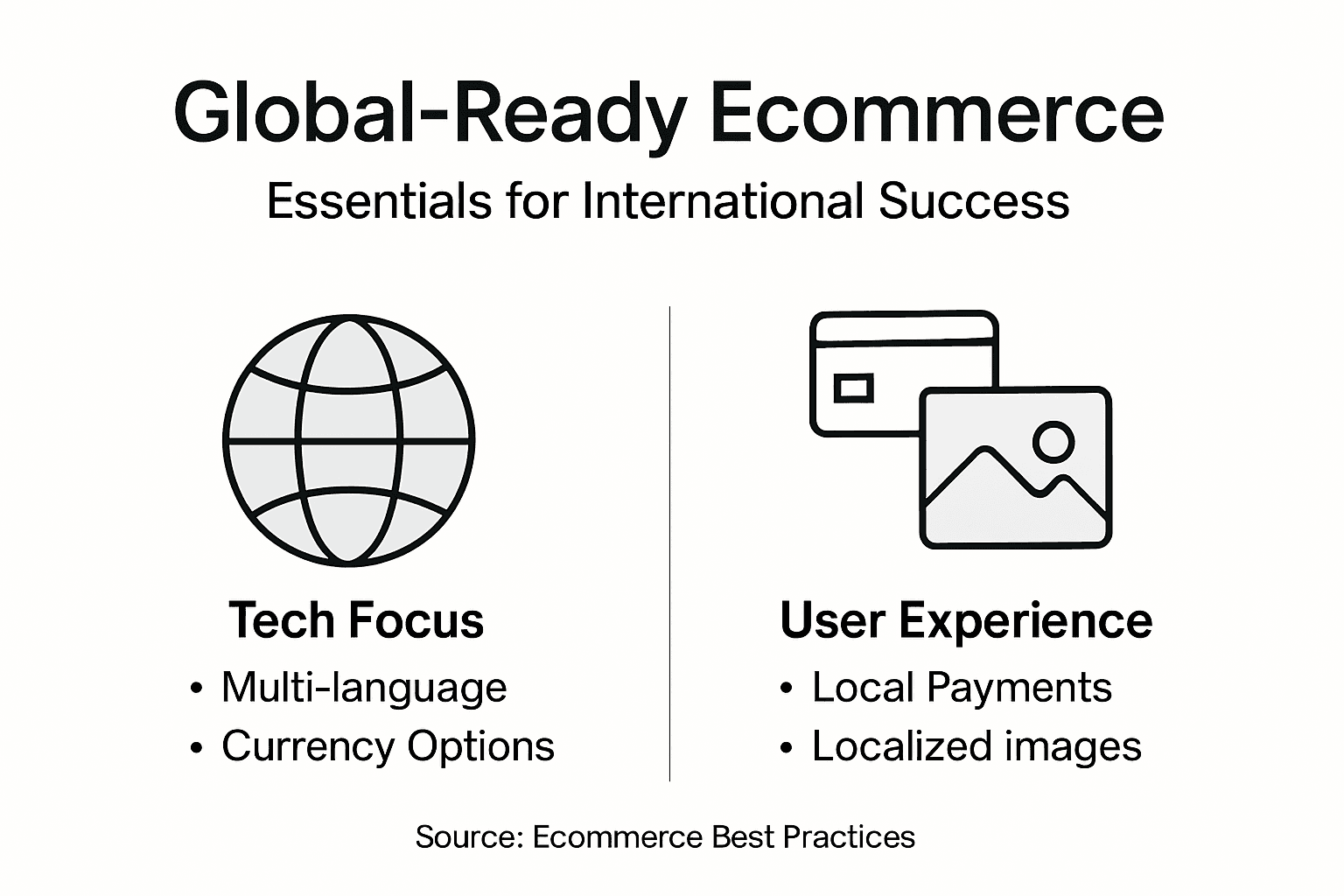
Pro tip: Invest in professional localization services that go beyond literal translation, focusing on cultural nuance and contextual adaptation for each target market.
Localization, translation, and currency adaptation
Website localization represents a sophisticated process that transforms digital content from merely translated text into culturally resonant experiences tailored for specific international markets. This intricate approach goes beyond literal language conversion, focusing on creating meaningful connections that feel native and authentic to each target audience.
Localization strategies encompass multiple critical dimensions of digital adaptation. These include linguistic translation, cultural contextualization, visual design modifications, and technical infrastructure adjustments that enable seamless user experiences across diverse regional contexts. Professional localization demands deep understanding of local communication norms, consumer behaviors, and technological preferences.
The comprehensive localization process involves several key strategic elements:
-
Linguistic Translation
- Professional translation services
- Contextual language adaptation
- Grammatical and syntactical considerations
-
Cultural Customization
- Adapting visual design elements
- Modifying imagery and color schemes
- Respecting cultural sensitivities
-
Technical Infrastructure
- Multiple currency support
- Localized payment gateways
- Region-specific formatting standards
Website internationalization approaches require meticulous attention to detail, ensuring that every aspect of the digital experience feels natural and intuitive for international users. Successful localization transforms websites from generic platforms into culturally intelligent digital environments that speak directly to local consumers.
Pro tip: Collaborate with native speakers and cultural consultants to validate your localization efforts, ensuring authentic and nuanced communication across different markets.
Here is a comparison of common internationalization challenges and effective solutions:
| Challenge | Typical Consequence | Effective Solution |
|---|---|---|
| Mismatched payment gateways | Abandoned carts | Integrate local payment providers |
| Inconsistent currency formatting | Buyer confusion | Localize all currency displays |
| Poor translation quality | Loss of consumer trust | Invest in expert localization |
| Misaligned imagery or colors | Reduced engagement | Customize design to local tastes |
| Noncompliance with regulations | Legal penalties | Monitor evolving compliance standards |
Legal, tax, and compliance challenges
Expanding an international ecommerce business requires navigating a complex landscape of legal and regulatory frameworks that vary dramatically across different jurisdictions. These challenges demand sophisticated understanding of cross-border regulations, tax implications, and compliance requirements that can significantly impact a company’s global expansion strategy.
International electronic commerce laws represent a critical consideration for businesses seeking to operate across multiple countries. These regulations encompass intricate frameworks governing digital transactions, electronic signatures, data protection, cybersecurity standards, and cross-border contract enforcement. Companies must develop comprehensive compliance strategies that address the nuanced legal requirements of each target market.
Key legal and compliance challenges include:
-
Regulatory Compliance
- Navigating international data protection laws
- Understanding cross-border electronic contract requirements
- Ensuring cybersecurity and digital identity management
-
Tax and Customs Considerations
- Managing international tax obligations
- Handling customs declarations and duties
- Addressing low-value shipment regulations
-
Risk Management
- Mitigating legal and financial risks
- Implementing robust compliance monitoring systems
- Developing adaptive legal strategy frameworks
Customs and import regulations present significant challenges for international ecommerce businesses, requiring meticulous attention to shipping documentation, tax calculations, and compliance with local import restrictions. Successful global operations demand proactive legal strategies that anticipate and address potential regulatory complexities.
Pro tip: Consult with international legal experts specialized in ecommerce regulations to develop a comprehensive compliance strategy that can adapt to evolving legal landscapes across different markets.
Common pitfalls and best practices
Internationalization in ecommerce represents a complex journey fraught with potential challenges that can dramatically impact a business’s global expansion strategy. Strategic awareness of common pitfalls is crucial for companies seeking to successfully navigate the intricate landscape of cross-border digital commerce.
SME internationalization strategies reveal several critical mistakes that businesses frequently encounter when expanding into international markets. These include insufficient market research, inadequate cultural adaptation, and overlooking critical compliance requirements that can derail global expansion efforts. Successful companies approach international markets with meticulous planning and deep understanding of regional nuances.
Key pitfalls and corresponding best practices include:
-
Market Research
- Pitfall: Superficial understanding of target markets
- Best Practice: Conduct comprehensive cultural and economic research
- Recommendation: Engage local market experts
-
Technical Adaptation
- Pitfall: Generic website approach
- Best Practice: Develop culturally intelligent digital platforms
- Recommendation: Implement flexible design systems
-
Compliance and Legal
- Pitfall: Ignoring regulatory differences
- Best Practice: Proactive legal and tax strategy
- Recommendation: Regular compliance audits
Website internationalization best practices emphasize progressive adaptation through systematic internationalization, regionalization, and localization phases. Successful global businesses understand that effective international expansion requires continuous learning, cultural intelligence, and adaptive technological infrastructure.
Pro tip: Create a phased market entry strategy that starts with low-risk markets sharing similar cultural and technological characteristics, allowing incremental learning and risk mitigation.
Unlock Global Growth with Expert Shopify Internationalization Support
Expanding your ecommerce store internationally involves overcoming complex challenges like multilingual content management, localized payment integration, and cultural customization. These critical elements are necessary to create a seamless cross-border shopping experience that boosts revenue and customer engagement. At Blackbelt Commerce, we specialize in crafting custom Shopify solutions designed to tackle exactly these pain points. Whether you need multi-language integrations, regional payment gateways, or advanced Shopify Plus development, we ensure your store is optimized for global markets.

Take the next step to unlock your business’s true international potential today. Explore how our proven process of consultation, design, development, and ongoing support can turn your Shopify store into a global-ready powerhouse. Visit Blackbelt Commerce to see our detailed case studies and discover how global ecommerce success is within your reach. Get started now with expert guidance tailored for international market expansion from Blackbelt Commerce and elevate your ecommerce to new heights.
Frequently Asked Questions
What is ecommerce internationalization?
Ecommerce internationalization is the process of adapting digital platforms to thrive in global markets, encompassing support for multiple languages, currencies, and regional preferences to effectively reach international customers.
What are the key strategies for successful ecommerce internationalization?
Successful ecommerce internationalization involves several key strategies, including market entry strategies, localization of content, payment and logistics integration, and regulatory compliance frameworks tailored to different regions.
How does localization differ from simple translation in ecommerce?
Localization goes beyond mere translation by adapting content to resonate with local cultures, including the modification of images, design elements, and technical features that align with regional preferences and norms.
What challenges should businesses anticipate when expanding internationally?
Businesses should prepare for various challenges such as navigating different regulatory frameworks, ensuring compliance with local tax obligations, and addressing potential risk management issues that come with global expansion.
